
RECAPRUSH MOVIE GUIDE
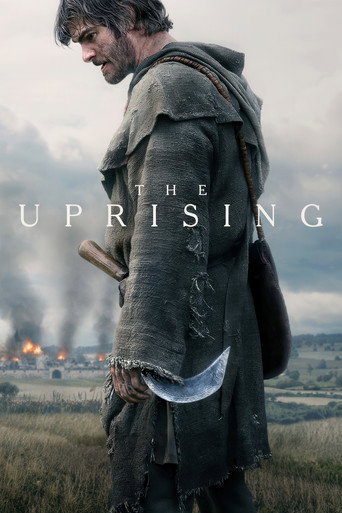
The Uprising (2026)
Directed by Paul Greengrass
As war and plague devastate 14th-century England, a humble peasant ignites a rebellion, uniting an army of commoners to defy the King’s might in a desperate fight for justice and survival.
Overview, poster, and credits from TMDB.
Read and watch our full recap ↓FROM THE RECAPRUSH LIBRARY · FULL RECAP
The Uprising (2026): Why the King Survives — Full Recap & Ending Explained
9 min read · Estimated reading time— views
Intro — RecapRush Viewpoint
What happens when the man who feeds a kingdom finally refuses to obey it? In The Uprising (2026), Andrew Garfield’s grieving farmer discovers that fighting injustice is easier than deciding what justice should look like afterward. A local confrontation grows into England’s Peasants’ Revolt of 1381, carrying him toward London, a frightened young king, and promises that will prove catastrophically fragile.
Full spoilers ahead. This guide follows the rebellion’s rise and collapse, then explains the forest epilogue and its connection to Robin Hood. The film places an invented protagonist inside a historical uprising; its ending belongs to dramatic invention rather than a documented account of the revolt.
RecapRush viewpoint: The most unsettling question here is whether a wounded person can fight oppression without making punishment the centre of his identity. The final hood offers hope, but it also hides a man whose faith in peaceful change has been broken.
Featured Image
The featured poster and accompanying backdrop images identify The Uprising (2026). Images are supplied through TMDB; the gallery links to their source.
Table of Contents
Quick Facts
- Film: The Uprising (2026)
- Writer and director: Paul Greengrass
- Genre: Historical drama and action
- Setting: England during the Peasants’ Revolt of 1381
- Runtime: Approximately 128 minutes
- Lead: Andrew Garfield as Ploughman
- TMDB movie ID: 977942
- Spoiler status: Major plot and ending spoilers throughout
Full Spoiler Recap
A farmer reaches his limit
Ploughman has lost his wife and children to the plague. Work gives him a routine, but it cannot repair his life. When tax collectors and soldiers arrive, the pressure of another levy collides with a village already struggling to survive. His resistance becomes violent, turning a man who wants to endure quietly into someone who can no longer return to ordinary life. [2][3]
His first act matters because it has no grand strategy behind it. Think of it as a boundary finally being crossed: grief has left him vulnerable, yet it has also stripped away much of what intimidation can threaten. The question is no longer how to satisfy the authorities. It is how much more a person should have to surrender.
Private anger becomes a public cause
Other rebels gather around him, including Wat Tyler and John Ball. Their alliance carries a demand for change toward London. Ploughman’s personal loss now sits inside a much larger movement, and the crowd gains strength from discovering that its suffering is shared. [2][3]
The three men give the rebellion different kinds of authority. A farmer embodies everyday labour; a soldier offers practical leadership; a preacher supplies a moral language for resistance. Their cooperation makes the movement powerful, but it also raises a difficult question: are they marching toward the same future, or merely away from the same enemy?
London opens the possibility of change
The rebels reach the capital hoping that Richard II will hear them. Ploughman retains a crucial belief: the king might still be capable of doing right, even if the people surrounding him are corrupt. That hope makes a royal promise feel like a possible escape from the conflict. [2][3]
For the farmer, negotiation is more than a tactic. It preserves the idea that the world still has a legitimate centre. If the king can acknowledge their humanity, then resistance and loyalty do not have to contradict each other. This is why the prospect of agreement can be so persuasive even after everything he has endured.
The movement loses control of its anger
The London violence goes beyond punishment of powerful officials. Looting and attacks on other inhabitants expose a fracture between the rebels’ stated purpose and the crowd’s conduct. Ploughman witnesses a cause he helped ignite moving beyond the control of its leaders. [2][4]
This is the story’s moral turning point. Collective strength does not automatically produce collective restraint. Once the identity of “enemy” becomes flexible, people who hold little power themselves can become targets. The film asks the viewer to recognise exploitation without treating every act committed in its name as liberation.
The promise gives way to betrayal
The confrontation ends in the defeat of the uprising. Tyler is killed, Ball does not survive the film’s violent suppression, and Ploughman escapes with survivors. The possibility of reform through the king’s goodwill has collapsed. [2][3]
The devastating loss is therefore both physical and psychological. Ploughman has lost comrades, but he has also lost the belief that suffering becomes meaningful when authority finally listens. The audience is left with an uncomfortable thought: a promise can disarm people more effectively than an open threat.
A survivor becomes an outlaw
The story then advances one year. Ploughman and fellow survivors live outside royal authority and confront the king in the forest. He kills the Mayor of London but leaves Richard alive. The farmer’s hooded appearance evokes Robin Hood, turning the aftermath of a failed rebellion into the beginnings of an outlaw legend. [2][3][5]
That shift changes the scale of the struggle. An army seeking recognition has become a smaller group refusing submission. Victory no longer means receiving freedom from the crown; it means asserting an existence the crown cannot comfortably control.
Cast and TMDB Details
Cast and Characters










Andrew Garfield plays Ploughman; Jamie Bell plays John Ball; Cosmo Jarvis plays Wat Tyler; Thomasin McKenzie plays Alyce; Woody Norman plays King Richard II; and Jonny Lee Miller plays Mayor Walworth. Stephen Dillane and Tom Hollander appear as Archbishop Sudbury and Treasurer Hales. The cast gallery above links actors to their profiles.
Explore The Uprising on TMDB. The film was written and directed by Paul Greengrass. [1]
More from RecapRush
 Young Washington (2026) Recap & Ending Explained: The Battle That Forged a Future Leader
 Call My Agent! The Movie (2026) Recap & Ending Explained – Andréa, Noémie, and the Former ASK Team
 Teenage Sex and Death at Camp Miasma (2026) Movie Recap & Ending Explained
Ending Explained
Does Ploughman survive?
Yes. His survival allows the story to continue beyond the revolt’s defeat. The forest sequence is an epilogue, not a reversal that restores the dead or makes the rebellion successful. [2][3]
Why does he spare the king?
Ploughman chooses to leave Richard with fear rather than deliver an immediate death. This reverses their relationship: the man who once needed royal recognition can now determine the terms of their encounter. The final intimidation gives the king a continuing reminder that suppressed people have not simply disappeared. [2][3]
RecapRush’s reading is that this decision combines restraint with revenge. Sparing someone can be merciful, but deliberately preserving their terror complicates that mercy. Ploughman has escaped the king’s control without fully escaping the emotional world that the king helped create.
Is he actually Robin Hood?
The film invites that association through the hood, the forest and resistance to royal power. However, the character is not explicitly named Robin Hood. Treat the sequence as the film’s imagined bridge into folklore, rather than proof of the legendary outlaw’s real historical identity. [5]
Is the ending historically accurate?
The uprising and several leading figures are historical. Ploughman’s personal journey and the retaliatory forest confrontation are fictionalised. The movie’s compressed defeat should not be used as a precise reconstruction of the historical fate of every rebel. [2][3][5]
RecapRush Interpretation
The ending offers a victory of memory rather than a victory of government. A ruler can suppress a gathering and revoke its hopes; he cannot necessarily prevent the defeated from becoming a story that others retell.
Yet the final transformation is deliberately uneasy. The hood can symbolise freedom, solidarity and survival. It can also suggest concealment: the ordinary man has become a figure whose public purpose is inseparable from private pain. The legend grows just as the person becomes harder to see.
Deep Analysis — Psychology, Power and Metaphor
Ploughman: the hunger to make loss matter
His grief helps explain why the rebellion becomes emotionally larger than a tax dispute. A successful movement could make suffering feel connected to something beyond helplessness. That is a powerful motive, and a dangerous burden to place on political change: no public victory can return his family.
His belief in the king also gives him a psychological refuge. A corrupt adviser can be removed. A fundamentally unjust order requires a deeper break with everything he has accepted. Trusting Richard lets him postpone that break, which makes the betrayal especially destructive.
John Ball and Wat Tyler: conviction needs a destination
Ball represents the force of moral certainty; Tyler represents the problem of organising it. The rebellion needs both conviction and direction, yet neither can guarantee that a crowd will continue to share one definition of justice.
The tension is worth carrying beyond the medieval setting. Being right about the existence of oppression does not answer every question about what should replace it. A movement needs a future its members can recognise, as well as a wrong they can condemn.
Alyce: a rebellion is made of individual lives
Alyce helps keep the story from becoming only a confrontation between famous male leaders. Her presence reminds us that people do not arrive at a common cause with identical histories. A crowd may speak together while each participant carries a different wound.
Richard II: vulnerability does not erase responsibility
A young, frightened ruler can invite sympathy without becoming innocent of the consequences of rule. The film’s power dynamic asks us to distinguish fear from powerlessness. Richard’s emotions may be recognisably human; his position still allows decisions that ordinary people cannot escape.
The field, the capital and the forest
These spaces suggest three relationships to authority. The field is labour under an established order. London is the attempt to confront that order at its centre. The forest is life beyond its permission. Seen this way, the final change of location expresses Ploughman’s changing belief about where freedom can exist.
What Most Viewers Missed
- The nameless hero changes the emphasis. “Ploughman” identifies him by labour, encouraging us to consider the people history records as a class rather than as individuals.
- Trust is part of the plot’s machinery. The farmer’s hope in Richard makes the eventual betrayal more than another battle lost.
- The revolt contains competing motives. Shared anger does not mean every participant imagines the same outcome.
- The forest does not repair the defeat. The epilogue preserves resistance while leaving the earlier human cost intact.
- The Robin Hood connection is an artistic proposition. It explains how this film moves into legend, not how historians have proved an outlaw’s identity.
Mid/Post-Credits
The forest confrontation belongs to the film’s ending and should not be confused with a post-credits scene. The sources used for this guide do not establish a separate mid- or post-credits sequence; no additional scene is described here.
Final Thoughts
The Uprising leaves you with a hero who has survived and a cause that has been defeated. That tension is more interesting than a simple triumph. The final hood asks whether a legend can preserve the hope of a movement—or whether it turns a collective demand into the story of one avenger.
For RecapRush, the lasting question is what Ploughman will carry into the forest: the possibility of a fairer world, the need to punish those who denied it, or both. His survival answers the plot. It does not settle the moral argument.
Join the conversation
What did you think of the ending? Share your interpretation. Spoilers may appear below.
This product uses the TMDB API but is not endorsed or certified by TMDB.
No comments yet. Start the conversation.