

RECAPRUSH MOVIE GUIDE
The Assassin(s) (2026)
Directed by Hur Jin-ho
In 1974, a shooting shocks South Korea. Detective Cheol-gu, who witnesses the attack, Jae-hwan, the city desk editor whose coverage is suppressed, and Young-il, a rookie reporter, begin to dig beneath the cover-up. As their pursuit of the truth deepens, they come to confront forces meant to remain unseen.
Overview, poster, and credits from TMDB.
Read and watch our movie ↓FROM THE RECAPRUSH LIBRARY · MOVIE
The Assassin(s) (2026) Story Analysis: What Happens When Loyalty Requires Asking Forbidden Questions?
12 min read · Estimated reading time— views
Intro + RecapRush Viewpoint
A police detective can believe in his country and still discover that the people speaking for it want him to stop doing his job. That contradiction gives The Assassin(s) its most compelling human question: when evidence and obedience pull in opposite directions, which one deserves loyalty?
Hur Jin-ho’s Korean thriller brings a detective, a newspaper editor, and a rookie reporter into a fictional investigation surrounding the August 15, 1974 shooting that killed South Korea’s first lady, Yuk Young-soo. Its protagonists approach the same event with different professional responsibilities. What joins them is the refusal to treat an official account as the end of inquiry. [1, 3]
RecapRush’s viewpoint: the film’s premise becomes richer when we read it as a crisis of responsibility. Investigating means risking the relationships, careers, and protections that once made these men feel secure. The mystery asks what happened; the character drama asks how much someone will surrender to keep asking.
Reading note — story spoilers: this is a sourced story guide and critical analysis of the released film, not a complete scene-by-scene recap. The verified sources establish its central investigation and several consequential scenes, but do not reliably establish every late twist or final character outcome. Interpretation is labeled below; fictional conspiracy elements are not historical findings.
Featured Image
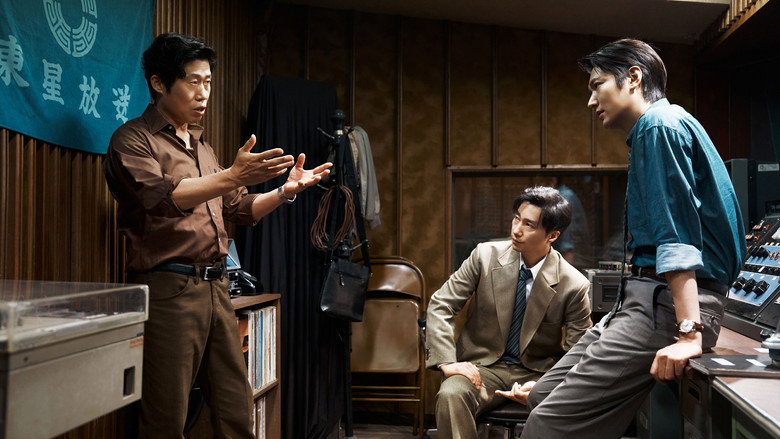
Table of Contents
Quick Facts
- Exact title: The Assassin(s)
- Korean title: 암살자(들)
- Year / status: 2026; released in South Korea on September 23, 2026
- Director: Hur Jin-ho
- Runtime: 131 minutes
- Country / language: South Korea / Korean
- Verified TMDB ID: movie 1418428
- TMDB genres: Drama, Crime, Thriller, Action
- Production: Hive Media Corp
- Main characters: Park Cheol-gu, Kim Jae-hwan, Han Young-il
- Article scope: verified story analysis with limited spoilers; no invented final resolution
TMDB supplies identity, metadata, genres, and cast records. The Korean theatrical date is corroborated by CGV’s listing and contemporary release reporting. A theatrical date identifies the film’s Korean release, not worldwide availability on one platform. [1, 5]
Verified Story Guide
1. A national ceremony becomes a crime scene
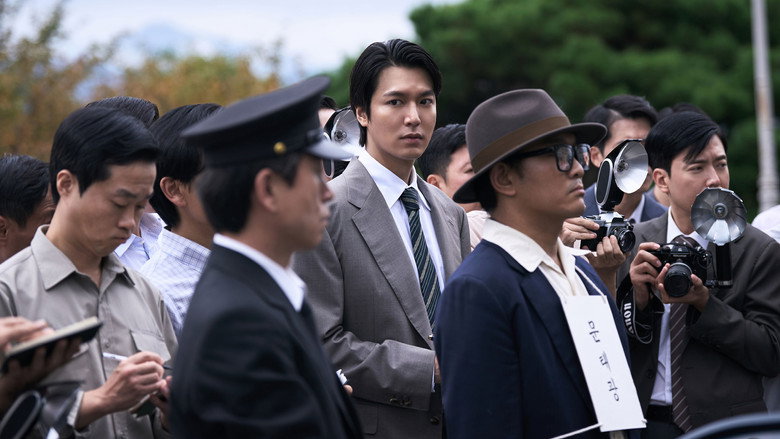
The story begins around the Liberation Day ceremony on August 15, 1974. Gunfire transforms a public celebration into an emergency. Cheol-gu and Young-il are witnesses; Jae-hwan becomes involved through the newspaper’s investigation. The initial violence supplies the narrative’s starting point, while the struggle over its explanation drives the story forward. [3, 6]
This structure matters. A witness remembers a particular sound or movement; an institution produces a complete statement. Those are different kinds of knowledge. RecapRush reads the film’s tension as the distance between what an individual noticed and what a powerful organization says everybody must accept.
2. The announced explanation leaves questions unanswered
The official trailer foregrounds inconsistencies involving shots and bullet holes. Cheol-gu questions the physical evidence, while Young-il describes another shot after the suspected gunman has been subdued. These are verified elements of the trailer’s fictional investigation; their inclusion does not settle the real case. [4]
A detective’s ordinary habit of checking details becomes politically dangerous. In RecapRush’s reading, Cheol-gu does not need to begin as a rebel for that conflict to work. His professional standards are enough. If examining evidence becomes disloyalty, the institution has changed the meaning of his job.
3. The newsroom becomes another contested space
Jae-hwan’s position gives him a different problem: finding information is only part of journalism. Yonhap’s review describes intelligence officials censoring stories inside the newsroom and authorities threatening to close it. Publication itself becomes something the characters must defend. [7]
The editor’s responsibility extends beyond his own courage. A decision to persist places coworkers under pressure, while surrendering leaves the public dependent on an account they cannot scrutinize. That makes editorial leadership an uncomfortable balance between protecting people and protecting the work those people exist to do.
4. Young-il’s investigation expands beyond his first assignment
Next Best Picture’s festival review describes Young-il traveling to Japan to corroborate information about the suspected shooter’s background. The young reporter’s path enlarges the inquiry beyond the original scene. [6]
For RecapRush, his most interesting tension is between access and responsibility. Being able to enter a room or obtain a lead can feel like personal advancement. The harder question is what he does with that advantage when the information threatens the institutions that permitted his access in the first place.
5. Pressure reaches Cheol-gu’s family
Yonhap describes a particularly disturbing incident: Cheol-gu’s son briefly disappears and returns with a shaved head, explaining that someone presented as his father’s friend took him for treats. The episode functions as an implicit warning. [7]
The detail turns ordinary kindness into a threat. A treat should signal care; here it demonstrates that someone can reach a child. RecapRush reads this as coercion designed to make the target supply his own fear. The aggressor does not need to state every possible consequence because a frightened parent can imagine them.
6. Resistance becomes a shared responsibility
Festival reviews describe separate investigative paths, escalating intimidation, and a growing emphasis on defending a free press. They establish the direction of the drama without providing an adequately documented complete final sequence. [8, 9]
The guide therefore stops short of naming a mastermind or inventing who survives, who publishes the decisive story, or exactly how each subplot closes. The verified arc is enough to locate the central moral conflict: the investigators must decide whether pressure changes what they believe or only what it costs to act on that belief.
Cast + TMDB
Cast and Characters

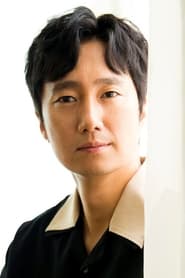




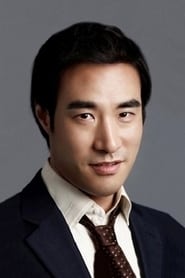



The portrait gallery links credited performers to their RecapRush profiles using TMDB person records. Yoo Hae-jin is listed by TMDB under the alternate romanization Yoo Hai-jin. He plays Park Cheol-gu; Park Hae-il plays Kim Jae-hwan; Lee Min-ho plays Han Young-il. Supporting records displayed here include Choi Yu-ri as Choi Seung-hwa, Ryu Hye-young as Seo Yoon-hee, and Kim Dae-myung as Man-seob. [1]
The three leads represent different responsibilities rather than interchangeable investigators: physical evidence, editorial judgment, and reporting in the field. Their cooperation lets one person’s question become another person’s task.
Ending Explained: What Is Verified
What can we responsibly say about the ending?
Next Best Picture describes an abrupt resolution followed by an explanatory end-credit scroll. Geeks of Color’s review identifies the final act’s emphasis on press freedom. These accounts support discussion of the conclusion’s thematic direction, but not an exact reconstruction of its last scenes. [6, 9]
More from RecapRush
 Colony (2026) Movie Recap & Ending Explained: Why the Hive Turns Against Seo
 The Fix (2026) Recap & Ending Explained: Why Clay Refuses to Leave Tucker Behind
 Evil Dead Burn (2026) Recap & Ending Explained: Why Alice Must Kill the Family Story That Trapped Her
RecapRush interpretation: a conclusion centered on press freedom shifts attention from the satisfaction of solving a mystery to the conditions that make investigation possible. Even a correct answer is fragile if nobody can examine or circulate it. That is an ethical reading of the documented emphasis, not a claim that the film proves an undisclosed historical culprit.
Does the movie solve the actual 1974 case?
It should not be treated as doing so. In an interview reported by SBS, Hur explained that he wanted to express the emotions of people living in the period rather than unveil a previously hidden historical truth. The filmmakers also distinguished cinematic imagination from factual claims in their later public response. [3, 10]
RecapRush Interpretation
The strongest way to understand these three men is through the promises their occupations make. A detective promises to examine evidence. An editor promises that public importance will matter more than convenience. A reporter promises to ask the next question. The film’s pressure tests whether those promises still mean anything once fulfilling them becomes expensive.
Cheol-gu’s conflict is especially sharp because loyalty offers him a language for obedience and a language for resistance. He can serve his country by trusting its institutions, or serve it by insisting those institutions answer questions. RecapRush reads his struggle as a painful effort to separate an ideal from the people claiming exclusive ownership of it.
Jae-hwan’s authority has a different burden. An editor cannot outsource every risk to younger colleagues and call that principle. Young-il, meanwhile, has to learn that visibility and usefulness are not identical. A reporter can become important by being seen; he becomes responsible by checking what others would prefer remain unseen.
Deep Analysis & Key Themes
The family is part of the political story
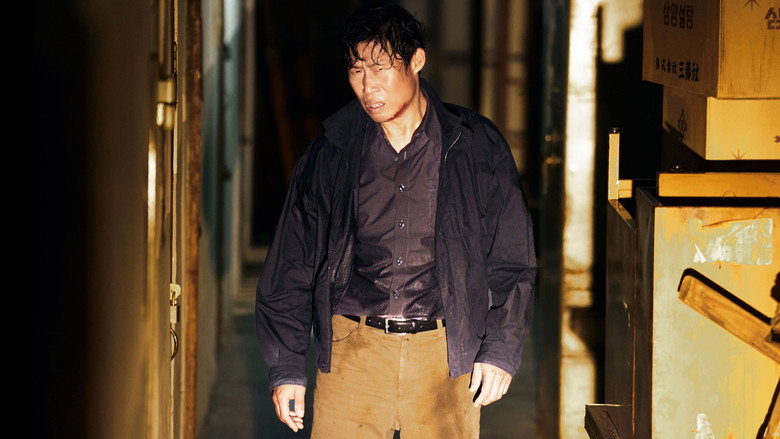
The warning involving Cheol-gu’s child makes a professional conflict domestic. The practical choice becomes whether to keep working when the cost may fall on someone who never consented to the danger. That does not automatically make persistence heroic or retreat cowardly. It makes both choices emotionally legible.
Censorship changes the meaning of an empty page
When publication is controlled, an absent report no longer proves that nothing happened. It may show that someone succeeded in preventing a report from appearing. RecapRush’s reading of the newsroom conflict is that censorship attacks the reader’s ability to distinguish silence from absence.
This creates a useful question for the audience: are we judging the newspaper by the information it possesses, the information it prints, or the forces determining the difference?
Cooperation protects inquiry from a single point of failure
The three professions bring different tests to the same material. An observation can suggest a question without supplying an answer. Reporting can corroborate a lead without proving every implication. Editing can decide that something deserves publication while keeping uncertainty visible. Their alliance becomes persuasive when those distinctions remain intact.
Historical atmosphere and historical proof are different achievements
A convincing costume, newsroom, or street can make a fictional encounter feel immediate. It cannot make that encounter documented history. The film’s period texture invites emotional understanding; the reader still needs separate evidence for claims about real responsibility. That distinction preserves both the value of drama and the seriousness of the event it draws upon.
What Most Viewers Missed
The parentheses are a question, not a verdict
The exact title is The Assassin(s). Its uncertain plural invites the audience to ask about the scope of responsibility. RecapRush reads that typography as permission to question the narrative’s apparent simplicity. It is not evidence that multiple historical gunmen have been established.
Young-il’s access is not the same as independence
But Why Tho?’s review notes that the rookie’s social status opens doors. That advantage gives his decisions greater weight: access can help an investigation, but comfort can also make confronting power harder. [8]
The tiny details carry the largest ethical questions
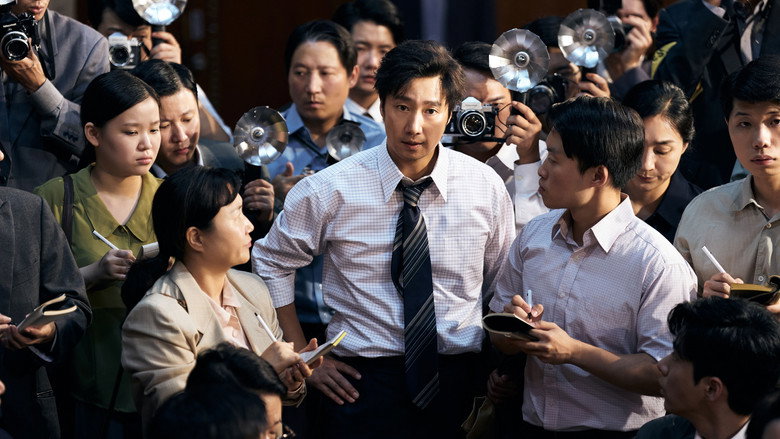
A sound, a missing piece of evidence, a censored story, a child’s haircut: the documented material gives the film’s larger conflict concrete form. RecapRush’s interpretation is that these details matter because each asks the same practical question: will someone acknowledge what is directly in front of them when doing so has consequences?
Mid/Post-Credits
Reported credit material: Wikitree reports one credit-associated archival/news clip, based on audience accounts. Next Best Picture separately mentions an explanatory end-credit scroll. These descriptions should not be collapsed into a precisely timed, independently confirmed post-credit scene. [6, 11]
Stay through the credits if you want the contextual material. No verified source used here establishes a sequel teaser. Archival footage can document the underlying event without authenticating the film’s fictional investigation.
Final Thoughts
The Assassin(s) offers a useful and unsettling distinction: believing in a country does not require believing every statement made in its name. Its detective and reporters turn that distinction into a problem with personal costs.
RecapRush’s reading favors the human stakes over the temptation to turn a thriller into a historical verdict. The question that travels beyond the film is concrete: when keeping quiet becomes the safest option, who will still do the work that lets somebody else ask a question?
FAQ
Is The Assassin(s) a 2026 Korean movie?
Yes. This article covers Hur Jin-ho’s 암살자(들), TMDB movie 1418428, released in South Korea on September 23, 2026. It is not another film or series called The Assassin.
Is it based on a true event?
Its starting point is the August 15, 1974 shooting that killed Yuk Young-soo. Its protagonists and investigative narrative include fictionalization. Treat specific conspiracy propositions as film material unless independently documented.
Who are the three investigators?
Park Cheol-gu is the detective, Kim Jae-hwan the newspaper editor, and Han Young-il the rookie reporter, played by Yoo Hae-jin, Park Hae-il, and Lee Min-ho respectively.
Is this a full ending explanation?
This is a verified story analysis with a limited discussion of the ending’s reported thematic direction. It does not invent a complete final scene, culprit reveal, or character fate unavailable in the reliable sources.
Is there an official trailer?
Yes. The main trailer linked above is uploaded by Hive Media Corp’s hivemedia_corp YouTube channel.
Are the missing-bullet clues proven historical facts?
They are discussed here as elements of the trailer and fictional investigation. The film’s dramatic use of them does not by itself establish a historical conclusion.
Join the conversation
What did you think of the ending? Share your interpretation. Spoilers may appear below.
This product uses the TMDB API but is not endorsed or certified by TMDB.
No comments yet. Start the conversation.