
RECAPRUSH MOVIE GUIDE
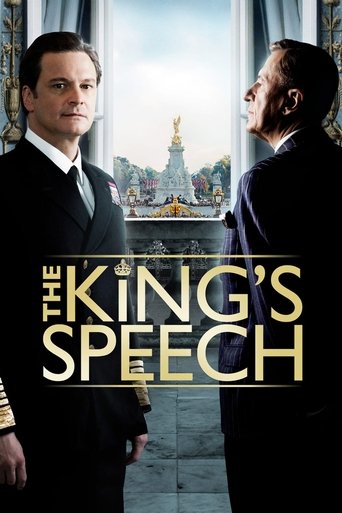
The King's Speech (2010)
Directed by Tom Hooper
The King's Speech tells the story of the man who became King George VI, the father of Queen Elizabeth II. After his brother abdicates, George ('Bertie') reluctantly assumes the throne. Plagued by a dreaded stutter and considered unfit to be king, Bertie engages the help of an unorthodox speech therapist named Lionel Logue. Through a set of unexpected techniques, and as a result of an unlikely friendship, Bertie is able to find his voice and boldly lead the country into war.
Overview, poster, and credits from TMDB.
Read and watch our full recap ↓FROM THE RECAPRUSH LIBRARY · FULL RECAP
The King's Speech (2010) Recap & Ending Explained: Why Bertie Still Needs Lionel
14 min read · Estimated reading time— views
Intro + RecapRush Viewpoint
The King's Speech builds its climax around something most historical dramas treat as preparation: a man reading a statement. The important question is not whether George VI will win a war in the broadcast booth. It is whether he can address frightened listeners without being defeated by his own expectation of humiliation.
RecapRush interpretation: The ending is strongest when read as a victory of supported participation, not a miracle cure. Bertie does not become worthy of attention because his speech becomes perfect. He learns to accept the conditions that let him speak, including another person's help. That distinction keeps the friendship more interesting than a simple teacher-and-pupil success story.
Spoilers and editorial note: This AI-assisted, source-checked guide covers Tom Hooper's complete 2010 film, not every event in the historical George VI's life. It draws on the screenplay, production and educational material, published scene accounts and historical checks; it does not claim a first-hand screening. Interpretations are labelled. The film's period treatments are dramatic material, not present-day clinical guidance.

Table of Contents
Quick Facts
- Film: The King's Speech (2010)
- Director: Tom Hooper
- Screenwriter: David Seidler
- Central roles: Colin Firth as George VI; Geoffrey Rush as Lionel Logue; Helena Bonham Carter as Queen Elizabeth
- Runtime reference: 118 minutes, matching TMDB and the approximately 118-minute BBFC cinema record
- TMDB genres: Drama, History
- TMDB movie ID: 45269
- Scope: A dramatized journey from the 1925 Wembley address to the September 1939 wartime broadcast
The year is 2010 even where a local theatrical listing uses 2011. The British Council identifies it as a 2010 feature. Its database lists a shorter runtime, so this guide uses the 118-minute reference rather than suggesting every listing describes an identical edition.
Full Spoiler Recap
Wembley makes a private difficulty publicly inescapable
Prince Albert, Duke of York, known to his family as Bertie, struggles through an address at the British Empire Exhibition. His wife Elizabeth sees how painful the occasion is. A royal position gives him access to an audience but no protection from the effort of speaking before it.
Earlier attempts to help him have failed. Elizabeth seeks out Lionel Logue, an Australian practitioner whose manner is markedly different from the formal deference surrounding the family. Lionel insists that treatment happen on his terms, in his consulting room, with a degree of equality Bertie finds intrusive.
A recording challenges Bertie's account of himself
Lionel asks him to read Shakespeare while loud music plays through headphones, recording the result. Bertie leaves dissatisfied. Later, hearing the recording reveals that his reading was much more fluent than he believed.
He returns for sessions. Physical exercises become part of the work, but Lionel also wants to discuss personal experience. Bertie initially tries to separate speech from private life; the growing relationship makes that boundary harder to maintain.
RecapRush interpretation: The record matters because it introduces evidence Bertie's immediate self-assessment cannot supply. It does not prove he was pretending, nor that every future difficulty can be switched off. It makes room for the possibility that his expectations are incomplete. The film gives him a reason to return before asking him to make a larger emotional commitment.

The throne becomes a possibility neither man can ignore
After George V dies, Bertie's older brother David becomes Edward VIII. His commitment to Wallis Simpson creates a succession crisis. In the film, David also mocks Bertie's speaking difficulty, reinforcing an old hierarchy between the brothers.
When Lionel suggests Bertie could be king, their developing friendship breaks down. Bertie hears an unacceptable intrusion into royal duty and lashes out at Lionel's social standing. The sessions stop.
Edward ultimately abdicates, and Bertie becomes George VI. The feared responsibility is no longer hypothetical. He returns to Lionel, and the relationship resumes under a different pressure: the man asking for help now occupies the office he believed he could never fill.
Westminster Abbey tests whether trust can survive embarrassment
Before the coronation, Lionel's lack of formal medical qualifications becomes a crisis. Bertie feels exposed and questions the basis of their work. Lionel explains that his experience includes helping men whose speech had been affected by the First World War, and that he has not claimed the medical title others have assigned him.
During the confrontation, Lionel occupies the coronation chair, provoking Bertie to insist on being heard. The declaration “I have a voice” is the scene's dramatic turn. Bertie retains Lionel rather than allowing the Archbishop's preferred alternative to displace him.
RecapRush interpretation: The scene does not establish that qualifications are worthless. It stages Bertie's choice between abandoning a relationship because it is socially embarrassing and assessing what that relationship has actually made possible. Its risky provocation belongs to this drama, not a universal model for treating another person's vulnerability.
A new war requires a different kind of address
In September 1939, war creates the occasion for the final broadcast. Lionel comes to Buckingham Palace. He helps Bertie prepare, then remains with him as the king speaks into the microphone.
The sequence makes the broadcast an encounter between two men even as it reaches a much larger audience. Lionel guides the rhythm while Bertie delivers the address. Listeners are shown receiving it beyond the room. The speech is completed, and Bertie emerges to a public reception with his family.
The ending also preserves a small but decisive qualification: the men acknowledge that some stammering remained. The epilogue identifies their continuing friendship and Lionel's continuing assistance during wartime speeches. Completion has not made the support relationship obsolete.
Cast and Characters
Cast and Characters






The TMDB-linked cast gallery supplies actor profiles above this character discussion; it is not a second cast table.
Bertie / George VI: His dramatic obstacle is not a lack of things to say. It is the expectation that speaking will expose him to correction, ridicule or failure. His difficult behavior toward Lionel matters because it prevents the story from treating him as a purely passive recipient of kindness.
Lionel Logue: His insistence on informality can be helpful and abrasive at once. He is most valuable when he makes space for Bertie's voice, rather than when he appears to enjoy puncturing royal manners. The ending measures his achievement by the other man's action.
Elizabeth: Her persistence connects discouragement to another attempt. She neither performs the broadcast for Bertie nor waits for confidence to appear spontaneously. Her role highlights the practical labor of arranging help and staying present when that help initially encounters resistance.
David / Edward VIII and George V: In the film's family structure, the brother and father help make speech feel like an examination. Their authority has a different emotional effect from Lionel's. The same man can therefore sound and behave differently depending on who is listening.
Ending Explained
Does Bertie overcome his stammer completely?
No. The ending demonstrates that he can carry out this broadcast, not that every trace of the difficulty has disappeared. His light exchange with Lionel afterward explicitly resists a flawless-cure reading.
RecapRush interpretation: The distinction changes the moral of the film. A perfection-based ending would imply that the public can trust him only once the difference has vanished. This ending lets the difference remain audible while changing its power over the occasion. His success is an action he completes, not a new category of person he has become.
Why does Lionel stay in the room?
His presence gives the king a specific listener rather than an unimaginable mass of judges. The support is immediate and responsive, not just a lesson remembered from an earlier scene.
RecapRush interpretation: A microphone creates distance: Bertie cannot see the people he addresses or read their reactions. Lionel makes that distance manageable without eliminating it. He functions as a bridge, not a substitute speaker. Needing that bridge does not make the achievement counterfeit; the film's whole narrative has shown why isolated willpower was an inadequate demand.
More from RecapRush
 The Man with the Bag (2026) — Official Teaser & Movie Preview
 Obsession (2026) Recap & Ending Explained: Why Nikki’s Freedom Arrives Too Late
 Masterplan (2026) Recap & Ending Explained: Why Roger’s Fake Family Becomes a Real Choice
Why does the balcony follow the private broadcast?
The family appears before an applauding crowd after the speech. A private effort has become publicly recognizable.
RecapRush interpretation: The sequence changes what public visibility means. At Wembley, being seen and heard exposes Bertie to anticipated failure. At the palace, the crowd can receive what he has already managed to communicate. The balcony does not certify that royal hierarchy is fair. It closes the film's particular emotional circuit between being displayed before people and finding a way to address them.
Is the speech a declaration of victory?
No. Its historical date is September 3, 1939, when Britain entered the war against Germany. The address asks people to face a difficult collective trial; it does not announce that trial's successful conclusion.
RecapRush interpretation: This is why the ending's uplift carries a limit. Bertie's personal breakthrough occurs at the beginning of a public catastrophe. The film can resolve the question of whether he will speak without resolving what the listeners must endure next. Confidence is useful here because the future remains dangerous, not because danger has gone away.
Original Interpretation: Authority Begins with Listening
The movie places two incompatible uses of authority beside one another. One tells a person how he ought to sound, then reads failure as insufficient effort. The other changes the circumstances of the attempt and pays attention to what happens. Bertie has spent much of the story expecting the first kind, including when Lionel offers the second.
The friendship becomes persuasive because it is not effortless. Bertie can retreat into rank when a conversation threatens him. Lionel can push too far when certainty about his method outpaces tact. Neither man's social position automatically produces the right response. Repair requires them to return to a relationship they could more easily dismiss.
There is also an unresolved political tension. The consulting room's temporary equality makes royal performance possible; it does not abolish the institution that puts the two men on unequal terms outside it. The film's warmth can be enjoyed without mistaking a friendship across class for a redistribution of power. Lionel's contribution becomes publicly useful while remaining largely invisible to the radio audience.
That invisibility is not necessarily a defeat. It is also what useful collaboration often looks like: the listener hears a person speaking, not every rehearsal, disagreement and adjustment that made the speech achievable. The ethical question is whether the speaker recognizes the help. Bertie's gratitude provides the film's answer more clearly than the crowd's applause does.
Character and Theme Analysis
Anger is both a release and a weapon
The sessions include Bertie's unusually fluent swearing. In isolation, the sequence can look like a joke about royal decorum. Its more revealing contrast is between anger directed at a blocked word and anger directed at Lionel's supposed inferiority.
RecapRush interpretation: An emotion can loosen one constraint while strengthening another. Bertie may find words when he stops policing propriety, yet still use those words to police class boundaries. Progress in one register therefore does not excuse cruelty in another. The later return to Lionel matters as a moral adjustment as well as a practical necessity.
Elizabeth makes persistence concrete
Elizabeth's search is a counterweight to the expectation that a king should simply command himself into competence. She treats another attempt as worthwhile even when previous attempts have produced disappointment.
RecapRush interpretation: The movie's account of courage is broader than the final speaker. It includes seeking a practitioner, negotiating awkward conditions, and not treating a loved one's embarrassment as a reason to abandon them. Those actions do not attract the same applause, but the plot cannot reach the microphone without them.
A voice is not the same thing as effortless fluency
The Abbey confrontation links being heard to personhood before the final address links it to office. That order is important.
RecapRush interpretation: If Bertie's only claim were that kings deserve an audience, the story would offer little to anyone outside the palace. The more transferable idea is that difficulty getting words out does not make a person's thoughts disposable. The film is limited by its exceptional subject, but its most generous reading refuses to make that subject's rank the source of his human value.
Meaningful Details Worth Noticing
The record can be replayed. Unlike a fleeting impression of success or failure, it provides something Bertie can revisit. In our reading, that makes it a structural alternative to the memory of public humiliation: an experience can have evidence beyond the feeling it leaves behind.
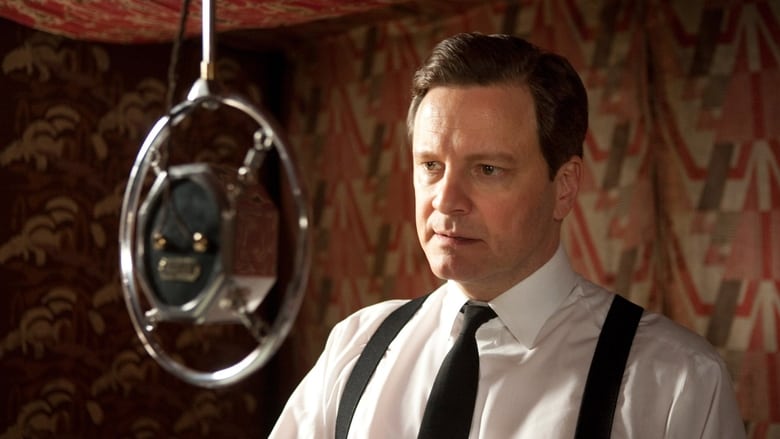
The microphone never becomes an ordinary household object. The inspected promotional artwork isolates a mouth beside its heavy metal frame. The design communicates the confrontation without needing a palace or battlefield: the distance between person and apparatus is enough.
The music supplies momentum without doing the speaking. The climactic use of Beethoven's Seventh Symphony, noted in contemporary reviews, gives the audience a rhythmic experience. Our reading is that its forward motion supports the sequence while leaving the human pauses essential. The emotional effect should not be confused with a documentary record of what radio listeners heard.
The coronation is not the final test. A crown establishes an office, but the movie reserves its climax for communication. The distinction shifts attention from possession of status to an action performed for others.

Historical Scope and Limits
This is a historical drama, not a verbatim account of therapy sessions. David Freeman's review for the International Churchill Society identifies compressed chronology and altered relationships, including the film's handling of Churchill. It also distinguishes the real earlier progress with Logue from the movie's arrangement of events around the abdication crisis.
The Royal Archives confirms a coronation-day broadcast in May 1937. The 1939 climax should therefore not be described as George VI's first broadcast ever. It is the film's decisive wartime address. These distinctions preserve the emotional story without using it as a shortcut to historical certainty.
Credits-Scene Information
The specialist What's After the Credits? catalog reports no extra scenes during or after the credits for the standard film. The biographical closing information is an epilogue, not a sequel teaser. This guide has not independently screened every release or streaming edition.
Final Thoughts
RecapRush assessment: The King's Speech offers its most convincing resolution when assistance remains part of success. The last broadcast does not erase the earlier ordeal; it demonstrates a different way of meeting it. A king becomes able to address a nation because, first, he has become able to accept a listener.
The result is reassuring without having to mean that every problem has been solved. Bertie can speak. Lionel can help without taking his place. What comes after the broadcast is still uncertain, and that is precisely why getting through it matters.
FAQ
Why is Prince Albert called George VI?
Bertie is the family nickname of Prince Albert, Duke of York. He becomes king after Edward VIII's abdication and reigns as George VI. The change of name does not indicate a different character.
Was Lionel Logue a physician?
He was not a medical doctor. The film makes the mismatch between Bertie's assumptions and Lionel's qualifications a major confrontation. That plot point is not an argument for rejecting modern professional standards.
Does the film end with the coronation?
No. Its final major event is the 1939 wartime radio address, followed by the public reception and biographical epilogue.
Does the successful speech mean Bertie no longer stammers?
No. Residual difficulty is acknowledged, and continuing assistance is part of the ending. The achievement is delivering the address, not becoming permanently flawless.
Is the trailer a full version of the film?
No. The accompanying video is the film trailer published by eOnefilms. It is included for context after the article, not as a full-film stream.
Join the conversation
What did you think of the ending? Share your interpretation. Spoilers may appear below.
This product uses the TMDB API but is not endorsed or certified by TMDB.
No comments yet. Start the conversation.