
RECAPRUSH MOVIE GUIDE
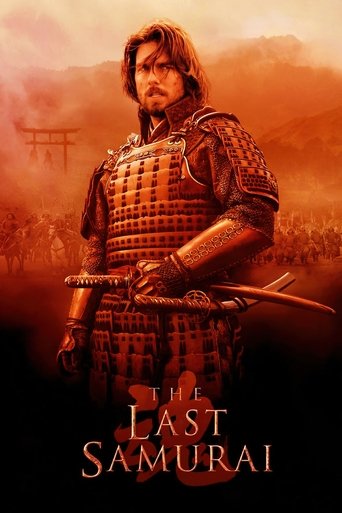
The Last Samurai (2003)
Directed by Edward Zwick
Nathan Algren is an American hired to instruct the Japanese army in the ways of modern warfare, which finds him learning to respect the samurai and the honorable principles that rule them. Pressed to destroy the samurai's way of life in the name of modernization and open trade, Algren decides to become an ultimate warrior himself and to fight for their right to exist.
Overview, poster, and credits from TMDB.
Read and watch our full movie recap ↓FROM THE RECAPRUSH LIBRARY · FULL MOVIE RECAP
The Last Samurai (2003) Recap & Ending Explained: Why Algren Must Live After Katsumoto Dies
14 min read · Estimated reading time— views
Intro + RecapRush Viewpoint
The hardest thing Nathan Algren does in The Last Samurai is survive. Fighting comes easily to him; finding a reason to wake up afterward does not. Edward Zwick's epic places a damaged American soldier inside a community he has helped wound, then asks whether learning to respect that community can become something more demanding than another beautiful excuse to die.
Tom Cruise's Algren and Ken Watanabe's Katsumoto make an unusually compelling pair because each recognizes something unfinished in the other. One has lost faith in the institutions he served. The other still believes in service, even as the government he honors turns against him. Their friendship does not erase that contradiction. It makes the contradiction personal.
RecapRush Viewpoint: The film's emotional center is the difference between a death that can be honored and a life that still requires repair. Katsumoto's final battle gives Algren a story worth preserving; returning to the village gives him a future that cannot be reduced to a battlefield legend.
Full spoilers ahead. This article covers the released 2003 film through its final scene. Film events, historical context, and RecapRush's interpretation are identified separately. The screenplay is a supporting reference, not proof that every draft detail appears in the finished movie.
Featured Image

Table of Contents
Quick Facts
- Exact title: The Last Samurai
- Release: December 5, 2003, United States
- Status: Released feature film
- Director: Edward Zwick
- Screenplay: John Logan, Edward Zwick, Marshall Herskovitz
- Story: John Logan
- Runtime: 154 minutes
- Verified TMDB genres: Drama, Action, War
- Distributor: Warner Bros.
- Principal setting: Japan in the 1870s; the story begins in 1876
- TMDB movie ID: 616
- Historical distinction: Nathan Algren and Katsumoto are fictional characters. The film draws on the era of the Meiji transformation and samurai rebellions, rather than reproducing one person's biography.
Full Spoiler Recap
1. A soldier becomes a salesman for the machinery that broke him
In San Francisco, Algren drinks heavily and performs military heroism for a weapons company. Memories of violence against a Cheyenne community haunt him. Colonel Bagley, associated with that past, offers him a lucrative job training Japan's imperial troops. Algren accepts despite his contempt for Bagley. Sergeant Gant accompanies him; translator Simon Graham becomes his guide in Japan.
The contradiction matters immediately: Algren understands what organized violence can do, yet sells that expertise again. His disgust has become a private wound rather than a boundary he is willing to defend.
2. An army is sent into battle before it is ready
Omura and Bagley push the conscripts into action against Katsumoto's rebels despite Algren's objections. The troops break under attack. Gant dies, and the wounded Algren is captured after fierce resistance. Katsumoto chooses to spare him.
Military competence has not protected Algren from serving an irresponsible command. The defeat also removes the assumptions that made him useful: he arrives as an instructor and must now become a student.
3. Taka's household forces him to confront a particular loss
Algren recovers in the village under Taka's care. She is Katsumoto's sister and the widow of the warrior Algren killed. Withdrawal, language learning, sword practice, and conversations gradually change his daily life. His relationship with Katsumoto deepens; affection develops between him and Taka.
This is more uncomfortable than a straightforward rescue romance. The person helping him recover has a reason to resent his continued presence. The film places the consequences of his violence inside the room where he sleeps.

4. The village cannot remain separate from politics
A nighttime attack threatens Katsumoto. Algren helps defend him and suspects Omura's involvement. When Katsumoto travels to Tokyo to meet the emperor, Algren goes with him. The imperial army has improved, but Katsumoto's political position has deteriorated. He is arrested; Nobutada suffers public humiliation over his samurai identity.
The journey exposes the limit of personal respect. Algren may have changed his view of Katsumoto, but the institutions deciding Katsumoto's future have not.
5. Choosing sides brings an irreversible cost
Algren rejects his former employment, survives an attack by imperial agents, and helps free Katsumoto. Nobutada is wounded during the escape and stays behind so the others can get away. His death leaves Katsumoto devastated. Algren persuades him to continue resisting and commits to fighting beside him.
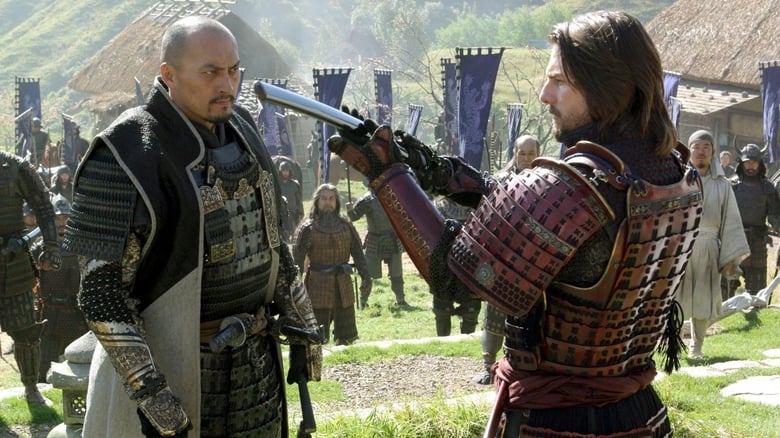
Taka dresses Algren in her husband's armor. What might otherwise look like a glamorous costume change carries a painful history: he enters battle wearing the material memory of a man he killed.
6. Strategy cannot overcome the final imbalance
The samurai initially exploit the imperial army's confidence through battlefield tactics. As their numbers fall and reinforcements approach, Katsumoto leads a final cavalry charge. Algren kills Bagley, but Gatling guns cut down the riders. The imperial commander stops the firing despite Omura's objections. Mortally wounded, Katsumoto dies by seppuku with Algren's assistance; the soldiers bow in respect.
The charge cannot be called a military victory. Its effect is on the witnesses. The film separates the government's capacity to destroy these men from its capacity to make their destruction feel morally acceptable.
7. A sword changes hands, and the story changes scale
Algren survives and brings Katsumoto's sword to the emperor during trade negotiations. The emperor refuses the proposed agreement and confronts Omura. Asked about Katsumoto's death, Algren offers to describe his life instead. Graham's closing narration acknowledges uncertainty about Algren's subsequent fate, while the final images show him returning to Taka's village.
The ending moves from public remembrance to private possibility. An emperor receives a symbol; a wounded man seeks somewhere to live.
Cast + TMDB
Cast and Characters

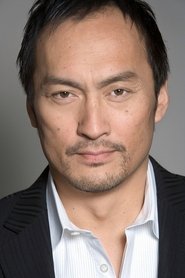


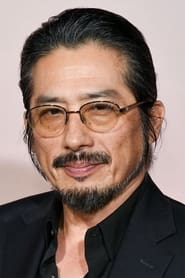


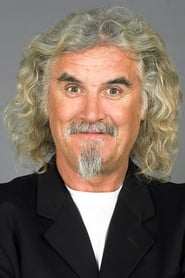
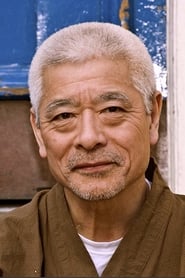

The cast gallery uses the credited records for TMDB movie 616, including actor portraits, character names, and RecapRush actor-profile links. The movie record credits Tom Cruise as Nathan Algren, Ken Watanabe as Moritsugu Katsumoto, Koyuki as Taka, Hiroyuki Sanada as Ujio, and Timothy Spall as Simon Graham.
Cruise's uneasy stillness and Watanabe's controlled curiosity make their conversations feel like exchanges between people, rather than lectures delivered by a wise teacher to a grateful visitor. Koyuki gives the household scenes their essential tension: helping someone does not mean his arrival has stopped hurting.
Ending Explained
Does Algren die?
He survives the battle and appears afterward before the emperor. That much is directly established. The closing narration then treats his later whereabouts as uncertain, while the image offers a return to the village. The strongest straightforward reading is that he finds peace there. A more cautious reading recognizes Graham's hopeful framing. Neither supports presenting Algren's death as a revealed twist.
The uncertainty concerns the closing account of his later life, not whether the palace meeting happens after his battlefield injuries. There is no need to invent a ghost, an afterlife, or a hidden timeline to explain the sequence.
Why does Katsumoto die while Algren lives?
Katsumoto's death completes his chosen response to defeat. Algren's survival serves a different narrative purpose: someone must carry the memory beyond the battlefield. RecapRush's reading is that dying beside Katsumoto would offer Algren a kind of final absolution the film instead makes him earn through continuing responsibility.
That does not make Katsumoto's decision a universal moral ideal. It is the conclusion of this character's code, dramatized by a romantic historical epic. The loss remains tragic even when the camera gives it dignity.
What do the blossoms mean?
Katsumoto's attention to blossoms returns as he dies. His final recognition that they are all perfect revises the earlier search for a rare perfect blossom. Our interpretation is that beauty stops being an exception he must locate and becomes something he can recognize in impermanent life.
That reading connects the motif to the ending's emotional movement: the value of a life is not confined to a flawless result. It is also found in attention, relationships, and the fleeting moments that cannot be held indefinitely.
Does the emperor reject modernization?
The scene rejects a particular agreement and Omura's dominance; it does not show Japan abandoning all modern institutions. The dramatic resolution asks for continuity with cultural memory while moving forward. Describing it as the complete defeat of modernization would erase the compromise the ending is trying to imagine.
More from RecapRush
 Thunderbolts* (2025) Recap & Ending Explained: They Save Bob, but Who Owns Their Victory?
 The Social Reckoning (2026) Review & Ending Explained: Why Exposing Facebook Is Only the Beginning
 PAW Patrol: The Dino Movie (2026) Recap & Ending Explained: How Marshall Saves Dino Island
The palace scene is a fictional resolution. It should not be cited as evidence that the historical Meiji emperor made this decision after receiving a sword from an American veteran.
Who is the last samurai?
The title need not function as a certificate awarded exclusively to Algren. Katsumoto and his companions embody the threatened warrior world, while Algren becomes its witness and participant. Reading the title collectively avoids turning the Japanese characters into supporting evidence of the American protagonist's greatness.
RecapRush Interpretation
Algren begins with a familiar defensive belief: because he has seen terrible things, he no longer owes the world anything. Cynicism lets him condemn his employers without refusing their money. The village interrupts that bargain. People become specific, and consequences become impossible to keep at a professional distance.
His transformation is therefore most persuasive when it involves humility, not expertise. A man accustomed to being paid for knowing how to fight discovers the discomfort of being watched, corrected, and dependent. The community does not need him to arrive as its moral authority. He needs to learn how to exist without presenting himself as one.
The ending's move toward Taka also changes the meaning of courage. A last stand can make courage visible in a few spectacular minutes. Living among people connected to your own violence requires a quieter kind of accountability. Our reading is that Algren's possible peace is valuable precisely because it is not another medal.
Deep Analysis & Key Themes
Guilt becomes useful only when it changes a choice
Algren's distress initially circles back into himself. Alcohol and contempt do not prevent him from accepting another military contract. They make him miserable while leaving his practical relationship to power largely intact.
His later refusal matters because it costs him something. He can no longer occupy the comfortable position of a skilled outsider who disapproves of the mission while remaining available to carry it out. The film links moral repair to changed allegiance, rather than to the intensity of remorse alone.
Taka carries a burden the redemption story risks overlooking
It is easy to watch Algren heal and forget who provides the conditions for that healing. Taka must manage the proximity of the man responsible for her husband's death. Compassion asks more of her than admiration asks of him.
This makes the romance both moving and ethically uneasy. If her pain becomes only a stepping stone in his recovery, the story reproduces the imbalance it wants to overcome. An attentive reading keeps her grief present even when the film turns toward reconciliation. Forgiveness is a gift she can offer, not a prize his improvement automatically earns.
Katsumoto's certainty contains a vulnerability
The same code that gives Katsumoto composure can narrow his available future. He understands service through a deeply established identity, making institutional rejection more than a political setback. It threatens the language through which he knows himself.
This is why his bond with Algren is richer than simple mentorship. Algren has already suffered the collapse of a military identity. Katsumoto supplies a model of discipline; Algren supplies an unsettling example of what happens when the institution and the moral ideal separate.
Machines and traditions are moral shortcuts the film asks us to examine
The contrast between industrial weaponry and the village's rhythms is emotionally powerful. It makes violence look efficient in one world and meaningful in another. But the distinction should not be accepted without question. A sword does not make violence virtuous, and a machine does not explain every political motive.
The useful question is who chooses the violence, who bears its consequences, and what purpose it serves. The film becomes more interesting when its beautiful images are treated as arguments to consider rather than historical truths to absorb.
The witness has power after the warrior loses it
The battlefield and palace perform opposite movements. First, bodies are destroyed by force. Later, a remembered life unsettles a political transaction. Algren cannot reverse the first event, but he can influence how it enters public memory.
The sword functions differently in those spaces. On the field, it is a weapon with limited reach. Before the emperor, it becomes evidence of an obligation. Its power has shifted from what it can cut to what it asks someone to remember.
Historical romance is not historical explanation
Historian Jonathan Dresner identifies major problems with the film's account of the Meiji military and the Satsuma rebellion. In particular, historical rebels used modern firearms and artillery; many samurai participated in building the modern state. Algren is not a historical American savior of the samurai.
That corrective does not prevent the film from moving you. It changes the terms on which you should trust it. Its conflict is designed to explore guilt, belonging, and honorable memory, and it compresses a complex political transformation into personalities and symbols. Enjoying that design does not require treating the compression as a history lesson.
What Most Viewers Missed
The film gives Algren two audiences. The opening weapons demonstration asks him to make violence marketable. The final imperial audience asks him to make a dead man's life intelligible. His ability to tell a story has moved from salesmanship toward witness.
Learning creates a different relationship to time. Drill, recovery, language, and conversation slow the movie around Algren. Our reading is that repetition gives him a way to inhabit the present instead of continually retreating into traumatic memory.
The last charge does not solve the practical problem. Its emotional force can disguise its failure to preserve the fighting community. The aftermath asks what remains when courage cannot deliver the desired outcome.
Taka's household is not simply the opposite of war. War is already inside it through loss and obligation. The possibility of home comes from confronting that history, not pretending that the house exists outside it.
The ending changes the question from death to life. Algren's response to the emperor refuses to let Katsumoto be defined solely by the manner of his death. That shift is also a guide to watching the movie: the conversations and domestic scenes matter as much as the final assault.
Mid/Post-Credits
The released film has no post-credits scene, as confirmed by the ending guide listed in References. The narrative closes with the village imagery before the end credits. There is no verified sequel teaser or additional ending to incorporate into this explanation.
Final Thoughts
The Last Samurai remains compelling because friendship does not protect its characters from incompatible duties. Algren and Katsumoto can understand each other, improve each other's lives, and still arrive at a battlefield where understanding cannot save them both.
Its historical simplifications deserve scrutiny, especially when an American's recovery dominates a story about Japan. Yet its strongest emotional insight survives that criticism: honoring someone is more difficult than admiring a spectacular death. It means paying attention to the life that preceded it and accepting responsibility for what comes next.
Algren's final possibility is modest compared with the battle's scale. A village. A person who recognizes him. An opportunity to stop performing heroism and begin living. That is why the quiet ending matters.
FAQ
Is The Last Samurai based on a true story?
It is historical fiction informed by nineteenth-century Japanese change and samurai rebellion. Its central characters and Algren's personal journey should not be presented as a documented biography.
Does Katsumoto survive?
No. He is mortally wounded in the final battle and dies with Algren's assistance. The emperor's later response preserves his memory, not his life.
Does Algren return to Taka?
The closing image shows a return to the village, while Graham's narration frames Algren's later fate with uncertainty and hope. A reunion is the natural emotional reading; details of a marriage or later family life are not established.
Why is Algren wearing red armor?
Taka gives him her late husband's armor. Within the story, it links his new commitment to a loss he helped cause. RecapRush reads it as a responsibility he carries, rather than proof that the past has been erased.
Is Katsumoto the same person as Saigō Takamori?
No. Katsumoto is fictional and draws on the historical figure associated with the Satsuma rebellion. The film's battles, relationships, and political conclusion should not be transferred directly into Saigō's biography.
Where can I find the verified movie and cast record?
Use TMDB movie 616. The gallery on this page links the credited actors to their RecapRush profiles.
Join the conversation
What did you think of the ending? Share your interpretation. Spoilers may appear below.
This product uses the TMDB API but is not endorsed or certified by TMDB.
No comments yet. Start the conversation.