
RECAPRUSH MOVIE GUIDE
Young Washington (2026)
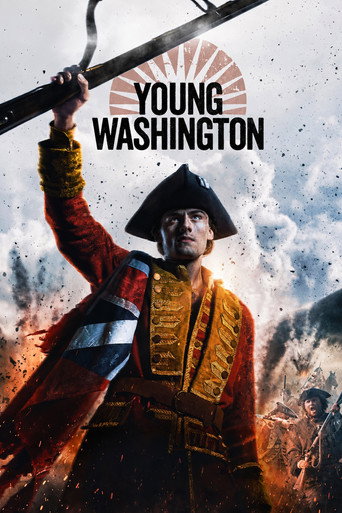
Before he led a nation, George Washington was a young soldier thrown into a global conflict. With alliances crumbling and war closing in, he must choose who to trust and confront the leader he's becoming.
Overview, poster, and credits from TMDB.
Read and watch our full recap ↓FROM THE RECAPRUSH LIBRARY · FULL RECAP
Young Washington (2026) Recap & Ending Explained: The Battle That Forged a Future Leader
18 min read · Estimated reading time— views
Intro + RecapRush Viewpoint
Before George Washington became the commander of the Continental Army or the first President of the United States, he was a young colonial officer trying to prove that birth and status did not have to decide his future. Jon Erwin's Young Washington focuses on that earlier, less mythologized period: the years when Washington was still learning how easily ambition, courage and bad judgment could coexist. [1, 2]
William Franklyn-Miller plays Washington as a restless young man who wants recognition from the British military establishment. The film follows his movement from surveying and colonial networking into the dangerous frontier politics of the Ohio Country, the defeat at Fort Necessity, the death of his half-brother Lawrence, and finally the disastrous Braddock Expedition of 1755. [2, 3]
Rather than presenting Washington as a finished icon, the movie uses failure as its organizing idea. Every defeat removes another layer of youthful certainty. The climactic Monongahela battle becomes the moment when he begins to understand that leadership is not the same thing as personal advancement. [3, 4]
RecapRush Viewpoint: Young Washington works best when it separates the future legend from the young man still making mistakes. Its ending is not really about proving that Washington was destined for greatness. It is about showing how repeated failure forces him to redefine what greatness should mean.
Full spoilers ahead: This article covers Washington's early ambitions, Lawrence Washington, Robert Dinwiddie, Fort Necessity, the French and Indian War, General Edward Braddock, the Monongahela ambush, the bullet holes in Washington's coat and hat, the film's providence theme, the ending text and the closing historical text.
Featured Image
Table of Contents
Quick Facts
- Title: Young Washington
- Year: 2026
- Director: Jon Erwin
- Writers: Jon Erwin, Tom Provost and Diederik Hoogstraten
- Genres: History, war, drama
- U.S. theatrical release: July 3, 2026
- Runtime: 121 minutes
- Rating: PG-13
- Distributor: Angel Studios
- Production companies: Wonder Project, 10 Ton Productions and 2521 Entertainment
- Principal cast: William Franklyn-Miller, Ben Kingsley, Mary-Louise Parker, Leo Hanna, Mia Rodgers, Joel Smallbone, Kelsey Grammer and Andy Serkis
- TMDB movie ID: 1308767
- IMDb ID: tt32104007
Current listings identify Young Washington as a 121-minute historical war drama centered on Washington's early military career during the French and Indian War. [1, 6, 7]
Full Spoiler Recap
1. George grows up believing status should not define him
The film begins before Washington becomes a military figure. After the death of his father Augustine, George loses the path toward the kind of formal education available to wealthier members of colonial society. His older half-brother Lawrence becomes an important mentor, teaching him surveying and introducing him to the networks of land, military service and influence that shape colonial Virginia. [3]
George's frustration is not simply poverty. He is close enough to powerful men to understand the rules of advancement, yet far enough outside the British aristocratic system to feel those rules working against him. This creates the ambition that drives the first half of the movie. He does not merely want to serve. He wants to be recognized.
2. Lawrence becomes George's model of military adulthood
Lawrence Washington represents the life George hopes to enter. He has military experience, social confidence and connections that George lacks. The brothers' relationship gives the film an emotional foundation before the war begins. Lawrence repeatedly encourages George to think beyond the limits other people place on him. One of the movie's recurring metaphors compares George to a pawn that may eventually defeat a king. The idea flatters his ambition at first. Later, it becomes a lesson about responsibility rather than status.
3. Lord Fairfax and Virginia's elite open doors — but not all the way
Through surveying and family connections, George enters the orbit of Lord Fairfax and other influential Virginians. Kelsey Grammer's Fairfax is not presented as a simple benefactor. He recognizes George's ability but also understands the rigid social hierarchy around him. The film repeatedly shows George discovering that talent and ambition do not automatically erase questions of class, colonial status or patronage. That frustration pushes him harder. It also helps explain why early military recognition matters so much to him.
4. Robert Dinwiddie gives George his first major frontier mission
Ben Kingsley's Governor Robert Dinwiddie sees strategic use in the ambitious young Washington. British and French interests are colliding in the Ohio Country, where multiple Indigenous nations are also protecting their own political and territorial interests. George receives a mission connected to British claims in the region. The assignment gives him the opportunity he has wanted. It also places him inside a conflict far more complicated than his desire for promotion.
5. The frontier reveals the limits of confidence
George enters the wilderness expecting courage and discipline to carry him forward. Instead, he discovers a landscape where intelligence depends on local knowledge, alliances are unstable and European military assumptions do not control events. Christopher Gist and other experienced frontier figures become essential. The movie uses these sequences to weaken George's belief that authority automatically follows rank. He is learning that command does not make reality simpler.
6. A violent encounter accelerates a global conflict
One of the central historical episodes dramatized by the film is Washington's early confrontation with French forces in the Ohio Country. The real historical chain of events surrounding the Jumonville affair and its aftermath helped intensify a conflict that became part of the wider Seven Years' War. The movie presents George as someone whose decisions have consequences much larger than he understands in the moment. [8] This is one of the most important stages of his development. He has wanted history to notice him. Now history is beginning to notice him for reasons he cannot fully control.
7. Fort Necessity becomes George's first major military humiliation
Washington's position deteriorates as French forces respond. He and his men construct Fort Necessity. The name itself becomes ironic. The fort is a desperate defensive position, not the kind of triumphant military achievement George once imagined. Heavy rain, weak positioning and enemy pressure leave the Virginians in a disastrous situation. The battle ends in surrender. [8, 9] The film does not treat this defeat as a temporary inconvenience. It attacks George's identity. He has spent years imagining recognition as proof of worth. Fort Necessity gives him recognition attached to failure.
8. Lawrence's death changes what ambition means
The loss of Lawrence becomes another major emotional blow. George loses the brother who helped define his idea of what a successful military life should look like. The death also leaves him more exposed to his own uncertainty. Without Lawrence's example, George has to decide what remains when ambition no longer has a clear model. Mary Washington, played by Mary-Louise Parker, becomes increasingly important here. Her faith in Providence gives George a different framework for interpreting survival and failure.
9. George temporarily loses faith in the path he wanted
After military disappointment and personal loss, George reaches a point where the life he imagined no longer seems available. The British system still does not treat colonial officers as equals. His early service has brought humiliation rather than the prestigious commission he wanted. The film allows him to become discouraged rather than instantly transforming him into the Washington of later history. That delay matters. The character arc depends on George learning that leadership cannot be built only from hunger for recognition.
10. General Braddock arrives with British certainty
Andy Serkis' General Edward Braddock enters as the embodiment of formal British military confidence. Braddock brings discipline, rank and conventional European assumptions about how an army should move and fight. George joins the Braddock Expedition as an aide. The relationship gives the film a second model of authority after Lawrence. Braddock possesses the status George once desperately wanted. But his authority does not guarantee flexibility.
11. The march toward Fort Duquesne becomes increasingly dangerous
Braddock's force moves toward the French position. The expedition struggles with terrain, logistics and the difficulty of moving a large conventional army through frontier conditions. George's earlier experience gives him reasons to worry. The film uses the contrast between formal doctrine and local conditions to show how much he has changed since his first campaign. He is still ambitious. But he is no longer convinced that rank alone makes a commander correct.
12. George becomes seriously ill before the decisive battle
During the expedition, George suffers from severe illness, commonly described in accounts of the film as dysentery. For a time, he appears physically incapable of taking part in the coming battle. [4] The illness makes his later survival even more dramatic. He enters the climactic sequence already weakened. The movie is preparing the audience to see the battle not as the victory of an invincible hero but as the survival of a young officer who has repeatedly learned how little control he possesses.
13. Braddock's army walks into the Monongahela ambush
On July 9, 1755, British forces encounter French, Canadian and Indigenous fighters near the Monongahela. The battle becomes chaos. Traditional formations struggle in wooded terrain. Officers become targets. Command breaks down. Braddock is mortally wounded. [4, 8] The sequence is the film's largest battlefield set piece. It also completes the argument the earlier frontier scenes have been building. The army with the most formal status does not automatically possess the most useful knowledge.
14. Washington stops fighting for promotion and starts fighting for the men
George enters the battle despite his illness. As the command structure collapses, soldiers need someone who can help organize a retreat. This becomes the decisive character moment. Earlier in the film, George wanted command because command represented recognition. Now command arrives as responsibility. He helps rally the remaining forces and participates in the rear guard that allows survivors to withdraw. [4] The distinction is the emotional point of the climax. George does not become a leader because someone finally grants him the title he wanted. He becomes one because frightened people begin depending on him when the title matters least.
15. Bullets tear through Washington's clothing, but he survives
The film recreates the famous tradition surrounding Washington's survival at the Monongahela. Accounts associated with the movie describe four bullet holes in his coat, another through his hat and two horses being shot beneath him while he remained physically unharmed. [4] The story became part of Washington's later legend. Young Washington uses it carefully.
The sequence can be read as extraordinary luck. It can also be read through the film's recurring language of Providence. The movie allows those interpretations to coexist rather than mathematically proving divine intervention.
16. The “Indian Prophecy” reframes Washington's survival
Near the conclusion, the film invokes the tradition often called the Indian Prophecy — a later story in which an Indigenous leader is said to have recognized that Washington had been protected for a larger purpose. Historically, versions of this story were recorded later and should not be treated as a simple contemporaneous transcript of the 1755 battle. The film uses it as thematic language rather than courtroom evidence. [4, 10] Within the story, the prophecy does not tell George exactly what he will become. It tells him that survival creates obligation. That is the lesson he has been moving toward since the beginning.
More from RecapRush
 Doctor Strange (2016) Recap & Ending Explained: Why Surrender Is Stephen's Winning Move
 Forgotten Island (2026) Recap & Ending Explained: Why Jo Has to Let Raissa Go
 It Ends (2026) Recap & Ending Explained: Why James Turns Back When the Road Finally Stops
17. The ending leaves the presidency far in the future
The movie does not finish with the Revolutionary War. It does not jump all the way to the presidency. Instead, it ends with the foundation of a future identity. The young man who wanted prestige has learned that survival, command and public reputation carry costs. On-screen historical context points forward toward the political break with Britain and the events that eventually lead to independence, but the main story stops before Washington becomes the figure already familiar from national mythology. [11] That restraint is important.
The film is titled Young Washington because it is about formation, not completion.
Cast + TMDB
Cast and Characters









The film is matched to TMDB movie 1308767. The Cast and Characters gallery below uses TMDB credits and links each actor to their RecapRush profile.
Complete cast and crew on TMDB.
Ending Explained
What does the final battle mean for George Washington?
The Monongahela battle is the point where George's idea of leadership changes. For most of the film, he associates advancement with recognition. He wants a commission. He wants British officers to respect him. He wants social barriers to stop defining what roles are available to him. During the ambush, none of those ambitions can save anyone. The army needs practical leadership in a moment of collapse. George's response is therefore different from his earlier attempts to prove himself. He helps because the men need someone to act. The movie treats that shift as the beginning of the leader history later remembers. [3, 4]
Does General Braddock survive?
No.
Braddock is mortally wounded during the disastrous expedition. His defeat reinforces one of the movie's central contrasts: formal authority without adaptability can fail catastrophically. Washington survives the same battle and learns from it.
Why is Washington's coat full of bullet holes?
The movie dramatizes a famous historical account associated with Washington's survival during the Monongahela battle. Washington later wrote that he had multiple bullets pass through his coat and horses shot beneath him while he escaped injury. The film uses this as both battlefield spectacle and thematic evidence for its Providence motif. [4, 10]
Is Young Washington saying George was protected by God?
The film includes religious language about Providence and uses Washington's extraordinary survival as a major thematic moment. It does not provide an objective demonstration that divine intervention caused every missed bullet. A viewer can interpret the sequence religiously, historically or as extraordinary battlefield luck. The film's characters themselves are more willing to see meaning in the survival than the camera is able to prove.
What is the “Indian Prophecy”?
The movie invokes a long-circulating story that an Indigenous leader later told Washington that he had been protected in battle for a larger future purpose. The tradition exists in Washington lore, but historians have treated its transmission cautiously because versions were recorded later. Inside the movie, the prophecy functions mainly as a way to transform survival into responsibility.
Why does the movie end before the American Revolution?
Because the film is designed as an origin story. The central arc is not “How did Washington win independence?” It is “How did an ambitious young colonial officer begin becoming the kind of leader people would later trust with larger responsibility?” Ending in the 1750s allows the film to preserve that focus.
Is there a sequel?
As of the latest publicly available post-release coverage, no direct Young Washington 2 has been officially confirmed. Some commentary has noted that the story naturally leaves enormous historical territory unexplored, but sequel speculation should remain separate from confirmed production news. [3]
Historical Context
The film is historical drama, not a documentary transcript
Young Washington uses real people and major historical events, but it is still a dramatized feature film. Washington's early frontier mission, Fort Necessity, the French and Indian War and the Braddock Expedition are all grounded in documented history. Private conversations, compressed relationships and some dramatic transitions are reconstructed for storytelling.
Washington's early military career genuinely included major failure
The film's willingness to show defeat is historically significant. Washington's early reputation was not built through an uninterrupted sequence of victories. Fort Necessity ended in surrender. Braddock's expedition ended disastrously. Those experiences became part of the military education he carried into later life. [8, 9]
The war involved more than Britain and France
The label “French and Indian War” can flatten the political reality. Multiple Indigenous nations pursued their own strategies, alliances and territorial interests. They were not simply extensions of European armies. A historically careful reading of the film should keep that wider context visible even when the screenplay centers Washington's perspective.
RecapRush Interpretation
The following section is editorial interpretation, separate from verified history. Young Washington is less interesting as a prophecy of the presidency than as a story about ambition being corrected by consequence. Young George begins with a recognizable belief:
If powerful people would only give him the chance he deserves, he could prove himself. That belief is not completely wrong. The system around him is unequal. Connections and class matter. British officers do not automatically treat colonial service as equal. But the film gradually shows that being underestimated does not make George incapable of making serious mistakes. He needs both lessons. He has to learn that unfair systems can block talented people. He also has to learn that personal conviction is not the same thing as good judgment. The final battle matters because George is no longer trying to defeat those lessons. He acts inside them. Leadership begins when responsibility becomes more important than recognition.
Deep Analysis & Key Themes
Failure is the movie's real mentor
Lawrence, Fairfax, Dinwiddie and Braddock all teach George something. But failure teaches him more. Fort Necessity strips away the fantasy that determination guarantees success. The Braddock Expedition strips away the fantasy that formal authority guarantees competence. By the end, George has learned to treat mistakes as information rather than simply humiliation.
British class hierarchy quietly foreshadows a later break
Young George wants British recognition. That matters because the audience already knows that he will later lead a rebellion against Britain. The film does not need to force Revolutionary rhetoric into the 1750s. It can let smaller humiliations do the work. Every reminder that colonial service is treated as lesser plants a question that history will later make much larger.
Providence functions as responsibility, not merely protection
The movie repeatedly associates George's survival with Providence. The strongest version of that theme is not “George cannot die.” History proves that everyone dies. The more useful reading is: If survival appears extraordinary, what obligation follows from it? The ending transforms Providence from personal reassurance into moral pressure.
Braddock represents the danger of authority without adaptation
Braddock is not important merely because he loses. He represents a military structure that trusts its own forms too completely. The frontier does not care about institutional confidence. The terrain, enemy tactics and logistical reality punish rigidity. George survives partly by becoming more willing to learn from circumstances.
George's heroism is delayed until he stops asking to be seen as heroic
For much of the film, he wants recognition. At the climax, he is too busy responding to collapse to perform for approval. That reversal is why the battle functions as character resolution. He earns the qualities associated with leadership at the moment personal advancement becomes irrelevant.
What Most Viewers Missed
The film is not primarily about the presidency
The title encourages audiences to bring the future President into every scene. But the screenplay's real subject is the distance between that future image and the young officer on screen. The more viewers treat every moment as destiny, the easier it is to miss how often George is genuinely uncertain.
Fort Necessity matters more than a conventional victory would
A triumph could have confirmed George's existing belief in himself. Surrender forces him to develop a different relationship with confidence. That failure is therefore structurally necessary.
Mary Washington changes the meaning of Providence
Providence begins as reassurance from a mother to a discouraged son. By the end, the same idea carries public weight. If George believes survival has meaning, he can no longer treat his life as a private project of advancement.
The bullet holes work on two levels
They are battlefield facts within the story. They are also myth-making material. The film shows the exact kind of event that later generations turn into legend. That makes the scene both biographical and self-aware.
The ending refuses to cash in the full Washington mythology
The movie could have jumped forward to Valley Forge, Yorktown or the presidency. It does not. That choice keeps the character unfinished. The audience knows the future. George does not.
The historical title “Father of His Country” is intentionally absent from the young man
The movie's marketing can invoke the future icon. The drama itself works by withholding him. William Franklyn-Miller is playing someone who has not yet earned the symbolic identity history will place on him.
Mid/Post-Credits
There is no additional story scene extending Washington’s narrative after the ending. [12] That is different from saying there is nothing else on screen: AfterCredits records a promotional video featuring Kelsey Grammer after the initial credits, discussing Angel’s pay-it-forward program. [13] It is a promotional message, not a sequel reveal or another event in the film’s story.
Final Thoughts
Young Washington is most effective when it allows history's future hero to fail in the present tense. The film does not need George Washington to be flawless in order to explain why people later followed him. In fact, the opposite is more useful. Fort Necessity teaches him that confidence can outrun judgment. Braddock teaches him that rank can outrun adaptability. The Monongahela battle teaches him that leadership appears when other people need steadiness more than the leader needs recognition. The final image of Washington is therefore not a finished national icon. It is a young man who has finally begun to understand the cost of becoming one.
RecapRush verdict: Young Washington ends at the right point because it does not confuse destiny with development. The future is already known to the audience, but the movie's achievement is making that future feel earned through failure rather than guaranteed by legend.
FAQ
Is Young Washington based on a true story?
It is a historical drama inspired by real people and documented events from George Washington's early life and military career. Major events are historical, while dialogue and some personal scenes are dramatized. [3, 8]
Who plays George Washington?
William Franklyn-Miller plays the young George Washington. [6]
What is the correct TMDB ID?
The verified TMDB movie ID is 1308767. [6, 7]
How long is Young Washington?
Current listings give the film a runtime of 121 minutes. [6, 7]
When was Young Washington released?
The U.S. theatrical release was July 3, 2026, with July 2 listed in some international markets. [7]
Does George Washington win the final battle?
The Braddock Expedition ends in military disaster. Washington's achievement is helping rally and protect retreating forces after the British command structure collapses. [4]
Does Braddock die?
Yes. General Edward Braddock is mortally wounded during the Monongahela battle.
Is the bullet-hole story real?
Washington later wrote about bullets passing through his clothing and horses being shot beneath him during the battle. The movie dramatizes that famous account. [4, 10]
Does Young Washington have a post-credits scene?
There is no extra narrative scene. A promotional pay-it-forward message featuring Kelsey Grammer is reported after the initial credits; it does not continue the story. [12, 13]
Will there be a Young Washington sequel?
No direct sequel has been officially confirmed in the sources checked for this article.
Join the conversation
What did you think of the ending? Share your interpretation. Spoilers may appear below.
This product uses the TMDB API but is not endorsed or certified by TMDB.
No comments yet. Start the conversation.