
RECAPRUSH MOVIE GUIDE
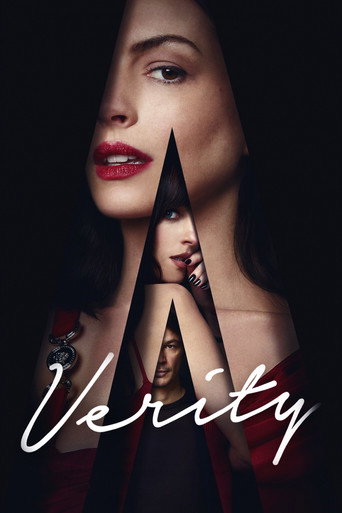
Verity (2026)
Directed by Michael Showalter
Lowen Ashleigh is hired by Jeremy Crawford to ghostwrite novels for his bestselling author wife Verity, who is unable to finish following an accident. Lowen gradually uncovers Verity's disturbing truths while residing at the Crawfords' home to work.
Overview, poster, and credits from TMDB.
Read and watch our full movie recap ↓FROM THE RECAPRUSH LIBRARY · FULL MOVIE RECAP
Verity (2026) Recap & Ending Explained: Why the Letter Cannot Prove Verity’s Innocence
13 min read · Estimated reading time— views
Intro + RecapRush Viewpoint
A manuscript can be evidence, confession, performance, or bait. In Verity, the horror comes from never knowing which of those roles the written word is playing. Lowen Ashleigh enters the Crawford home to finish another woman’s novels, but the job soon becomes an invitation to finish another woman’s life: occupy her office, inherit her audience, desire her husband, and decide what story should survive her.
Michael Showalter’s adaptation of Colleen Hoover’s novel stars Dakota Johnson as Lowen, Anne Hathaway as Verity Crawford, and Josh Hartnett as Jeremy Crawford. Its central mystery is deliberately unstable. One text says Verity hated motherhood and caused her daughter Harper’s death. A later letter says that “confession” was only a villain-writing exercise—and that Jeremy had already tried to murder his wife for believing it.
RecapRush viewpoint: the letter changes the moral stakes, but it does not solve the mystery. Both texts come from the same gifted manipulator, and both are discovered when their author cannot be questioned. The ending is less interested in making us choose a document than in showing what Lowen does when certainty becomes impossible. She protects the life she wants, even after learning it may have been built on murder.
> Full spoiler warning: The following article reveals Verity’s death, the hidden letter, Jeremy’s earlier attack, Lowen’s pregnancy, and the final scene.
Featured Image
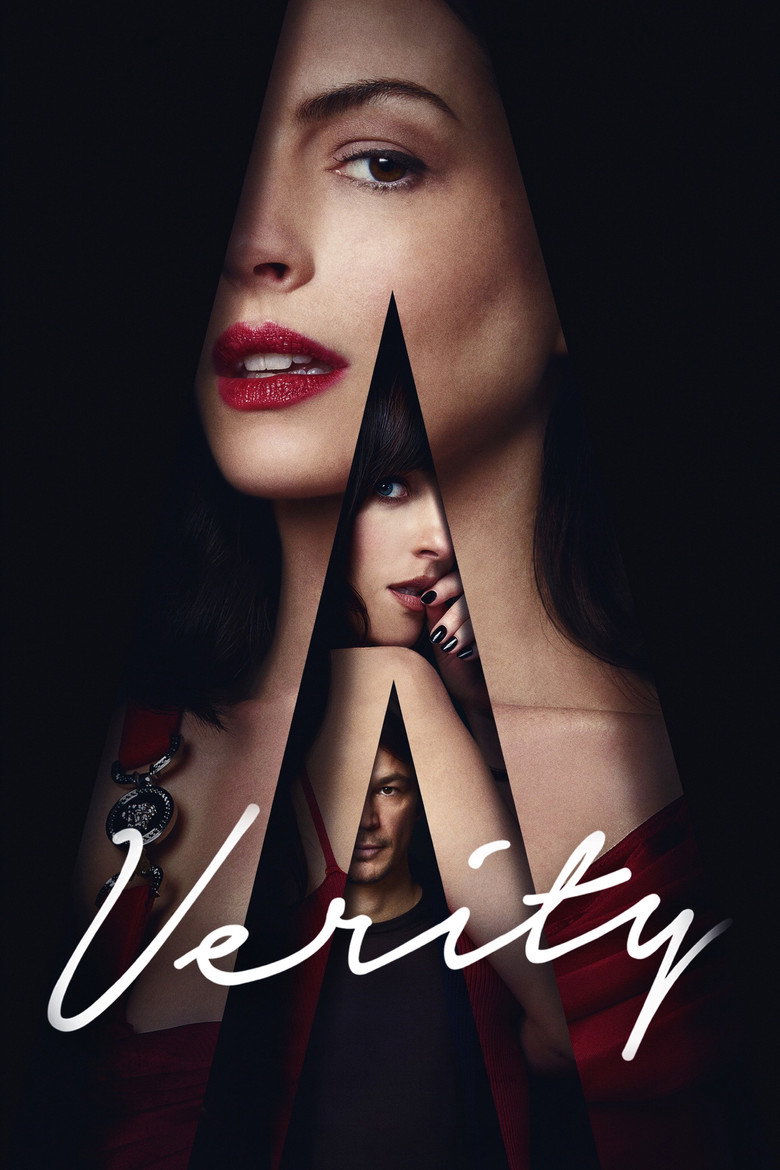
Verity (2026) theatrical poster featuring the principal cast.
Table of Contents
Quick Facts
- Exact title: Verity
- Year: 2026
- TMDB release-date field: September 30, 2026
- U.S. theatrical release: October 2, 2026
- Runtime: 114 minutes
- Director: Michael Showalter
- Screenplay: Nick Antosca
- Based on: Colleen Hoover’s novel Verity
- TMDB movie ID: 1283515
- Verified TMDB genres: Mystery, Thriller
- Principal cast: Dakota Johnson, Anne Hathaway, Josh Hartnett, Brady Wagner, Ismael Cruz Cordova, Irina Dvorovenko
- Distributor: Amazon MGM Studios in the United States and Canada
Full Spoiler Recap
1. Lowen accepts a job that already feels like an intrusion
Lowen Ashleigh is a struggling writer carrying grief and financial pressure when Jeremy Crawford offers her an unusually intimate assignment. His wife, bestselling thriller author Verity Crawford, cannot complete her successful series after a car accident left her apparently unable to communicate. Lowen is asked to study Verity’s files and finish the books in her voice.
The practical arrangement quickly becomes psychological trespass. Lowen moves into the remote Crawford estate, where Jeremy cares for Verity and their surviving son, Crew. The family is also grieving Harper, the child who drowned. Every room contains an absence, yet Verity’s silent physical presence prevents that absence from becoming cleanly mournable.
2. A manuscript turns research into accusation
In Verity’s office, Lowen discovers an unpublished autobiographical manuscript titled So Be It. It is not a set of neutral craft notes. Written in Verity’s voice, it describes resentment toward motherhood, hostility toward the children, and responsibility for Harper’s death.
Lowen reads the pages as confession. The manuscript gives shape to her unease around the house, but it also gives her a morally convenient explanation for her attraction to Jeremy. If Verity is a victim, desiring Jeremy is betrayal. If Verity is a monster hiding inside a helpless body, Lowen can imagine herself as the person rescuing him.
3. Verity appears far less helpless than she seems
Lowen begins noticing signs that Verity may be performing her condition. Glimpses of movement and shifts in behavior make the house feel like a surveillance trap. Lowen watches Verity, but increasingly feels watched by her.
That uncertainty matters more than a conventional “caught moving” twist. Verity’s silence forces everyone else to narrate her. Jeremy sees an injured wife. Lowen sees a threat. Crew sees a mother whose presence cannot be reduced to either account. The viewer receives facts through Lowen, whose fear and desire are becoming inseparable.
4. Lowen and Jeremy cross the boundary
The emotional and sexual attraction between Lowen and Jeremy becomes a relationship. Their intimacy does not occur outside the mystery; it changes how Lowen evaluates every clue. She wants Jeremy’s trust and wants a future in which Verity no longer occupies the center of the household.
The film uses that compromised perspective to resist a simple heroine-versus-villain arrangement. Lowen may be correct that Verity is dangerous. She also benefits from reaching that conclusion. Her discovery of the manuscript is therefore both an investigative breakthrough and a temptation.
5. The manuscript reaches Jeremy
Lowen eventually shows Jeremy So Be It. Its allegations transform private suspicion into action. Jeremy confronts Verity, and her supposed incapacity collapses: she can respond, and she has been concealing more awareness than her family understood.
But the revelation does not produce a fair inquiry. Jeremy attacks Verity. Lowen becomes involved in the fatal aftermath, and Jeremy disposes of Verity’s body in the lake. The image makes the family’s earlier loss echo through the new killing: the water that already holds Harper’s unresolved death now becomes the place where Jeremy tries to bury the consequences of his own judgment.
6. A new family forms over an unresolved crime
After Verity’s death, Lowen, Jeremy, and Crew prepare to leave the estate and begin again. Lowen is pregnant. On the surface, the household has rearranged itself into the future she had imagined: Verity is gone, the writing assignment has become a relationship, and Lowen can occupy the role she once observed from outside.
The apparent resolution is deliberately unsettling. Their new beginning depends on accepting the manuscript as true and Verity’s death as justified. Then Lowen finds another text.
7. The hidden letter reverses the story
Beneath a loose floorboard, Lowen discovers a letter from Verity to Jeremy. Verity claims So Be It was not autobiography but a therapeutic writing exercise: her editor had encouraged her to retell real experiences from a villain’s point of view. According to the letter, she did not hate her children and did not murder Harper.
The letter contains an even more devastating accusation. Verity says Jeremy had previously discovered the manuscript, drugged her, and caused the car crash intending to kill her. She survived and pretended to be neurologically incapacitated because she feared he would try again. Her plan was to escape with Crew.
If the letter is true, Jeremy murdered Verity after already attempting to kill her once, and Lowen helped the man whose victim she had replaced. If it is false, Verity anticipated discovery and created one final counternarrative capable of poisoning Lowen’s future.
8. Lowen chooses concealment
Lowen does not give Jeremy the letter or seek an outside judgment. She conceals what she found and continues with him. Her choice preserves the family they have formed while making her responsible for suppressing evidence that could radically change the meaning of Verity’s death.
The final return to Verity’s Hot Ones interview offers no verdict. Instead, it reminds us that Verity was always a public storyteller skilled at constructing a voice. The ending leaves the manuscript and letter in permanent conflict—and leaves Lowen living inside the version that serves her.
Cast + TMDB
Cast and Characters









The gallery below is generated from TMDB’s credited cast for movie 1283515. It supplies portraits, actor names, credited characters, and RecapRush profile links without repeating the information in a second actor-character table.
Ending Explained
Is the manuscript true, or is the letter true?
The movie does not provide a definitive answer. The manuscript contains details that make it persuasive, while the letter offers a coherent explanation for why an author known for villainous perspectives would write such material. Colleen Hoover has said that she herself was uncertain about the truth while writing the story, and the filmmakers preserved that uncertainty.
The safest factual conclusion is therefore limited: both documents make claims; neither is independently proven. Anything stronger is interpretation.
Why does Jeremy kill Verity?
Jeremy accepts the manuscript as an authentic confession and reacts with lethal certainty. Her revealed awareness confirms that she has deceived him about her condition, but it does not prove that every claim in So Be It is factual. His decision collapses suspicion, judgment, and punishment into one act.
More from RecapRush
 The End of Oak Street (2026) Recap & Ending Explained: Why Greg Is Alive Again
 Once Upon a Time in the West (1968) Recap & Ending Explained: Why Harmonica Leaves Jill
 Doctor Strange (2016) Recap & Ending Explained: Why Surrender Is Stephen's Winning Move
The hidden letter then reframes his violence. If Verity tells the truth there, Jeremy had already tried to kill her by engineering the crash. The final murder is not a momentary break but the completion of an earlier attempt.
Why does Lowen hide the letter?
Lowen cannot verify it without destroying the life now forming around Jeremy, Crew, and her unborn child. Concealment protects her relationship and avoids confronting her own role in Verity’s death. It also repeats Verity’s central strategy: control the story by controlling what other people are allowed to read.
This is the ending’s clearest moral fact. Lowen may not know which document is true, but she knowingly prevents Jeremy and the world from encountering the document that threatens her preferred version.
What does the final Hot Ones clip mean?
The interview returns Verity to the role of author and performer. Public Verity speaks through charm, publicity, and carefully shaped language; private Verity survives only through contradictory texts. The clip refuses to turn her into a solved case. Her last power is authorship: even after death, she determines the questions everyone else must argue about.
Is Lowen safe with Jeremy?
The film offers no guarantee. If the letter is accurate, Lowen has chosen a man capable of attempted murder, a completed killing, and concealment. Her pregnancy raises the stakes: the new family is secured by the same refusal to know that made the Crawford home dangerous.
RecapRush Interpretation
RecapRush reads the ending as a story about motivated belief. Lowen does not simply compare two texts like a neutral juror. By the time she finds the letter, she has emotional, sexual, maternal, and legal reasons to reject it. Belief becomes a form of self-preservation.
The crucial parallel is between Verity and Lowen. Verity writes a version of herself that may be fiction and may be confession. Lowen then edits reality by withholding the letter. Both women understand that the person who controls the available text controls the moral frame.
Jeremy’s tragedy is not merely that he may believe the wrong story. It is that he treats belief as permission to act without restraint. Whether Verity is guilty of Harper’s death or not, her murder demonstrates how certainty can become an instrument of desire and rage.
These are interpretations of the film’s verified events, not confirmed statements of the director’s intention.
Deep Analysis & Key Themes
Authorship as power
Ghostwriting looks like imitation, but it is also succession. Lowen is asked to become convincing enough that readers will accept her words under Verity’s name. The assignment trains her for the larger moral substitution the plot demands: she will eventually take Verity’s place inside the Crawford family.
The manuscript and letter show two opposite uses of authorship. One creates an incriminating self; the other creates an exonerating self. Because both are eloquent, the film denies us the comfort of equating good storytelling with truth.
Desire changes the evidence
Lowen’s attraction to Jeremy does not automatically make her wrong. It makes neutrality impossible. Every frightening sign in the house pushes her toward a conclusion that also benefits her.
That conflict gives the thriller its sharpest psychological tension. The question is not only “What did Verity do?” It is “What does Lowen need Verity to have done?” Once those questions overlap, evidence becomes vulnerable to desire.
The ethics of reading private pain
So Be It may be confession, fantasy, therapy, or deliberate manipulation. Each possibility raises a different ethical problem. Treating private writing as literal testimony can be dangerously reductive; dismissing it as fiction can excuse real harm. The movie keeps both risks active.
The adaptation’s central challenge to the audience is the same challenge placed before Lowen: can we tolerate uncertainty without turning it into permission? Jeremy cannot. Lowen ultimately chooses not to.
Motherhood and the fear of the “bad mother”
The manuscript weaponizes culturally forbidden maternal feelings—resentment, jealousy, exhaustion, and the wish to escape. If it is fictional, Verity chooses the most socially damning voice imaginable to enter a villain’s psychology. If it is true, she disguises violence inside language that can later be defended as invention.
The ambiguity works because readers and viewers are primed to treat maternal transgression as both uniquely monstrous and uniquely unspeakable. The film exploits that instinct, then asks whether our disgust made us too eager to convict.
Houses, bodies, and false stillness
The Crawford estate appears stable while containing buried histories. Verity’s body appears unresponsive while concealing agency. The loose floorboard appears ordinary while hiding a competing account. These repetitions make stillness suspicious.
Nothing in the home is simply passive. Rooms store evidence, water stores bodies, and silence stores possible intentions. The thriller’s visual logic says that suppression is temporary: what is buried continues shaping the people above it.
What Most Viewers Missed
- Verity’s movement proves deception about her condition, not the manuscript’s truth. Lowen and Jeremy treat one lie as confirmation of every accusation.
- The letter is evidence, not acquittal. It gives Verity a plausible defense but remains a text written by the person it protects.
- Lowen becomes an editor of reality. By hiding the letter, she decides which version of Verity future readers are allowed to know.
- The lake links two deaths without explaining either. Jeremy’s disposal of Verity’s body repeats the setting of Harper’s death and makes uncertainty physically cyclical.
- The ending’s pregnancy is not simple hope. It binds Lowen more tightly to Jeremy precisely when the letter gives her reason to fear him.
- The movie streamlines the novel. Release-week comparisons note that the adaptation reduces the number of Crawford children and changes details of Verity’s death, so book memories should not be treated as film evidence.
Mid/Post-Credits
Verified credits reporting indicates that Verity has no mid-credits or post-credits scene. The Hot Ones material belongs to the film’s ending rather than a hidden sequel teaser.
Final Thoughts
Verity ends with a question that cannot be answered by choosing the more dramatic document. The real revelation is Lowen’s choice after reading both.
She begins as a ghostwriter hired to disappear behind Verity’s voice. She ends by deciding which of Verity’s voices will disappear. That reversal gives the thriller its lasting unease. The manuscript may be true. The letter may be true. But Lowen’s concealment is something the film actually shows—and it makes her the final author of the Crawford story.
FAQ
What is Verity (2026) about?
Lowen Ashleigh is hired to complete the novels of incapacitated bestselling author Verity Crawford. At the Crawford estate, she discovers a manuscript that appears to confess to horrifying acts and becomes involved with Verity’s husband, Jeremy.
Who plays Lowen, Verity, and Jeremy?
Dakota Johnson plays Lowen Ashleigh, Anne Hathaway plays Verity Crawford, and Josh Hartnett plays Jeremy Crawford.
Did Verity kill Harper?
The film deliberately leaves that unresolved. The manuscript says she caused Harper’s death; the hidden letter says the manuscript was a fictional writing exercise.
Was Verity really paralyzed?
No. The ending confirms that she had been pretending to be unresponsive. Her letter claims she did so because Jeremy had already tried to kill her.
Why does Lowen keep the letter secret?
She protects her future with Jeremy and avoids confronting the possibility that they killed an innocent woman. RecapRush also reads the choice as proof that Lowen has learned to control reality by controlling the available story.
What happens to Verity?
Jeremy kills her after reading the manuscript and confronting her. He and Lowen conceal the killing, and Jeremy disposes of her body in the lake.
Is the ending different from the book?
The adaptation preserves the manuscript-versus-letter ambiguity but changes and streamlines several details, including the Crawford children and the handling of Verity’s death.
Does Verity have a post-credits scene?
No. There is no additional mid-credits or post-credits scene.
What is the verified TMDB ID?
The TMDB movie ID is 1283515.
Join the conversation
What did you think of the ending? Share your interpretation. Spoilers may appear below.
This product uses the TMDB API but is not endorsed or certified by TMDB.
No comments yet. Start the conversation.