

RECAPRUSH MOVIE GUIDE
Digger (2026)
Directed by Alejandro G. Iñárritu
The most powerful man in the world embarks on a frantic mission to prove he is humanity's savior before the disaster he's unleashed destroys everything.
Overview, poster, and credits from TMDB.
Read and watch our ending explained ↓FROM THE RECAPRUSH LIBRARY · ENDING EXPLAINED
Digger (2026) Recap & Ending Explained: Why the Fossil Fools Twist Changes Everything
17 min read · Estimated reading time— views
Intro + RecapRush Viewpoint
Alejandro G. Iñárritu's Digger begins as a huge, abrasive climate-disaster satire about an oil billionaire who wants to become the hero of a catastrophe tied to the system that made him rich. Tom Cruise plays Digger Rockwell, a swaggering energy tycoon whose confidence survives almost every warning until a drilling disaster in Greenland helps trigger a chain of ecological and political consequences that no amount of money, influence or showmanship can fully control.
Then the movie changes its rules. The exaggerated Digger story is revealed to be an in-universe theatrical production called Fossil Fools, performed decades after the events it satirizes. Cruise is therefore playing two roles at once: Digger Rockwell inside the play and Curtis Markson, the actor portraying him. What first looked like a movie about one man's guilt becomes a much more uncomfortable story about collective memory, performance, inherited power and whether art can do anything more than help people process a disaster that has already reshaped their world.
RecapRush Viewpoint: Digger deliberately weaponizes the expectation that Tom Cruise will eventually solve the impossible mission. The film's sharpest joke is that Digger can be punished inside a theater while the audience still has to walk back into the damaged world his generation helped create.
Full spoilers ahead. This recap covers the Greenland drilling disaster, Judy and Kimberly, President Compson, the Fossil Fools reveal, Curtis Markson, Kenny Rockwell, the oil-rig finale, the Level Four warning and the meaning of the final dystopian images. Plot details were checked against Warner Bros.' official material and multiple post-release ending/timeline reports. Interpretation is clearly separated from verified story events.
Featured Image
Table of Contents
Quick Facts
- Title: Digger
- Year: 2026
- Director: Alejandro G. Iñárritu
- Screenplay: Alejandro G. Iñárritu, Alexander Dinelaris, Nicolás Giacobone and Sabina Berman
- Story: Sabina Berman, Alejandro G. Iñárritu and Jez Butterworth
- U.S. theatrical release: October 2, 2026
- Distributor: Warner Bros. Pictures
- Runtime: 129 minutes
- Rating: R
- Genres: Comedy, drama, dark comedy, political satire
- Principal cast: Tom Cruise, Riz Ahmed, John Goodman, Sandra Hüller, Michael Stuhlbarg, Jesse Plemons, Emma D'Arcy, Burn Gorman and Sophie Wilde
- Cinematography: Emmanuel Lubezki
- Music: Cosmo Sheldrake
- TMDB movie ID: 1248832
- IMDb ID: tt31450459
Warner Bros. describes the film as the story of the world's most powerful man racing to prove that he can save humanity before the disaster he unleashed destroys everything. The official marketing deliberately hides the movie's biggest structural reveal.
Full Spoiler Recap
1. The Rockwell oil empire
Digger Rockwell comes from an oil dynasty that began in Texas generations earlier. By the time he controls the business, the Rockwell name has become synonymous with wealth, access and political influence. Digger carries himself like a man who believes that his fortune is proof of superior judgment. He is loud, impulsive and intensely aware of how he appears to other people.
The company has long pushed into increasingly risky territory, including drilling operations in Greenland. The film establishes that warnings about methane and unstable permafrost were not completely unknown to the people in charge. This matters later because Digger's public attempts to portray the disaster as unforeseeable are undercut by the history of warnings surrounding the operation.
2. The Greenland disaster
At the 79 North operation in Greenland, a growing environmental danger becomes impossible to ignore. A crack and methane-related instability develop around the drilling site. The situation escalates until the operation explodes, destabilizing a massive section of ice.
What begins as an industrial accident immediately becomes something much larger. The damaged ice mass threatens to break away, and the environmental team realizes that the event could trigger devastating consequences far beyond Greenland.
3. Judy threatens Europe
Ganesh, played by Riz Ahmed, becomes one of the people forced to explain the physical scale of the emergency. The enormous destabilized ice mass becomes known as Judy. The frightening conclusion is that Judy could reach Europe within days.
Digger is drawn into emergency meetings with President Compson and the American government. John Goodman's Compson is not presented as a clean moral counterweight to the billionaire. The political system has its own history of compromise and cooperation with Digger's business interests, making the crisis a product of overlapping corporate and governmental decisions rather than one man's isolated mistake.
4. Digger tries to control the story
Digger responds to catastrophe the way he responds to almost everything: by trying to dominate the room. He wants to explain what happened, dictate what happens next and preserve the idea that he is still the most capable person available.
His appearances before officials become increasingly theatrical. The film turns political accountability into grotesque performance, especially as Digger tries to present himself simultaneously as victim, expert, problem-solver and indispensable savior.
The contradiction becomes the movie's central joke: the same worldview that helped produce the crisis is now being offered as the solution to it.
5. Judy hits Europe
The plan to contain the consequences fails. Judy reaches Europe and causes enormous flooding and destruction. The event confirms that the crisis has moved beyond public relations, corporate liability or a temporary political scandal.
For the people at the top, the disaster is also a humiliating encounter with physical reality. Money, military power and political access cannot negotiate with an ice mass. The damage happens regardless of how persuasive Digger believes himself to be.
6. Kimberly creates another crisis
The catastrophe does not end with Judy. A second threat, Kimberly — also described as Kremlin Nova in later explanations of the film — creates another geopolitical and environmental emergency. The United States responds in a way that prevents one immediate threat but contributes to further long-term damage.
The movie deliberately piles disaster on top of disaster. Each attempted correction generates another consequence, turning Digger's fantasy of control into a running demonstration of how complex systems punish short-term thinking.
7. The movie reveals Fossil Fools
Then Digger breaks its own reality.
During what appears to be another scene in Digger's extravagant world, the environment suddenly behaves like a set. A piece of scenery gives way, crew members enter and a director calls attention to what has really been happening.
The Digger Rockwell story is a play.
The production is called Fossil Fools, a famous satirical dramatization of real events that occurred decades earlier inside the film's universe. The broad performances, exaggerated political dialogue and almost cartoonish behavior are therefore intentional features of the stage production we have been watching.
Tom Cruise is not only playing Digger Rockwell. He is playing Curtis Markson, the respected actor performing Digger in the revival of Fossil Fools.
8. Who Curtis Markson really is
Once the film moves backstage, Curtis becomes the real dramatic center. He worries that the production has reduced Digger Rockwell to an easy cartoon villain. The director, played by Sophie Wilde, is more interested in the play's satirical force than in protecting the historical Digger's complexity.
Curtis is also dealing with something much more personal. His daughter is missing while trying to travel through a world where extreme weather has become part of everyday life. Her disappearance makes the ecological legacy of Digger's era immediate rather than historical. Curtis can walk offstage after pretending to live through the catastrophe; his family still lives inside its consequences.
9. Kenny Rockwell reveals his identity
Jesse Plemons' Kenny initially appears to be the wealthy producer behind the revival. He also offers to use his global security resources to help locate Curtis' missing daughter.
Then Kenny reveals why Fossil Fools matters to him personally: he is Digger Rockwell's nephew.
The child who appears within the historical story grew up inside the family whose name became associated with catastrophe. Kenny explains that when he saw an earlier production of Fossil Fools, the audience cheered Digger's downfall — and he found himself cheering too.
He does not describe the play as a monument to his uncle. He sees it as a place where people can gather, laugh, rage and confront what that generation did to the world. His money therefore finances a work that openly humiliates his own family history.
10. The play jumps five years forward
The final section of Fossil Fools jumps roughly five years ahead. Digger, his sister and the young Kenny are living in isolation on one of the Rockwell oil rigs. The larger world has been permanently altered by the disasters.
For a time, Digger's old political connections still protect him. But President Compson eventually dies, and the new administration cuts support and supplies to the rig. The man who once treated the world like an extension of his own empire is now stranded on the infrastructure that empire built.
The irony is deliberate. Oil made Digger powerful enough to shape politics and geography. In the end, an oil platform becomes his shrinking final kingdom.
11. Digger jumps from the oil rig
As supplies disappear, Digger begins to break down. He experiences a vision in which food has somehow returned, only for reality to reassert itself. The fantasy of abundance cannot survive forever.
Digger goes outside with young Kenny. Their final conversation is quieter than much of the play that came before it. Then Digger leaves the boy behind and jumps from the rig into the water.
The theatrical audience erupts.
For them, Digger's death is not only a character beat. It is ritualized punishment. The man blamed for helping destroy their world can finally die in front of them, night after night, in a form they can control.
12. The Level Four ending
Backstage, Curtis emerges from the water used for Digger's final stage moment. The company celebrates the performance. Curtis also receives the news he desperately wanted: his daughter has been located and is safe.
For a brief moment, the movie seems ready to offer emotional closure.
Then the theater's warning system announces Level Four.
The audience and theater staff calmly put on advanced breathing masks. The behavior is practiced, suggesting that this kind of warning is now normal.
The doors open.
Outside is the real world.
The city is grey, polluted and flooded. Vehicles sit in water. Military and security forces remain visible. The technologically advanced society has survived, but it has not recovered the stable environment that Digger's generation took for granted.
More from RecapRush
 Beware Boiúna (2026) Recap & Ending Explained: Why Lena Survives Without Killing the Serpent
 The Ordinary Jackpot (2026) Recap & Ending Explained: Why Eun-tae Keeps the Money but Changes the Way He Works
 Coyote vs. Acme (2026) Recap & Ending Explained: Why Wile E. Has to Lose
The applause inside the theater has changed nothing outside it.
Cast + TMDB
Cast and Characters






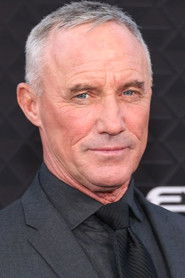



The TMDB credits list Tom Cruise as Rockwell, Riz Ahmed as Ganesh, John Goodman as President Compson, Sandra Hüller as Emma, Michael Stuhlbarg as the Vice President and Jesse Plemons as Kenny. The supporting cast also includes Robert John Burke, Emma D'Arcy, Burn Gorman, Sophie Wilde, Pip Torrens, Mercedes Hernández and Danny Kirrane.
Browse the complete cast and crew on TMDB.
Digger (2026) Ending Explained
Who is Curtis Markson?
Curtis Markson is the actor portraying Digger Rockwell in the revival of Fossil Fools. The movie initially hides Curtis from the audience by presenting the play as if it were the film's primary reality.
That reveal explains why Digger's behavior is so exaggerated. Curtis is performing a satirical version of a historical figure, and the production intentionally pushes Digger toward caricature. Curtis becomes uncomfortable with that simplification because he wants to find humanity in the role rather than play a one-dimensional monster.
Is Digger Rockwell real inside the movie?
Yes — within the fictional world of Digger, Rockwell was a real historical person. Fossil Fools is a theatrical dramatization of events associated with him and the ecological disasters that followed.
The movie therefore contains at least two levels of reality: the exaggerated Digger inside the play and the later world in which Curtis, Kenny and the theater audience live.
Why is Kenny Rockwell important?
Kenny is the bridge between those two timelines. He experienced Digger's world as a child and now lives as an adult in the environment left behind by that generation.
His decision to finance a play mocking his own uncle is one of the movie's most important ideas. Kenny is not trying to erase the Rockwell name from history. He is helping turn it into a public story people can confront together.
The film leaves some room for skepticism because Kenny remains wealthy and powerful, with access to a global security company. But his central speech presents the revival as an attempt to give people a communal form of anger and memory rather than a tribute to Digger.
What does Level Four mean?
The film never gives a technical manual explaining every level of the warning system. What matters is the audience's reaction. Everyone knows what to do: put on a breathing mask before going outside.
The implication is that dangerous atmospheric conditions are common enough to require a public alert system. The pollution could be connected to the long-term environmental damage, methane release, later geopolitical responses or a combination of those events.
RecapRush interpretation: Level Four is the movie's anti-ending. The theater has just provided catharsis, applause and symbolic justice. The alarm instantly replaces those emotions with survival procedure. History can become entertainment, but consequences remain physical.
What happens to Curtis' daughter?
Curtis spends much of the backstage story fearing that his daughter has disappeared amid severe weather and disrupted travel. Kenny uses his security resources to help search for her.
Near the end, Curtis learns that she has been found and is safe. The news gives him a genuine personal victory — one of the few uncomplicated moments of relief in the film.
That relief is immediately placed beside the Level Four warning. One family crisis has been solved, but the larger world remains unstable.
RecapRush Interpretation
The following section is editorial interpretation, separate from the verified plot.
Digger is not satisfied with the easy moral that one greedy billionaire destroyed the world. The movie certainly makes Digger responsible for enormous harm, but its second half reveals a larger problem: societies prefer individual villains because villains create stories with endings.
Digger can jump from the oil rig.
The audience can cheer.
The actor can climb out of the tank.
The lights can come up.
But the flooded street is still outside.
That distinction is the entire ending in miniature. Fiction can organize guilt into a beginning, middle and end. Environmental consequences do not obey dramatic structure.
Curtis and Kenny embody two different relationships to the past. Curtis worries about fairness to the individual being portrayed. Kenny is more interested in what the story does for the people forced to live with the consequences. Neither position is completely dismissed. The film instead asks whether historical accuracy, satire and public catharsis can ever be separated from power.
Deep Analysis & Key Themes
Digger is an anti-Tom Cruise hero
Tom Cruise's screen image is strongly associated with competence, speed and the belief that one extraordinary individual can solve an impossible mission. Digger reverses that formula.
Digger believes he is the indispensable man, but the systems he helped create are larger than him. His instinct to take control becomes part of the satire because control is exactly what he no longer has.
The billionaire-savior fantasy collapses
Digger's deepest assumption is that the skills used to accumulate power are the same skills required to repair the damage produced by that power.
The movie rejects that idea. Wealth gives him access to presidents, private infrastructure and global attention, but none of those privileges grant him mastery over the physical world.
Fossil Fools turns catastrophe into ritual
The audience inside the film already knows what Digger did. They do not attend Fossil Fools primarily to learn the facts. They attend to experience those facts together.
RecapRush analysis: The play functions like a secular ritual. A damaged society repeatedly stages the death of a symbolic villain because collective anger needs a shape. The danger is that ritual can provide emotional release without producing material change.
Kenny complicates generational guilt
Kenny inherits a family history he did not create. He also appears to retain extraordinary wealth and influence produced by that history.
Financing Fossil Fools can therefore be read as sincere accountability, reputation management or both. The film's strongest choice is not resolving that tension completely.
The theater and the outside world are opposites
Inside the theater, history is controlled: lighting, timing, dialogue, death and applause all happen on cue.
Outside, weather and pollution remain unstable. The final transition from applause to Level Four turns the theater into a temporary shelter from reality rather than a solution to it.
The final song is interrupted for a reason
Ending analysis has noted that Melanie Safka's “Look What They've Done to My Song, Ma” plays as the audience moves back into the damaged city, only for the warning system to interrupt the music.
RecapRush analysis: The interruption repeats the movie's entire structure. Human beings create songs, plays and stories that help make suffering intelligible. Physical reality keeps interrupting them.
What Most Viewers Missed
The exaggerated acting is a clue, not an accident
The first section often feels too theatrical to be ordinary reality because it literally is theater. The heightened behavior, oversized dialogue and artificial rhythm become retroactive clues after the Fossil Fools reveal.
The movie has two endings
Fossil Fools ends when Digger jumps from the rig and the audience gets the punishment it came to see.
Digger ends when those same spectators leave the building and reveal the real state of the world. The first ending provides closure. The second destroys it.
Kenny is both witness and heir
Kenny is important not merely because he is Digger's nephew. He was present as a child during the historical events and later became wealthy and powerful himself.
He therefore represents the uncomfortable question of inheritance: what does a later generation owe the world when its privileges were built by people whose choices caused enormous harm?
The breathing masks are ordinary to everyone except us
Nobody panics when Level Four is announced. People simply put on their masks.
That normality is more disturbing than chaos. The film is showing a society that has adapted to conditions that would look apocalyptic to the audience watching from our present.
Curtis' daughter makes the climate crisis personal
The backstage plot could have remained an intellectual debate about whether Digger is being portrayed fairly. The missing-daughter storyline prevents that distance.
Curtis is debating how to represent history while the weather created by that history is threatening someone he loves.
The final city is the answer to the entire play
The audience can debate whether Digger was too exaggerated, whether Kenny's motives are pure or whether the production is artistically fair.
The flooded city answers with something simpler: whatever the moral complexity of the people involved, the consequences are real.
Mid/Post-Credits
The verified closing sequence discussed here is the theater’s Level Four warning and the damaged city beyond its doors. This guide does not confirm the presence or absence of a separate mid-credits or post-credits scene; the ending reports cited below do not establish that point.
RecapRush interpretation: The warning matters because it cuts across the satisfaction of the performance. An audience can leave a play, but it cannot leave the environmental consequences that surround the theater.
Final Thoughts
Digger begins by asking whether a billionaire can save the world from the disaster he helped unleash. By the end, that question has almost become irrelevant.
Digger is dead.
Curtis is alive.
Kenny has transformed family history into public theater.
The audience has received its catharsis.
And the streets are still flooded.
That is why the Fossil Fools twist matters. It prevents Digger Rockwell's death from functioning as a conventional solution. A villain can be punished in fiction without the world being repaired in reality.
RecapRush verdict: Digger's biggest twist is not that the first half is a play. It is that the movie makes us enjoy the satisfaction of an ending and then forces us to watch that satisfaction become useless the moment the theater doors open.
FAQ
Is Digger Rockwell the same person as Curtis Markson?
No. Rockwell is the historical figure portrayed in Fossil Fools, while Curtis is the actor performing that role. Tom Cruise plays both layers. The theatrical reveal changes the status of what we have watched without erasing its consequences in the film’s world.
Is Fossil Fools based on events inside the story?
Yes. The production dramatizes an earlier catastrophe within the fictional world of Digger. It should not be confused with a claim that Rockwell is an actual historical oil billionaire.
Why does the audience applaud when Digger falls?
The spectators receive the staged downfall of a figure associated with their damaged world. RecapRush’s reading: the applause offers an emotional release; the city outside demonstrates why that release cannot repair the damage.
What does the Level Four warning establish?
The spectators respond by using breathing masks. The warning shows that the world outside the theater remains hazardous. Its exact pollutant and technical threshold are not explained here as verified facts.
Where can I find the official trailer and cast credits?
Use the official Warner Bros. YouTube trailer linked above and TMDB movie 1248832 for the credited cast. The gallery links actors to their RecapRush profiles.
Join the conversation
What did you think of the ending? Share your interpretation. Spoilers may appear below.
This product uses the TMDB API but is not endorsed or certified by TMDB.
No comments yet. Start the conversation.