
RECAPRUSH MOVIE GUIDE
The Bridge on the River Kwai (1957)
Directed by David Lean
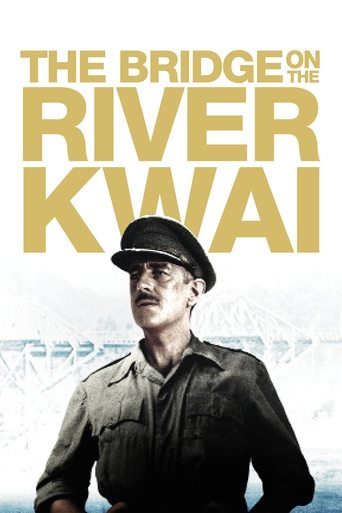
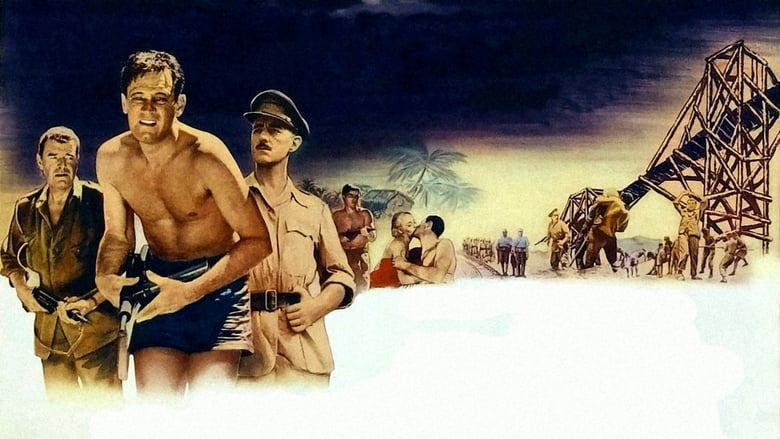
The classic story of English POWs in Burma forced to build a bridge to aid the war effort of their Japanese captors. British and American intelligence officers conspire to blow up the structure, but Col. Nicholson, the commander who supervised the bridge's construction, has acquired a sense of pride in his creation and tries to foil their plans.
Overview, poster, and credits from TMDB.
Read and watch our full recap ↓FROM THE RECAPRUSH LIBRARY · FULL RECAP
The Bridge on the River Kwai (1957) Recap & Ending Explained: Why Nicholson Protects the Wrong Victory
11 min read · Estimated reading time— views
Intro + RecapRush Viewpoint
The Bridge on the River Kwai turns an impressive achievement into an uncomfortable question: what if doing a job exceptionally well means serving the wrong purpose? Colonel Nicholson resists a prison commander's abuse, then becomes invested in completing the commander's railway bridge. His expertise does not disappear. His ability to judge what that expertise is accomplishing does.
RecapRush interpretation: The bridge is not simply a symbol of pride. It is a project that gives Nicholson a way to feel effective inside captivity. The danger is that a measurable success—disciplined men, good engineering, a finished structure—can displace the harder question of whom the success benefits. Destroying the bridge resolves the military objective without neatly resolving the moral confusion that built it.
Spoilers and editorial note: This guide covers David Lean's complete 1957 feature, not Pierre Boulle's novel or a documentary account of the Burma–Thailand railway. It uses AI-assisted research and drafting checked against film institutions, distributor records and published plot accounts, rather than claiming a first-hand screening. Original interpretations are labelled; Nicholson's final intention remains qualified.
Table of Contents
Quick Facts
- Film: The Bridge on the River Kwai (1957)
- Director: David Lean
- Screenplay: Carl Foreman and Michael Wilson, whose contributions were not properly credited at the original release
- Source novel: Pierre Boulle's The Bridge over the River Kwai
- Setting: A Japanese prisoner-of-war camp in Burma during the Second World War
- Runtime reference: AFI lists 161 minutes; TMDB lists 162
- TMDB genres: Drama, History, War
- TMDB movie ID: 826
- Scope: The complete feature, including the bridge demolition
The historical setting does not make every character or incident a documented event. The film was shot in Ceylon, now Sri Lanka. Its fictional confrontation should not be substituted for the experiences of real prisoners and forced laborers on the railway.
Full Spoiler Recap
Nicholson resists Saito's demand
British prisoners arrive at a camp commanded by Colonel Saito. They are to build a railway bridge. Colonel Nicholson refuses to let his officers perform manual labor, invoking the Geneva Convention. Saito responds with punishment, including confinement of Nicholson, while Major Clipton attends to the human cost.
Saito faces a construction deadline. Eventually he grants the exemption Nicholson demanded, presenting his concession as an amnesty. Nicholson emerges with his authority strengthened among his men.
RecapRush interpretation: This victory matters because Nicholson has genuinely resisted coercion. His later failure cannot be explained by saying that all his principles were fraudulent. A principle that protects people in one confrontation can become a source of dangerous self-confidence in the next. Having been right against Saito once, he becomes less receptive to being questioned himself.
Building becomes a substitute for resistance
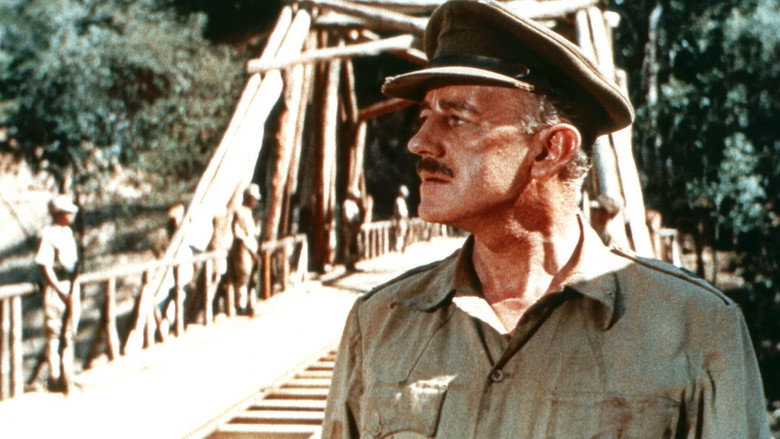
Nicholson takes an increasingly active role in improving the bridge. British engineering knowledge and organization transform a troubled project into a competent one. He sees constructive work as a means of restoring morale and demonstrating what his men can accomplish.
Clipton questions helping the enemy. Nicholson nevertheless moves beyond defending the officers' exemption: officers assist with the work, and recovering patients are asked to contribute what they can. The finished bridge becomes a source of personal and regimental pride.
RecapRush interpretation: The reversal is more revealing than a simple broken rule. Nicholson is now willing to cross the line he previously defended because he has changed the story he tells himself about the work. Under Saito, labor meant humiliation; under his own supervision, it means dignity. The bridge's strategic function has not changed with that change of manager.
Shears escapes, then is sent back
American prisoner Shears escapes the camp. His companions do not survive the escape, but he reaches help and eventually recuperates in Ceylon. Major Warden wants his knowledge of the camp for a demolition mission.
Shears does not want to return. His claimed officer status is also exposed as a deception adopted in captivity. Warden already knows enough about his position to overcome his attempt to refuse. Shears joins the mission with Warden, Lieutenant Joyce and Chapman, who dies during the parachute insertion.
The expedition continues with local assistance. An encounter with Japanese troops leaves Warden injured. When he proposes being left behind, Shears insists on carrying him rather than treating a man's survival as expendable to an abstract military ideal.
RecapRush interpretation: Shears is not made admirable by discovering a love of combat. He remains someone who wants to live. That gives his insistence on Warden's survival a different force: his resistance to heroic language does not prevent him from accepting responsibility for another person. The film separates reluctance to die from indifference to others.
The finished bridge acquires two incompatible meanings
The prisoners complete the structure. Nicholson sees evidence that captivity has not destroyed their discipline. The demolition team sees infrastructure carrying the enemy's war effort. At night, charges are attached to the bridge, with Joyce positioned to operate the detonator.
RecapRush interpretation: This is the film's central collision before anyone fights at the river. Nicholson and Warden can both describe their activities as fulfilling military duty, but one has made completion the objective and the other destruction. For a viewer, the bridge is physically the same object in both accounts. The conflict comes from the purposes attached to it.
A low river exposes the demolition plan
By morning, the water has fallen, exposing a wire. Nicholson investigates with Saito. At the riverbank, Joyce kills Saito and explains his mission. Instead of immediately helping, Nicholson interferes with the attempt to destroy the bridge.
Fighting breaks out. Joyce and Shears are killed. Nicholson recognizes Shears and confronts what he has done. Warden fires a mortar; the wounded Nicholson stumbles onto the detonator. The bridge collapses as the train crosses. Clipton witnesses the destruction and responds with horror rather than celebration.
The physical outcome is clear. Whether Nicholson deliberately uses his last movement to trigger the charges is less certain. Recognition, injury and falling happen close together; they should not be compressed into an unqualified claim that he calmly chooses redemption.
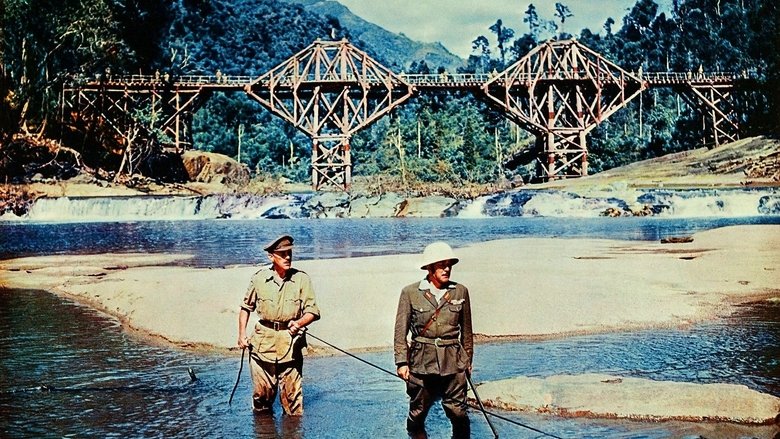
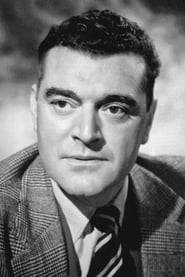
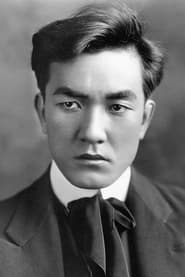
TMDB Cast Gallery
The linked gallery identifies the film's principal performers and characters. It is cast reference material, not evidence that an actor's other work shares this film's historical setting.
Ending Explained
Cast and Characters




Does Nicholson finally understand his mistake?
His recognition of Shears is followed by the question, “What have I done?” That is strong evidence of a break in his previous certainty. Until then, protecting the bridge can still fit the account of honorable work he has constructed. Shears connects the confrontation to the wider war and to someone who escaped the prison system Nicholson has begun improving.
More from RecapRush
 The Man with the Bag (2026) — Official Teaser & Movie Preview
 Chernobyl (2019) Recap & Ending Explained: Why Legasov Chooses Truth Over Survival
 The Scandal (2026) Recap & Ending Explained: Why Hui-yeon’s Survival Matters More Than Cho Won’s Last Letter
RecapRush interpretation: The line matters because Nicholson asks about his own conduct. He is no longer merely blaming Saito's methods or defending the prisoners' reputation. Understanding arrives when he briefly stops judging the bridge by workmanship and begins judging his involvement in it.
Does he deliberately blow up the bridge?
The bridge explodes when Nicholson falls onto the detonator after being wounded. Published readings differ over whether his movement is intentional. It is reasonable to read the fall as a final corrective act, but it is not necessary to insist that the film removes all doubt.
RecapRush interpretation: Leaving intention unsettled prevents an easy moral exchange in which one decisive gesture cancels everything before it. Even a deliberate final choice would not restore Joyce or Shears. If the fall is accidental, recognition still matters emotionally, but insight has come too late to become a controlled solution. Both readings preserve the gap between seeing a mistake and repairing its consequences.
Who wins when the train falls?
The demolition objective succeeds: the bridge and train are destroyed. That is not the same as a triumphant ending for the people involved. The men at the detonator die, the prisoners lose their labor, and Clipton sees the outcome as madness.
RecapRush interpretation: Clipton's response does not require us to conclude that stopping enemy transport was pointless. It asks us not to let an achieved objective erase the human process that produced it. A military result and a moral reckoning are different kinds of conclusion, and the film gives us both without making them agree.
Character and Theme Analysis
Nicholson: good standards without a good destination
RecapRush interpretation: Nicholson's failure is especially disturbing because it grows out of qualities normally treated as virtues: discipline, endurance and technical competence. The completed bridge makes these qualities visible. Its usefulness to the enemy is less satisfying to contemplate, so he minimizes that question.
This is why Clipton's objection is structurally important. Nicholson does not lack access to an alternative view. He encounters one and refuses to let it reorganize his priorities. The story is not just about missing information; it is about choosing which information counts as relevant to an achievement.
Shears: an imperfect man makes a humane choice
RecapRush interpretation: Shears' false rank complicates any easy opposition between an honorable officer and a dishonest survivor. His deception does not make every later judgment worthless, just as Nicholson's courage does not guarantee every later judgment is sound.
When Shears refuses to abandon Warden, concern for survival becomes a reason to help rather than flee. That choice also changes how we understand his earlier reluctance. Wanting to escape the camp is not a moral deficiency that must be cured by enthusiasm for returning to it.
Warden and Clipton: two ways of measuring the mission
RecapRush interpretation: Warden organizes action around an objective; Clipton keeps returning attention to bodies and suffering. Neither performs Nicholson's role, and neither can simply take his place. Their different responsibilities expose what one commanding viewpoint leaves out.
The final destruction therefore does not make Clipton an irrelevant bystander. He remains the person able to name what successful mission language cannot adequately describe. His witnessing is not a competing tactical plan. It is a refusal to let tactics become the whole account.
Overlooked Details That Change the Reading
The officer-labor dispute reverses rather than disappears
RecapRush interpretation: Nicholson first risks punishment to protect a boundary around officers' work, then volunteers participation when completion becomes his goal. This is not a minor continuity point. It reveals that the practical meaning of a rule can change when pride becomes attached to a project.
Water defeats the appearance of a perfect plan
The falling river exposes the demolition wire. RecapRush interpretation: Neither careful engineering nor careful sabotage controls every condition. The finale turns on something outside the antagonists' preferred stories about discipline and preparation. Their plans collide because the environment makes a hidden connection visible.
The film and novel do not have the same destruction
AFI's production discussion distinguishes the film's spectacular bridge collapse from the novel's different outcome. Readers should not import the screen ending into a summary of Boulle's book.
RecapRush interpretation: In the film, the completed object disappears, but the questions attached to making it remain. Physical demolition is decisive in a way the ethical judgment is not. That contrast is one reason the last image of destruction cannot do all the interpretive work by itself.
Credits-Scene Note
The institutional and plot sources checked for this guide do not establish a separate narrative mid-credits or post-credits scene. AFI records a closing acknowledgment connected with the Ceylon production; an acknowledgment is not an additional story scene. This guide therefore does not promise a hidden epilogue or claim an independently verified frame-by-frame credits inspection.
Final Thoughts
RecapRush assessment: The bridge's completion and destruction are both impressive, but the harder drama lies between them: a man discovers that the achievement organizing his life may be a mistake. Nicholson's courage is real, his work is effective, and those facts do not settle whether his judgment is right.
The ending remains compelling because it withholds an uncomplicated rescue of his reputation. He recognizes something; a bridge falls; people cannot be brought back. The film asks us to hold those facts together instead of turning the explosion into a convenient moral reset.
Frequently Asked Questions
Is Nicholson secretly working for the Japanese?
He knowingly helps build their bridge, but the film frames his investment through discipline, morale and pride rather than revealing a secret allegiance. His stated rationale does not remove the military value of his work to the enemy.
What happens to Saito, Shears and Joyce?
Joyce kills Saito during the confrontation near the detonator. Joyce and Shears die during the ensuing fighting. The guide avoids assigning every fatal shot where published scene accounts differ.
Why does Nicholson try to stop the demolition?
He has become committed to preserving the bridge as his men's achievement. RecapRush interpretation: He reacts to the threatened destruction of that achievement before reassessing the purpose it serves.
Is this an accurate biography of a real British colonel?
No. It is a fictional film adapted from Boulle's novel against a real wartime background. Nicholson should not be treated as a documentary portrait of an actual railway prisoner or commander.
Which version does this recap explain?
David Lean's 1957 feature, TMDB movie 826. It does not cover a television season, a remake or the novel's distinct conclusion.
Join the conversation
What did you think of the ending? Share your interpretation. Spoilers may appear below.
This product uses the TMDB API but is not endorsed or certified by TMDB.
No comments yet. Start the conversation.