
RECAPRUSH MOVIE GUIDE
Paths of Glory (1957)
Directed by Stanley Kubrick
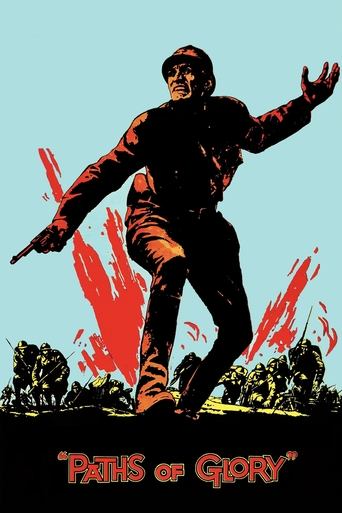
A commanding officer defends three scapegoats on trial for a failed offensive that occurred within the French Army in 1916.
Overview, poster, and credits from TMDB.
Read and watch our full recap ↓FROM THE RECAPRUSH LIBRARY · FULL RECAP
Paths of Glory (1957) Recap & Ending Explained: Why Dax Cannot Save the Men
12 min read · Estimated reading time— views
Intro + RecapRush Viewpoint
Paths of Glory turns an impossible military objective into an apparently simple accusation: the men failed because they were cowards. Colonel Dax knows what happened under fire, but knowledge and authority are not the same thing. His attempt to defend three soldiers exposes a command structure more interested in explaining away failure than examining its own decisions.
RecapRush interpretation: The film’s devastating move is to separate moral clarity from practical power. Dax can identify an injustice, argue against it and uncover another officer’s misconduct without stopping the executions. The final song offers a different kind of resistance: a few minutes in which people cease treating another human being as an enemy or an instrument. Those minutes matter precisely because they do not end the war.
Spoilers and editorial note: This guide covers Stanley Kubrick’s complete 1957 feature. It uses AI-assisted research and drafting checked against distributor material, film scholarship and published plot accounts; it does not claim a first-hand screening. Interpretive passages are commentary, not additional historical evidence.

Table of Contents
Quick Facts
- Film: Paths of Glory (1957)
- Director: Stanley Kubrick
- Screenplay: Stanley Kubrick, Calder Willingham and Jim Thompson
- Source novel: Paths of Glory by Humphrey Cobb
- Producer: James B. Harris
- Runtime: 88 minutes, per Criterion and TMDB
- Country and language: United States; English
- TMDB genres: War, Drama
- TMDB movie ID: 975
- Story setting: The French army on the Western Front, 1916
This is a fictional adaptation drawing on historical military injustice, not a documentary reconstruction in which every character and incident should be equated with a real person. The year 1916 belongs to the story; 1957 identifies the film.
Full Spoiler Recap
A promotion makes an impossible attack attractive
General Broulard proposes an assault on a heavily defended German position called the Anthill. General Mireau initially recognizes the difficulty. The prospect of advancement helps change his response, and he instructs Colonel Dax to carry out the operation despite Dax’s objections.
The decision moves down the hierarchy as an order. Its attraction to a senior officer does not make the ground ahead any less lethal for the men expected to cross it. Mireau’s visit to the trenches also reveals his hostility toward vulnerability: he dismisses a soldier suffering from shell shock instead of recognizing the injury.
Roget’s patrol creates a reason to silence Paris
Before the assault, Lieutenant Roget leads a nighttime reconnaissance with Corporal Paris and another soldier. Frightened and impaired by drink, Roget throws a grenade that kills the man he sent ahead. Paris survives and challenges his account of the patrol.
The incident matters beyond establishing Roget’s fear. Paris now knows something dangerous about a superior. When the regiment later has to supply men for punishment, that knowledge makes him vulnerable rather than protected.
The attack fails under overwhelming fire
Dax leads the assault, but the troops cannot take the Anthill. Some men advance into devastating fire; others remain pinned in the trenches. Mireau interprets the stalled movement as disobedience and orders artillery to fire on his own soldiers. The artillery commander demands written confirmation and does not carry out the order.
Returning to rally another wave, Dax is knocked back into the trench by a falling soldier’s body. That concrete obstruction contradicts any tidy claim that the attack needed only more determination.
RecapRush interpretation: The battlefield supplies physical evidence of impossibility. The argument that follows will try to replace that evidence with a moral label. Once failure is renamed cowardice, the commanders can discuss punishment without first admitting that their plan failed.
Three men become an example
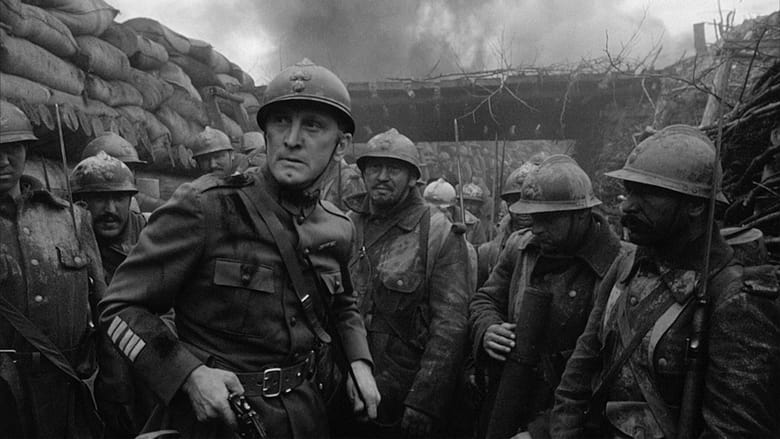
Mireau wants large-scale punishment. The generals settle on three soldiers, one from each company in the first wave, to face a court-martial for cowardice.
Their selection is not uniformly random. Paris is chosen by Roget, whose conduct he witnessed. Ferol is selected because his commander regards him as undesirable. Arnaud is picked by lot. These different routes to the same accusation reveal how little the selection depends on establishing individual guilt.
Dax, a defense lawyer before the war, undertakes their case. The men must answer for a regiment’s failure even though the officers who chose them have unrelated reasons for putting these particular lives at risk.
The courtroom does not correct the battlefield injustice
The hearing is held in the château, far from the conditions the defendants were ordered to endure. Dax objects to a process without adequate safeguards and tries to explain what happened during the assault. The court instead narrows testimony into an accusation that the men did not advance as ordered.
His defense does not secure acquittals. The men are condemned, and their remaining time is spent awaiting execution. Dax also learns about Mireau’s order to shell French troops and takes the information to Broulard, hoping it will help avert their deaths.
The narrative leaves room to expect intervention, then refuses it. The three men are executed by firing squad. No last-minute pardon arrives.
Mireau faces scrutiny after the damage is irreversible
After the executions, Broulard confronts Mireau about the artillery order and announces an inquiry. Mireau’s possible fall does not undo the sentences already carried out.
Broulard then offers Dax the command that Mireau is losing. He assumes Dax has been maneuvering for promotion rather than sincerely trying to save the soldiers. Dax rejects the offer and condemns Broulard’s understanding of what has happened.
The disagreement is deeper than one officer being cruel and another kind. Broulard struggles to recognize an action that is not a bid for advantage. Dax’s refusal exposes the limits of that explanation without removing Broulard from power.
The German singer and the final delay
Dax encounters his soldiers gathered in a tavern. A frightened German woman is brought before them to sing. Their initial whistles and jeers subside as she performs The Faithful Hussar. Men listen, hum along and become visibly emotional.
An order arrives for the unit to return to the front. Dax allows the men a little more time before they must go. The film ends with that small postponement, not with an announced peace, a rescued prisoner or the overthrow of the generals.
Cast and Characters
Cast and Characters

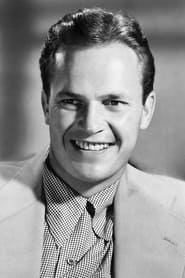


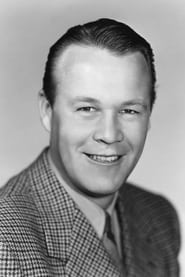

The linked TMDB gallery identifies Kirk Douglas as Colonel Dax, Ralph Meeker as Corporal Paris, Adolphe Menjou as General Broulard, George Macready as General Mireau, Wayne Morris as Lieutenant Roget and Richard Anderson as Major Saint-Auban. Each portrait links to the corresponding RecapRush person profile.
The three condemned men are Paris, Arnaud and Ferol. Joe Turkel plays Arnaud and Timothy Carey plays Ferol; Christiane Kubrick, credited as Susanne Christian, plays the German singer. These additional roles are identified here for clarity without duplicating the gallery as a cast table.
Ending Explained
Do the condemned soldiers survive?
No. All three are executed. The information about Mireau’s misconduct is not a hidden rescue mechanism, and the later inquiry is not a reversal of the men’s fate.
RecapRush interpretation: The timing is the point. An institution can investigate a superior after using subordinates as an example. Such an investigation may threaten one career while leaving the original injustice intact. Accountability that arrives too late cannot be treated as equivalent to preventing harm.
More from RecapRush
 Wicker (2026) Recap & Ending Explained: Why Saving the Baby Matters More Than Exposing the Lie
 Heart of the Beast (2026) Recap & Ending Explained: Why James Must Teach Odin to Leave Him
 Howl’s Moving Castle (2004) — Full Spoiler Recap & Ending Explained
Why does Broulard offer Dax a promotion?
Broulard mistakes Dax’s defense and exposure of Mireau for an effort to obtain Mireau’s command. Dax’s rejection confirms that his purpose was to protect the men, not inherit a position from their deaths.
RecapRush interpretation: The offer is a second attempt to translate a moral dispute into a personnel matter. If Dax accepts, the hierarchy can absorb the protest as ordinary competition. His refusal preserves the distinction, though it gives him no power to restore the executed soldiers.
Why does the song change the soldiers’ behavior?
The final scene shows a change from humiliating a frightened woman to listening and sharing her melody. The German singer is an individual before them, rather than the distant military enemy represented by gunfire throughout the battle.
RecapRush interpretation: The scene creates attention where the preceding proceedings demanded classification. In court, a person becomes a coward; on stage, the woman begins as entertainment taken from the enemy. Listening interrupts that reduction. The men’s tears do not establish that they have become permanently innocent or gentle, but the change in their behavior is real.
Is the final scene hopeful?
Only within a limit the film makes explicit: the unit must return to the front. Dax does not cancel the order. He grants a brief interval.
RecapRush interpretation: The ending contains a humane act without offering a humane system. Its modest scale prevents the song from serving as compensation for the executions. A few minutes of fellow feeling cannot balance three deaths, yet refusing to recognize their value would repeat the generals’ habit of measuring people only by usefulness.

Character and Theme Analysis
Dax’s courage cannot guarantee an outcome
Dax leads the attack as well as defending its scapegoats. His experience of danger supports his argument, but the court does not allow that experience to determine its judgment.
RecapRush interpretation: The film challenges the reassuring idea that a sufficiently brave and articulate advocate will necessarily prevail. Dax’s failure does not make his defense meaningless. It reveals the difference between being right and possessing the authority to make being right count.
His final decision is correspondingly small. He cannot save the condemned men or end the next deployment, but he can decide not to interrupt the song immediately. The scale of available action has narrowed; his obligation to other people has not disappeared.
Mireau and Broulard distribute responsibility differently
Mireau openly demands punishment after the failed attack. Broulard negotiates the number of victims and later distances himself from Mireau’s artillery order. The two men do not need identical temperaments to participate in the same injustice.
RecapRush interpretation: Mireau makes the violence conspicuous; Broulard makes it administratively manageable. Reducing a proposed punishment can look moderate without challenging its premise. That distinction explains why exposing the more visibly angry man is not enough to repair the command structure.
Paris is punished for what he knows
Paris’s selection connects the court-martial to Roget’s earlier patrol. The lieutenant who endangered his own men can help decide which subordinate will be branded a coward.
RecapRush interpretation: This gives the film’s accusation a concrete mechanism. Power over the list of defendants becomes power over the survival of an inconvenient witness. The language of collective discipline conceals an intensely personal interest.
Fear is unequal before rank
The commanders treat ordinary soldiers’ fear as evidence against them. Roget’s fear during reconnaissance and Mireau’s anxiety about failure instead produce decisions that others must bear.
RecapRush interpretation: The question is not whether officers or enlisted men ever feel afraid. It is whose fear becomes punishable and whose fear becomes an order. The patrol, assault and trial each show a different version of that inequality.
Meaningful Overlooked Details
Only one selection is a lottery
Calling all three men randomly chosen obscures the separate motives behind Paris and Ferol’s selection. Chance is one route to punishment here, not its universal explanation. That difference makes the charge of individual cowardice even harder to sustain.
The artillery commander asks for a written order
The refusal to fire without written confirmation interrupts Mireau’s command. It does not depend on persuading him that he is wrong.
RecapRush interpretation: Requiring a record makes responsibility harder to pass downward. The episode contrasts with the court’s treatment of procedure, where safeguards that could help the accused are pushed aside. Paperwork can constrain power or be dismissed by it, depending on who benefits.
The inquiry follows the executions
The order of these events is essential. If the film ended with the inquiry alone, it might resemble a story in which a corrupt officer is exposed and the institution corrects itself. The dead men prevent that comfortable reading.

Credit-Scene Information
The plot accounts and distributor materials checked for this guide identify the tavern song and the return-to-front order as the concluding narrative sequence. They do not establish an additional story scene during or after the credits. This is not a frame-by-frame verification of every release edition.
Final Thoughts
Paths of Glory refuses to make recognition of injustice a promise that injustice will be stopped. Its executions remain irreversible even when Mireau becomes vulnerable and Dax exposes Broulard’s assumptions.
RecapRush interpretation: The final delay matters because it protects something that the film’s powerful men repeatedly disregard: time belonging to vulnerable human beings. Dax cannot transform the system, but he can give the men a moment before it claims them again. The song leaves compassion present and endangered at once.
For another film that separates an official victory from its moral cost, read our [Unforgiven ending analysis](/movie/33). To compare two different forms of institutional abandonment, see [High Noon](/movie/288).
FAQ
Who are the three soldiers executed?
Corporal Philippe Paris, Private Pierre Arnaud and Private Maurice Ferol. Their selection follows three different mechanisms: retaliation, a lottery and their commander’s unfavorable opinion.
Does Mireau actually shell his own troops?
He orders the artillery to fire on them. The artillery commander refuses to do so without written confirmation. An order being issued and an order being carried out are different events.
Does Dax become the new general?
No. Broulard offers him Mireau’s command, but Dax rejects the offer and its assumption that he was pursuing promotion.
What is the song at the end?
The German folk song The Faithful Hussar, performed by Christiane Kubrick, credited as Susanne Christian. No song lyrics are reproduced in this guide.
Does the ending show the soldiers dying in another battle?
No. The return-to-front order establishes continuing danger. The film does not show or confirm the later fate of each man listening in the tavern.
Is the video below the entire film?
No. It is MGM’s official promotional trailer, verified on the Amazon MGM Studios YouTube channel.
Join the conversation
What did you think of the ending? Share your interpretation. Spoilers may appear below.
This product uses the TMDB API but is not endorsed or certified by TMDB.
No comments yet. Start the conversation.