
RECAPRUSH TV GUIDE
Chernobyl (2019)
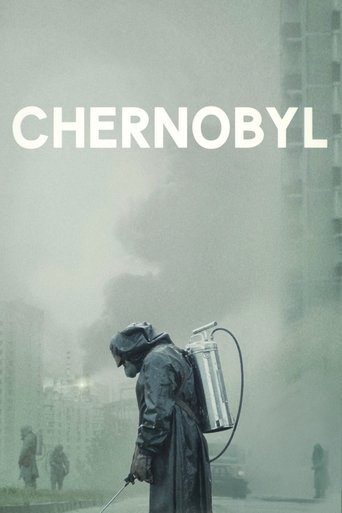
The true story of one of the worst man-made catastrophes in history: the catastrophic nuclear accident at Chernobyl. A tale of the brave men and women who sacrificed to save Europe from unimaginable disaster.
Overview, poster, and credits from TMDB.
Read and watch our full recap ↓FROM THE RECAPRUSH LIBRARY · FULL RECAP
Chernobyl (2019) Recap & Ending Explained: Why Legasov Chooses Truth Over Survival
17 min read · Estimated reading time— views
Intro + RecapRush Viewpoint
The first lie in HBO's Chernobyl is almost small enough to understand. A reactor cannot explode, the men in charge insist, so the burning graphite on the ground must mean something else. From that refusal grows a catastrophe measured not only in radiation but in every person ordered to act on information the state already knows is false.
Craig Mazin's five-part 2019 miniseries begins with physicist Valery Legasov recording the truth and taking his own life. It then moves backward to the explosion of Reactor 4 and forward through the sacrifices, denials, investigations, and cleanup that follow. The structure makes the outcome unavoidable. Suspense comes from watching people decide whether survival is worth becoming part of the lie.
RecapRush Viewpoint: Chernobyl is most powerful when it treats truth as physical matter. Lies do not erase radiation; they merely transfer the cost to firefighters, miners, nurses, soldiers, families, and future victims. Legasov's final victory is not that he escapes the system. It is that he leaves the system unable to bury what happened.
Full spoilers ahead: This article covers all five episodes, including the reactor explosion, the hospital deaths, the liquidation effort, the trial, Legasov's testimony, and the epilogue. It also distinguishes the miniseries' dramatization from documented history.
Featured Image
Featured image: TMDB poster for HBO's Chernobyl (TV ID 87108).
Source: https://www.themoviedb.org/tv/87108
Table of Contents
Quick Facts
- Title: Chernobyl
- Year: 2019
- Type: Live-action historical drama miniseries
- Genre: Drama
- Creator and writer: Craig Mazin
- Director: Johan Renck
- Episodes: 5
- Original run: May 6–June 3, 2019
- Network: HBO
- TMDB TV ID: 87108
Full Spoiler Recap
1. “1:23:45” — the explosion and the first denial
On April 26, 1988, Valery Legasov records a series of tapes about Chernobyl, hides them outside his apartment, and hangs himself. The story then returns exactly two years to the night Reactor 4 explodes at the Chernobyl Nuclear Power Plant near Pripyat.
In the control room, Deputy Chief Engineer Anatoly Dyatlov refuses to accept what the workers' instruments and eyes are telling them. He insists the reactor core is intact because an RBMK reactor is not supposed to explode. Plant managers Viktor Bryukhanov and Nikolai Fomin repeat the lower radiation reading from a meter that has reached its maximum instead of asking what a broken measurement means.
The denial travels downward as orders. Aleksandr Akimov and Leonid Toptunov are sent to restore cooling water to a core that no longer exists. Other workers look directly into the open reactor or carry irradiated debris with their hands. Each man is placed in greater danger because acknowledging the impossible would threaten the authority of the people giving commands.
Firefighters arrive without protection for a nuclear event. Vasily Ignatenko picks up a piece of graphite and soon develops a severe burn. His wife, Lyudmilla, watches the strange glow from Pripyat while residents gather on a railway bridge beneath falling radioactive dust. The scene is beautiful because none of them can see what the light is doing to their bodies.
At a local executive committee meeting, officials choose secrecy. Telephone lines are cut and the city is contained. The reactor continues burning while the language used to describe it becomes smaller.
2. “Please Remain Calm” — Legasov and Shcherbina confront the core
In Moscow, Legasov is summoned to advise the state committee. He recognizes that graphite outside the building means the reactor core is exposed, but Boris Shcherbina, the deputy chairman assigned to lead the response, initially treats the physicist's caution as obstruction.
Their helicopter flight to Chernobyl begins the miniseries' central relationship. Shcherbina has political power without nuclear knowledge; Legasov has knowledge without power. When Shcherbina threatens to have him thrown from the helicopter, Legasov calmly explains that the threat cannot change the physics below them.
An accurate high-range dosimeter confirms the scale of the radiation. Legasov recommends dropping sand and boron on the fire and evacuating Pripyat. The state eventually orders buses into the city, but residents are told they will return in three days. They leave photographs, pets, and ordinary lives behind.
In Minsk, nuclear physicist Ulana Khomyuk detects contamination and traces it to Chernobyl. She learns that water collecting beneath the reactor could interact with the molten core material. In the series, she warns Legasov of the possibility of a second steam explosion. Three plant workers—Alexei Ananenko, Valeri Bezpalov, and Boris Baranov—enter the flooded basement to open valves and drain the tanks.
The episode ends in darkness when their lamps fail. The ticking dosimeters become the only map. Survival depends on people entering a danger that officials first refused to name.
3. “Open Wide, O Earth” — bodies become evidence
The divers complete their mission, but the molten core still threatens the groundwater. Legasov says a heat exchanger must be installed beneath the reactor. Shcherbina recruits coal miners from Tula to dig a tunnel. Their chief immediately understands that the officials asking for sacrifice cannot promise safety.
The miners work in extreme heat. When fans are withheld because they could spread contamination, they strip naked and continue digging. The scene removes every layer of patriotic ceremony from the labor. The state needs their bodies more than it values them.
Lyudmilla travels to Moscow Hospital No. 6, where Vasily and the other first responders are dying from acute radiation syndrome. She is warned not to touch him and hides her pregnancy. Love makes the rules feel inhuman, yet radiation does not recognize tenderness as protection. Vasily's condition deteriorates; after his death, his body is sealed in zinc and buried under concrete.
Khomyuk interviews Akimov and Toptunov before they die. Their testimony suggests that the reactor exploded after the AZ-5 emergency shutdown button was pressed—the very action designed to stop it. The paradox points toward a defect in the RBMK reactor rather than simple operator incompetence.
Khomyuk is arrested after pressing Legasov about the withheld truth. Shcherbina secures her release, but the warning is clear: evidence has political value only when it supports the approved conclusion.
4. “The Happiness of All Mankind” — liquidation turns people into tools
Months pass. The fire is controlled, but radioactive debris remains across the roof and surrounding region. Soviet and foreign robots are tested to remove graphite. The most capable machine fails in the extreme radiation after officials provide the West with a deliberately low estimate of the conditions.
The state replaces machines with “bio-robots”: soldiers sent onto the roof for roughly ninety seconds at a time. Each man must shovel a small amount of graphite over the edge and return before his dose becomes even worse. The sequence reduces heroism to a bell, a stopwatch, breath inside a mask, and a few seconds of terrified work.
Young conscript Pavel joins Bacho and Garo in the exclusion zone, killing abandoned animals so they cannot carry contamination beyond it. Pavel begins unable to shoot a wounded dog and ends performing the work mechanically. The transformation is not presented as maturity. It is the emotional cost of making an ordinary person responsible for consequences created far above him.
Khomyuk continues reconstructing the accident. The control-room crew lowered reactor power too far, then removed control rods and disabled safety systems to continue a delayed test under unstable conditions. Yet those violations alone do not explain why pressing AZ-5 caused a power surge. The crucial fact is an RBMK design flaw: graphite tips on the control rods could briefly increase reactivity as the rods entered the core.
Legasov knows that the flaw was concealed. Exposing it would implicate the state and the nuclear establishment that formed his career. Remaining silent would leave other RBMK reactors vulnerable to the same danger.
5. “Vichnaya Pamyat” — the trial reconstructs the night
The finale moves to the 1987 trial of Dyatlov, Bryukhanov, and Fomin. Shcherbina explains the institutional failures, Khomyuk describes the human sequence of the test, and Legasov uses red and blue placards to explain the reactor's physics.
The test should have been completed before the day shift ended, but a request from the electrical grid delayed it. The experienced crew left, and the night shift inherited a dangerous experiment. Power fell nearly to zero, xenon poisoned the reactor, and operators withdrew too many control rods to restore output. The reactor entered an unstable state with a positive void coefficient: as cooling water turned to steam, reactivity increased.
When Akimov pressed AZ-5, the graphite-tipped rods initially displaced water and increased reactivity at the bottom of the core. Power surged, fuel channels ruptured, and explosions destroyed the reactor. The emergency shutdown became the trigger because a known design danger had been hidden from operators.
Legasov is expected to blame the men on trial and stop there. Instead, he names the design flaw and the culture of secrecy that protected it. He admits the operators made reckless choices, but he refuses to make them the entire explanation.
KGB Chairman Charkov tells Legasov that his testimony will be suppressed. He will lose his status, his institutional role, and meaningful contact with colleagues. Shcherbina, already ill, understands that neither of them will be publicly rewarded for preventing worse consequences.
The story returns to 1988. Isolated and professionally erased, Legasov records the tapes heard at the beginning. The epilogue explains that the recordings circulated after his death and helped force acknowledgment of the RBMK flaws. It also identifies Ulana Khomyuk as a composite character representing the scientists who worked to uncover the causes.
Archival images connect the performers to real people and record what happened afterward. The final title—“Vichnaya Pamyat,” eternal memory—turns remembrance into the opposite of the system's preferred disappearance.
Cast + TMDB
Cast and Characters

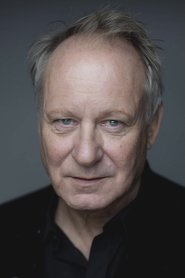






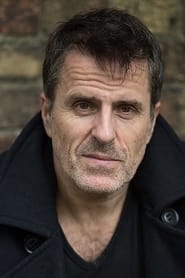
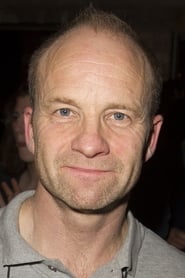
This article is matched to TMDB TV 87108. The Cast and Characters gallery uses TMDB's credited series records for Jared Harris as Valery Legasov, Stellan Skarsgård as Boris Shcherbina, Emily Watson as Ulana Khomyuk, Paul Ritter as Anatoly Dyatlov, Jessie Buckley as Lyudmilla Ignatenko, Adam Nagaitis as Vasily Ignatenko, Sam Troughton as Aleksandr Akimov, Robert Emms as Leonid Toptunov, Con O'Neill as Viktor Bryukhanov, Adrian Rawlins as Nikolai Fomin, Alan Williams as KGB Chairman Charkov, and David Dencik as Mikhail Gorbachev.
More from RecapRush
 Animals (2026) Recap & Ending Explained: Why Ramon Saves Hector but Mark Wins the Election
 Inception (2010) — Full Spoiler Recap & Ending Explained
 The Assassin(s) (2026) Story Analysis: What Happens When Loyalty Requires Asking Forbidden Questions?
The gallery below renders the credited TMDB data and profile links. The public article does not repeat the same cast in an Actor | Character table. Khomyuk is explicitly identified by the series as a fictional composite rather than a single historical person. [3, 4]
Ending Explained
Why does Legasov reveal the reactor flaw?
Legasov realizes that a partial truth is another form of the lie that caused the disaster. Dyatlov and the operators violated procedure, but the graphite-tipped control rods and positive void coefficient made the RBMK capable of catastrophic behavior. If the state blames only individuals, similar reactors remain dangerous.
His testimony costs him his public future. In the drama, telling the truth is not a path to personal rescue; it is the acceptance that other people may live because he stops protecting himself.
What does the red-and-blue explanation mean?
Legasov's red and blue placards visualize forces inside the reactor. Red represents factors that increase reactivity; blue represents factors that reduce it. The explanation shows how the operators created an unstable reactor and why AZ-5 did not immediately calm it.
The sequence is a teaching device, not a complete technical simulation. Its dramatic purpose is to make responsibility legible: human mistakes mattered, but those mistakes encountered a concealed design defect.
Did Legasov really expose the secret at that trial?
No. The finale's trial confrontation is a dramatization. Historical assessments and HBO's official companion podcast explain that Legasov and Shcherbina did not deliver the testimony at the real trial as shown. The real proceedings were longer and involved more participants. [4, 5, 6]
The series compresses several investigations and scientific voices into a single climax. That change should not be mistaken for a documentary record. Legasov did advocate reforms and suffered professional consequences, and his posthumous recordings contributed to the public understanding of the disaster.
Why does Legasov die by suicide?
The opening and ending portray him as isolated, ill, and erased after attempting to force institutional change. His death occurs two years after the disaster. The hidden tapes become a way to continue speaking after official channels have closed around him.
The drama does not frame suicide as a clean heroic solution. It shows a system that extracts his knowledge during crisis and abandons him when that knowledge threatens authority.
What happens to Shcherbina?
The epilogue states that Boris Shcherbina died in 1990. Within the miniseries, his arc moves from contempt for expertise to an understanding that political authority is useless when it cannot admit physical reality. He and Legasov do not become sentimental friends, but they acquire the trust necessary to act honestly.
Is Ulana Khomyuk a real person?
No. Khomyuk is a composite created to represent numerous Soviet scientists who investigated the accident and challenged secrecy. The closing text says so directly, and Mazin discussed the choice in HBO's companion podcast. [3, 4]
RecapRush Interpretation
The miniseries is not simply about leaders lying to the public. Its sharper insight is that institutions train people to lie to themselves. Dyatlov cannot see an exploded reactor because his identity depends on it being impossible. Bryukhanov reports the reassuring number because a higher one would make him responsible for an unmanageable truth.
Legasov begins inside the same bargain. His expertise grants him status because it is useful to the state. The trial forces him to choose whether expertise means explaining only what power permits or following evidence beyond the point where permission ends.
RecapRush reads his final decision as a refusal to make another anonymous worker pay his moral debt. The firefighters, divers, miners, nurses, and liquidators have already absorbed the physical cost. Legasov accepts the political cost because silence would send the bill forward.
Deep Analysis & Key Themes
The cost of lies accumulates like radiation
Radiation cannot be negotiated with. It continues passing through bodies while committees revise language, measurements, and blame. The miniseries repeatedly contrasts invisible physical processes with visible performances of authority.
That structure gives the opening question—what is the cost of lies?—its answer. A lie does not create an alternative reality. It creates a delay during which the real one becomes more dangerous.
Measurement is a moral act
The broken dosimeter reading is more than a technical detail. Officials treat the instrument's maximum as the environment's maximum. Legasov does the opposite: he asks what the machine cannot measure.
The same pattern recurs with robots, medical warnings, reactor diagrams, and testimony. Data becomes ethical only when people are willing to accept what it implies. Numbers can illuminate truth or provide a precise vocabulary for denial.
Shcherbina learns the difference between command and responsibility
At first, Shcherbina believes power means making people obey. Chernobyl teaches him that responsibility begins when obedience cannot solve the problem. He must listen to experts, request resources, evacuate a city, and admit that the state he represents created vulnerabilities it refuses to name.
His most meaningful change is not ideological conversion. It is humility. He learns to ask Legasov what must be done and then use his authority to make it possible.
The series refuses clean heroism
The divers, miners, firefighters, and liquidators perform extraordinary acts, but the camera rarely gives them triumphant release. Their courage exists because failures elsewhere have removed safer options.
This distinction protects the story from turning sacrifice into propaganda. Admiring the workers does not absolve the institutions that exposed them. Heroism may reduce the disaster, but it cannot retroactively justify it.
Horror comes from ordinary procedure
Johan Renck's direction finds terror in doors, telephones, paper reports, hospital plastic, lead aprons, and the sound of dosimeters. The series rarely needs a conventional monster. Procedure becomes monstrous when everyone performs a small assigned task without being allowed to see the whole system.
The most frightening scenes are often quiet: a nurse touching contaminated clothing, a clerk recording a low number, a soldier waiting for the roof bell, or Legasov sitting in an empty office after his name has been removed from the story.
Historical drama has its own duty to truth
The miniseries openly compresses people and events. Khomyuk is composite; the courtroom confession is dramatized; several scientific and political processes are simplified. HBO's companion podcast was created in part to explain those decisions. [4]
That transparency matters because the show's subject is deception. Its strongest historical value comes not from pretending every scene is literal but from inviting viewers to distinguish documented events, composite storytelling, and thematic interpretation.
What Most Viewers Missed
The opening tells us that testimony, not survival, is the climax
Because Legasov dies in the first scene, the series never asks whether he personally escapes. The real question is whether his account escapes. Hiding the tapes outside transforms an apparently private death into the beginning of public evidence.
The graphite is proof before anyone speaks
Graphite blocks belong inside the reactor core. Their presence on the ground is physical proof that the core is open. The officials' refusal to recognize them shows that the crisis is epistemic before it becomes administrative: evidence is present, but the institution lacks permission to understand it.
The robots repeat the dosimeter mistake
Officials understate radiation when requesting a machine from West Germany. The supplied robot then fails because it was built for the false conditions described. The lie meant to protect national prestige forces Soviet soldiers to replace machinery with their bodies.
Khomyuk is deliberately more than one scientist
Treating Khomyuk as a real individual misses the epilogue's point. She represents a scientific community whose labor would be difficult to dramatize in five episodes. Her composite nature also prevents the story of truth from belonging to Legasov alone.
The miners' nudity rejects the official image
The miners strip because of heat, but the visual also removes uniforms, ranks, and heroic framing. Their bodies expose the basic transaction beneath the rhetoric: authorities require people to enter danger that those authorities will not share.
The final archival montage changes the contract with the viewer
The performers disappear into photographs of real people, documented outcomes, and notes about dramatization. The sequence asks viewers to carry emotional attention beyond the finished drama and toward history, where consequences do not end with a courtroom scene.
Mid/Post-Credits
There is no separate mid-credits or post-credits scene after the finale. The historical epilogue and archival montage are part of the episode's ending, not a bonus stinger. They provide factual context, identify dramatized elements, and complete the series' memorial purpose.
Final Thoughts
Chernobyl turns a nuclear disaster into a study of how institutions lose the ability to correct themselves. Every layer of denial seems defensible to the person using it: preserve calm, protect a career, avoid humiliation, maintain confidence in the state. Together, those choices place workers beside an open core without knowing what they are touching.
Legasov's ending matters because he breaks that chain without escaping its consequences. The miniseries dramatizes his trial testimony, but the moral structure is clear: knowledge becomes courage only when it is spoken where silence is rewarded.
RecapRush's final reading is that the series' warning is wider than one reactor or one political system. Any institution can become dangerous when protecting its story matters more than measuring reality. Truth eventually arrives; the only question is how many people are made to pay before it is allowed in the room.
FAQ
What is the exact TMDB ID for Chernobyl?
The verified record is TMDB TV 87108. It matches HBO's 2019 five-episode miniseries, principal cast, poster, and original air dates. [1, 3]
How many episodes are in Chernobyl?
The miniseries contains five episodes: “1:23:45,” “Please Remain Calm,” “Open Wide, O Earth,” “The Happiness of All Mankind,” and “Vichnaya Pamyat.” They originally aired from May 6 through June 3, 2019. [3]
Is Chernobyl a documentary?
No. It is a historical drama based on real events. It uses composite characters, compressed timelines, and dramatized scenes. HBO's official podcast discusses the factual sources and the changes made for television. [4]
Did the three divers die immediately?
No. The series' epilogue corrects the widespread assumption that all three died soon after the mission. Their real outcomes were different from the legend that grew around the event.
Why is the final episode called “Vichnaya Pamyat”?
The phrase means “eternal memory” and is associated with remembrance for the dead. It frames the finale not only as an explanation of the explosion but as a memorial to people whose sacrifice or suffering could otherwise be reduced to statistics.
Join the conversation
What did you think of the ending? Share your interpretation. Spoilers may appear below.
This product uses the TMDB API but is not endorsed or certified by TMDB.
No comments yet. Start the conversation.