
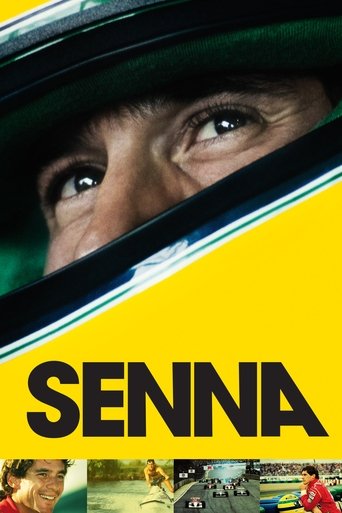
RECAPRUSH MOVIE GUIDE
Senna (2010)
Directed by Asif Kapadia
The remarkable story of Brazilian racing driver Ayrton Senna, charting his physical and spiritual achievements on the track and off, his quest for perfection, and the mythical status he has since attained, is the subject of Senna, a documentary feature that spans the racing legend's years as an F1 driver, from his opening season in 1984 to his untimely death a decade later.
Overview, poster, and credits from TMDB.
Read and watch our full recap ↓FROM THE RECAPRUSH LIBRARY · FULL RECAP
Senna (2010) Recap & Ending Explained: Why the Funeral Changes the Rivalry with Prost
12 min read · Estimated reading time— views
Intro + RecapRush Viewpoint
Senna makes racing look immediate while asking us to watch a life whose outcome is already known. Asif Kapadia’s documentary follows Ayrton Senna from karting memories through Formula One championships, a bitter rivalry with Alain Prost and the fatal weekend at Imola. Its ending changes the scale of the story: a contest over who deserves to win gives way to the people who must live with a loss.
RecapRush interpretation: The funeral does more than conclude a biography. Prost’s presence unsettles the opponent role he has occupied during much of the film. The rivals belong to a larger human history than the championship battles can contain. That is why the ending should complicate our judgment of the rivalry rather than simply confirm a hero-and-villain account.
Scope and editorial note: Full spoilers for the approximately 106-minute theatrical documentary follow. This is the 2010 film, released in the UK in 2011, not the later Netflix dramatic series or the extended documentary edition. The guide uses AI-assisted research and drafting checked against production material, film criticism and historical sources; it does not claim a first-hand screening. Original interpretations are labelled separately.

Table of Contents
Quick Facts
- Film: Senna (2010)
- Director: Asif Kapadia
- Writer: Manish Pandey
- Production: Working Title Films, StudioCanal and Midfield Films
- Theatrical runtime: 106 minutes, per TMDB and contemporary film listings
- TMDB genres: Documentary
- TMDB movie ID: 58496
- UK release: June 3, 2011, per Working Title
- Central subject: Ayrton Senna’s Formula One career, principally 1984–1994, with earlier karting material
- Championship years: 1988, 1990 and 1991
The differing 2010 and 2011 labels refer to the film’s release history. They do not identify two separate documentaries. The longer edition adds interview material and is outside this guide’s scene-by-scene scope.
Full Spoiler Recap
Karting supplies a memory of uncomplicated competition
The film opens with material from Senna’s karting years and his recollection of a kind of racing less entangled with money and politics. It establishes a personal ideal against which his Formula One experience will be measured.
That ideal is not proof that the past was wholly innocent. It is the subject’s remembered contrast. Keeping that distinction in mind helps us read the documentary as a portrait built around a perspective rather than an exhaustive institutional history of motorsport.
A young driver becomes impossible to ignore
Senna enters Formula One with Toleman in 1984. His performance in the rain at Monaco introduces the exceptional ability around which the film builds its central drama. The race is stopped with Prost the winner, leaving Senna’s charge short of first place.
The Lotus period follows before the story concentrates on McLaren. By 1988, Senna and Prost are teammates as well as competitors for the championship. Senna wins his first world title, but sharing a team does not make their interests identical.
RecapRush interpretation: A championship can register an individual result without describing the dependencies behind it. Senna needs a competitive car and a team, yet his teammate is also the person he must beat. The McLaren years turn that structural tension into a personal relationship.
Suzuka makes rules part of the contest
The 1989 Japanese Grand Prix becomes a decisive collision between Senna and Prost. Senna continues and finishes first on the road, but disqualification removes the result, and Prost takes the title. The film emphasizes Senna’s anger at official decisions and his disputes with Jean-Marie Balestre.
In 1990, with Prost now at Ferrari, another collision at Suzuka resolves the championship in Senna’s favor. Senna later acknowledges that the contact was intentional. The reversal matters: the documentary’s subject cannot be understood only as someone acted upon by rivals and officials. His own decisions are part of the danger and controversy.
These sequences need to be distinguished. The 1989 dispute and the 1990 first-corner collision are not the same incident, and their championship outcomes are different.

Brazil offers a victory that feels personal
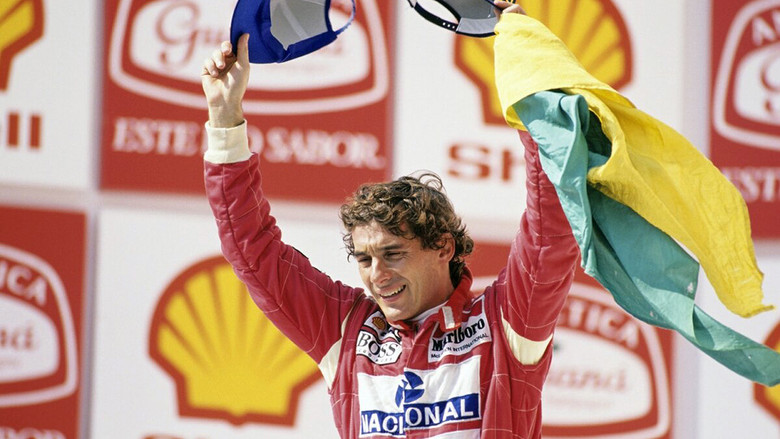
At the 1991 Brazilian Grand Prix, Senna wins at home despite a failing gearbox that leaves him struggling with the car. The film gives this achievement emotional weight beyond another result in a championship campaign. His exhaustion and the response to the victory connect the athlete’s body with the hopes invested in him by spectators.
He wins his third world championship that year. The documentary then moves through a changing competitive landscape: Williams becomes dominant, with Nigel Mansell champion in 1992 and Prost champion in 1993. Senna’s talent does not make the machinery beneath him interchangeable with a rival’s.
Williams does not deliver a simple new beginning
After Prost retires, Senna joins Williams for 1994. Changes to the regulations and the team’s difficulties prevent the move from becoming an uncomplicated continuation of its previous dominance.
The final part of the film narrows onto the San Marino Grand Prix weekend at Imola. Rubens Barrichello is injured on Friday; Roland Ratzenberger dies following his Saturday qualifying crash. Senna’s distress and the concern surrounding the event interrupt any assumption that this is merely another race to conquer.
On May 1, 1994, Senna crashes during the Grand Prix and dies at 34. This guide does not use the documentary’s emotional construction to assert a newly proven technical cause for the accident or a precise account of his unspoken thoughts.
The race narrative becomes a public farewell
The documentary moves into mourning and funeral footage in Brazil. Family, friends and racing figures appear within a collective response to his death. Prost, who has so often been the opposing force in the competitive story, is one of the pallbearers.
The conclusion also points toward the charitable work carried forward through the Instituto Ayrton Senna and toward the sport’s safety record as it stood when the film was made. Archival images of Senna alive continue to shape the farewell, including material accompanying the start of the credits.
The ending does not reverse the death. It changes what the surviving images are doing: footage once recorded in the present becomes a means of remembering someone who is absent.
Cast and Documentary Participants
Cast and Characters
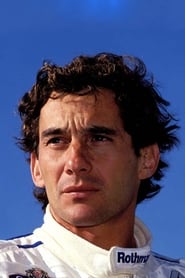
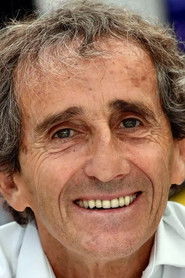
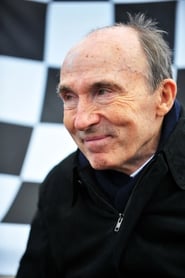
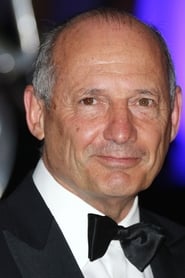


The accompanying TMDB gallery links Ayrton Senna, Alain Prost, Frank Williams, Ron Dennis, Viviane Senna and Milton da Silva to their RecapRush person profiles. They are documentary subjects and contributors appearing as themselves or in archival material, not actors playing fictional roles.
The theatrical cut avoids cutting away to newly filmed talking-head interviews, but that does not mean the filmmakers conducted no interviews. Production notes explain that recorded contributions were used as audio over selected footage. The distinction is between how testimony was gathered and how it is presented.
Ending Explained
Why does Prost’s presence at the funeral matter?
Prost is a pallbearer, not an adversary pursuing points in the final sequence. Production notes also identify him as a contributor who gave the filmmakers substantial interview time.
More from RecapRush
 The Bridge on the River Kwai (1957) Recap & Ending Explained: Why Nicholson Protects the Wrong Victory
 Coyote vs. Acme (2026) Recap & Ending Explained: Why Wile E. Has to Lose
 Re:Zero Season 1 (2016) Recap & Ending Explained: Why Subaru Can Only Win After He Starts From Zero
RecapRush interpretation: Competitive opposition is a role within a particular setting, not the whole of a relationship. The funeral makes that limit visible. A viewer who has accepted the rivalry as a complete moral map must now account for grief that does not fit it.
This does not require us to pretend the disputes were mild or imaginary. It asks us to avoid treating an athlete’s rival as the permanent antagonist of every part of his life. The International Cinephile Society’s comparison of the theatrical and extended editions is useful here: the additional interviews give Prost more room than the shorter dramatic structure does.
Why return to images of Senna alive?
Film International’s account describes living images of Senna intercut with the farewell and continuing as the credits begin. The documentary’s archive preserves gestures, expressions and movement that a result sheet cannot.
RecapRush interpretation: Those images have a double effect. They let the person feel present while reminding us that access to him now depends on a recording. Their warmth does not cancel the funeral; the funeral changes how we experience their warmth.
The ending therefore offers remembrance rather than a twist. There is no hidden survival, dream sequence or fictional reunion to decode.
Does the film prove that Senna was always right?
No. A portrait’s closeness to its subject should not be mistaken for a final adjudication of every sporting dispute. The paired Suzuka incidents, his own competitive choices and the treatment of Prost all deserve attention.
RecapRush interpretation: The strongest way to honor the film’s emotional power is to keep examining the choices that produce it. Recognizing a viewpoint does not make the archive false. It makes us ask which material is foregrounded, which voices remain off screen and what a compressed rivalry cannot fully explain.
Character and Theme Analysis
Perfection meets a sport that cannot be controlled alone
Senna’s pursuit of excellence operates within teams, regulations and technological differences. Monaco, the Suzuka disputes and the later Williams advantage each place a different limit around individual performance.
RecapRush interpretation: His desire for an unambiguous answer on the track keeps encountering systems that distribute outcomes. Speed is measurable, but a championship also depends on reliability, rules and decisions beyond one cockpit. The tension is more revealing than a claim that talent ought automatically to defeat every obstacle.
The body interrupts the legend
The 1991 home victory is an achievement accompanied by physical strain. Imola later confronts the film with a loss that competitive will cannot overcome.
RecapRush interpretation: The exhausted winner and the mourned driver belong to the same story. Treating the earlier pain only as inspirational evidence risks making bodily limits disappear into the myth of determination. The final weekend forces those limits back into view without requiring us to diminish the earlier accomplishment.
A national symbol remains a person
The Brazilian flag, home-race response and public mourning connect Senna’s career to a community larger than the racing paddock. His significance is not exhausted by his rivalry with another driver.
RecapRush interpretation: The funeral changes the audience within the film. Earlier, spectators wait for a result; afterward, they share a loss. This movement makes national attachment tangible while leaving an important question open: how much of a private life can a public sporting portrait actually show?
The documentary supplies intimate material, but it does not become a complete account of every relationship. Its selectivity should remain visible in any claim about the whole person.
Meaningful Details and Viewing Cautions
No talking heads does not mean no editorial mediation
The production notes distinguish the interviews recorded for the project from the archive shown on screen. A seamless period setting can still contain later testimony and deliberate selection.
RecapRush interpretation: This is what makes the film feel immediate, and also why immediacy is not the same as neutrality. We can be immersed in a sequence while remembering that someone has organized its perspective.
The safety epilogue belongs to its release period
The film’s closing safety claim should not be repeated as a current statement that no Formula One driver has died from race injuries since Senna. Jules Bianchi died on July 17, 2015, following injuries sustained at the 2014 Japanese Grand Prix; the FIA’s subsequent tribute confirms both the date and circumstances.
That later fact does not change what the documentary said when it was released. It changes how a present-day guide must contextualize it. A historical title card is evidence of its own moment, not a live safety bulletin.
The extended edition changes the balance of testimony
The longer edition includes on-screen interviews absent from the theatrical approach. It should not be described merely as the same sequence running more slowly. More space for contributors, including Prost, can change the balance of a portrait as well as its duration.

Credits and Additional-Scene Information
Film International describes archival images continuing as the credits begin. Those images extend the memorial portrait; they should not be confused with a fictional post-credits reveal. The sources checked do not establish a separate narrative scene after the credits. This is a source-based qualification, not a frame-by-frame check of every theatrical and home-video edition.
Final Thoughts
Senna’s ending asks us to move beyond the language of winning without discarding what made the competition compelling. The driver’s ambition remains part of his story, but the funeral gathers people whose relationship to him cannot be expressed as positions on a grid.
RecapRush interpretation: The film becomes most interesting when its farewell exceeds its rivalry. Prost’s participation and the return to living images leave us with a person whose memory is shared by people who did not always agree. That is a richer conclusion than simply deciding which competitor was the villain.
For another documentary that places a celebrated achievement beside the relationships around it, read our [Man on Wire ending analysis](/movie/14048). For preparation, risk and the experience of those who must wait, see [Free Solo](/movie/515042).
FAQ
Is this Senna the documentary or the Netflix series?
This is Asif Kapadia’s 2010 documentary, TMDB movie 58496. It is not a recap of the later dramatic series.
Why do some listings call it a 2011 film?
Its release history spans different territories and dates. Working Title lists the UK release as June 3, 2011, while the director and TMDB identify the film as 2010.
Does Ayrton Senna survive the ending?
No. The documentary covers his death at the 1994 San Marino Grand Prix and the ensuing mourning. Earlier footage returning to the screen is remembrance, not a reversal of events.
Does Alain Prost appear at the funeral?
Yes. He is a pallbearer. That presence is important context for reading a film that concentrates heavily on their competitive clashes.
Is the longer edition covered here?
No. This guide focuses on the approximately 106-minute theatrical version and identifies the existence of the longer interview-led edition without combining all its material into the recap.
Is the video below the entire documentary?
No. It is the official UK promotional trailer from Universal Pictures UK.
Join the conversation
What did you think of the ending? Share your interpretation. Spoilers may appear below.
This product uses the TMDB API but is not endorsed or certified by TMDB.
No comments yet. Start the conversation.