
RECAPRUSH MOVIE GUIDE
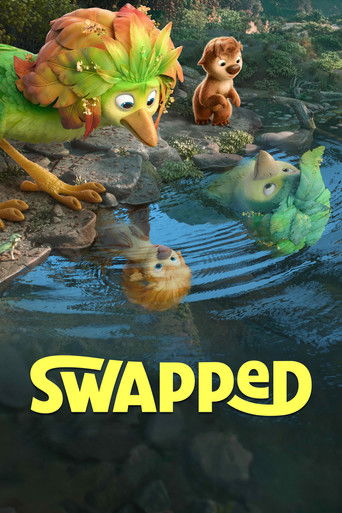
Swapped (2026)
Directed by Nathan Greno
A small woodland creature and a majestic bird, two natural sworn enemies of the Valley, magically trade places and set off on an adventure of a lifetime to switch back. Their journey soon uncovers a greater threat—one that could endanger not only their species, but the entire valley they call home.
Overview, poster, and credits from TMDB.
Read and watch our full recap ↓FROM THE RECAPRUSH LIBRARY · FULL RECAP
Swapped (2026) Recap & Ending Explained: Why Boogle Changes Shape but Never Changes His Mind
14 min read · Estimated reading time— views
Intro + RecapRush Viewpoint
Ollie wants to undo a kindness. As a child, he helps a hungry bird find food; years later, his own community treats that encounter as the beginning of its hardship. Nathan Greno’s Swapped builds an unexpectedly uncomfortable question into its colorful adventure: what happens when compassion has consequences you never understood?
Ollie’s first answer is to drive the outsiders away. Then a transformation puts him inside the kind of body his family fears. His journey with Ivy becomes a practical education in dependence, vulnerability, and the limits of judging a stranger by their shape.
RecapRush viewpoint: the film’s most useful complication is Boogle. Ollie and Ivy learn from unfamiliar forms, but their apparently harmless companion does not. His reveal tests the easy assumption that a new perspective automatically produces a better person. Experience creates an opportunity to change; it cannot make the choice for you.
Full spoilers follow, including the Firewolf reveal, Ollie’s final transformation, the dam, and his return. This is a complete guide to the released 2026 animated feature, not a preview.
Featured Image

Table of Contents
Quick Facts
- Film: Swapped (2026), previously developed under the title Pookoo
- Director: Nathan Greno
- Screenplay: John Whittington, Christian Magalhães, and Robert Snow
- Studio / distributor: Skydance Animation / Netflix
- Earliest documented screening: January 9, 2026, a special preview at the Sebastiani Theatre in Sonoma, advertised by the event organizer. This is distinct from the later general release.
- Netflix / general release: May 1, 2026
- Runtime: 102 minutes in the current TMDB and Netflix Tudum catalogs
- All verified TMDB genres: Adventure, Animation, Family, Fantasy
- Exact TMDB movie ID: 1007757
- Scope: the complete released film, including the final reunion. Promotional copyright dates and earlier planned release windows do not establish a 2025 public release.
Full Spoiler Recap
1. The Valley’s old disaster becomes a rule against curiosity
Ollie grows up among the Pookoo in a flooded valley. His grandmother describes an earlier harmony maintained by the Dzo, enormous living creatures associated with vegetation and transformation pods. A destructive Firewolf and a blocked river ended that shared world.
The story teaches caution, but Ollie remains curious. During a harvest celebration, he shows a young Javan how to obtain food. More birds arrive, and the Pookoo’s access to their food supply deteriorates. Years later, Ollie is still trying to repair the consequences.
2. A plan to frighten the birds changes Ollie instead
With the Pookoo facing hunger, Ollie uses reflective glass to try to drive the Javans away. The attempt goes wrong. He falls into a pit containing a transformation pod and becomes a Javan.
His own community no longer recognizes him as one of its members. Forced into the wider Valley, he encounters Ivy and her sisters. What looked like a simple division between home and danger becomes harder to maintain when home rejects his appearance.

3. Ivy acquires the body she has misunderstood
Ollie meets Boogle, a friendly fish who knows where more pods can be found. An attempt to reach one also transforms Ivy into a Pookoo. Their shared problem sends them toward further pods near the Great Waterfall.
The journey requires more than tolerating each other’s company. Ollie must learn flight, while Ivy discovers the Pookoo’s sensory abilities. Neither can simply carry on behaving as though their original body is still available.
4. The food conflict acquires a second history
Ivy explains that her flock came seeking food because its own home could no longer support it. Starvation had already cost her family dearly. Ollie begins to understand the desperation behind an arrival his community remembers only as an invasion.
That explanation does not restore the lost harvests. It changes what he can reasonably believe about the birds’ motives. The pair’s attempt to recover familiar forms now includes a more difficult task: admitting that each knew only part of the conflict.
5. Boogle’s helpfulness conceals a different destination
Encounters with Treewolves disrupt the search, and Ollie and Ivy undergo another transformation, becoming fish. They continue with Boogle and eventually find pods that restore their original forms.
They also let Boogle use one. He becomes the Firewolf. The companion who appeared to guide them toward recovery has used their search to regain his own destructive power. He attacks, injures Ivy, and destroys the remaining pods. Ollie gets Ivy to safety.

6. A divided population has to share a refuge
As the Firewolf threatens the Valley, different creatures seek shelter on Pookoo Island. Ollie persuades his father, Caloo, to trust them. The community that once protected itself through exclusion must now help others survive.
Ollie returns to the pit containing the dead Dzo. Through its remaining connection, he receives a pod and transforms into a Dzo himself. He takes on the scale and power needed to confront the Firewolf and the dam.
7. Ollie opens the river at the apparent cost of his life
In Dzo form, Ollie battles the Firewolf and breaks the obstruction. The resulting water defeats the attacker, but Ollie is lost in the action. His family and friends mourn him while the Valley begins to recover.
The surviving Dzo can finally return. They bring Ollie back alive, restored to his Pookoo form. His reunion with Ivy and his family gives the film a happy conclusion, while the different communities begin living together again.
Cast + TMDB
Cast and Characters


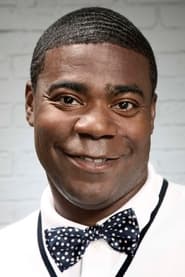



The accompanying voice-cast gallery uses six verified TMDB records, actor portraits, and RecapRush person-profile links. Michael B. Jordan voices Ollie; Juno Temple voices Ivy; Tracy Morgan is credited as Boogle / Firewolf; Cedric the Entertainer voices Caloo; Justina Machado voices Calli; and Nate Torrence voices Lodd.
Morgan’s combined credit matters to the ending: the familiar companion and the antagonist are one character across forms. The gallery retains that credited identity instead of inventing separate performers. The selected portraits show the voice actors, not the fictional species, and the gallery is not a complete credits list.
Ending Explained
Is Boogle really the Firewolf?
Yes. His fish form has contained the same character responsible for the earlier disaster. The pod restores his dangerous form, and his betrayal confirms that companionship has not changed his intention.
Director Nathan Greno confirmed the identity in his interview with What’s on Netflix. He also explained that Boogle existed as a beloved comic character before the filmmakers developed the villain reveal. That production history supports the intended surprise; it does not require us to imagine an additional hidden villain behind him.
Why does Ollie become a Dzo?
The transformation lets him oppose the Firewolf and dismantle the dam. His goal has expanded from repairing his own reputation to protecting a shared habitat.
Our interpretation: the final change gives his responsibility an appropriate physical form. Earlier, he experiences another creature’s vulnerability. Now he uses an unfamiliar body’s strength for creatures beyond his own group. Understanding becomes consequential action.
Does Ollie die, or does he survive?
He survives. The film first presents an apparent sacrifice and allows the others to grieve. The returning Dzo then bring him back in Pookoo form. His survival is part of the shown conclusion, not a theory that he might still be somewhere in the Valley.
The resurrection-like structure can divide viewers. It preserves the courage of a choice made without certainty of rescue, but softens its lasting cost. RecapRush reads that as a deliberate family-adventure resolution whose emotional reassurance is stronger than its appetite for tragedy.
What does breaking the dam accomplish beyond defeating the Firewolf?
It changes the conditions that kept the Valley cut off and enables the Dzo’s return. The ending repairs both a physical obstruction and the relationships that developed around it.
More from RecapRush
 Roman Holiday (1953) Recap & Ending Explained: Why Joe Gives Up the Story, Not Just the Princess
 Other Mommy (2026) Review & Ending Explained: Why Bela’s Monster Wears Ursula’s Face
 Inception (2010) — Full Spoiler Recap & Ending Explained
The image is effective because prejudice is not treated as a feeling suspended in empty space. The creatures have been living with scarcity, separation, and inherited warnings. Reconnection needs an altered environment as well as kinder intentions.
RecapRush Interpretation
The most useful distinction in Swapped is between changing form and changing your judgment. Ollie and Ivy gradually allow new experiences to revise what they think. Boogle acquires another perspective without accepting that revision. The same possibility produces different moral results.
That is why empathy here should not mean trusting everyone indiscriminately. The protagonists’ openness makes friendship possible, but it also creates an opportunity for manipulation. The ending asks them to hold onto cooperation after betrayal rather than conclude that every unfamiliar creature must be an enemy.
Ollie’s childhood mistake is similarly complicated. His kindness was real, and so were consequences he could not anticipate. Treating him as simply innocent would erase the Pookoo’s distress. Treating him as solely responsible would erase the pressures driving the Javans. His growth lies in becoming able to consider both.
This is RecapRush’s reading. Greno’s stated thematic emphasis, in the published director interview, is on connection, expanded perspective, and collective strength. Our discussion of accountability and trust develops those ideas through the film’s specific choices rather than attributing additional intentions to him.
Deep Analysis & Key Themes
Food turns an abstract disagreement into a survival problem
The conflict has a material foundation. A creature looking for a meal can be another creature’s threat to tomorrow’s supply. From within either group, self-protection can feel obvious and morally sufficient.
Ivy’s account of her flock changes the frame without magically making resources unlimited. The film’s hopeful answer is a renewed shared system, not a demand that hungry creatures stop caring whether they eat. That makes the Dzo and the reopened river more than decorative fantasy elements: the world has to support the peace the characters are asked to build.
An inherited warning can preserve memory and restrict imagination
The old story contains genuine danger. Its problem is the way a lesson about a particular disaster can harden into a judgment about every outsider.
Ollie initially responds with curiosity that is more energetic than informed. His parents’ protective reflex is more informed by fear than by present encounters. Neither position is enough. The adventure supplies information their closed community cannot generate by repeating its existing account.
For a family film, this is a productive tension. The adults do not have to be foolish for their caution to become limiting; the young protagonist does not have to be infallible for his questions to matter.
The body supplies knowledge a conversation cannot
The transformed characters have to operate differently. A new sense, a new balance, or the sudden absence of a familiar ability changes what a situation asks of them.
Animation makes that education visible. The broad bird silhouette, the small furry body, and the fish’s watery environment organize different relationships to space. A companion who can move freely in one setting may need assistance in the next. Dependence stops being a permanent label attached to one species.
Greno told Netflix Tudum that nature documentaries informed the film’s ecosystem. That documented approach helps explain the interest in habitats and animal-plant combinations. It does not turn the fantasy biology into real zoology: these are invented species whose design serves an invented world.
Boogle makes the lesson harder—and more useful
The friendly guide has a strong narrative advantage. He offers useful information precisely when the travelers need it. Gratitude can make it difficult to inspect the direction in which that help is taking them.
His betrayal does not prove that their developing friendship was a mistake. It proves that helpful behavior and harmless appearance are incomplete evidence of someone’s purpose. That is a more demanding lesson than simply learning to like creatures who look different.
The risk of the twist is that a single villain can absorb blame for a wider conflict. Our reading keeps the food dispute and the communities’ choices in view. Removing the Firewolf creates an opening; the closing peace still needs creatures willing to behave differently inside it.

What Most Viewers Missed
These are details worth returning to, rather than claims about measured audience behavior.
- The title simplifies the mechanism. The characters transform into other species; the plot does not require two consciousnesses to trade ownership of a fixed pair of bodies.
- Ollie’s appearance changes his standing at home. Recognition based on shape is exposed as a fragile measure of identity before the larger reconciliation begins.
- Boogle wants access, not a lesson. He participates in the search for a different purpose, which retrospectively changes the meaning of his assistance.
- The river and the social world recover together. The film connects a damaged habitat to damaged relationships instead of presenting the scenery as interchangeable background.
- Returning to an original form does not mean returning to an original belief. The ending preserves who the protagonists are while changing the boundaries of whom they include.
Mid/Post-Credits
Not Another Kid Movie’s published review lists no post-credits scene. A sufficiently corroborated studio or credits-specialist account of an additional scene was not located for this guide, so no bonus event or sequel tease is described here. This section reports the verification limit rather than inventing extra story after the reunion.
Final Thoughts
Swapped is most interesting when its welcoming surface leaves room for uncomfortable questions. Kindness can be shortsighted. Caution can become exclusion. A useful friend can be dangerous. None of those complications makes connection pointless; they make it something the characters have to practice with judgment.
For RecapRush, the ending works as an optimistic answer to the fear that difference must always produce conflict. Ollie comes home in a familiar body, but the home worth returning to has become less closed. That change is the more lasting transformation.
FAQ
Is Swapped a 2026 movie or a delayed 2025 release?
It is a released 2026 film. A special Sonoma preview is documented for January 9, 2026; Netflix’s general release followed on May 1. Earlier production and planned-release dates should not be treated as evidence of a 2025 public release.
What are a Pookoo, a Javan, and a Dzo?
They are fictional species in the Valley. Ollie begins as a Pookoo, Ivy as a bird-like Javan, and the Dzo are enormous creatures associated with the ecosystem and transformation pods.
Do Ollie and Ivy literally exchange minds?
The more precise description is species transformation. Their identities persist while their forms and abilities change. The later fish transformations make a simple one-for-one exchange an inadequate explanation.
Is Boogle a separate creature from the Firewolf?
No. The fish and Firewolf are different forms of the same character, also reflected in Tracy Morgan’s combined TMDB voice credit.
Does Ollie return to his family?
Yes. The Dzo return him alive and in Pookoo form, and he reunites with his family and Ivy. The apparent loss is resolved by the film itself.
How long is the movie, and where is it released?
The current Netflix Tudum and TMDB listings give approximately 1 hour 42 minutes. Netflix released it on May 1, 2026; availability can vary by territory.
Join the conversation
What did you think of the ending? Share your interpretation. Spoilers may appear below.
This product uses the TMDB API but is not endorsed or certified by TMDB.
No comments yet. Start the conversation.