
RECAPRUSH MOVIE GUIDE
Freefall: A Reckoning for Boeing (2026)
Rory Kennedy revisits Boeing through whistleblower testimony following John Barnett’s death.
Overview, poster, and credits from TMDB.
Read and watch our full recap ↓FROM THE RECAPRUSH LIBRARY · FULL RECAP
Freefall: A Reckoning for Boeing (2026) Explained: What Accountability Means After the Warnings
11 min read · Estimated reading time— views
Intro + RecapRush Viewpoint
An aircraft passenger places trust in people they will never meet: the engineer who approves a design, the worker who assembles a component, the inspector who refuses to overlook a defect. Freefall: A Reckoning for Boeing asks what happens when the people responsible for raising concerns feel that speaking up puts their own futures at risk.
Rory Kennedy's documentary returns to Boeing after Downfall: The Case Against Boeing (2022), shifting attention toward whistleblowers and the human cost of a prolonged struggle over safety. Its central figure is John Barnett, a former quality manager whose death makes this investigation intensely personal.
RecapRush Viewpoint: The documentary's most challenging question is whether an institution can call itself accountable while the burden of demonstrating failure remains with the people who warned it. Our reading is that the film examines the distance between acknowledging harm and building conditions that prevent its repetition.
Spoiler and content notice: This guide discusses the documentary's investigation, its concluding argument, bereavement, and suicide. It distinguishes reported allegations, official findings, and RecapRush interpretation. The numbered breakdown follows the investigation's major subjects; it is not a claim to reproduce every scene in exact order.
Featured Image
Featured image: The theatrical poster supplied by TMDB for Freefall: A Reckoning for Boeing, movie ID 1688804.
Source: https://www.themoviedb.org/movie/1688804
Caption: Rory Kennedy returns to the Boeing story through whistleblower testimony. Poster artwork belongs to its respective rights holders.
Table of Contents
Quick Facts
- Title: Freefall: A Reckoning for Boeing
- Year / country / language: 2026 / United States / English
- Genre: Documentary; business and aviation investigation
- Director: Rory Kennedy
- Writers: Mark Bailey and Keven McAlester
- Netflix release: August 19, 2026
- Running time: 93 minutes in IMDb and RogerEbert.com's listings; TMDB currently records 95 minutes
- TMDB: Movie ID 1688804
- Related film: Downfall: The Case Against Boeing (2022)
- Where to watch: Netflix, subject to regional availability
Catalog note: TMDB records August 14, 2026 as its release date. That catalog field should not be confused with Netflix's confirmed August 19 streaming release. The runtime discrepancy is retained here rather than silently presenting the two databases as identical.
Full Spoiler Recap
1. The story returns through a whistleblower
Published coverage describes the opening as returning to Barnett and his recorded deposition. He died in March 2024, bringing a human loss into a story often discussed through corporate statements and technical terminology. The documentary's focus is therefore not simply what happened to an aircraft manufacturer, but what happened to people who tried to challenge its practices.
Barnett appears through archival material, rather than a new interview. That distinction changes the emotional weight of testimony: his recorded words survive him. For RecapRush, this is an argument for listening carefully to the substance of a warning rather than reducing the speaker to a headline about their death.
2. An earlier investigation becomes a larger question
Netflix identifies Freefall as the follow-up to Kennedy's 2022 film. The sequel broadens the conversation from an earlier crisis toward accounts of conditions inside the company. Review coverage describes a group of workers discussing alleged production shortcuts, defective or unsuitable parts, and the treatment of safety concerns.
These are claims the film investigates, not interchangeable findings about every Boeing aircraft. A useful way to read the documentary is to ask which assertions are supported by records, which are personal testimony, and which are conclusions the filmmakers draw from that material.
3. Speaking up becomes part of the story
Kennedy told interviewer Vanessa Hope that Barnett's recordings, retained documentation, and deposition helped shape the film's central narrative. Other whistleblowers also approached her. The investigation presents individual voices as a means of examining institutional behavior.
The human conflict is easy to recognize even without engineering expertise. Reporting a concern can put professional identity, financial stability, and relationships under pressure. RecapRush reads this tension as the documentary's moral engine: a safety system depends on information reaching the people who can act, yet the messenger may face reasons to stay quiet.
4. Public fear meets an independently investigated accident
The documentary includes the January 2024 Alaska Airlines door-plug accident. The official record provides essential context separate from the film's presentation. On January 5, flight 1282 experienced the separation of a mid-exit door plug during its climb from Portland. There were no fatalities.
In its June 24, 2025 findings, the NTSB attributed the probable cause to Boeing's inadequate training, guidance, and oversight. It found that four securing bolts were missing before the accident and that undocumented factory work prevented the required quality inspection. It also identified ineffective FAA oversight of relevant systemic issues.
The lesson is more specific than a generalized warning about flying. A physical failure had a traceable relationship to work procedures, documentation, inspection, and oversight. That makes the event useful to an accountability discussion: it points toward mechanisms that can be examined and changed.
5. Responsibility is challenged in public
The film uses congressional scrutiny as part of its wider account. The Senate's Permanent Subcommittee on Investigations held its hearing with then-CEO Dave Calhoun on June 18, 2024. His written testimony apologized to families of victims of the Lion Air and Ethiopian Airlines crashes and described Boeing's safety and quality commitments, including policies against retaliation.
RecapRush reads the contrast between those commitments and whistleblower accounts as a question about implementation. A policy can prohibit retaliation on paper; the practical test is whether employees feel able to report a problem and whether the organization responds effectively.
6. Barnett's death requires a clear evidentiary boundary
The official investigation concluded that Barnett died by suicide. Charleston Police's May 17, 2024 release stated that its investigation and the coroner's determination supported that conclusion. The documentary does not establish that Boeing murdered him.
The separate question raised by Barnett's representatives concerns the alleged contribution of workplace treatment to his suffering. That argument must be attributed to those making it. An accusation about responsibility is not itself a court judgment, and emotional conviction does not replace proof.
7. The investigation leaves a demand rather than a clean resolution
The film's concluding emphasis, as described in interviews and criticism, is accountability. It does not offer a fictional victory in which every institution is transformed. Boeing's response, reported as appearing before the credits, disputes some allegations and says other issues have been addressed or remain under improvement.
More from RecapRush
 Primetime (2026) Recap & Ending Explained: What Does Dan's SAG Card Mean?
 GOAT (2026) Recap & Ending Explained: Why Jett’s Final Pass Matters as Much as Will’s Winning Shot
 The Fixers (2026) Full Series Recap & Ending Explained – Primordial Files Breakdown
That response belongs in the reader's understanding of the film. The documentary advances a case; the company contests aspects of it. The most productive conclusion is to evaluate evidence and measurable change, rather than treating either a forceful film or a reassuring statement as the end of scrutiny.
Cast + TMDB
Cast and Characters
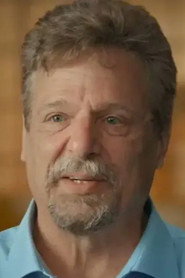
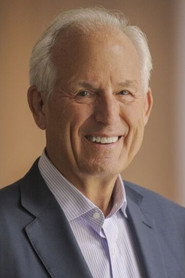


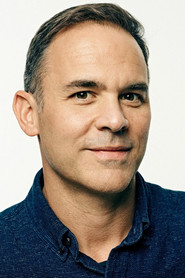
Exact match: TMDB movie 1688804. This documentary's credited participants appear as themselves, including archival appearances. They are not actors playing fictional characters.
The TMDB gallery supplies credited names, roles, and available portraits. Some participants have no portrait in the catalog; RecapRush does not substitute an unrelated face. Links open their RecapRush person profiles. Archival executives and journalists should also be distinguished from people newly interviewed for the documentary.
Director Rory Kennedy and the credited writers belong to the creative team, rather than being presented as fictional characters. Title and credit record: https://www.themoviedb.org/movie/1688804
Ending Explained
Does the film solve a murder mystery?
No. The verified official finding is suicide. The ending's argument about institutional responsibility should not be rewritten as proof of homicide. That distinction protects both factual accuracy and the dignity of the people involved.
Has the documentary demonstrated that Boeing's problems are all resolved?
No. Its argument challenges the adequacy of reform. Boeing maintains that some claims are unfounded and that other issues have been addressed or are being improved. These opposing positions explain why the documentary ends as a demand for continuing scrutiny rather than a universally accepted resolution.
What does the title's “reckoning” mean?
RecapRush interpretation: A reckoning would require consequences and demonstrable changes proportionate to the harm, not only public acknowledgment. The word keeps attention on the future: who can report a concern, who must act on it, and who checks whether the response works?
The ending's force comes from the gap between a completed documentary and an unfinished public issue. The film can bring testimony into view. It cannot, by its own existence, implement a safety procedure or deliver a legal outcome.
RecapRush Interpretation
Our reading centers on the unequal distribution of risk. A worker may bear immediate consequences for reporting a problem, while the consequences of ignoring that problem may fall later on strangers. Such distance makes responsibility easier to discuss abstractly and harder to enforce personally.
The documentary's human focus pushes against that abstraction. A passenger is someone's parent, partner, or child; a whistleblower has a life beyond the information they provide. Treating these people as individuals changes the question from whether a controversy damages a brand to whether an organization listens when human welfare is at stake.
Deep Analysis & Key Themes
Trust needs a process
Trust in aviation is not simply affection for a company. It depends on repeatable checks, reliable records, skilled work, and independent oversight. The NTSB findings illustrate how failures across that chain can matter. RecapRush sees the documentary's strongest analytical opportunity in making those processes understandable, rather than leaving viewers with undirected fear.
Expertise can become inconvenient
A person who identifies a defect may interrupt a schedule. That interruption can be interpreted as useful information or as an obstacle. This is an ethical question about what an institution rewards: the appearance of smooth operation, or the ability to discover and correct an uncomfortable problem.
An apology and a remedy serve different purposes
An apology acknowledges a relationship and an injury. A remedy changes conditions. Both can matter, but one cannot automatically stand in for the other. The public hearing and the film's disputed account of reform give readers a reason to ask for concrete evidence of change.
Documentary form carries responsibilities too
Kennedy told RogerEbert.com that she prioritizes archival research and tries to distinguish recreations from archive footage stylistically. That is a valuable standard for viewers as well as filmmakers. An illustrative reconstruction can explain an event, but its visual immediacy should not make it seem like an original recording.
The same principle applies to emotionally powerful testimony. A documentary may be persuasive while still requiring its audience to notice attribution, dates, and the boundaries of what has been established.
What Most Viewers Missed
Three distinctions are worth carrying beyond the viewing experience:
- Participant versus performer: A “Self” credit identifies a real person; “archive footage” tells you their appearance may not be a new interview.
- Official finding versus allegation: The NTSB's accident findings and the police conclusion about Barnett are distinct from the documentary's broader claims about institutional conduct.
- Release date versus catalog date: Netflix's streaming launch and TMDB's release field describe different dates here.
These are useful reading tools, not a claim that other viewers overlooked a hidden scene. They help prevent the intensity of a documentary from flattening different kinds of evidence into one certainty.
Mid/Post-Credits
Published reporting confirms a Boeing response before the credits. The sources reviewed do not establish a separate mid-credits or post-credits scene, so this guide does not invent one. The response is part of the documentary's factual framing, rather than a fictional sequel tease.
Final Thoughts
Freefall: A Reckoning for Boeing deserves a careful conversation about the people who provide warnings and the institutions expected to act on them. Its emotional stakes come from a real struggle over trust, loss, and the meaning of responsibility.
RecapRush's concluding perspective: the most useful response is to move from fear toward specificity. Ask what the evidence establishes, how a failure occurred, what has changed, and how that change is independently checked. Those questions give the film's demand for accountability a practical meaning.
FAQ
Is Freefall the same film as Downfall?
No. Freefall is Kennedy's 2026 follow-up to Downfall: The Case Against Boeing (2022).
Is this based on real events?
Yes. It is a documentary using testimony and archival material. Its allegations should still be distinguished from independently established findings.
What is its exact TMDB ID?
Movie 1688804.
When did it arrive on Netflix?
August 19, 2026, as confirmed by Netflix's official promotional information.
Why does this page list two runtimes?
IMDb and RogerEbert.com list 93 minutes; TMDB currently lists 95. The discrepancy is disclosed rather than concealed.
Does it prove John Barnett was murdered?
No. The official conclusion was suicide. Claims about the effects of his workplace treatment are a separate issue.
Join the conversation
What did you think of the ending? Share your interpretation. Spoilers may appear below.
This product uses the TMDB API but is not endorsed or certified by TMDB.
No comments yet. Start the conversation.