
RECAPRUSH MOVIE GUIDE
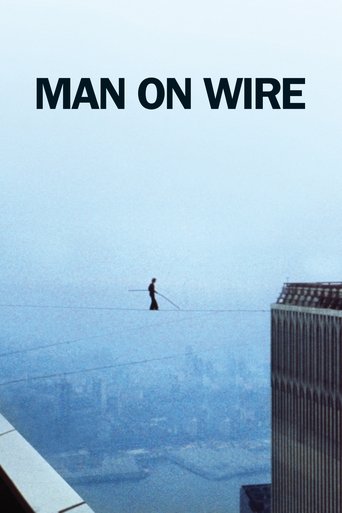
Man on Wire (2008)
Directed by James Marsh
On August 7th 1974, French tightrope walker Philippe Petit stepped out on a high wire, illegally rigged between New York's World Trade Center twin towers, then the world's tallest buildings. After nearly an hour of performing on the wire, 1,350 feet above the sidewalks of Manhattan, he was arrested. This fun and spellbinding documentary chronicles Philippe Petit's "highest" achievement.
Overview, poster, and credits from TMDB.
Read and watch our full recap ↓FROM THE RECAPRUSH LIBRARY · FULL RECAP
Man on Wire (2008) Recap & Ending Explained: What the Walk Costs Philippe Petit’s Friends
11 min read · Estimated reading time— views
Intro + RecapRush Viewpoint
Man on Wire turns a famous success into a question about the people success leaves behind. Philippe Petit survives his unauthorized 1974 walk between the World Trade Center towers. James Marsh’s documentary then follows the less orderly consequences: public celebration does not preserve the private relationships that made the spectacle possible.
RecapRush interpretation: The crucial change is one of scale. From the street, this is one extraordinary man suspended above a city. From inside the group, it is a shared undertaking whose rewards and emotional costs do not fall equally. The ending asks us to keep both pictures in view.
Spoilers and editorial note: This guide covers the complete 2008 documentary and its aftermath, not the 2015 dramatization The Walk. It uses AI-assisted research and drafting checked against distributor material, participant interviews and published film criticism; it does not claim a first-hand screening. Interpretive passages are commentary rather than additional historical evidence.

Table of Contents
Quick Facts
- Film: Man on Wire (2008)
- Director: James Marsh
- Producer: Simon Chinn
- Source memoir: To Reach the Clouds by Philippe Petit
- Runtime: 94 minutes, confirmed by TMDB and MoMA
- TMDB genres: Documentary
- TMDB movie ID: 14048
- Languages: English and French
- UK theatrical release: August 1, 2008
- Central historical event: August 7, 1974, New York City
The film’s release year and the year of the walk are different. This is a feature documentary, so there is no season or episode scope to combine with another article.
Full Spoiler Recap
An image becomes a destination
Petit’s ambition begins before the New York operation. An image of the planned Twin Towers gives the French wire walker an objective: occupy the empty space between them. The film looks back at earlier performances at Notre Dame and the Sydney Harbour Bridge, establishing the experience behind a scheme that otherwise sounds impossible.
Annie Allix, his girlfriend, and collaborators including Jean-Louis Blondeau and Jean François Heckel become involved. Their preparations encompass both the physical act and a separate problem: getting permission is not the plan. They must reach the rooftops and set up without the authorities stopping them.
The distinction matters. A skilled performer can still be defeated by access, equipment or timing. The film’s suspense therefore begins well before Petit is standing over the city.
The preparation becomes a covert operation
Magnolia’s synopsis describes years of anticipation followed by eight months of planning in New York. The group must transport heavy cable and rigging into the towers, get a line across the gap and secure it despite wind and building movement. Work has to happen secretly at night.
Marsh organizes this material with the momentum of a heist. Interviews, surviving preparation footage and reconstructions let the documentary move between recollection and the practical obstacles of the operation. The people telling the story are also evidence that an extraordinary plan depended on ordinary tasks being completed.
There is no single category of helper. Some commit themselves fully; others doubt the project or withdraw. Their differing accounts keep the operation from becoming a seamless legend in which everyone knew it would work.
The night before the walk
The final approach separates the collaborators into teams working toward the two rooftops. Security and concealment become immediate concerns. The cable cannot simply appear where Petit needs it: the group has to establish the connection between the buildings before daylight exposes them.
The documentary’s reenactments belong to this reconstruction of the past. They should not be mistaken for a camera crew following every part of the 1974 intrusion. That distinction is especially important in a film whose storytelling feels so immediate.
RecapRush interpretation: During the preparation, the gap between the towers is an engineering and logistical problem. Once Petit steps out, the same gap becomes a performance space. The transformation is extraordinary precisely because the film has first made the labor behind it visible.
August 7, 1974: the performance succeeds
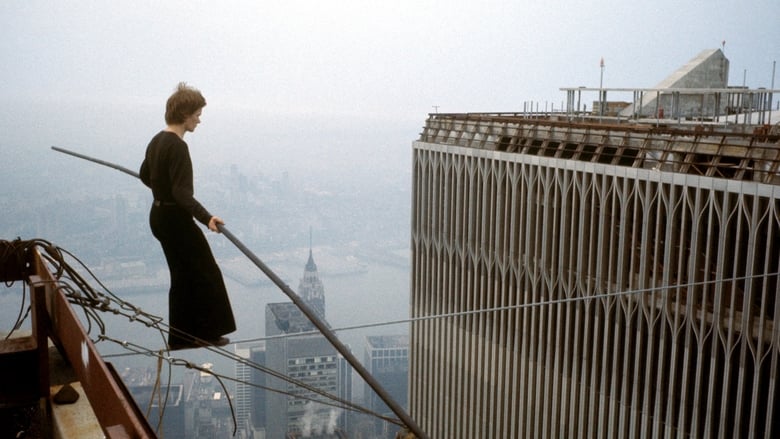
Petit steps onto the cable above Manhattan and remains aloft for roughly 45 minutes, walking and performing rather than merely crossing once to safety. The successful event is the documentary’s central historical fact. The accounts differ in rounding its duration; Magnolia describes it as nearly an hour.
He eventually comes back to the authorities, is arrested and undergoes a psychological evaluation before his release. The private conspiracy has become a public sensation. The scale of that transition is part of the ending: people who could only have stopped the plan beforehand now encounter it as an accomplished event.
The aftermath refuses a simple victory lap
The film continues beyond the successful walk. Annie and Jean-Louis’s recollections complicate Petit's triumph. The relationship with Annie ends, and the friendship with his principal collaborator does not emerge intact. Contemporary reviews identify this as the documentary’s bittersweet turn.
Marsh’s interview with Filmmaker also discusses Petit’s sexual encounter with another woman after the event while Annie was waiting. The documentary does not need a fatal fall to introduce a loss. Its personal consequences arrive after the physical danger has passed.
This is the essential spoiler: Petit achieves what he wanted, but achievement does not return the group to the life it had before. The historical success and the fractured relationships coexist.
Cast and Characters
Cast and Characters

The linked TMDB gallery presents the documentary’s participants as themselves. Philippe Petit is the performer; Jean-Louis Blondeau is a central collaborator; Annie Allix supplies an intimate perspective on his ambition. Jean François Heckel, David Forman and Alan Welner contribute other memories of the undertaking. These are interview subjects, not actors portraying fictional versions of the team.
Their presence gives the article a useful reading rule: Petit's excitement is not the only account that matters. A recollection can express admiration and pain at the same time. The gallery links to their RecapRush person profiles without a second cast table.
Ending Explained
Does Philippe Petit survive?
Yes. The walk is completed successfully, and Petit participates in the documentary’s later interviews. There is no concealed fatal outcome. The suspense concerns the process and its consequences rather than a mystery about whether the man telling the story lived.
More from RecapRush
 Paths of Glory (1957) Recap & Ending Explained: Why Dax Cannot Save the Men
 Zip Wire (2026) Recap & Ending Explained: Why Amy Makes the Cure Impossible to Own
 It Ends (2026) Recap & Ending Explained: Why James Turns Back When the Road Finally Stops
Why is the ending sad after such a joyful achievement?
Because reaching the objective does not meet every participant’s needs. Annie’s relationship and Jean-Louis’s friendship are not repaired by the acclaim. The film moves from an accomplishment that spectators can recognize immediately to losses that are harder to summarize.
RecapRush interpretation: The group has temporarily organized itself around one person’s destination. Afterward, the destination disappears as a shared organizing purpose. What remains is the question of how those people will relate without the project holding them together. Success exposes that question rather than answering it.
This reading does not turn every disagreement into proof that the dream was worthless. It asks for a fuller accounting of what made the dream possible. Gratitude, intimacy and continued friendship require forms of attention that applause cannot supply.
Is the film condemning Petit?
It preserves perspectives that make an uncomplicated hero portrait difficult. Petit’s artistic commitment and the hurt experienced by people close to him are both part of the account. A viewer can admire the performance while judging his conduct after it differently.
RecapRush interpretation: The documentary’s strongest ethical choice is to let these judgments remain distinct. Exceptional ability does not automatically establish exceptional generosity. Equally, disappointing behavior afterward does not make the work on the cable imaginary. Holding those conclusions together is more demanding than choosing either celebration or dismissal.
Character and Theme Analysis
Petit: performing the memory as well as the feat
Petit is an animated storyteller in the later interviews. His account helps give an old event urgency, while the other interviews widen its emotional frame. The film thus contains two forms of performance: the original act and its retelling.
RecapRush interpretation: A charismatic narrator can make an ambition feel contagious. The counterweight is not to drain that account of energy, but to retain the testimony of those who experienced the same ambition from less powerful positions. The documentary’s competing voices make admiration more informed.
Annie and Jean-Louis: the difference between supporting and belonging
Annie’s connection to Petit and Jean-Louis’s role in making the walk possible give them stakes that the crowd does not share. To an onlooker, the ending may be the moment the performer reaches safety. For them, the question extends into what follows.
RecapRush interpretation: Supporting someone’s goal can be an expression of love without guaranteeing a lasting place in that person’s future. That uncomfortable distinction makes the aftermath consequential. The film allows the helpers to be people with lives and disappointments, rather than treating them only as evidence of the protagonist’s magnetism.
The towers: a place given another meaning
MoMA describes the film as offering an alternative memory of the World Trade Center after the trauma of September 11. Marsh does not insert a depiction of the towers’ destruction into the 1974 story.
RecapRush interpretation: Keeping the narrative in its historical moment gives the buildings room to carry joy as well as grief. The empty space between them becomes something an artist can temporarily inhabit. That image need not erase later knowledge to add another meaning to it.

Meaningful Details That Are Easy to Overlook
The climax uses photographs
Marsh explained that moving footage of the actual walk was not available to him; the sequence relies on still photographs. This is distinct from the preparation footage and reconstructed nighttime action.
RecapRush interpretation: A photograph lets a viewer study balance without being carried straight toward the next step. The stillness makes the body appear suspended in time as well as space. The film’s sense of duration can therefore come from looking longer, rather than showing more movement.
Doubt belongs in the record
The inclusion of helpers who did not see the project through prevents commitment from becoming the only permitted perspective. Their uncertainty is part of the history, not an error that success retrospectively removes.
RecapRush interpretation: Once an attempt succeeds, it becomes tempting to describe every warning as a failure of imagination. Keeping the doubts in the film resists that shortcut. The outcome does not change what people could reasonably know beforehand.

Credit-Scene Information
The distributor materials and plot accounts checked for this guide do not establish a separate narrative scene during or after the credits. This is not a frame-by-frame verification of every release edition. The ending analysis above concerns the documented walk and personal aftermath, not an alleged credits reveal.
Final Thoughts
Man on Wire makes room for the exhilaration of an audacious act and the disappointment that can survive it. The most useful question to carry away is not simply whether Petit should have attempted the walk. It is whether a story of individual achievement can properly acknowledge the people who helped create it.
For another documentary about a celebrated physical achievement and the people around its central subject, read our [Free Solo recap and ending analysis](/movie/515042). The comparison is especially useful for thinking about how preparation and personal attachment create different experiences of the same risk.
FAQ
Is Man on Wire a true story?
Yes. It documents Philippe Petit’s 1974 World Trade Center performance through interviews, archival material, photographs and reenactments. Those different forms of evidence should not all be described as original footage of the walk.
Is this the same film as The Walk?
No. This guide concerns James Marsh’s 2008 documentary. The Walk is the later dramatic film directed by Robert Zemeckis, with Joseph Gordon-Levitt portraying Petit.
Why does the documentary continue after Petit comes down?
The aftermath supplies a second outcome: the act succeeds, while important relationships change or end. Removing that material would leave a much simpler account of triumph.
Was the performance in 2008?
No. The walk took place on August 7, 1974. The documentary was released in 2008 and reconstructs the earlier event.
Is the trailer below the full documentary?
No. It is Magnolia Pictures’ promotional trailer. It gives an introduction to the film, not the complete account or a substitute for it.
Join the conversation
What did you think of the ending? Share your interpretation. Spoilers may appear below.
This product uses the TMDB API but is not endorsed or certified by TMDB.
No comments yet. Start the conversation.