RECAPRUSH MOVIE GUIDE
Coyote vs. Acme (2026)
After Acme products fail him one too many times in his dogged pursuit of the Roadrunner, Wile E. Coyote decides to hire a billboard lawyer to sue the Acme Corporation.
Overview, poster, and credits from TMDB.
Read and watch our full recap ↓FROM THE RECAPRUSH LIBRARY · FULL RECAP
Coyote vs. Acme (2026) Recap & Ending Explained: Why Wile E. Has to Lose
13 min read · Estimated reading time— views
Intro + RecapRush Viewpoint
After a lifetime of exploding rockets, collapsing catapults and painted tunnels that only work for somebody else, Wile E. Coyote tries a new invention: the legal system. Coyote vs. Acme turns the Road Runner cartoons into a live-action/animation courtroom comedy, then asks whether exposing a corporation matters when the corporation still wins the verdict.
RecapRush viewpoint: Wile E.'s courtroom defeat is the film's real victory. If one clean ruling solved everything, the story would reduce persistence to a prize; by letting the loss inspire other toons, the ending makes persistence contagious.
Major spoilers ahead: This article covers the released film's full plot, courtroom outcome, Project Sisyphus, final chase and credits. Factual reporting is separated from RecapRush interpretation. Sources checked October 3, 2026.
Featured Image
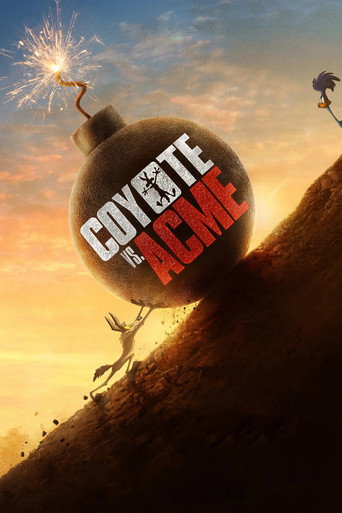
!Official Coyote vs. Acme theatrical poster featuring Wile E. Coyote
Official theatrical artwork catalogued under TMDB movie 1204680. Ketchup Entertainment artwork, presented to identify the film.
Table of Contents
Quick Facts
| Detail | Verified information |
|---|---|
| Film | Coyote vs. Acme (2026) |
| Director | Dave Green |
| Screenplay | Samy Burch |
| Screen story | James Gunn, Jeremy Slater and Samy Burch |
| Source inspiration | Ian Frazier's 1990 New Yorker piece, “Coyote v. Acme” |
| U.S. distributor | Ketchup Entertainment |
| U.S. theatrical release | August 28, 2026 |
| Digital release | September 29, 2026 for purchase and rental |
| Runtime | 103 minutes |
| Genre | Comedy, adventure, family; live-action/animation hybrid |
| TMDB movie ID | 1204680 |
| Release status | Released |
TMDB lists an August 17 general release date; the date above is the verified U.S. theatrical opening reported by Ketchup's campaign and the Associated Press. As of October 3, 2026, the film is available through digital purchase or rental rather than a verified subscription-streaming service.
Full Spoiler Recap
1. The chase creates a case
Wile E. Coyote's familiar pursuit of the Road Runner keeps ending with Acme equipment injuring the purchaser instead of catching the target. After another catastrophe, Wile notices an Albuquerque billboard for personal-injury attorney Kevin Avery. Kevin's practice is small and built around settlements, not crusades. Wile hires him to bring a product-liability action against Acme.
Kevin expects the corporation to pay a modest amount and end the dispute. His ambitious niece and intern Paige sees more potential in the case, while Wile refuses to treat money as the only answer. Acme answers with Buddy Crane, Kevin's polished law-school rival. The imbalance is immediate: Kevin has a struggling office and an unusually silent client; Buddy has corporate resources and the confidence that the system belongs to him.
2. Acme tries to make the problem disappear
The case forces Kevin to study years of alleged product failures rather than dismissing them as cartoon accidents. Discovery points toward Dr. Lorre, a former Acme scientist connected to a 1992 warning, and a concealed research program called Project Sisyphus. The program used toons as test subjects for dangerous products, converting their recoverable bodies into a corporate excuse for reckless experimentation.
Acme treats every new lead as something to contain. Witnesses are intimidated or neutralized, evidence becomes difficult to preserve, and courtroom procedure becomes another product the company knows how to operate better than its victims. Kevin's early desire for a safe settlement begins to look like surrender disguised as pragmatism.
3. A trial becomes a public fight
Kevin and Paige build the case from Wile's injuries, Acme's internal conduct and testimony from the toon world. Tasmanian Devil's connection to Acme's public-relations machinery turns a potentially useful witness into more chaos. Buddy exploits disruption and pushes the proceedings toward failure. The courtroom cannot contain the scale of the accusation, and the legal action expands into public scrutiny and a congressional hearing.
The expansion does not remove Wile's own complication. Kevin learns that the coyote also wants the lawsuit to force the Road Runner to appear, giving Wile another chance to catch him. That concealed motive causes a break between lawyer and client. Wile may be a victim of Acme, but he is still Wile E. Coyote; the film refuses to make sympathy dependent on transforming him into somebody with no obsessions or bad plans.
4. Acme escalates beyond argument
On the eve of the hearing, Acme's response becomes physical. Kevin and Wile are threatened and attacked rather than merely opposed in filings. Kevin's decision to return is consequently not a belief that the case has become easy. It is an acceptance that a guaranteed win is not the only reason to tell the truth in public.
At the hearing, Kevin speaks about Wile's defining quality: he continues. The speech reframes decades of comic failure as evidence of endurance rather than stupidity. Road Runner then appears. Instead of treating Wile as a mortal enemy, the bird defends him and identifies him as a friend. Their chase has consequences, but it is also a relationship whose rules belong to them—not to the company exploiting it.
5. Project Sisyphus is exposed—and Wile still loses
Evidence surrounding Project Sisyphus and Foghorn Leghorn's leadership confirms Acme's willingness to test unsafe products on toons. Yet Wile does not receive the clean legal victory the evidence appears to promise. The decision goes to Acme, and authorities initially decline to produce the immediate accountability Kevin sought.
The loss is not presented as proof that Acme was right. It demonstrates how institutional power can survive exposure. Wile's individual claim fails at the moment the public finally understands that his experience is not individual at all.
6. One losing case becomes many cases
Buddy and Foghorn are caught in a contraption Wile originally designed for Road Runner, turning Acme's own logic back on its defenders. The public case has also changed the field: other toons arrive at Kevin's office with their own claims. A growing collective action now threatens the corporation more broadly than the original lawsuit could.
Foghorn and Buddy are arrested as the wider wrongdoing catches up with them, Dr. Lorre is freed, and Kevin's modest practice is transformed into a place where victims can organize. Wile does not become rich or retire from the desert. He has instead made it possible for others to be heard.
7. The chase begins again
Road Runner's testimony does not end the pair's defining pursuit. Wile returns to the desert and the chase resumes. The difference is interpretive: Road Runner has called him a friend, so the pursuit can be read as a relationship with its own durable rhythm rather than pure hatred.
The film closes the legal story without closing Looney Tunes. Wile can change what his persistence means without ceasing to be the character who persists.
Cast + TMDB
Cast and Characters


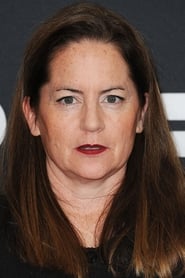

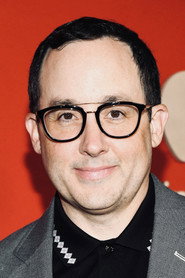



| Performer | Credited character | TMDB profile |
|---|---|---|
| Will Forte | Kevin Avery | 62831 |
| Lana Condor | Paige Avery | 1452046 |
| John Cena | Buddy Crane | 56446 |
| Tone Bell | Sal Maltese | 1120700 |
| Martha Kelly | Dottie Jones | 1572541 |
| Luis Guzmán | Judge Troppogrosso | 40481 |
| P.J. Byrne | Bill Pellicanos | 1211946 |
| Eric Bauza | Foghorn Leghorn, Bugs Bunny, Daffy Duck, Porky Pig, Elmer Fudd, Tweety, Road Runner and Dr. Lorre (voices) | 89599 |
| Candi Milo | Granny, Miss Prissy and Witch Hazel (voices) | 95257 |
| Jim Cummings | Tasmanian Devil (voice) | 12077 |
Full TMDB credits. Character names and voice groupings above follow the current TMDB credits for the exact film identity.
Ending Explained
Does Wile E. Coyote win his lawsuit?
No. Wile's individual action does not produce a verdict against Acme or personal compensation. That result is corroborated by both JustWatch's ending account and the released-film recaps. The subsequent arrests and growing wave of toon claimants are consequences of the exposure, not a retroactive rewrite of his verdict.
More from RecapRush
 Clayface (2026) Recap & Ending Explained: Why Matt’s Last Love Scene Is His Cruelest Performance
 Hoppers (2026) Recap & Ending Explained: Why Saving the Glade Means Saving Jerry
 Other Mommy (2026) Review & Ending Explained: Why Bela’s Monster Wears Ursula’s Face
RecapRush interpretation: Wile has to lose because the film is about persistence, not vindication on demand. A legal win would allow the institution to define the exact moment his struggle became meaningful. Losing prevents Acme from owning that definition. His action matters because it changes what other victims believe they can do.
The distinction is central: losing a case is not the same as being wrong. The movie gives the corporation the formal result and gives Wile the larger consequence. That split makes the satire sharper than a simple courtroom upset.
Why does Road Runner call Wile a friend?
Road Runner appears for Wile and describes their relationship as friendship. The final renewed chase therefore does not cancel the testimony. It confirms that pursuit is the language of their connection.
RecapRush interpretation: Classic shorts depend on repetition without permanent resolution. The film translates that production rule into character meaning. Road Runner understands that Wile will chase; Wile understands that Road Runner will escape. Their conflict is real inside each gag, but the repeated return is also a kind of mutual commitment.
This reading does not erase Wile's responsibility for his traps. It changes who gets to interpret the relationship. Acme sees indestructible bodies as free test material. The friends see an ongoing game. The corporation's mistake is believing resilience eliminates consent.
What happens to Acme after the verdict?
The company escapes Wile's individual judgment but not the consequences of disclosure. Other toons bring claims, the wrongdoing behind Project Sisyphus is exposed, and Foghorn and Buddy are ultimately arrested after becoming victims of a coyote contraption.
RecapRush interpretation: The trap is poetic rather than legal justice. It gives the comedy an immediate payoff while the larger class action suggests accountability is unfinished work. The film wisely separates the satisfaction of seeing villains caught from the slower process of changing a system.
Deep Analysis
Sisyphus is not just a project name
RecapRush interpretation: Sisyphus is condemned to push a boulder that always rolls back down. Wile performs the comic version of that myth: invent, pursue, fail, recover, repeat. Acme names its research program after the loop because the corporation believes endless failure makes the subject endlessly usable.
The ending reverses the ownership of the metaphor. Wile's repetition is not evidence that nothing changes. Each attempt can accumulate witnesses, relationships and consequences. The boulder returns, but the person pushing it is not necessarily unchanged.
Cartoon invulnerability is not permission
The movie's most productive ethical idea begins with toon physics. A character can be flattened, burned or exploded and appear intact in the next scene. Acme interprets recovery as the absence of harm.
RecapRush interpretation: That logic resembles any institution that treats a worker's survival as proof that a risk was acceptable. The body coming back is not consent to what happened. Durability can hide exploitation because the damage does not remain visible in the expected way.
Wile's case makes accumulated experience legible. Every gag once treated as an isolated reset becomes part of a pattern. The lawsuit is essentially continuity imposed on a company that profits from pretending continuity does not exist.
Kevin learns the difference between settlement and justice
Kevin begins with a business model built around reducing uncertainty. A settlement is not inherently dishonest, but his reliance on it allows powerful defendants to decide what a complaint is worth before anyone hears it.
RecapRush interpretation: Wile's refusal changes Kevin because it forces him to value public truth separately from a favorable transaction. He grows not by becoming certain he can win, but by continuing after certainty disappears. That makes him the human parallel to his client.
Paige's presence keeps the change from becoming a lone man's redemption. She pushes the work forward, helps interpret the evidence and shares in the office's new future. Kevin's transformation becomes institutional only when the practice itself changes.
The film's release history becomes part of its meaning
The completed film was shelved in 2023 before Ketchup Entertainment acquired it and released it in 2026. That history is factual and external to the plot. It also creates an unavoidable echo: audiences are watching a story about a corporation trying to contain a smaller voice because public pressure prevented a corporation from containing this movie.
RecapRush interpretation: The parallel should not be used to claim every fictional detail maps onto one executive decision. Its power is simpler. Both stories distinguish formal control from final meaning. Ownership could delay the work, but collective attention altered what happened next.
Friendship does not require the chase to stop
Many endings treat maturity as abandoning the behavior that defined a character. This one lets Wile return to pursuit after learning something about it.
RecapRush interpretation: The important change is not behavioral but relational. Before the testimony, Wile imagines Road Runner primarily as an object to catch. Afterward, the audience can see the bird as a participant who understands the ritual. The same movement can hold a different meaning once both sides are recognized.
What Most Viewers Missed
These are RecapRush interpretive connections, not claims about hidden production intent.
The verdict and the ending are deliberately different things
Wile loses the legal question but changes the social question. Viewers who remember only the arrests may accidentally turn the ending into a conventional win. Its stronger idea is that an unjust result can still generate useful evidence and collective action.
Buddy is Kevin's alternate future
Both lawyers know how systems turn suffering into paperwork. Buddy uses that knowledge to protect concentration of power; Kevin learns to use it to make a neglected client visible. Their rivalry is not merely personal—it stages two ideas of what professional competence is for.
Road Runner is the witness Wile cannot control
Wile's hidden hope of using testimony as another trap nearly destroys the trust supporting his case. Road Runner's voluntary appearance matters because it cannot be engineered. The most important evidence arrives only after Wile's plan fails.
The final chase protects the characters from the corporation
Acme wants the chase to be a testing environment it can monetize. The final pursuit returns it to Wile and Road Runner. In RecapRush's reading, continuity here is reclamation: the gag belongs to the performers inside it again.
Mid/Post Credits
There is no mid-credits or post-credits story scene. Multiple release-week reports agree on that point. Near the end of the credits, however, the film includes a dedication thanking the people who posted, shared, held signs and spoke out to help the movie reach the screen.
That dedication is not a sequel tease. It acknowledges the public campaign surrounding the film's path from shelving to theatrical release. Viewers looking only for an additional narrative scene can leave when the credits begin; viewers interested in the production's real-world coda have a reason to stay for the message.
Final Thoughts
RecapRush interpretation: Coyote vs. Acme understands that Wile E. Coyote cannot be rewarded by becoming a person who stops trying. It gives him something more appropriate: proof that an attempt can fail on its own terms and still open a path for somebody else.
The Road Runner's friendship does not domesticate the chase, and the arrests do not pretend one case repaired every institution. The film preserves the joke while adding continuity to its consequences. That balance is why the ending lands: Wile loses, gets up, and runs again—but this time he is not running alone.
For another RecapRush story about a seemingly closed defeat becoming a new opening, read [Fall 2: Deadpoint recap and ending explained](/movie/1101412).
Join the conversation
What did you think of the ending? Share your interpretation. Spoilers may appear below.
This product uses the TMDB API but is not endorsed or certified by TMDB.
No comments yet. Start the conversation.