
RECAPRUSH MOVIE GUIDE
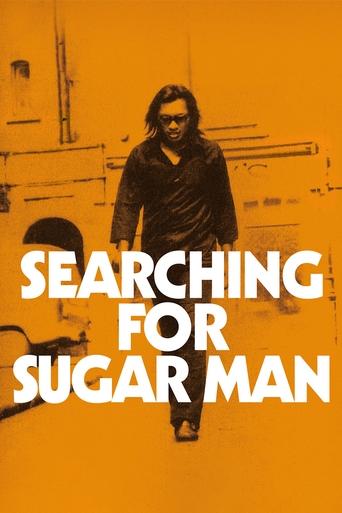
Searching for Sugar Man (2012)
Directed by Malik Bendjelloul
Two South Africans set out to discover what happened to their unlikely musical hero, the mysterious 1970s rock 'n' roller, Rodriguez.
Overview, poster, and credits from TMDB.
Read and watch our full recap ↓FROM THE RECAPRUSH LIBRARY · FULL RECAP
Searching for Sugar Man (2012) Recap & Ending Explained: Why Finding Rodriguez Does Not Settle the Money
12 min read · Estimated reading time— views
Intro + RecapRush Viewpoint
Searching for Sugar Man begins with an audience trying to explain an absence. South African fans know Rodriguez's songs but cannot reliably account for the man who made them. The documentary's great reversal is not a newly discovered recording: it is the discovery that the person they have turned into a tragic legend has continued living beyond their knowledge.
RecapRush interpretation: Finding Rodriguez resolves the question of his supposed death. It does not automatically resolve why admiration traveled farther than information or payment. The 1998 concerts let artist and audience finally recognize each other, but recognition and restitution remain different things. That distinction makes the ending more interesting than a simple claim that fame eventually makes everything fair.
Spoilers and editorial note: This guide covers Malik Bendjelloul's complete 2012 documentary. It uses AI-assisted research and drafting checked against distributor materials, filmmaker interviews, contemporary reporting and published criticism, rather than claiming a first-hand screening. Interpretations are labelled. Documentary participants appear as themselves; they are not actors playing invented characters. Descriptions of Rodriguez's circumstances refer to the film's period, not a claim that he is alive today.

Table of Contents
Quick Facts
- Film: Searching for Sugar Man (2012)
- Writer and director: Malik Bendjelloul
- Central musician: Sixto Rodriguez, professionally known as Rodriguez
- Principal searchers: Record-shop owner Stephen “Sugar” Segerman and music journalist Craig Bartholomew Strydom
- Key albums: Cold Fact (1970) and Coming from Reality (1971)
- Runtime: 85 minutes in Sony's press kit and TMDB; some listings round to 86
- US distributor: Sony Pictures Classics
- US theatrical opening: July 27, 2012, in New York and Los Angeles
- TMDB genres: Music, Documentary
- TMDB movie ID: 84334
- Scope: The film's search, discovery, 1998 concert climax and closing portrait—not a complete subsequent biography
Full Spoiler Recap
A promising Detroit recording career fails to take off
The film reconstructs the enthusiasm surrounding Rodriguez's early music. Producers Dennis Coffey and Mike Theodore remember an artist whose songwriting seemed capable of a major breakthrough. The commercial response in the United States did not match that confidence.
His records did not establish the career their admirers expected. The documentary contrasts this disappointment with an extraordinary second life for the music overseas: recordings reached South Africa and became deeply important to listeners there.
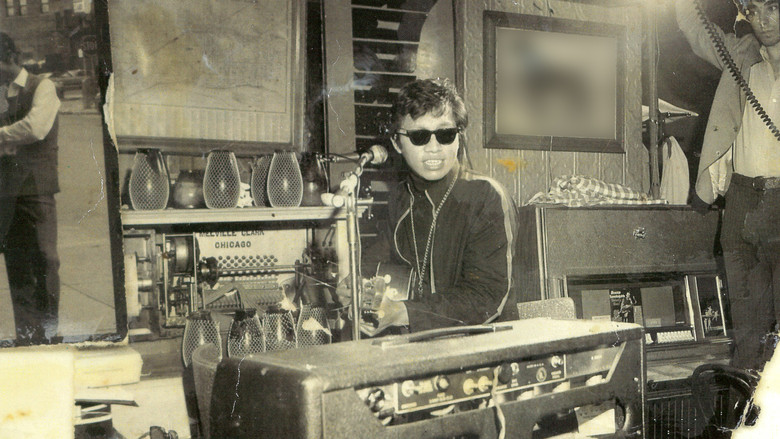
RecapRush interpretation: This opening separates the quality people hear in a record from the machinery that turns it into a successful release. The producers' conviction and the sales result do not cancel each other out. Their disagreement creates the question the rest of the film explores: who gets to decide that an artist has failed, and within which audience?
South African listeners inherit songs without a reliable biography
Fans describe Rodriguez as an established presence in their record collections. The music's questioning, anti-establishment voice resonated with young white listeners dissatisfied with apartheid-era conformity. That account of a particular audience should not be mistaken for a comprehensive history of South African resistance or every community's listening habits.
Rumors fill the information gap around the singer, including false stories that he died during a performance. Segerman and Strydom investigate rather than accepting those stories as a settled obituary.
RecapRush interpretation: The film makes familiarity and knowledge diverge. Knowing every track does not mean knowing where the singer is, whether he has been paid or even whether he is alive. A record can be part of someone's private life while its creator remains almost entirely imaginary to them.
The search turns admiration into practical work
The investigators pursue contacts, record-business connections and possible clues in the songs. A website gives the inquiry a place where someone outside their existing circle can respond. Rodriguez's daughter Eva provides the decisive family connection: her father is alive.
The documentary then introduces Rodriguez in Detroit. Rather than matching the sensational fate attributed to him, he has been living a working life and raising a family. Interviews with his daughters provide a perspective the death legends could never supply.
RecapRush interpretation: Eva's connection changes the direction of authority. The fans know what the music meant abroad; the family knows the person whose life has been narrated without them. Neither can supply the whole story alone. The discovery becomes possible when those different kinds of knowledge meet.
The living man replaces the missing icon
Rodriguez's presence shifts the film from an investigation into an encounter. The quiet domestic reveal is the opposite of the spectacular death story the searchers began with. The audience is asked to revise its assumptions before it can celebrate the discovery.
An important distinction concerns how that reveal was filmed. In his interview with The Credits, Bendjelloul explains that the shot of Rodriguez opening a window was arranged during the filmmaking process, originally with a trailer in mind. It is not footage of the South African fans first discovering him alive.
RecapRush interpretation: A planned introduction can communicate a true discovery without recording the original instant of discovery. Recognizing the construction does not require rejecting the person behind the window. It does require distinguishing the film's order of revelation from the historical order of events.
The concerts join two histories that have been running apart
Rodriguez travels to South Africa in 1998 and performs for the people who have carried his songs through their lives. Concert footage supplies the documentary's emotional climax: an audience previously attached to a remote recording can now greet the musician in person.
The documentary was released in 2012. Its presentation of the 1998 tour is retrospective; making the film did not cause that earlier visit. The searchers, the family connection and the concerts belong to the history the film later organizes for viewers.
RecapRush interpretation: For the fans, the appearance confirms that their attachment was not addressed to an unreachable ghost. For Rodriguez and his family, it makes a previously distant audience visible. The event is powerful because it is mutual, not simply because a crowd certifies the musician's worth.
The closing portrait does not become a financial solution
The later sections return attention to Rodriguez's modest circumstances and the contrast between acclaim and ordinary work. Questions about income from earlier record sales do not receive a conclusive on-screen accounting. The film does not end with a demonstrated settlement that compensates him for everything he missed.
Bendjelloul later told TheWrap that he had explored the financial trail but chose not to make it the film's ultimate focus. His account emphasizes Rodriguez's relationship to money and consumption. That explains an editorial decision; it is not proof that the payment question was resolved.
TMDB Cast Gallery
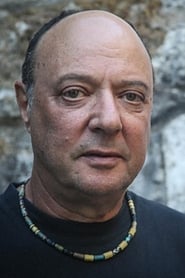
The linked gallery identifies documentary participants appearing as themselves, including Rodriguez, members of his family and people involved in the music. “Cast” here is the database's credit category, not a suggestion that their testimony is fictional performance.
Ending Explained
Cast and Characters




What is the documentary's central answer?
The supposed death is not the truth. Rodriguez is alive at the time of the discovery, and the 1998 performances bring him into direct contact with his South African following. The revelation changes an absence into a relationship.
More from RecapRush
 The Man with the Bag (2026) — Official Teaser & Movie Preview
 The End of Oak Street (2026) Recap & Ending Explained: Why Greg Is Alive Again
 Re:Zero Season 1 (2016) Recap & Ending Explained: Why Subaru Can Only Win After He Starts From Zero
RecapRush interpretation: The search succeeds when its participants stop trying to complete a legend and become willing to encounter a person. The difference matters: a legend can be shaped to fit a fan's emotional needs, while a person has a family, preferences and a history that may resist that shape.
Does the ending prove that he became rich?
No. An enthusiastic audience and successful performances are not evidence that every old royalty reached him. The film's closing movement offers recognition, not a complete financial audit.
RecapRush interpretation: Calling this distinction pessimistic misses what is actually joyful. A reunion can be real and valuable without accomplishing every kind of justice at once. Applause is something the audience can give immediately. Repairing decades of commercial arrangements would require a different process, with evidence the documentary does not provide.
Who took the missing royalties?
The film raises questions about record-business payments but does not establish a definitive chain of liability. It would be irresponsible to turn an evasive interview, an uncomfortable reaction or an unanswered question into a proven accusation of theft against a named individual.
RecapRush interpretation: Suspense encourages viewers to expect a culprit, but this documentary's strongest evidence supports the reunion more firmly than a financial verdict. The unresolved trail is a limit of the film, not an invitation to fill the gap with certainty.
Why return to ordinary life after the concert climax?
RecapRush interpretation: The closing portrait prevents the stage from becoming the only place where Rodriguez's life counts. If the story ended with applause alone, it could imply that the years of work and family life existed only as an unfortunate wait for public validation. Returning to that life makes it harder to dismiss it as empty time.
That does not mean hardship should be romanticized. Respect for someone's generosity or lack of bitterness is not a reason to decide that fair compensation would have been unnecessary. Personal dignity and material fairness are compatible demands.
Character and Theme Analysis

Rodriguez: reserve is not evidence of an empty life
RecapRush interpretation: The documentary initially makes Rodriguez interesting through other people's uncertainty. Once he appears, his restrained manner offers little support for the sensational personality they imagined. This is not a failed reveal. It tests whether a viewer can stay interested when a mysterious icon becomes a less easily packaged person.
The daughters' testimony is essential to that test. Their relationship is not built on trying to solve an album-cover image. Family memory supplies a scale of value that predates the concerts. His significance to them does not need to be discovered by a foreign audience to become real.
Segerman and Strydom: fandom becomes a responsibility to check
RecapRush interpretation: Their most consequential act is not believing more intensely than other fans. It is treating a cherished story as something that might be wrong. The investigation requires letting go of a dramatic explanation when living evidence contradicts it.
This distinguishes curiosity from possession. A collector can preserve an object while remaining indifferent to its maker. Here, pursuing the maker opens the possibility of contact, correction and an encounter that changes what the collectors thought they possessed.
Two locations, two measures of visibility
Bendjelloul describes deliberately contrasting wintry Detroit with brighter Cape Town imagery in the production notes. The contrast is a filmmaking decision, not a claim that either city has only one mood or one social identity.
RecapRush interpretation: The geographical split gives form to unequal knowledge. In one place, the records belong to a shared musical memory; in another, the man continues outside widespread celebrity. The locations make that mismatch legible, but they should not be reduced to “failure here, salvation there.” Both contain parts of the same life.
What the Film Leaves Out—and Details Worth Noticing
South Africa was not his only audience outside the United States
The film is not a complete account of Rodriguez's international career. In the February 20, 1998 Mail & Guardian interview connected with Strydom's search, Rodriguez discusses performing on the same Australian bill as Midnight Oil in 1981. His earlier Australian touring is not a later invention designed to discredit the documentary.
RecapRush interpretation: This changes the scope of the mystery. “These fans did not know what had happened to him” is supportable without claiming “nobody anywhere had heard from him.” The South African reunion remains extraordinary when that larger, less tidy history is restored.

The aged look does not always mean archival footage
In Sundance's production interview, Bendjelloul describes using an iPhone Super 8-style application for some material, including the reconstructed bar introduction. The production also used animation to bridge missing moving-image records of the earlier years.
RecapRush interpretation: Texture can make the past feel accessible without turning newly created imagery into an old recording. The useful question is not merely whether an image looks authentic, but what kind of evidence it actually is: contemporary testimony, historical performance footage or reconstruction.
A lyric is not automatically a biographical confession
The investigators consider geographical and lyrical clues, but the 1998 interview also records Rodriguez explaining that some named figures in his songs are fictional. Treating every lyric as a literal diary would repeat the error of turning an artwork into an unverified biography.
RecapRush interpretation: Songs can sustain intensely personal attachments precisely because listeners bring their own experience to them. That freedom of interpretation is valuable. It becomes a problem only when a listener's imagined story is presented as a fact about someone else's life.
Mid-Credits and Post-Credits Note
The authoritative production and interview sources checked for this guide do not verify a separate narrative mid-credits or post-credits scene. The discovery and concert payoff belong to the documentary itself. This article does not promise a hidden epilogue or claim an independent frame-by-frame inspection of the credits.
Final Thoughts
RecapRush assessment: Searching for Sugar Man is most rewarding when its happy ending is understood accurately. It reunites a musician with listeners who had mistaken uncertainty for a tragic conclusion. It does not demonstrate that the music business finally balanced its accounts or tell every chapter of his international career.
The distinction strengthens rather than diminishes the reunion. There is enough wonder in people finding each other without asking that encounter to prove that neglect always ends fairly. The songs had already mattered. What changes is that the people on either side of them can finally know more about whom they are hearing.
Frequently Asked Questions
Was Rodriguez really dead when the fans began searching?
No. The death stories were rumors. Finding him alive is the central revelation of the search; it is not a resurrection or a fictional twist.
Did the documentary arrange his first South African concerts?
No. The concert climax concerns 1998 events, years before the 2012 film's release. The film later brought that history to a wider audience.
Is the window reveal the original moment the fans found him?
No. Bendjelloul has described arranging that shot during production. The image introduces the living Rodriguez to the film's audience rather than documenting the original discovery as it happened.
Was he entirely unknown outside Detroit until South Africa found him?
No. His earlier Australian following and touring complicate that claim. The documentary principally follows the South African searchers' perspective, not every territory where his music circulated.
Does this guide reveal who owes him money?
No. It distinguishes the film's unresolved payment questions from its verified reunion. It does not turn suspicion into a finding of financial wrongdoing.
Join the conversation
What did you think of the ending? Share your interpretation. Spoilers may appear below.
This product uses the TMDB API but is not endorsed or certified by TMDB.
No comments yet. Start the conversation.