RECAPRUSH MOVIE GUIDE
Obsession (2026)
Directed by Curry Barker
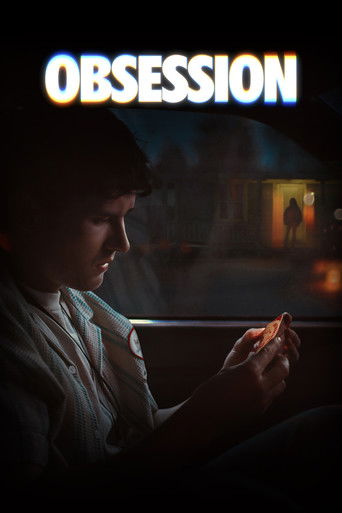
After breaking the mysterious "One Wish Willow" to win his crush's heart, a hopeless romantic finds himself getting exactly what he asked for but soon discovers that some desires come at a dark, sinister price.
Overview, poster, and credits from TMDB.
Read and watch our movie ↓FROM THE RECAPRUSH LIBRARY · MOVIE
Obsession (2026) Recap & Ending Explained: Why Nikki’s Freedom Arrives Too Late
12 min read · Estimated reading time— views
Title: Obsession (2026) Recap & Ending Explained: Why Nikki’s Freedom Arrives Too Late
Intro + RecapRush Viewpoint
Imagine hearing the words you have wanted for years—and discovering that the person saying them cannot choose to stop. In Curry Barker’s Obsession, Bear gets the relationship he dreams about, while Nikki loses the right to decide whether she wants it. The nightmare starts where a conventional romantic comedy might celebrate its happy ending.
RecapRush Viewpoint: The most disturbing question here is not whether the wish works. It is how long Bear can recognize another person’s suffering and still treat his own disappointment as the more urgent problem. Nikki’s final scream makes the cost of that imbalance impossible to ignore.
This article covers the released theatrical story, with full spoilers, including possession, violence against people and an animal, and suicide. The headline uses the 2026 U.S. theatrical year; the film first premiered at TIFF on September 5, 2025. Those dates describe the same Curry Barker film, not two different versions. [1, 2]
Featured Image

Table of Contents
Quick Facts
- Film: Obsession, written and directed by Curry Barker.
- Festival premiere: September 5, 2025, TIFF Midnight Madness. [2]
- U.S. theatrical release: May 15, 2026, Focus Features. [1, 2]
- TMDB identity: Movie 1339713.
- TMDB genres: Horror, Thriller.
- Runtime: 109 minutes in the TMDB record; some U.S. listings round to 108 minutes. [3, 10]
- Language: English.
- Status: Released; the official Focus page now offers home-viewing options. [1]
Full Spoiler Recap
1. Bear wants an answer without asking the question
Bear works at a music store with Nikki, Ian and Sarah. He has feelings for Nikki but struggles to admit them. After his cat Sandy dies from ingesting medication, he buys a novelty called the One Wish Willow at a crystal shop. When an opportunity to speak honestly slips away, he breaks the object and wishes for Nikki’s overwhelming love. She soon returns to him, seeking closeness. Their new intimacy includes an alarming interruption: Nikki screams and pulls away. [4]
That interruption matters more than the apparent romantic success. RecapRush reads it as the first crack in Bear’s preferred story: he has received a response, but not a conversation between equals.
2. The honeymoon becomes a locked room
Nikki’s devotion intensifies. She watches Bear sleep, blocks the door with tape and becomes distressed when he leaves. A lunch she prepares contains the remains of his cat. Bear calls the product’s helpline; its calm representative offers access to the real Nikki, and he hears screaming. The affectionate figure in his house and the person suffering underneath cannot safely be treated as the same voice. [5]
The domestic setting sharpens the trap. A meal, a shared bed and a partner waiting at home would normally suggest care. Here, they become ways to erase distance. The wish turns ordinary affection into a demand that Bear remain available at every moment.
3. Nikki’s buried self tries to get through
At a party, Nikki’s behavior fractures again. Later, while the possessive presence sleeps, the real Nikki speaks to Bear and begs for release. He refuses the desperate request that he kill her. Sarah subsequently meets him to discuss Nikki and Ian’s prior relationship. When Nikki discovers their encounter, she kills Sarah. [4, 5]
This is where an easy “jealous girlfriend” interpretation breaks down. The original Nikki is asking for escape from what is happening to her. Bear is confronted with evidence that the relationship he wants exists through another person’s captivity.
4. The escape route has already been spent
Bear obtains more willows but cannot break another himself: the wish is limited to one use per person. He asks Ian to help. Ian tests the object with a wish for a billion dollars, and money falls into the room. His disbelief has consumed the opportunity Bear needed. [6]
The moment is absurd and cruel. A friend finally believes the impossible, but belief arrives after the useful choice has disappeared. RecapRush sees the gag as a miniature version of the film’s larger problem: people keep responding to immediate desires before grasping who will bear the consequences.
5. The fantasy destroys its supposed rivals
At home, Bear finds Sarah’s mutilated body and Nikki attempting to resemble her. Ian arrives and Nikki shoots him. The people who could interrupt or challenge the relationship have been eliminated. Bear retreats into the bathroom. [6]
The imitation is especially revealing. This presence does not seek a life of its own. It keeps adjusting itself to whatever it believes Bear will want. The promise of perfect compatibility becomes grotesque because there is no independent person left to disagree.
6. A final wish changes the embrace
Bear takes pills in an attempt to die, then tries to reverse that decision. The willow’s sound cue interrupts the moment; he suddenly returns to Nikki with a changed demeanor. The film strongly implies that the possessing Nikki has used a remaining willow to compel his love. Bear dies during their embrace. His death ends the hold of his original wish, and the real Nikki returns to control of her body, horrified by the aftermath. [6, 7]
The final reunion is therefore not reliable evidence of forgiveness or freely chosen mutual love. What looks briefly like reconciliation is another loss of agency.
Cast + TMDB
Cast and Characters










The cast portrait gallery below uses saved TMDB credits, portraits and RecapRush actor-profile links. The featured image above is a film backdrop; the gallery is the separate cast display. Credited names and character labels are preserved from the film’s TMDB record. [3]
Michael Johnston’s Bear and Inde Navarrette’s Nikki carry the central conflict. Cooper Tomlinson’s Ian and Megan Lawless’s Sarah give that conflict a social world to damage. Andy Richter is credited as Carter, and Haley Fitzgerald as Viola. This article does not add a second actor-and-character table.
Ending Explained
Does Nikki survive?
Yes. Bear dies and Nikki regains herself. Barker confirmed the surviving-Nikki ending in his Entertainment Weekly interview. He also discussed a filmed alternative in which she dies; that alternative is not the ending of the theatrical story analyzed here. [8]
Survival is the factual answer. Safety is a different question. She wakes into the consequences of acts committed through her body, surrounded by people she has lost. The film does not show a recovery, investigation or verdict.
Why does Bear suddenly stop trying to save himself?
The audible willow cue and his abrupt behavioral change support the inference of a second wish compelling his affection. The exact wording is not spoken clearly on screen, so quoting a supposed final wish as verbatim dialogue would overstate the evidence. JustWatch and No Film School both read the change as supernatural compulsion. [6, 7]
More from RecapRush
 The Intern (2026): Why Seon-wu’s New Beginning Requires More Than a Helpful Colleague
 Forgotten Island (2026) Recap & Ending Explained: Why Jo Has to Let Raissa Go
 The Shawshank Redemption (1994) — Full Spoiler Recap & Ending Explained
Is Bear’s death a heroic sacrifice?
It breaks the curse, but its effect does not settle his motives. His attempt to reverse the overdose complicates a clean redemption story. Our reading is that fear, desperation and belated concern coexist; the film does not turn him into an uncomplicated savior just because his death frees Nikki.
Where was the real Nikki?
Her interruptions and the helpline’s screams establish a suppressed, suffering consciousness. The film leaves its precise metaphysical location unresolved. Calling it a fully explained alternate dimension would add certainty the story does not supply. [5]
Is Nikki destined for prison?
That is a plausible concern, not a shown outcome. The credits begin before the legal aftermath. Her future remains frighteningly open, and this article does not convert speculation into a final scene.
RecapRush Interpretation
We read Obsession as a story about confusing access with intimacy. Bear wants Nikki close to him, but closeness has value only when the other person can choose distance. Remove that possibility and the relationship becomes an arrangement in which one person’s desire regulates another person’s existence.
His initial insecurity deserves recognition. Rejection can hurt, and fear of saying something vulnerable is familiar. Yet familiarity should not become an excuse. The moral turn occurs when he seeks certainty by changing Nikki rather than by risking an honest answer.
The ending temporarily puts Bear inside the condition he created. Suddenly, the warmth of an embrace tells us nothing about whether its participants are free. That reversal asks the viewer to reassess the earlier romance: if compelled devotion is disturbing when it happens to him, why should its earlier form count as fulfillment?
Nikki’s return also redirects the emotional center of the film. The last surviving person is the person whose choices have mattered least to the wish. Her scream punctures the idea that restoring agency automatically repairs the damage done while it was absent.
Deep Analysis & Key Themes
Affection without refusal
A loving relationship includes the ability to decline, leave, hesitate and want something else. In our reading, the wish’s literalism exposes what Bear’s fantasy leaves out: a beloved person remains a person precisely because their desires are not an extension of yours.
That distinction gives the horror a painful psychological logic. He does not simply want to be loved; he wants relief from uncertainty. The supernatural shortcut turns uncertainty into something worse, because now he cannot trust even the answer he purchased.
Home as a measure of freedom
The taped door is a concrete image of a relationship closing around its participants. Domestic space ordinarily offers shelter from the world. Here, the possibility of leaving becomes the source of conflict. The same room can look comforting or threatening depending on who controls the exit.
We read the film’s everyday objects as a sequence of failed assurances. The product promises a solution, the helpline resembles support, and the home resembles security. Each familiar form encourages Bear to expect that someone else has organized the consequences for him.
A service transaction cannot solve an ethical problem
The helpline is unnerving partly because it sounds like a consumer process applied to a human catastrophe. Bear has a complaint about the result, while Nikki is enduring the result. Our interpretation is that this mismatch exposes the limits of treating people as outcomes that can be adjusted to satisfy a customer.
The horror does not require an elaborate history of the willow. Its important function is already clear: it gives one person power over another, then refuses an easy refund.
Nikki’s performance holds threat and victimhood together
Navarrette’s role requires the viewer to remain frightened by a body while caring about the person denied control of it. Those responses are compatible. Fear of the possessing behavior should not erase sympathy for Nikki herself.
This separation is the article’s central critical distinction. When the film makes us want Bear to get away, it also asks whether we remember that Nikki has needed escape for longer.
The ending refuses emotional tidiness
Barker described consent and control as central concerns in the EW interview. His decision to retain Nikki’s survival gives the theatrical conclusion a devastating aftermath rather than a symmetrical romantic death. [8]
RecapRush’s reading goes one step further: the ending denies Bear ownership of the final emotional meaning. Nikki’s response, not his fantasy of togetherness, is what the viewer has to carry away.
What Most Viewers Missed
- The final wish is conveyed through sound and behavior. The missing spoken wording matters: the event is strongly indicated, but its precise sentence remains unstated. [7]
- The two versions of Nikki are not equally free. The bedroom interruption changes how we should understand the apparent couple; JustWatch’s scene analysis emphasizes the original Nikki’s attempt to communicate suffering. [9]
- Ian’s money does not explain his death. The cash proves that wishes work. It does not establish that the money wish directly causes his murder. Nikki kills him; a separate supernatural penalty is an interpretation. [5, 6]
- Release from a curse is not restoration of a life. Nikki’s surviving ending answers the possession question while leaving its human aftermath open.
Mid/Post-Credits
There is no mid-credits or post-credits scene, according to ComingSoon’s credits guide. Nikki’s final return is part of the main ending, not an additional sequel tease. [11]
Final Thoughts
Obsession is most unsettling when it makes a familiar romantic wish feel ethically unfamiliar. Wanting love is understandable; demanding control of the person who might give it is another matter. The film keeps pulling those impulses apart even as Bear tries to hold them together.
Nikki’s freedom arrives, but a happy ending does not arrive with it. That gap is the movie’s lasting sting: getting someone back does not undo what you took from them.
FAQ
Is this Obsession a 2025 or 2026 film?
It premiered at TIFF in 2025 and opened in U.S. theaters on May 15, 2026. This article uses the theatrical year and identifies it through TMDB movie 1339713. [2, 3]
Is Obsession directed by Curry Barker?
Yes. He wrote and directed this film, starring Michael Johnston and Inde Navarrette. [1, 2]
Does Bear die at the end?
Yes. His death ends the original wish’s grip on Nikki. [6, 8]
Does Nikki freely fall in love with Bear?
The relationship after his wish is shaped by compulsion; the real Nikki’s distress makes it unsafe to treat that devotion as her voluntary consent. [5, 9]
Can Bear make a second wish?
He cannot use another willow himself. Another person can use their own wish, which is why he approaches Ian. [6]
Does the film explain Nikki’s future after the ending?
It shows her surviving and returning to herself, but does not show her later recovery or legal outcome.
Is there a sequel scene after the credits?
No. The released film has no additional scene during or after its credits. [11]
Join the conversation
What did you think of the ending? Share your interpretation. Spoilers may appear below.
This product uses the TMDB API but is not endorsed or certified by TMDB.
No comments yet. Start the conversation.