
RECAPRUSH MOVIE GUIDE
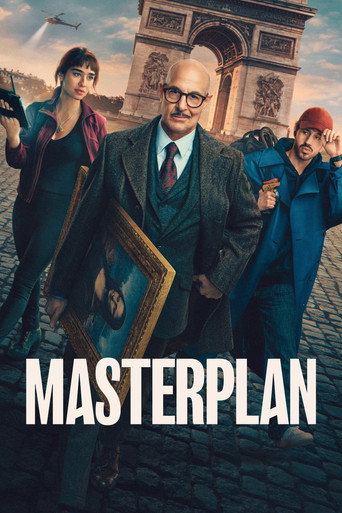
Masterplan (2026)
Directed by Thomas Vincent
When a legendary thief sets his sights on the Mona Lisa, he recruits two young strangers to help him before revealing they are long-lost siblings… and oh yes, by the way, he is their father. Thrown into a chaotic reunion they never asked for, this new family must learn to work together — and try not to kill each other — if they want any chance at pulling off the heist of the century.
Overview, poster, and credits from TMDB.
Read and watch our full recap ↓FROM THE RECAPRUSH LIBRARY · FULL RECAP
Masterplan (2026) Recap & Ending Explained: Why Roger’s Fake Family Becomes a Real Choice
17 min read · Estimated reading time— views
Intro + RecapRush Viewpoint
Imagine finding your missing father and immediately being asked to rob the Louvre. The reunion would be difficult enough without the security systems, explosives, and priceless painting. In Masterplan, the emotional complication is also the recruitment strategy: Roger knows that a story about belonging can get people to agree to things a simple job offer cannot.
Thomas Vincent’s 2026 heist movie puts Stanley Tucci between two younger specialists, Chiara and Jay, and lets the family story become as elaborate as the robbery. Everyone is watching for a trick. The trouble is that wanting an answer can make a suspicious person surprisingly easy to persuade.
The RecapRush viewpoint: the most useful way into this film is to ask when Roger’s promises begin costing him something. Early on, affection is a tool he uses to obtain other people’s labor. At the border, protection requires him to give up his own escape. That change gives the ending an emotional argument, even if you remain unconvinced that one sacrifice should buy back so much trust.
Full spoilers ahead. This guide covers the complete released film, including the Mona Lisa robbery, false paternity story, Van Klum deal, border surrender, prison escape, and final restaurant reveal. Facts were checked October 26, 2026; the psychological and thematic readings are RecapRush’s interpretation. This is a French–Italian Prime Original co-produced by Gaumont and Amazon MGM Studios, eligible here through its US Prime Video distribution.
Featured Image
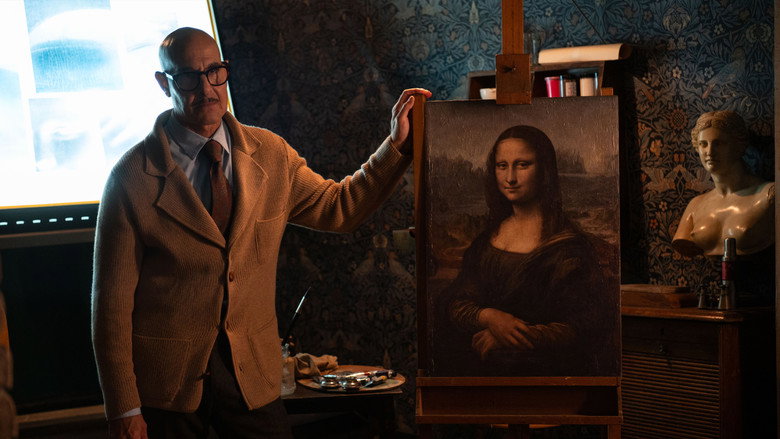
Table of Contents
Quick Facts
- Title / year: Masterplan (2026)
- Director: Thomas Vincent
- Screenplay: David Wolstencroft and Thomas Vincent
- Principal cast: Stanley Tucci, Simona Tabasco, Victor Belmondo
- Production: Gaumont and Amazon MGM Studios; described by Amazon as a French–Italian Prime Original
- Verified release: October 16, 2026, exclusively on Prime Video, including the US
- Release milestone: official streaming premiere; this guide does not substitute a trailer announcement for a release
- TMDB identity: Movie 1561726
- All current TMDB genres: Action, Thriller
- Runtime records: approximately 1 hour 50 minutes; TMDB lists 110 minutes, Prime Video’s listing 109, and Gaumont’s production catalog 107
- Coverage: complete film, with major spoilers throughout
Full Spoiler Recap
1. Two specialists answer a job offer
Chiara makes her living getting through security with technology. Jay favors explosives and a more physical approach. Their separate criminal lives intersect at a property in Como, Italy, where they discover that they have been recruited for the same break-in.
The assignment is an audition. Roger Cavendish arranged it to find out whether their abilities would work together. Once he has their attention, he offers a larger target: the Mona Lisa.
The first deception is therefore already operating before the family revelation. Chiara and Jay believe they are deciding how to complete a job. Roger is deciding whether they are useful to his next one. He controls the meaning of the encounter while allowing them to experience it as an independent success.
2. Roger makes the job personal
Roger claims to be their biological father, which would make Chiara and Jay siblings. Jay calls his mother and receives apparent confirmation; Chiara is given DNA evidence. The offer now seems to contain an explanation for missing pieces of their past.
He also presents himself as an accomplished criminal with an impressive history. That reputation matters because the robbery sounds absurd without someone who can claim to know how it might work.
For the pair, money and emotional possibility become entangled. Saying yes seems to mean gaining both a partner and a parent. The film’s con is effective because it does not require its targets to stop being ambitious. It gives that ambition a family shape.
3. Preparing the robbery becomes a competition for approval
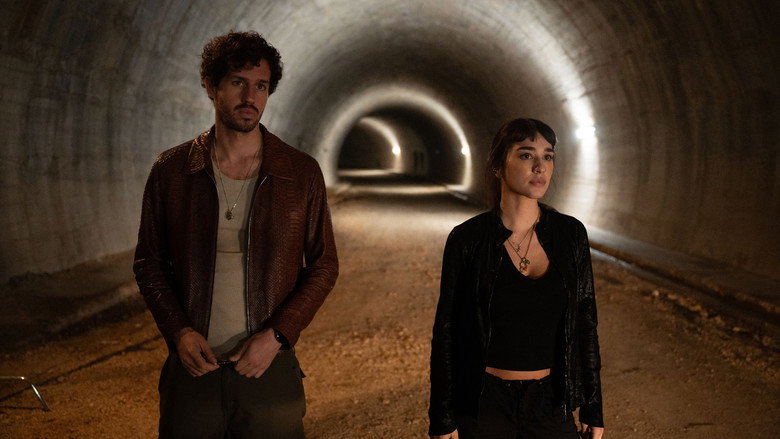
The route into the Louvre involves an old underground passage associated with the Académie Française. A workers’ strike creates an opportunity, while the museum’s electronic security requires Chiara’s expertise. Jay must open the physical route.
The preparation period turns the supposed siblings into rivals for Roger’s approval. Suspicion rises, but an overheard conversation with a lawyer appears to establish that he intends to leave them his property. What looks like a private disclosure has precisely the reassuring effect he needs.
This is an important step in the manipulation. A reassuring statement addressed directly to a skeptical person is easy to doubt. A statement apparently discovered by that person can feel like evidence they have obtained for themselves.
4. The Mona Lisa leaves the museum
The operation combines interference with security systems, access through the tunnel, and a tightly limited opportunity to reach the painting. Chiara handles the electronic side while Jay gets into position. Their skills are complementary in practice, not merely in Roger’s sales pitch.
The extraction uses a balloon device to carry the artwork away. The team regroups with what appears to be the prize, making the impossible assignment look accomplished.
Roger then separates from Chiara and Jay. He sends them away in his Jaguar with instructions about what to do if he does not return. At this point, they have reason to believe he is accepting danger to help them get clear. It will not be the last time the film asks us to evaluate that gesture.
5. The empty trunk exposes the larger con
At the safehouse, the painting is missing. A concealed mechanism in the car explains how Roger could remove it without the others realizing. The successful robbery has delivered control of the prize to him, not to the team.
Danger follows them to the safehouse, and they get away. More damaging than the immediate attack is the collapse of the family explanation. Jay’s mother admits she was paid to support Roger’s claim. The supposed evidence and reassuring inheritance arrangement belong to the same fabrication.
Chiara and Jay have not discovered an untrustworthy father. They have discovered that the father story was invented to recruit them. That distinction removes Roger’s ability to defend his choices as unpleasant necessities on behalf of a family.
6. A debt replaces the promised fortune
The pair track Roger through his pacemaker and observe his meeting with Van Klum. Roger’s true problem is a debt to a dangerous criminal. He needs the painting as leverage, rather than as the source of the uncomplicated payday his accomplices expected.
The handoff includes an examination of the artwork. Van Klum accepts what is presented to him, but the exchange does not produce safety. Roger has anticipated that the buyer may eliminate people who know about the deal.
French and Italian forces arrive, creating the disorder Roger intends to use as cover. The police intervention is part of his escape strategy. His plans for getting out have once again been more developed than the explanations he gave Chiara and Jay.
7. Roger returns for the people he used
Roger initially has an opportunity to leave alone. Instead, he stops for Chiara and Jay and takes them with him. At a border tunnel, he gives them a way out and submits to the Italian authorities.
He also drops his constructed identity. Roger Cavendish is a persona; his real name is Marcus Dubrovnik, and he is from New Jersey. The cultivated legend has been another layer of misdirection.
The surrender matters because it changes the consequences of separation. After the Louvre robbery, letting the younger thieves go concealed a betrayal. At the border, letting them go requires him to remain. Similar-looking actions have opposite costs.
8. One year later, the partnership survives
Chiara and Jay help Roger escape from prison a year later. The reunion is no longer built on their believing his paternity story. They know what he did and still choose to return.
The film reserves one final reveal for the artwork. The Mona Lisa delivered to Van Klum and recovered by the authorities was a convincing forgery. The genuine painting is hanging in an Italian restaurant.
The public recovery and the private reality are therefore different. A famous image displayed in an ordinary place is easy to dismiss as a reproduction. The caper ends by turning familiarity into camouflage.
Cast + TMDB
Cast and Characters



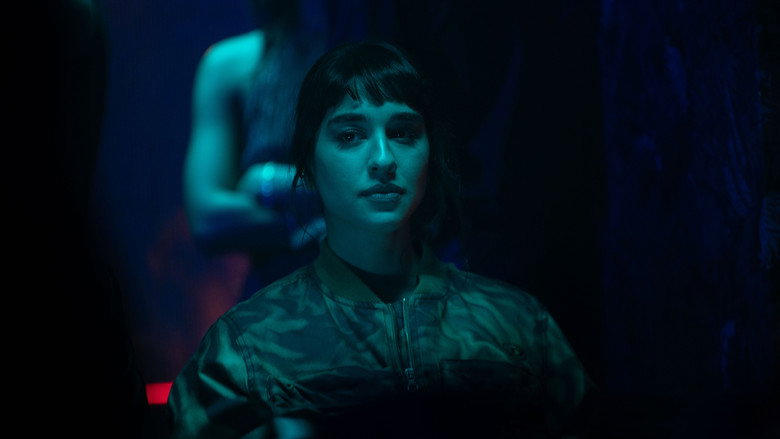
The principal-character portrait gallery uses verified TMDB person records for Stanley Tucci as Roger, Simona Tabasco as Chiara, and Victor Belmondo as Jay, with links to their RecapRush profiles. It is a focused selection of the three leads rather than a complete credits list.
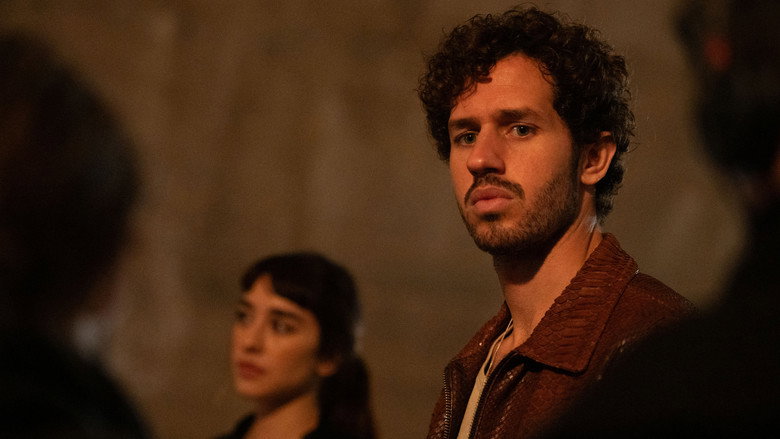
Tucci’s role depends on making calculation look like social ease. Roger needs the younger thieves to feel that accepting him is their discovery, not his achievement. Tabasco’s Chiara and Belmondo’s Jay give that performance two different audiences: one oriented toward systems, the other toward physical execution. Their professional confidence makes their emotional vulnerability more interesting than simple gullibility would be.
The later identity reveal changes how we understand Roger without changing who plays him. His names and personas are part of the narrative; they should not be mistaken for separate casting credits.
Ending Explained
Is Roger really Chiara and Jay’s father?
No. The apparent reunion is a manufactured recruitment tactic. The confirmation from Jay’s mother was purchased, and the paternity evidence belongs to the deception. By the final act, neither young thief needs to believe the biological claim for the relationship to continue.
That leaves a deliberately uncomfortable question. A bond can become meaningful even when its origin was exploitative. Meaning does not make that exploitation harmless.
More from RecapRush
 Free Solo (2018) Recap & Ending Explained: Why the Summit Does Not End the Question of Risk
 Michael (2026) Recap & Ending Explained: Why the Biopic Stops at the Peak of the Bad Era
 Chernobyl (2019) Recap & Ending Explained: Why Legasov Chooses Truth Over Survival
Why does Roger surrender when he has an escape route?
The action establishes that he allows Chiara and Jay to get away while accepting capture himself. The emotional explanation is our reading: protecting them has begun to matter more than keeping every benefit of the plan for himself.
We should be careful about calling this a flawless tactical solution. The movie supplies a sacrifice as an emotional turning point; it does not demonstrate that this is the only physically possible escape arrangement. The choice is clearest as a statement about whom he is willing to pay a price for.
Where is the real Mona Lisa?
The original ends up on the wall of an Italian restaurant. The painting involved in the criminal handoff and apparent recovery is a fake. The concluding reveal does not document every logistical step by which the original was placed there, so this guide does not invent a hidden accomplice or an unseen transport operation.
The joke depends on context. In a museum, the image is treated as an irreplaceable treasure. Among restaurant decorations, its very recognizability can make it look unremarkable.
Why do Chiara and Jay help him escape?
Their return confirms a continuing alliance after the fraud is exposed. RecapRush reads it as a response to his later protection, rather than evidence that the earlier lies were secretly true.
You can accept the story’s chosen-family conclusion while questioning its speed. Trust restored by an action is still trust placed in a person who has demonstrated extraordinary skill at manipulating it. The ending is warmest if you believe the sacrifice marks a durable change; it is more uneasy if you think Roger remains incapable of a relationship without controlling the terms.
RecapRush Interpretation
The following is RecapRush’s reading, not a statement of confirmed director intent. Masterplan sets up two kinds of authentication. The painting has to be accepted as genuine, and Roger has to be accepted as a father. Both processes appear to involve evidence. Both can be manipulated.
The ending treats them differently. The artwork has an original that remains an original regardless of what experts or police believe. The relationship has no lost biological truth waiting to be recovered. If it becomes real, it has to do so through choices made after the false story is gone.
That distinction is the film’s most interesting emotional possibility. Roger cannot turn himself into their biological father through better behavior. He can decide to behave protectively without receiving that title in advance. Chiara and Jay can respond without pretending they were never deceived.
Our reservation is that the film’s affectionate close makes accountability feel lighter than the betrayal warrants. A reunion is evidence of renewed connection, not proof that every injury has been repaired. The pleasure of a caper can coexist with that unresolved ethical discomfort.
Deep Analysis & Key Themes
Roger sells an explanation before he sells a plan
The Mona Lisa is the spectacular proposition. The quieter offer is a story that explains who Chiara and Jay are and why their lives have taken separate paths. In our reading, that explanation is the more powerful inducement.
A lucrative job can be assessed as a transaction. A recovered parent can feel like an answer to a personal question. Roger places those two decisions inside one another, making it harder for his recruits to separate professional interest from emotional hope.
This does not require them to be foolish in every area of life. Expertise is specific. Someone capable of bypassing a security system can still want an account of their own past badly enough to give it too much credit.
The lawyer scene turns suspicion into a delivery system
The apparent inheritance conversation matters because the younger thieves are already looking for evidence. Roger does not merely ask them to trust him again. He supplies something that looks independent of his appeal.
The psychological maneuver is subtle even when the film’s larger machinery is extravagant. Their skepticism becomes the route by which reassurance enters. They think they have looked behind his performance; he has anticipated where they will look.
That makes the scene useful preparation for the empty trunk. The problem is not that the pair never checked anything. It is that Roger was able to shape the checks themselves.
The film repeats a separation and changes its meaning
Leaving after the Louvre job looks like a protective sacrifice but conceals self-interest. Separating at the border looks superficially similar and carries a genuine cost. This repetition gives the final act a concrete moral comparison.
The test is no longer whether Roger can make a convincing speech. It is who ends up exposed to danger and who gets the available exit. His body remains where his earlier promises asked the others to place theirs.
The distinction also explains why the ending can feel emotionally legible despite the elaborate plot. We do not need to admire every mechanism to recognize a change in how the consequences are distributed.
The restaurant transforms value through setting
The final painting reveal is a joke about visibility. Something can be plainly present and still escape recognition when the setting tells people it cannot possibly be important.
Roger’s persona works through the opposite effect. His manner and reputation encourage the others to assign him authority before they understand him. In both cases, context does interpretive work before the object or person is examined closely.
We read that as a useful caution within the comedy: recognition is not just seeing. It is deciding what kind of thing you believe you are seeing.
A chosen family still needs boundaries
The prison pickup delivers a cooperative ending. It does not establish a model of healthy family life. These characters remain criminals, and their loyalty is expressed through another illegal act.
That moral messiness can be part of the fun, but it should remain visible in the interpretation. Choosing one another is emotionally significant. It does not make the choice beyond criticism, and it does not mean the person who caused the harm is entitled to forgiveness.
The strongest version of the ending is therefore conditional: they are choosing a relationship with fuller knowledge. Whether that knowledge will change how the relationship operates is a question the film leaves outside its final joke.
What Most Viewers Missed
The successful robbery is not the end of the exploitation
Removing the painting proves that Chiara and Jay were capable. It does not prove that they understood the arrangement. The film separates successful execution from informed participation: they can do the work exceptionally well while being wrong about who benefits.
The two apparent sacrifices are a matched pair
Roger’s post-heist separation and border surrender invite comparison. Ask who retains the advantage after each one. That question is more revealing than how tender or plausible he sounds while explaining himself.
The title can describe control of information
A plan is not only a sequence of physical actions. Roger’s advantage depends on knowing which version of the story each person has been given. The empty trunk is a physical reveal of an informational imbalance that existed from the beginning.
The final reveal leaves a practical gap on purpose
We learn where the original painting is. We do not receive a complete account of its placement. Treating an omitted logistical step as permission to invent another twist would make the explanation less accurate, not more complete.
Mid/Post-Credits
The one-year-later prison escape and restaurant reveal belong to the film’s documented concluding story. The sources checked do not establish a separate bonus scene after or during the credits. No additional stinger, sequel tease, or verified absence of one is claimed here.
Final Thoughts
Masterplan is most interesting when its crime mechanics expose a personal vulnerability: the desire to belong can survive years of learning not to trust people. Roger exploits that desire before making a choice that seems to honor it.
Whether the emotional repair feels earned will depend on how much weight you give that choice. For us, the ending works best as a provocative beginning for this trio, rather than a certificate that everything between them is settled. The painting has a fixed answer about authenticity. The people still have to live theirs.
FAQ
When was Masterplan released?
Its verified Prime Video release was October 16, 2026. Amazon’s official materials identify it as streaming globally, including the US. The release date is distinct from the July teaser and September trailer publicity.
Is this a Hollywood production?
Amazon describes it as a French–Italian Prime Original, co-produced by Gaumont and Amazon MGM Studios. It fits this coverage through US distribution. Calling it solely an American production would obscure that identity.
What genres should it be listed under?
The current verified TMDB genres are Action and Thriller. Its heist plot and comic tone can be described in the article without adding Crime or Comedy to the TMDB-backed genre array when they are absent from that record.
Are Chiara and Jay actually Roger’s children?
No. The paternity story is part of his con. Their later decision to help him follows the exposure of that lie.
Does Roger give Van Klum the original Mona Lisa?
No. The ending identifies the handoff painting as a forgery and reveals the original hanging in an Italian restaurant.
How long is Masterplan?
Allow about 1 hour 50 minutes. The checked listings differ slightly: TMDB gives 110 minutes, Prime Video 109, and Gaumont’s production page 107. Those catalog figures should not be presented as identical.
Is the restaurant twist a true account of an art theft?
This guide explains the film’s fictional heist. Its events and invented tunnel operation are not presented as documented Louvre history.
Join the conversation
What did you think of the ending? Share your interpretation. Spoilers may appear below.
This product uses the TMDB API but is not endorsed or certified by TMDB.
No comments yet. Start the conversation.