
RECAPRUSH MOVIE GUIDE
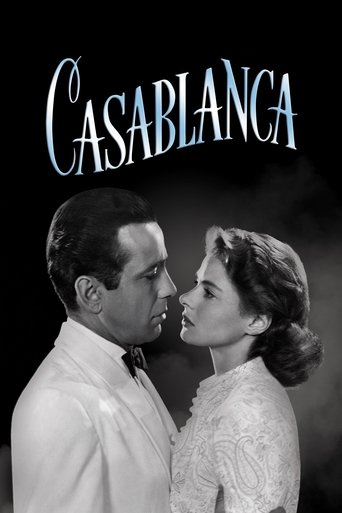
Casablanca (1943)
In Casablanca, Morocco in December 1941, a cynical American expatriate meets a former lover, with unforeseen complications.
Overview, poster, and credits from TMDB.
Read and watch our full recap ↓FROM THE RECAPRUSH LIBRARY · FULL RECAP
Casablanca (1942) Recap & Ending Explained: Why Rick Lets Ilsa Go
13 min read · Estimated reading time— views
Intro + RecapRush Viewpoint
Major spoilers ahead. At Rick’s Café Américain, everyone is waiting for a door to open: a visa, an airplane seat, a bribe, a political reversal, one last chance to leave. Rick Blaine pretends he is different. He has turned disappointment into a business model and neutrality into armor. Then Ilsa Lund walks through his door, and the past he buried in Paris suddenly needs an answer.
Casablanca endures because its famous romance is finally resolved as an ethical choice rather than a romantic prize. RecapRush’s view is that Rick does not stop loving Ilsa at the airport. He proves the love is real by refusing to make her smaller than the person she wants to be. His sacrifice also returns him to the political courage he had before heartbreak taught him to hide.
Featured Image
Table of Contents
Quick Facts
- Title: Casablanca
- Year: 1942
- Genre: Drama, romance, wartime thriller
- New York opening: November 26, 1942
- National U.S. release: January 23, 1943
- Runtime: Approximately 102–103 minutes
- Director: Michael Curtiz
- Screenplay: Julius J. Epstein, Philip G. Epstein, and Howard Koch
- TMDB movie ID: 289 — TMDB title page
- Spoiler status: The complete plot and airport ending are discussed below
Full Spoiler Recap
1. Casablanca is a waiting room with no promise
In December 1941, refugees crowd into Vichy-controlled Casablanca hoping to reach neutral Portugal and then the Americas. The legal path requires exit visas that few can obtain. Around that desperation grows a marketplace of officials, criminals, informants, gamblers, and opportunists.
American expatriate Rick Blaine runs the city’s most fashionable nightclub. Rick is outwardly cool, private, and unwilling to risk himself for anyone. He insists that he does not become involved in other people’s causes, even though fragments of his history suggest otherwise: he once ran guns to Ethiopia and fought on the anti-fascist side in Spain.
Petty criminal Ugarte arrives with two letters of transit stolen from murdered German couriers. The documents can carry their holders out of Casablanca without ordinary restrictions. Ugarte asks Rick to hide them, believing the café owner is the rare man who cannot be frightened or bought. Before a sale can occur, Captain Louis Renault’s police arrest Ugarte in the café. Rick watches without intervening, and Ugarte later dies in custody. The letters remain hidden with Rick.
2. Victor Laszlo arrives with the woman Rick cannot forget
German Major Heinrich Strasser comes to Casablanca determined to stop resistance leader Victor Laszlo from escaping. Laszlo has survived imprisonment and continued fighting Nazi power across Europe. His reputation makes him both a symbol and a target.
Victor enters Rick’s with his wife, Ilsa Lund. Rick sees Ilsa and his practiced detachment collapses. She is the woman he loved in Paris during the German advance. They planned to leave the city together, but at the train station Rick received only a note saying she could not come. He departed heartbroken with his friend and pianist Sam.
Ilsa asks Sam to play the song linked to Paris. Rick has forbidden it because the melody breaks through the identity he has constructed, yet he cannot keep memory out once Ilsa is physically present. Their reunion is restrained in public and devastating in private. Rick reads her return as proof that she betrayed him. Ilsa carries an explanation she cannot initially give.
3. Rick’s café becomes a political stage
Laszlo tries to purchase exit visas from Signor Ferrari, a rival club owner and black-market operator. Ferrari cannot provide them, but he reveals that Rick may possess Ugarte’s letters. Victor approaches Rick, who refuses to sell at any price. When Victor asks why, Rick tells him to ask his wife.
The conflict moves from private bitterness to public defiance when German officers sing a patriotic anthem inside the café. Laszlo asks the house band to play “La Marseillaise.” Rick gives permission with a small nod. The room rises and overwhelms the German song. Refugees, staff, and patrons become a chorus, and the café briefly stops being neutral territory.
Strasser orders Renault to close the club. Renault performs the order with characteristic hypocrisy, claiming to be shocked by gambling just as an employee hands him his winnings. The joke is funny, but it also defines his method: Louis survives by treating moral responsibility as theater.
4. Ilsa explains Paris
Laszlo attends a resistance meeting, leaving Ilsa alone with Rick. She asks for the letters and, when he refuses, points a gun at him. Rick challenges her to shoot. She cannot. Instead, she confesses that she still loves him.
Ilsa finally explains what happened in Paris. She had been married to Victor before meeting Rick, but she believed Victor had died in a concentration camp. On the day she and Rick planned to leave, she learned that her husband was alive and needed her. She abandoned Rick without explaining because she could not face the choice or endanger Victor.
The revelation changes the moral shape of their affair. Ilsa did not casually exchange one man for another; she was caught between a love born under the belief that she was free and a commitment resurrected by wartime survival. She tells Rick she no longer trusts herself to choose and asks him to decide for all three of them.
5. Victor reveals what love looks like without possession
Victor returns after narrowly avoiding arrest. He understands that Ilsa and Rick share a history, even if he does not know every detail. He asks Rick to use the letters to take Ilsa to safety, offering his own freedom in exchange. The request matters because Victor does not treat Ilsa as property to be guarded. His first concern is her survival.
Rick now sees both parts of the decision clearly. Ilsa loves him, but Victor’s work matters beyond the triangle, and Ilsa’s partnership is a source of strength in that work. Rick devises a plan that appears to favor his own escape with Ilsa. He sells the café to Ferrari, tells Renault that he will frame Laszlo for possession of the letters, and arranges a late-night meeting at the club.
6. Rick turns the trap around
When Victor and Ilsa arrive, Renault moves to arrest Victor. Rick draws a gun on Renault and forces him to help the couple reach the airport. Louis secretly contacts Strasser, assuming the major can intercept them.
At the fog-covered airfield, Rick tells Ilsa that she will board the plane with Victor. She believed Rick’s plan was for the two of them to leave together, so the decision shocks her. Rick explains that if she stays, regret will eventually poison their reunion. Their Paris love was real, but keeping Ilsa now would reduce that truth to an escape from duty.
Rick also protects Ilsa’s dignity when he speaks to Victor. He claims that she only pretended to love him to obtain the letters. Victor may understand that this is not the entire story, but he accepts the gift of privacy. He and Ilsa board the plane.
7. Rick chooses a side
Strasser arrives and attempts to stop the flight. Rick shoots him before he can contact the control tower. Police arrive moments later. Louis could identify Rick as the killer, but instead orders his officers to round up the “usual suspects.” In that instant, he stops merely performing ambiguity and makes a real choice against German authority.
Louis advises Rick to leave Casablanca, and the two walk away into the fog. Rick has lost the future he briefly imagined with Ilsa, but he has recovered direction. The ending replaces a romantic couple with a political friendship: two compromised men stepping toward resistance.
Cast + TMDB
Cast and Characters


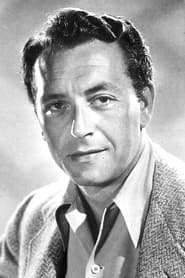
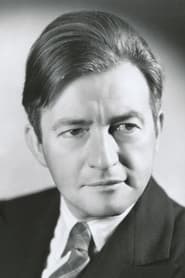
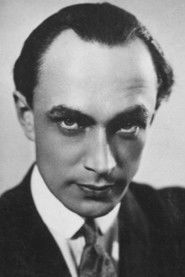

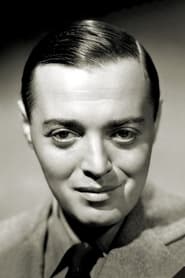


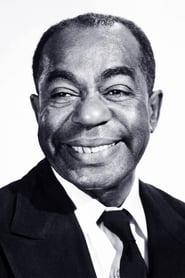
The gallery below is generated from verified TMDB credits. Select a performer to visit the RecapRush profile and filmography page. The leading roles include Humphrey Bogart as Rick Blaine, Ingrid Bergman as Ilsa Lund, Paul Henreid as Victor Laszlo, Claude Rains as Captain Louis Renault, and Conrad Veidt as Major Strasser.
Ending Explained
Why does Rick send Ilsa away with Victor?
Rick recognizes that the choice is larger than which man Ilsa loves more in a private moment. Victor’s resistance work may affect many lives, and Ilsa is not merely an accessory to it; she is his partner and emotional anchor. Rick believes that separating them would eventually make Ilsa ashamed of the life she chose.
More from RecapRush
 Clayface (2026) Recap & Ending Explained: Why Matt’s Last Love Scene Is His Cruelest Performance
 The Odyssey (2026) Recap & Ending Explained: Why Odysseus Leaves Ithaca Again
 Plastic Beauty (2026) Series Recap & Ending Explained – What Happens to Fumi and Rin?
The decision also corrects Rick’s earlier misunderstanding. For years he treated Ilsa’s disappearance as proof that love was unreliable. Once he understands why she left, he can act from knowledge rather than injury. Letting her go is painful, but it is no longer passive abandonment. It is his deliberate choice.
Does Ilsa truly love Rick?
Yes. The film does not invalidate their relationship to make the ending convenient. Ilsa loved Rick in Paris and says she still does in Casablanca. She also loves and is committed to Victor. Her conflict is difficult precisely because both bonds are genuine.
Did Victor know about Rick and Ilsa?
Victor clearly senses that their connection is deeper than Ilsa initially admits. His request that Rick take her to safety shows that he values her life above his pride. At the airport, Rick gives Victor a protective version of events, and Victor accepts it without demanding a humiliating confession. The exact limit of his knowledge remains tactfully unstated.
Why does Renault protect Rick?
Louis has spent the film adapting to whoever holds power. Yet he repeatedly shows admiration for Rick’s nerve and discomfort with total submission to Strasser. Rick’s sacrifice and decisive resistance create a moment Louis can no longer dismiss as someone else’s problem. By concealing the shooting, Louis finally risks himself.
Is the ending happy or tragic?
It is emotionally tragic and morally hopeful. Rick and Ilsa lose the life they might have shared, but their love produces courage instead of possession. Victor escapes, Ilsa retains her dignity, Rick returns to active resistance, and Louis begins his own change. The ending refuses the easy happiness of reunion in favor of a larger, costlier hope.
RecapRush Interpretation
Rick’s famous cynicism is not the opposite of idealism; it is wounded idealism hiding from another disappointment. His café lets him remain at the center of history while claiming history has no claim on him. He sees refugees, collaborators, resistance members, and occupiers every night, but money and etiquette allow him to call the room neutral.
Ilsa’s arrival makes that fiction impossible. At first Rick wants the letters of transit to settle a private account. By the airport, he understands that the documents are a moral test. He can use power to possess the person who hurt him, or he can restore freedom to people whose choices matter beyond his pain.
RecapRush reads the final walk with Louis as the completion of Rick’s return. He does not get over Ilsa; he outgrows the version of himself who used her absence as permission to care about nothing.
Deep Analysis & Key Themes
Love becomes meaningful through sacrifice
The film’s central romance is not resolved by discovering a hidden lack of feeling. Rick’s choice is powerful because the feeling remains. He gives up a desired future after deciding that Ilsa’s eventual self-respect and Victor’s survival matter more than immediate happiness.
This does not make Ilsa’s agency perfectly simple. She hands Rick the decision because war, marriage, guilt, and renewed love have made every path unbearable. The airport scene can therefore be read both as Rick’s moral achievement and as a reminder of how little room the world has given Ilsa to choose without catastrophic consequences.
Neutrality is a performance
Rick and Louis each claim to stand outside politics. Rick says he takes risks for no one. Louis follows the prevailing wind. The film steadily reveals that these positions are political choices disguised as absence.
Rick’s nod before “La Marseillaise” is a turning point because it makes his private values public. Closing the café cannot undo what the patrons have experienced: a room of displaced people briefly speaking in one voice against occupation.
The letters of transit are a moral instrument
The letters are deliberately improbable objects with near-magical power. Their narrative purpose is less bureaucratic realism than ethical pressure. Whoever holds them can decide whose future matters. Ugarte treats them as merchandise, Ferrari as opportunity, Strasser as threat, and Rick finally as a responsibility.
Memory changes when the truth changes
“As Time Goes By” does not simply preserve romance. For Rick, the song initially traps him inside the story that Ilsa betrayed him. Her explanation does not erase his pain, but it changes its meaning. The same Paris memories can now support generosity instead of resentment.
The fog protects a new identity
The airport’s heavy fog strips away the crowded social world of the café. Rick, Ilsa, Victor, Louis, and Strasser stand almost without a city around them, reduced to choices. After the plane departs, Rick and Louis disappear into that fog together. Their next lives are uncertain, but uncertainty has become freedom rather than paralysis.
What Most Viewers Missed
- Rick has a political past before Ilsa returns. His earlier support for anti-fascist causes shows that the airport decision revives an existing moral self; it does not create one from nothing.
- Victor’s generosity makes Rick’s selfish option harder to defend. Victor offers his own freedom so Ilsa can escape, denying Rick the comfort of treating him as a cold rival.
- Louis rehearses his final choice through comedy. His jokes and flexible loyalties are not only entertainment. They show a man skilled at performing obedience without fully believing in it, which makes his airport turn surprising but prepared.
- The anthem scene and airport scene solve the same problem at different scales. In both, Rick moves from private observer to participant. First he permits collective resistance; later he personally accepts its cost.
- The final friendship is not a consolation prize. Rick and Louis are newly aligned because both have crossed a line that makes their former lives impossible. Their walk suggests work ahead, not an easy replacement for romance.
Mid/Post-Credits
Casablanca has no mid-credits or post-credits scene. The story ends with Rick and Louis walking into the fog after Ilsa and Victor’s plane departs. No later scene confirms what happens to any of them, so continuations should be treated as speculation rather than part of the film’s ending.
Final Thoughts
The romance in Casablanca remains moving because the film never pretends love solves history. Rick and Ilsa find each other in Paris when the world is collapsing, then meet again in a city where every private desire is entangled with visas, occupation, exile, and resistance.
At the airport, Rick finally sees love as something more demanding than reunion. He protects Ilsa from a decision he believes she would regret, helps Victor continue his fight, and abandons the neutrality that kept him emotionally safe. The plane carries the couple away, but Rick is the person who truly escapes: not from Casablanca yet, but from the prison built by his own bitterness.
FAQ
What is Casablanca about?
It follows nightclub owner Rick Blaine, whose former lover Ilsa arrives in wartime Casablanca with resistance leader Victor Laszlo. Rick possesses documents that could let them escape, forcing him to choose between personal love and a larger cause.
Why did Ilsa leave Rick in Paris?
She learned that Victor, her husband, was alive. She had believed he died in a concentration camp when she began her relationship with Rick.
Who leaves Casablanca on the plane?
Ilsa and Victor leave together using the letters of transit.
Does Rick kill Major Strasser?
Yes. Rick shoots Strasser when the major attempts to stop the departing plane and alert the control tower.
What does Renault do after the shooting?
He protects Rick by directing the police away from him. The two then prepare to leave Casablanca and align themselves with the resistance.
Is Casablanca based on a play?
Yes. The screenplay was developed from the unproduced stage play Everybody Comes to Rick’s by Murray Burnett and Joan Alison.
Did Casablanca win Best Picture?
Yes. It won the Academy Award for Outstanding Motion Picture, the category now known as Best Picture, along with awards for directing and screenplay.
Join the conversation
What did you think of the ending? Share your interpretation. Spoilers may appear below.
This product uses the TMDB API but is not endorsed or certified by TMDB.
No comments yet. Start the conversation.