
RECAPRUSH MOVIE GUIDE
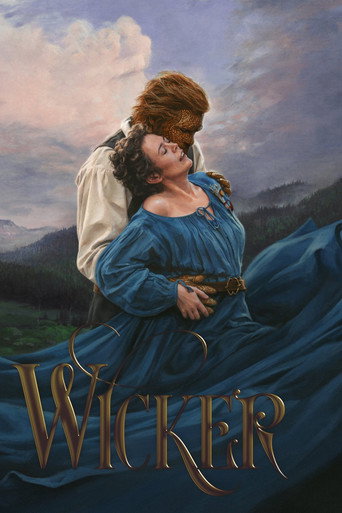
Wicker (2026)
Directed by Eleanor Wilson, Alex Huston Fischer
On the outskirts of a village by the sea, lives a Fisherwoman; smelly, single and perpetually ridiculed. One day, fed up with her stuffy, small-minded neighbours, she commissions herself a husband to be made from wicker. In an otherwise conservative town, this unconventional romance sparks outrage, jealousy and chaos.
Overview, poster, and credits from TMDB.
Read and watch our full recap ↓FROM THE RECAPRUSH LIBRARY · FULL RECAP
Wicker (2026) Recap & Ending Explained: Why Saving the Baby Matters More Than Exposing the Lie
14 min read · Estimated reading time— views
Intro + RecapRush Viewpoint
The cruelest thing about the village in Wicker is how quickly its residents mistake another person’s happiness for an insult. A woman who smells of fish and earns her own living is an acceptable target. Give that woman a loving husband, however, and suddenly everyone has questions about what happens inside her house.
Alex Huston Fischer and Eleanor Wilson’s adult fairy tale puts Olivia Colman opposite Alexander Skarsgård as a partner woven from plant material. The premise sounds like a joke about ordering the perfect man. The relationship becomes more interesting when its supposed perfection meets an ordinary human weakness: the fear that something good cannot possibly belong to you.
RecapRush’s viewpoint: the ending earns its hope through the Fisherwoman’s decision to protect a baby she still associates with betrayal. Learning the truth clears her husband. Choosing kindness before she learns that truth reveals something about her. The difference is the emotional center of this strange, earthy romance.
Full spoilers: this article covers the entire released film, including the fire, the baby’s origin, the reunion and the departure. Narrative details are checked against film-specific post-release accounts; sections labeled RecapRush interpretation contain our own readings, not claims about the filmmakers’ intentions. Verified October 25, 2026. This is the Black Bear release Wicker, not The Wicker Man.
Featured Image
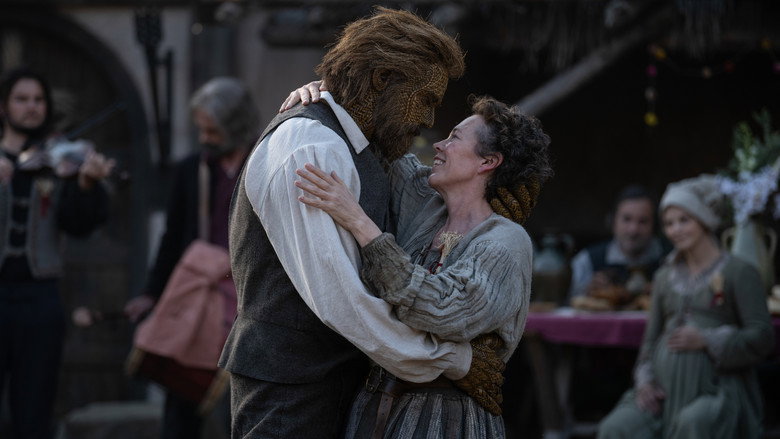
Table of Contents
Quick Facts
- Exact title / year: Wicker (2026)
- Format / language: live-action feature / English
- TMDB movie ID: 1195803
- Directors and screenwriters: Alex Huston Fischer and Eleanor Wilson
- Source material: Ursula Wills-Jones’s short story “The Wicker Husband”
- TMDB genres: Romance, Fantasy, Comedy
- Runtime: 105 minutes
- World premiere: January 24, 2026, Sundance Film Festival
- U.S. theatrical opening: October 23, 2026, in select theaters through Black Bear; expansion announced for October 30
- Current status: released. The January festival premiere and October U.S. theatrical opening are separate events.
- Coverage: complete film recap and ending explanation, with original analysis
Full Spoiler Recap
1. A working woman has no acceptable place in the village
The Fisherwoman supports herself in a seaside settlement where her neighbors ridicule her appearance, smell and unmarried life. The Basket Weaver offers a more respectful connection. She asks him to make her a husband, and his craft supplies the extraordinary companion the village assumes she will never have.
The setting operates as a fable rather than a documented historical community. Its marriage customs include collars for wives. Everyday work and domestic authority establish the imbalance before the magical husband exposes it.
2. Kindness becomes the scandal
The Wicker Husband is affectionate and useful around the home. The Fisherwoman can continue working while he contributes to their shared life. He does not make her earn tenderness by becoming someone more acceptable to the neighbors.
Their pleasure draws attention. The Tailor’s Wife is particularly unsettled by the comparison with her own marriage. Gossip allows dissatisfaction to travel outward: instead of staying a private problem, resentment becomes suspicion about the unusual couple.
3. A second creation becomes false evidence
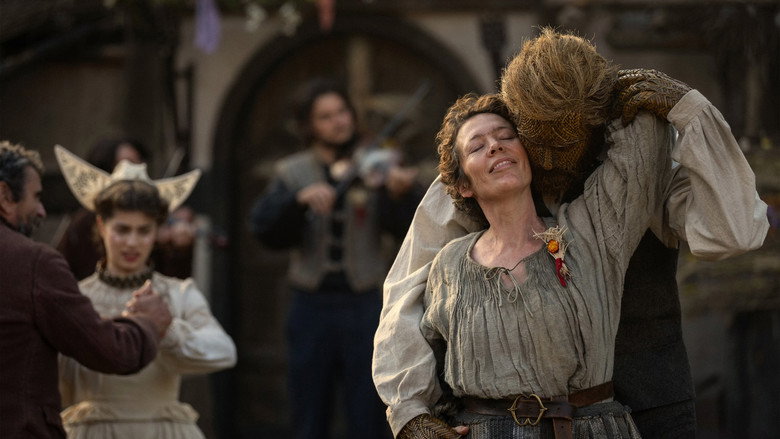
The Bottlewasher’s Wife asks the Basket Weaver for a baby, and he creates one. The child’s woven body becomes the basis for an accusation of infidelity against the Wicker Husband. The Tailor’s Wife helps turn resemblance into scandal.
The Fisherwoman accepts the implied connection. During the resulting confrontation, a lamp sets her husband alight. He runs into the forest, and she believes he has died. The account does not require us to treat the fire as a planned killing: the decisive fact is that an accusation produces devastating harm before the truth has been established.
4. Grief presents a choice before an explanation
While fishing, the Fisherwoman discovers the abandoned wicker baby in the forest. She takes the child in. At this point, she has not received the explanation that will disprove the alleged affair.
The Basket Weaver subsequently tells her that he made the baby separately. Her husband did not father it. He has also found and repaired the damaged Wicker Husband. The couple can reunite, and the Fisherwoman apologizes. Her care for the baby matters to her surviving partner.
5. Repair does not restore an unlimited future
The reunion comes with a warning: mold is damaging the husband’s body. Repair has saved him, but it has not made him immortal. Reconciliation and physical recovery are different problems; resolving the accusation does not remove his vulnerability.
That qualification prevents the story from returning to an untouched version of the couple’s early happiness. They have recovered each other, with an uncertain amount of time left.
6. The village buys into its own punishment
The husband proposes a final scheme. The Basket Weaver announces his retirement and offers a wicker wife to the villager who brings the best gift. The competition gathers resources from people eager to acquire an ideal companion. The Butcher wins, but the bride is made from blackthorn. Her embrace brings thorns rather than the comfort he expects.
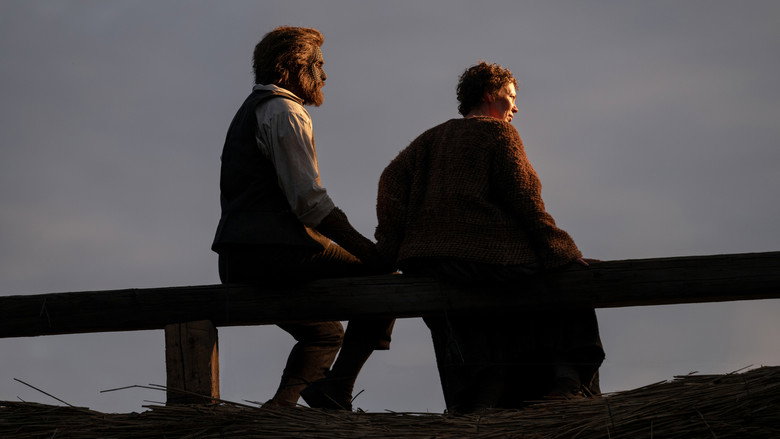
The Basket Weaver leaves with the Fisherwoman, her husband and the baby in his cart. The family gets out of the community that helped break their trust. The film offers an escape, not a verified cure for the husband’s condition or a guarantee of endless happiness.
Cast + TMDB
Cast and Characters






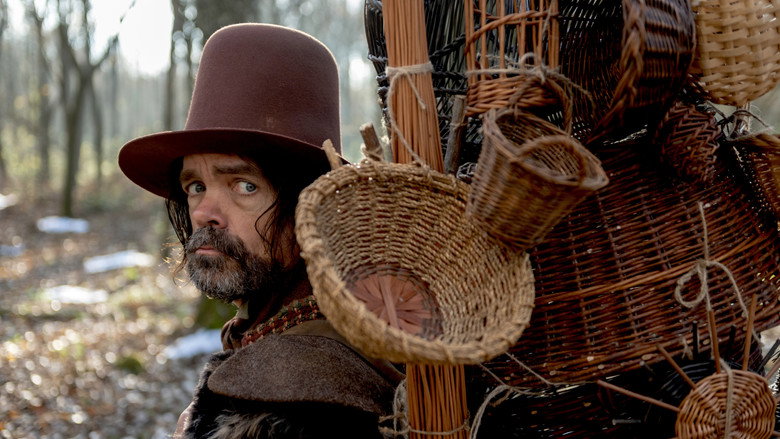
The accompanying portrait gallery uses TMDB cast records for Olivia Colman as the Fisherwoman, Alexander Skarsgård as the Wicker Husband, Peter Dinklage as the Basket Weaver, Elizabeth Debicki as the Tailor’s Wife, Nabhaan Rizwan as the Tailor and Richard E. Grant as the Doctor. Each portrait links to the performer’s RecapRush profile.
Colman’s role carries the story’s hardest contradiction: someone accustomed to humiliation can still cause terrible harm. Skarsgård’s husband needs to register as a partner whose trust matters, rather than a reward with no feelings of his own. Dinklage’s craftsman connects the romantic fantasy to practical rescue, while Debicki’s character makes comparison between households socially destructive. These are RecapRush’s readings of the characters’ functions.
Ending Explained
Did the Wicker Husband cheat?
No. The baby was created by the Basket Weaver at another woman’s request. A similar material does not establish parentage. The supposed proof works because people already want a scandalous explanation for the couple’s happiness.
This distinction also makes the Fisherwoman’s responsibility unavoidable. Her husband’s innocence does not magically undo the fire or make her accusation harmless.
Does he die in the fire?
No. He survives and is repaired. The apparent death is not the final outcome. His continuing mold damage nevertheless leaves a real limit on the happy ending. Survival now does not mean survival forever.
Why does taking in the baby matter?
The Fisherwoman protects the child before she knows that her husband is innocent. Our reading is that this choice interrupts the logic of the village: a vulnerable being should not have to prove that its existence is respectable before receiving care.
The act cannot excuse what she did to her partner. It does show that her character contains more than the jealousy that nearly destroys their marriage. Reconciliation needs that moral complexity; otherwise the ending would amount to correcting a clerical error.
What is the point of the blackthorn wife?
The final bride turns an acquisition fantasy against the villagers. They want a companion delivered through a transaction, with no corresponding examination of how they treat people. The painful result gives that wish a physical consequence.
The film does not need to kill the Butcher or destroy the entire village to complete the satire. Neither outcome should be inferred from the thorny embrace. The family’s departure, rather than the extent of the punishment, closes their story.
More from RecapRush
 The Ordinary Jackpot (2026) Recap & Ending Explained: Why Eun-tae Keeps the Money but Changes the Way He Works
 Coraline (2009) Recap & Ending Explained: Why the Other Mother Can Offer Everything Except Love
 Whalefall (2026) Recap & Ending Explained: Jay’s Escape and His Father’s Letter
Is the ending happy or sad?
Hopeful, with a limit. The couple reunites, the baby has caregivers, and the Basket Weaver helps them leave. The husband’s deteriorating body remains part of that future. The film ends with a choice to share uncertain time, not a promise that uncertainty has disappeared.
RecapRush Interpretation
A useful way to read the film is to separate being wanted from being trusted. The Fisherwoman commissions someone who will want her. She then has to learn how to trust that person when other people insist she should doubt him.
That is a more demanding story than a makeover fantasy. She does not become worthy of affection by escaping her working body or satisfying the village’s standards. Yet receiving affection cannot automatically heal every habit learned under those standards. A lifetime of being treated as undesirable can make the possibility of abandonment feel more believable than the evidence of devotion.
This explains the emotional pressure without excusing the response. The husband has a stake in the relationship. A partner’s insecurity does not cancel his right to safety. The fire gives the fairy tale an uncomfortable moral boundary: the person we have rooted for can cross a line.
The baby shifts the question from possession to responsibility. If the Fisherwoman cared only about reclaiming an exclusive claim on her husband, the child would remain an obstacle. Looking after it requires her to respond to need even while her own story feels unresolved. We read that as a partial recovery of judgment, made before someone arrives to tell her she has been vindicated.
Leaving the village is equally important. The ending does not require the couple to persuade every neighbor to approve of them. Their practical alliance with the Basket Weaver supplies another option. A community’s judgment can be influential without deserving permanent jurisdiction over a life.
Deep Analysis & Key Themes
Domestic labor makes affection visible
The husband’s help at home matters because it gives tenderness a practical form. Attention becomes time and effort. The Fisherwoman’s working life is something a partner can support, rather than a personal defect he should tolerate.
In RecapRush’s reading, this is why his arrival unsettles the other households. A compliment can be dismissed as courtship. A changed division of labor raises questions about the arrangements everyone has been calling natural. The threat comes from an example that might be copied.
Jealousy can defend a hierarchy that hurts its defender
The Tailor’s Wife has reasons to feel dissatisfied, but her response directs pressure toward another woman’s household. That distinction keeps grievance and cruelty from becoming synonyms. Recognizing what constrains a character does not mean every action she takes is justified.
The social pattern is recognizable: when status is scarce, someone else’s improvement may feel like a demotion. The Fisherwoman’s happiness is embarrassing because it reveals that the established order has distributed comfort poorly. Destroying the example is easier than changing the order.
A body made by hand is still vulnerable
Wicker material gives the fantasy an unusual physical logic. The husband can be constructed and repaired, but he can also burn and deteriorate. Those facts prevent “made for her” from meaning “available to her without consequence.”
Our interpretation of the mold is deliberately limited. It makes time finite; it does not establish a precise diagnosis, a timetable or a secret cure. Read emotionally, it brings an ordinary condition of loving someone into this impossible romance: care cannot purchase a guarantee against loss.
Forgiveness cannot be identical to restoration
The reunion has value because damage remains. If everything could simply be reset, the Fisherwoman would have learned a lesson at no lasting cost. Instead, the couple must decide what their relationship can be after an accusation has become violence.
The husband’s survival allows forgiveness to become possible. It does not oblige viewers to consider the original harm small. Holding both thoughts makes the ending more persuasive than treating the incident as a harmless comic misunderstanding.
Craft changes who can imagine a future
The Basket Weaver makes more than objects. His work gives isolated people forms of companionship they cannot obtain through the village’s conventional routes. His final involvement also becomes logistical: the story needs help and a means of departure, not just a heartfelt apology.
That practical dimension is easy to overlook in a magical fable. Love gives the couple a reason to leave. Solidarity helps make leaving possible.
What Most Viewers Missed
The accusation confuses likeness with evidence. Two bodies being made of wicker supports an attractive rumor, not a reliable account of how the baby came to exist. The eventual explanation exposes a failure of reasoning as well as a failure of trust.
The baby is cared for before the mystery is solved. Reversing that order would make the Fisherwoman’s kindness much easier. The actual sequence asks whether compassion can survive information she believes is painful.
The marriage imagery has two kinds of binding. Collars make obligation visible; woven material makes connection visible. Our reading is that the film invites us to ask what holds a household together and who gets hurt by the way it is held. This is an interpretation of the imagery, not a confirmed statement of directorial intent.
The final family is not certified by village approval. Their departure changes whose recognition they need. They do not have to win the same social contest they entered as outsiders.
Post-Credits
Bam Smack Pow’s post-release credits guide reports no post-credits scene. That is a sourced report, not a claim that RecapRush independently watched the end credits. We do not extend it into an unsupported separate claim about mid-credits material or a sequel announcement.
Final Thoughts
Wicker’s most unsettling idea is that a loving partner cannot do all the emotional work for the person he loves. The Fisherwoman receives the companionship she wants and still has to answer for what fear makes her do. That keeps the fantasy from becoming a simple prescription for happiness.
The final cart carries a family with damage, help and limited time. RecapRush reads its movement away from the village as the film’s clearest expression of hope: they can choose what to protect even when they cannot control how long they will have it.
FAQ
Is Wicker a 2026 release even though it premiered at Sundance?
Yes. It premiered at Sundance on January 24, 2026, then opened in select U.S. theaters on October 23. Both events occurred in 2026; the festival date should not be presented as the U.S. general theatrical opening.
Is this connected to The Wicker Man?
This article concerns Fischer and Wilson’s romantic fantasy Wicker, adapted from “The Wicker Husband” by Ursula Wills-Jones. It is a different film identity from The Wicker Man.
Who made the wicker baby?
The Basket Weaver made it at the Bottlewasher’s Wife’s request. The child is not proof that the Wicker Husband had an affair.
Does the Wicker Husband survive?
He survives the fire and is repaired. The mold affecting his body remains a problem, so the ending does not promise an unlimited life.
Why do they leave the village?
They leave after reconciliation and the Basket Weaver’s final scheme. RecapRush reads the departure as a way to protect their family from a community that has made their relationship a public target.
Is the final bride another gentle wicker companion?
No. The bride awarded to the Butcher is made from blackthorn, and her embrace is painful. That reversal provides the last act’s dark comic punishment.
Where is Wicker playing at the verification date?
Black Bear’s U.S. release began in select theaters on October 23, 2026, with expansion announced for October 30. This article does not claim a verified subscription-streaming date.
Join the conversation
What did you think of the ending? Share your interpretation. Spoilers may appear below.
This product uses the TMDB API but is not endorsed or certified by TMDB.
No comments yet. Start the conversation.