
RECAPRUSH MOVIE GUIDE
Roman Holiday (1953)
Directed by William Wyler
Overwhelmed by her suffocating schedule, touring European princess Ann takes off for a night while in Rome. When a sedative she took from her doctor kicks in, however, she falls asleep on a park bench and is found by an American reporter, Joe Bradley, who takes her back to his apartment for safety. At work the next morning, Joe finds out Ann's regal identity and bets his editor he can get exclusive interview with her, but romance soon gets in the way.
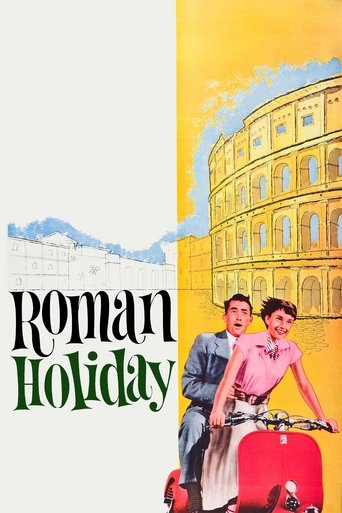
Overview, poster, and credits from TMDB.
Read and watch our full recap ↓FROM THE RECAPRUSH LIBRARY · FULL RECAP
Roman Holiday (1953) Recap & Ending Explained: Why Joe Gives Up the Story, Not Just the Princess
14 min read · Estimated reading time— views
Intro + RecapRush Viewpoint
Roman Holiday gives a reporter the exclusive he has been waiting for, then asks whether he can live with publishing it. Joe Bradley's day with Princess Ann begins as access to a valuable secret. By the final press conference, the question is no longer whether he knows enough to write the story. It is what he owes someone who did not know she was supplying one.
RecapRush interpretation: The ending completes two separations: Ann leaves the holiday behind, and Joe separates knowing something from having the right to sell it. Their romance does not produce a shared future on screen. It produces a reason for him to stop treating her private experience as an opportunity, and a reason for her to remember a day that cannot continue.
Spoilers and editorial note: This guide covers William Wyler's complete 1953 feature. It uses AI-assisted research and drafting checked against AFI, BFI, distributor information and published plot accounts, rather than claiming a first-hand screening. Original readings are labelled. Promotional artwork below is distinguished from black-and-white film imagery.
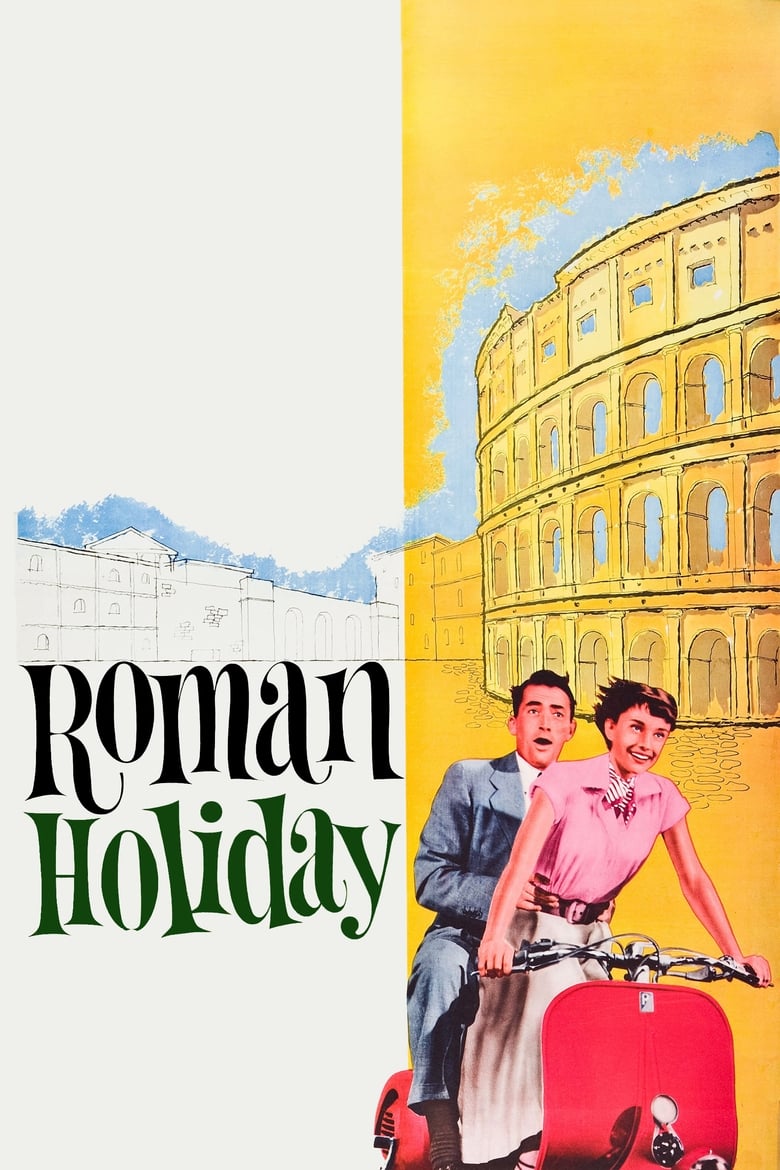
Table of Contents
Quick Facts
- Film: Roman Holiday (1953)
- Director and producer: William Wyler
- Writing credits: Dalton Trumbo, Ian McLellan Hunter and John Dighton; Trumbo's contributions were acknowledged after the original release
- Main trio: Audrey Hepburn as Princess Ann, Gregory Peck as Joe Bradley, Eddie Albert as Irving Radovich
- Setting: Rome, during a visiting princess's European tour
- Presentation: Black and white
- Runtime reference: 118 minutes in AFI and Paramount's listing; TMDB rounds its record to 119
- TMDB genres: Romance, Comedy, Drama
- TMDB movie ID: 804
Some sources spell the princess's name Anne; this guide follows TMDB's Ann. These are references to the same character, not different versions of the story.
Full Spoiler Recap
A royal schedule leaves no room for an unscheduled person
Princess Ann is in Rome as part of an official tour. Public appearances require a composure that hides how exhausted and frustrated she has become. After an emotional outburst, she is given a sedative. Before it takes full effect, she slips away from the embassy.
Joe Bradley, an American reporter, finds her drowsy outside. He does not initially recognize her. Unable to get a usable address from her, he takes her to his small apartment for the night.
RecapRush interpretation: The opening distinguishes visibility from freedom. Ann has been seen by many people, but almost every encounter has a prescribed purpose. Leaving the embassy is an attempt to experience something she has not already been told how to perform.
Joe discovers the scoop before Ann discovers his profession
The next morning, Joe arrives late at work and tries to conceal having missed the princess's press appointment. His editor Hennessy knows the event was cancelled because of her reported illness. A newspaper photograph lets Joe recognize his guest.
He arranges a prospective payment for an exclusive and recruits photographer Irving Radovich. Ann calls herself Anya and does not disclose her position. Joe conceals both his recognition and his journalistic purpose.
After she leaves his apartment, he follows. Ann has her hair cut, buys a gelato and begins enjoying ordinary choices. Joe engineers another encounter and becomes her companion for the day, while Irving takes photographs without revealing their plan.
The day grows beyond the interview Joe meant to obtain
Their excursion includes cafes, sightseeing, a scooter ride and the Mouth of Truth. Ann's attempt to drive creates a comic disturbance and police questioning. Joe and Irving help talk their way out.
The outing later reaches a dance on a riverside barge. Agents searching for Ann try to take her away, causing a fight. She and Joe escape into the water, reach safety and kiss. An experience that began as Joe's scheme has become emotionally real to him.
The film does not resolve the deception by making it harmless from the beginning. Ann's enjoyment and Joe's growing affection coexist with a plan she has not agreed to.

Ann ends the holiday herself
Back at Joe's apartment, a radio report brings her public responsibilities into the room again. Ann knows she must return. Joe drives her close to the embassy, and they part with an embrace and kiss.
She returns to officials who reprimand her, but she now insists that awareness of her duty was why she came back. Her departure from Joe is painful, yet it is not shown as agents successfully dragging her out of the relationship.
Joe, meanwhile, tells Hennessy that he has no story to deliver. Irving has the photographs, but Joe no longer intends to turn the experience into the promised exclusive.
The press conference reveals what neither could say privately
Ann appears before the assembled press and sees Joe and Irving among the reporters. She now encounters them in their professional identities. Joe's public response about her faith in friendship reassures her that her confidence will not be betrayed.
Asked which city she preferred on the tour, she chooses Rome rather than maintaining a diplomatically equal answer. She then meets the reporters individually. Irving gives her the photographs as a keepsake rather than using them to expose her.
Joe and Ann exchange a formal greeting whose significance belongs to the preceding day. She departs with her officials. After the other reporters leave, Joe lingers and finally walks away alone. There is no on-screen reunion after that walk.
Cast and Characters
Cast and Characters
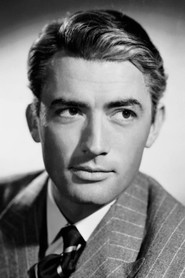


The TMDB cast gallery links the actors to their existing profiles. These notes address the characters rather than repeating the gallery as another cast table.
Princess Ann: Her desire is larger than meeting a handsome stranger. She wants to make choices whose value is not decided in advance by a royal itinerary. The haircut is important in that respect: she changes something about her own appearance before the romance reaches its emotional climax.
Joe Bradley: His generosity is compromised once he recognizes her. The ending matters because he has something concrete to surrender: the potentially lucrative story. Affection does not merely improve his mood; it changes what he is prepared to do with information.
Irving Radovich: His camera makes the scheme practicable. His final gift also makes its abandonment visible. Joe can promise discretion, but Irving is the person who can decide how the photographed day will circulate.
Hennessy: The editor keeps the economic value of Joe's opportunity in view. Without that pressure, refusing publication could feel costless. He is not given access to the private experience that changes Joe's priorities.
The Ambassador and Countess Vereberg: They represent the official world Ann temporarily leaves. Her return does not remove their roles, but her manner toward them changes the terms on which she resumes hers.
Ending Explained
Why don't Joe and Ann stay together?
Ann chooses to resume her royal obligations. Joe does not offer a practical arrangement that dissolves the gap between their lives, and the film does not give them an abdication, marriage or secret escape.
RecapRush interpretation: The ending need not mean that their feelings are weak. The story lets a genuine attachment encounter limits that affection alone cannot settle. Ann's return can be both a considered decision and a loss. Treating it as either effortless maturity or simple defeat would flatten the conflict the last scenes preserve.
Why does Joe tell his editor there is no story?
He means there is no exclusive he is willing to supply. He has not forgotten the events or failed to recognize their commercial potential. The refusal follows his involvement with Ann and is confirmed by his discretion at the press conference.
RecapRush interpretation: Early in the day, friendship is partly a technique for gathering material. By the end, preserving trust matters more than converting that material into income. His decision cannot undo the original manipulation, but it prevents him from completing it. That is a narrower and more credible change than claiming he has become a flawless journalist in every circumstance.
Does Ann discover Joe deceived her?
Seeing Joe and Irving as members of the press reveals the professional identity they concealed. Their public exchange and the photographs then communicate what they intend to do with their knowledge.
More from RecapRush
 Dune: Part Two (2024) Recap & Ending Explained: Why Paul Wins by Becoming the Future He Feared
 Buddy (2026) Recap & Ending Explained: Why Freddy Escapes the Show but Cannot Go Home
 Howl’s Moving Castle (2004) — Full Spoiler Recap & Ending Explained
RecapRush interpretation: The scene does not provide a long explanation or a negotiated reconciliation. It asks Ann to read conduct. Joe does not reveal her adventure; Irving hands over pictures that might have been used against her. Her response acknowledges those choices without pretending the day began on honest terms. The trust at the end is consequently different from her earlier, uninformed confidence.
Why are the photographs so important?
They are both evidence for a scoop and a record of an experience Ann values. Irving changes their destination: the subject of the photographs receives them instead of being exposed through them.
RecapRush interpretation: Nothing inside an image has to change for its meaning to change. A picture can become embarrassing publicity or a private souvenir depending on who receives it and why. The gift therefore supplies a material counterpart to Joe's assurance. It makes restraint something Ann can hold, not just something she has been asked to believe.
What does choosing Rome tell Joe?
Her answer identifies the city as more than another diplomatic stop. She retains a public setting, yet gives an answer informed by a private experience.
RecapRush interpretation: This is a small exercise of authorship. Ann is not announcing the romance to the room, but neither does she reduce the visit to an interchangeable success on the tour. The word reaches two audiences differently: the reporters receive an answer; Joe hears recognition. The choice preserves the memory without exposing its contents.
Why end with Joe walking alone?
The walk confirms the separation rather than cutting away at the last reassuring exchange. The holiday has ended, and Joe must leave the space in which he last saw her.
RecapRush interpretation: His restraint now has an emotional cost as well as a financial one. He cannot claim Ann through a story any more than he can assume a place in her official life. The lingering exit gives that consequence time to register. The film does not need to declare that they will never meet again; it simply refuses to provide another meeting as compensation.
Original Interpretation: A Holiday Is Not a Transfer of Ownership
Ann escapes a world that manages her movements, only to enter an outing Joe initially manages for a different purpose. Her anonymity is therefore incomplete. She believes she has found companionship outside her public identity, while Joe's secret knowledge determines why he follows her.
That uncomfortable parallel stops the romance from becoming a simple contrast between a restrictive palace and an entirely innocent street. Joe's world offers spontaneity, but it also has a market for the princess's private life. The final decision matters because he stops being another person who decides what her experience is for.
Our reading is that the film's most generous gesture is not rescuing Ann from royalty. It is allowing her day to remain hers. She can choose to return without making the excursion meaningless, and Joe can preserve it without owning a future with her. Their relationship leaves a consequence even though it does not leave a couple.
This also explains why the final encounter takes place at a press event rather than another tourist stop. The professional purpose concealed during the holiday is finally visible. Any remaining trust must exist with that knowledge, not in the earlier fiction that Joe was merely a stranger with time to spare.
Deep Character and Theme Analysis
The haircut is a choice, not just a disguise
Ann requests a short haircut during her excursion. It is a practical alteration to how she appears, but it is also something she initiates rather than something an official arranges.
RecapRush interpretation: The pleasure is not only that fewer people may recognize her. She is able to choose an appearance for the experience she wants. Returning to duty cannot entirely cancel that act. Her holiday has already produced a version of herself that was not assembled by the itinerary, even if the film does not promise permanent independence.
Shared deception does not create equal responsibility
Ann conceals that she is a princess; Joe conceals a scheme to profit from recognizing her. Both disguise facts, but they do not do so for identical reasons or with identical power over the encounter.
RecapRush interpretation: Her concealment seeks temporary privacy. His can turn that privacy into a commodity. That asymmetry matters when evaluating the charming moments between them. Joe's eventual refusal is meaningful precisely because the film gives him more to correct than a harmless omission of his job title.
Irving's participation prevents a purely private moral victory
Joe cannot make the photographic evidence disappear by changing his own mind. Irving has participated in the venture and has his own stake in it.
RecapRush interpretation: The final gift expands restraint beyond the romantic pair. It shows another participant accepting that the valuable material need not be exploited. Had Joe merely made a private promise while photographs went elsewhere, his change of heart would not have protected Ann in practice. Irving's action closes that gap.
Details Worth Noticing
The Mouth of Truth is an ironic stop for this pair. They play with the idea of exposing dishonesty while concealing their identities. The joke works without requiring the audience to imagine a supernatural judgment; the contrast is already present in what each person knows.
The greeting at the end remains formally correct. Its emotional force comes from shared knowledge, not a breach that tells the whole room their story. In our reading, intimacy does not always require public disclosure to remain real.
The film's Rome is not merely an illustrated background. BFI's location study tracks the excursion through actual city spaces, including the riverside dance. Moving among different kinds of public space gives the holiday a variety the repetitive official schedule lacks.
The ornate last setting is a real filming location. Palazzo Colonna identifies its Great Hall as the press-conference location. That production fact does not prove an interpretation, but the contrast between a busy excursion and a ceremonially ordered room is central to ours.
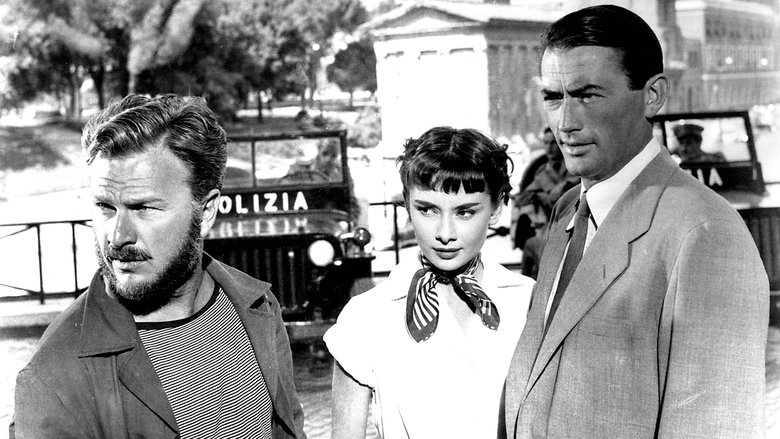
Color artwork does not mean the feature was shot in color. The inspected poster and ensemble artwork use bright designed backgrounds; the film itself is black and white. They are promotional interpretations, not evidence of a color scene or alternate narrative.

Credits-Scene Information
No separate mid-credits or post-credits narrative scene was independently verified for this guide. AFI's complete synopsis ends with Joe leaving alone, and the ending accounts checked do not supply a later reunion. Do not mistake that verification limit for a claim to have screened the credits of every edition.
Final Thoughts
RecapRush assessment: Roman Holiday makes an ending out of what its characters decline to take. Ann does not assume she can extend one day indefinitely. Joe does not take the exclusive that would turn their encounter into someone else's entertainment. Irving does not sell the pictures that make the scheme possible.
The romance is not cancelled by the separation. Its significance is tested by it. Joe leaves without the story he expected, but the film gives that refusal more weight than a successful scoop would have carried.
FAQ
Did Joe know who Ann was when he first found her?
No. He recognizes her the next morning from a newspaper photograph. His later companionship is informed by knowledge he does not disclose to her.
Does Joe publish the exclusive?
No. He refuses to deliver the story, and the final press conference reassures Ann that her private adventure will not be exposed by him.
What does Irving give the princess?
The photographs taken during their day together. At the press conference, they become a personal keepsake rather than the images accompanying Joe's planned exclusive.
Do Joe and Ann marry or meet again?
Neither is shown. The feature ends after the press conference with Joe walking away alone. A future reunion would be speculation.
Is this the 1987 television remake?
No. This guide covers the 1953 William Wyler feature starring Audrey Hepburn and Gregory Peck, verified as TMDB movie 804.
Join the conversation
What did you think of the ending? Share your interpretation. Spoilers may appear below.
This product uses the TMDB API but is not endorsed or certified by TMDB.
No comments yet. Start the conversation.