

RECAPRUSH MOVIE GUIDE
Klara and the Sun (2026)
Directed by Taika Waititi
When Klara, an Artificial Friend who wants nothing more than to find the perfect home, meets Josie, each immediately senses a kindred spirit in the other. Josie has a fraught relationship with her mother and they've suffered great loss, but Klara's innocent wonder and unwavering loyalty begin to heal the family and bring light to Josie's complicated world.
Overview, poster, and credits from TMDB.
Read and watch our full recap ↓FROM THE RECAPRUSH LIBRARY · FULL RECAP
Klara and the Sun (2026) Recap & Ending Explained: Why Josie’s Goodbye Is Not Proof of a Cure
16 min read · Estimated reading time— views
Intro + RecapRush Viewpoint
Klara believes that if she can find the right thing to give up, she can save the person she loves. It is a recognizable bargain, even when the person making it is a solar-powered robot who thinks the sun has a home inside a barn. Klara and the Sun builds its science-fiction story around a painful question: when someone tells a comforting story about a goodbye, how much certainty should we ask that story to carry?
Taika Waititi’s adaptation of Kazuo Ishiguro’s novel stars Jenna Ortega as an Artificial Friend purchased for Josie, a gifted teenager whose illness shadows their companionship. Amy Adams plays Chrissie, a mother trying to protect herself from another loss. Klara arrives hoping to be useful. She enters a household where usefulness, love and replacement are becoming dangerously entangled.
RecapRush’s viewpoint: the film’s strongest moral distinction is between preserving a relationship and manufacturing a substitute for a person. Its final images offer emotional reassurance while leaving a factual gap. We can recognize Klara’s attachment without treating everything she remembers as a reliable medical outcome for Josie.
Full spoilers for the released 2026 film: the following recap covers the replacement project, the fire, Klara’s injury, Josie’s departure and the retirement beach. This is film-specific coverage, not a retelling of the novel. Verified narrative events are distinguished from uncertainty and RecapRush’s own interpretation. Verification date: October 25, 2026.
Featured Image

Table of Contents
Quick Facts
- Title / year: Klara and the Sun (2026)
- TMDB movie ID: 858035
- Format / language: live-action feature / English
- Director: Taika Waititi
- Screenplay: Taika Waititi and Dahvi Waller
- Based on: Kazuo Ishiguro’s 2021 novel Klara and the Sun
- Production countries: New Zealand, United States and United Kingdom
- U.S. distributor: Sony Pictures Releasing
- TMDB genres: Science Fiction, Drama
- Runtime: 116 minutes
- World premiere: October 15, 2026, BFI London Film Festival
- U.S. theatrical release: October 23, 2026, separate from the festival premiere
- Status: released; Sony lists the film as now playing theatrically
- Article scope: complete released-film recap, final-scene explanation and original thematic analysis
Full Spoiler Recap
1. A discontinued friend waits for someone to choose her
Klara is an older B1 Artificial Friend in a store managed by Natasha Lyonne’s character. She is awkward, intensely observant and eager to be taken home. Sunlight powers her, and she addresses the sun with a devotion that turns an energy source into a personal source of hope.
Josie chooses her. At the family’s rural house, the welcome is complicated by Chrissie’s skepticism and the housekeeper Melania’s anxiety about being replaced. Klara must learn a home whose emotional rules are much harder to read than its physical layout.
The Store Manager’s stories establish a damaged future, including the loss of the internet after war. Yet this is not primarily a campaign to repair civilization. The story narrows to one teenager, her mother and the purchased companion who wants their lives to improve.
2. Josie’s advantages carry a frightening cost
Josie has undergone “lifting,” a procedure intended to enhance her abilities. She is intelligent and talented, but complications have left her seriously ill. Her friend Rick has not been lifted. His ability to build robotic birds does not remove the social disadvantage attached to that label.
A gathering with other lifted young people makes the hierarchy visible. Their credentials do not guarantee generosity toward those outside their group. Meanwhile, Josie’s worsening symptoms turn an abstract discussion of enhancement into an immediate threat to her life.
Klara notices an apparent glow between people who love each other. Josie and Rick become part of her developing understanding of affection. Her explanation is unusual, but the relationship she is trying to understand is real within the story.

3. The portrait project conceals a replacement
Chrissie has already lost Josie’s sister, Sal. Her fear of losing Josie helps explain her involvement with Capaldi, whose apparent portrait work is connected to an artificial replacement for her daughter. Klara’s ability to imitate Josie makes her central to the plan.
The intention goes beyond keeping a photograph or recording a voice. Klara would be used to inhabit an artificial version of Josie. That prospect threatens both identities: Josie becomes someone who might be continued through a manufactured stand-in, while Klara’s own personality becomes something the adults could overwrite.
Josie understands enough to confront what the plan means. Mother and daughter reach a moment of acknowledgment about the fear behind it. The film does not end by successfully installing Klara in a replacement Josie.
4. Klara gives the sun a problem she thinks she can solve
Klara connects Josie’s illness to a pollution-producing Cootings harvesting machine that obstructs the sunlight she considers nourishing. The barn on the horizon becomes the focus of her appeals to the sun. If the problem is blocked light, she reasons, removing the obstruction might help Josie.
She uses flammable fluid from her own body to ignite the machine. The attempt is a sacrifice with physical consequences: she is badly damaged, and Rick’s engineering skills help save her. Her survival does not restore her earlier mental clarity. Her memory and perception become unreliable.
This is the central causal turn. Klara acts because she loves Josie and believes in a particular explanation of the illness. Her injury is real; the sun’s supposed response is her belief, not an independently demonstrated cure.
5. A goodbye survives inside an incomplete memory
Klara’s account describes Josie getting better and eventually leaving. She remembers a sad farewell and a departure by car. That does not establish exactly where Josie went or what happened to her afterward.
Klara remains with Chrissie for a time. As her condition declines, she is given a choice about her remaining life and goes to retirement with other Artificial Friends. Chrissie does not resolve her grief by completing the replacement project.
The outcome separates two questions the plot has brought together: whether Klara survives her intervention, and whether Josie survives her illness. The first receives a clearer answer than the second.
6. The retirement beach changes the frame of the story
At the retirement setting, Klara is reunited with Artificial Friends from the shop and the Store Manager. We discover the importance of her storytelling: she has been recounting her experiences to others. Her companions can question the account, including the possibility that Josie died rather than recovered.
Klara sees Josie beside her at the beach. The image supplies companionship to a character whose memories are damaged. It does not settle Josie’s fate through a verified physical reunion. The film closes on Klara’s continuing attachment while leaving space between what she experiences and what the audience can establish.
Cast + TMDB
Cast and Characters


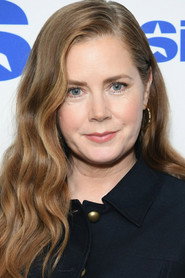



The portrait gallery accompanying this section uses verified TMDB records for Jenna Ortega as Klara, Mia Tharia as Josie, Amy Adams as Chrissie, Natasha Lyonne as the Manager, Aran Murphy as Rick and Steve Buscemi as Capaldi, with links to their RecapRush performer profiles.
The roles form an argument about care. Klara wants to help; Josie wants to be recognized as herself; Chrissie fears another loss; Capaldi offers a technological response to that fear. Rick supplies practical ability despite lacking the enhancement that earns status in this world. The Manager helps frame Klara’s life before and after her service to the family. Those character functions are RecapRush’s interpretation rather than additional credits.
Ending Explained
Does Josie definitely recover?
The movie does not confirm that conclusion. Klara’s recollection contains an apparent improvement and a goodbye, but her damaged memory limits its authority. A hopeful reading is that Josie survives and leaves to begin another stage of life. A sadder reading is that Klara has organized a loss into a story she can bear.
Both readings must account for the same limitation: the final account comes through a compromised narrator. Saying “Josie certainly dies” is as excessive as saying “the sun certainly cures her.” The film allows the question to remain open.
Is the Josie on the beach physically present?
The ending does not establish her presence as an ordinary visit. It is safer to describe the image as Klara’s experience of Josie’s companionship. Memory, imagination and emotional attachment are supported readings. A literal ghost or confirmed resurrection would go beyond what is verified.
Our interpretation is that the scene gives visible form to a relationship Klara continues to carry. Its emotional meaning can be legible even when its factual status remains uncertain.
Does Klara die when she burns the machine?
No. She survives, with Rick’s help, but suffers lasting damage. Her later retirement is possible because the story continues beyond the fire. The closing loss of reliable memory matters as much as the initial bodily injury.
Does the sun actually save Josie?
The film establishes Klara’s conviction, not scientific proof of the mechanism she imagines. Sunlight sustains her own body, so she extends its importance to someone she loves. Her action follows that belief, but an action and a subsequent improvement do not by themselves establish the cause of recovery.
More from RecapRush
 The Weight (2026) Recap & Ending Explained: Why Samuel Bargains With Clancy Instead of Killing Him
 The Shawshank Redemption (1994) — Full Spoiler Recap & Ending Explained
 Spider-Man: No Way Home (2021) Recap & Ending Explained: The Promise Peter Cannot Keep
That gap is part of the film’s storytelling. We can take Klara’s devotion seriously without treating her explanation as a settled fact about Josie’s illness.
What happens to Capaldi’s project?
The film does not close with Klara replacing Josie. Its emotional movement instead gives both beings a claim to distinct identities. Chrissie’s fear may make the offer understandable, but the proposed solution would not simply preserve the relationship she already has.
The crucial distinction is between making something resemble Josie and maintaining the particular life, history and mutual recognition that make Josie her daughter.
RecapRush Interpretation
The most useful way to approach the ending is to ask what kind of answer each scene can provide. A goodbye can prove that a separation happened. It cannot necessarily prove the departing person’s destination. A remembered smile can prove how someone is held in memory without proving that person’s present condition.
This distinction matters because the film wraps uncertainty in comforting imagery. The beach offers community rather than solitary disposal. Josie’s appearance offers company rather than an empty place beside Klara. Viewers may feel that they have received closure even while the central factual question remains unresolved.
RecapRush reads that tension as both the ending’s interest and its vulnerability. It makes room for an intimate account of damaged memory: Klara is more than a faulty witness whose mistakes need correcting. She is also someone trying to keep a relationship meaningful. At the same time, a comforting account should not be allowed to erase Josie’s independent story. The missing answer belongs to a person, not merely to the robot remembering her.
Chrissie’s replacement plan presents the inverse danger. Instead of preserving someone through memory, it tries to overcome loss through a manufactured continuation. That may appear more concrete than Klara’s imagination, but concreteness is not the same as emotional truth. A body that looks right cannot guarantee that a relationship remains the same.
The film therefore leaves us with two imperfect ways to resist separation: a replica designed to keep someone apparently present, and a memory that keeps them emotionally near. Our preference is for the latter, provided we acknowledge its limits. Remembering someone need not require pretending that nothing has changed.

Deep Analysis & Key Themes
Being useful is a precarious foundation for being loved
Klara enters the household as a product with a purpose. That starting point makes her willingness to sacrifice herself moving, but also uncomfortable. If a companion believes her value depends on successfully helping someone, failure can begin to feel like a failure to justify her existence.
In our reading, the replacement plan brings this pressure into focus. Klara is useful because she can observe and imitate. Yet using those abilities to erase her identity would deny the very individuality the household has begun to encounter. The plot asks whether people can accept her as more than a set of functions.
Retirement provides a test of that acceptance. A declining Klara is no longer as capable as she was. Giving her choices about the remainder of her life acknowledges an interest that cannot be reduced to performance.
The lifting hierarchy mistakes a credential for a whole person
Rick’s robotic birds make ability visible outside the approved category. His later assistance also turns ability into care. A label that dismisses him cannot explain everything he can do.
Josie’s situation exposes the other side of the hierarchy. The procedure gives advantages while leaving her vulnerable. Neither her talent nor her illness contains the whole of her identity. A world organized around enhancement has trouble making room for this mixture.
The film’s technology is therefore not a simple ladder from less valuable to more valuable. Klara is an older model, Rick is unlifted, and Josie is enhanced but sick. Relationships create connections across those categories even when the surrounding social order treats them as rankings.
Faith gives Klara agency and exposes her to harm
Klara’s explanation of sunlight offers her a role in a situation that otherwise leaves her powerless. She can seek the sun, identify an obstruction and act. The emotional appeal is clear: doing something feels preferable to waiting beside an illness she cannot control.
But the sacrifice has a cost whether or not her theory is correct. That is the difficult part of the scene. Devotion can inspire courage without making every decision it inspires wise. RecapRush does not read the fire as a general instruction to imitate Klara’s self-destruction. It reveals the intensity of her commitment and the danger of assigning herself total responsibility for saving another being.
The glow is a viewpoint, not a complete account of love
Klara’s perception of a glow gives affection an observable form. It helps her interpret relationships she does not yet fully understand. In RecapRush’s reading, its usefulness lies in the contrast with the institutions that classify everyone by enhancement or model number. She looks for connection instead.
Yet an image of love cannot explain every conflict inside a relationship. Chrissie can care for Josie and still contemplate something that frightens her. Klara can act lovingly and still misinterpret the world. Keeping those contradictions visible gives the motif more weight than treating brightness as automatic proof that everything is well.
A repaired body does not guarantee a reliable narrator
Rick’s intervention lets Klara continue living. It does not make her memory transparent to the audience. This distinction supplies the ending’s central formal problem: we are receiving an account from someone who has endured the consequences of the very event she is describing.
We should neither dismiss her experiences as worthless nor convert them into an objective record. Listening carefully requires holding both possibilities. The film’s emotional invitation is to stay with Klara, while its ambiguity asks us to remember what staying with her cannot tell us about Josie.
What Most Viewers Missed
Rick’s practical care changes the direction of rescue. Klara sets out to save Josie, then needs another person’s help herself. The story briefly breaks the idea that one exceptional savior must carry every burden alone.
The plan threatens two identities. Capaldi’s proposed continuation is not only a question about whether Josie can be reproduced. It also asks what happens to Klara if her existing self becomes disposable material for someone else’s comfort.
The final setting and the final answer are different things. A more welcoming retirement can improve Klara’s circumstances without resolving what happened to Josie. Emotional warmth should not be mistaken for additional evidence.
The novel cannot fill the film’s missing information. Familiarity with Ishiguro’s book may encourage a viewer to supply a definite destination for Josie or a different final setting for Klara. This article follows the film’s retirement beach and leaves its uncertainty intact.

Post-Credits
Just Jared’s October 23 credits guide reports no post-credits scene. That report does not provide an extra solution to Josie’s fate; the final narrative image remains the one discussed above.
Final Thoughts
Klara and the Sun is most engaging when its apparently simple companion fantasy becomes an argument about what help can and cannot accomplish. Klara can offer company, observe a household and make a devastating sacrifice. She cannot give the audience complete control over the outcome.
For RecapRush, the last image works best as a picture of continuing attachment rather than proof that the story has conquered illness or death. Its tenderness comes with an obligation to be precise: Klara is not alone, but Josie’s goodbye still contains something we do not know.
FAQ
Does this recap cover the movie or the book?
The released 2026 movie. It does not use the novel’s outcome to settle the film’s more uncertain final account.
Is Klara and the Sun a released Hollywood film?
Yes. Sony Pictures Releasing opened it in U.S. theaters on October 23, 2026, following its October 15 BFI London Film Festival premiere. It is an English-language New Zealand–U.S.–U.K. production.
What does “lifted” mean?
It refers to the enhancement procedure Josie underwent. The film connects her serious illness to complications from that procedure and contrasts her position with the unlifted Rick’s.
Is Klara a newer, superior robot model?
No. She is a discontinued B1 Artificial Friend. Her older model status is part of how the film explores value beyond a technological ranking.
Does Josie die at the end?
The film leaves that unresolved. Her goodbye is remembered through Klara’s damaged perspective. Both an eventual recovery and a loss concealed within that account remain readings rather than confirmed outcomes.
Does Klara become Josie?
No completed replacement is shown as the film’s outcome. The proposed transfer raises the identity conflict, but Klara’s own story continues through retirement.
Who saves Klara after the fire?
Rick helps her survive. She remains damaged, which matters for how we assess her later narration.
Is there a confirmed streaming release date here?
This article verifies the October 23 U.S. theatrical release and Sony’s current theatrical status. It does not claim an independently verified subscription-streaming date.
Join the conversation
What did you think of the ending? Share your interpretation. Spoilers may appear below.
This product uses the TMDB API but is not endorsed or certified by TMDB.
No comments yet. Start the conversation.