
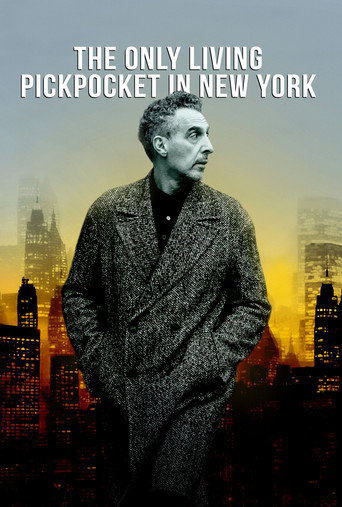
RECAPRUSH MOVIE GUIDE
The Only Living Pickpocket in New York (2026)
Directed by Noah Segan
Harry Lehman is an aging pickpocket who plies his trade with ever-diminishing returns in a drastically changed New York. Wallets stuffed with cash have been replaced by easily cancelled credit cards, and Harry struggles to make ends meet as he cares for his disabled wife, Rosie. When he unwittingly purloins and fences a valuable USB stick, Harry finds himself in a race against time to return the loot or face the rage of a vengeful crime family.
Overview, poster, and credits from TMDB.
Read and watch our full recap ↓FROM THE RECAPRUSH LIBRARY · FULL RECAP
The Only Living Pickpocket in New York (2026) Recap & Ending Explained: Harry’s Last Theft Is an Act of Care
15 min read · Estimated reading time— views
Intro + RecapRush Viewpoint
Harry Lehman knows how to take something from a stranger without being noticed. What he cannot do is stop the world from noticing that it has less use for him. The wallets are still there; the cash has gone elsewhere. Then one theft brings danger into the apartment where his wife needs him most.
Noah Segan’s The Only Living Pickpocket in New York gives John Turturro a wonderfully uncomfortable question to carry: what happens when the skill that has sustained your life becomes the thing that endangers everyone you love? Harry’s predicament has a criminal’s practical urgency and a caregiver’s much more intimate terror.
The RecapRush viewpoint: the film’s strongest idea is that competence and goodness are different achievements. Harry is accomplished at an occupation that harms people. His tenderness does not cancel that harm, and his professional pride cannot repair his family history. The final movement matters because it changes what he uses his abilities for. We read his last gamble as an attempt to leave care behind where he has so often left absence.
Spoiler warning: this article covers the entire released film, including the cryptocurrency scheme, family revelations, final waterfront sequence, and unresolved question of Harry’s survival. Release information was checked October 26, 2026: the New York/Los Angeles opening was October 23; the announced nationwide expansion is October 30.
Featured Image

Table of Contents
Quick Facts
- Exact title: The Only Living Pickpocket in New York
- Film year / country / language: 2026 / United States / English
- Writer and director: Noah Segan
- Running time: 88 minutes
- TMDB identity: Movie 1458099
- TMDB genres: Crime, Drama, Thriller
- World premiere: January 27, 2026, Sundance Film Festival
- Verified US theatrical opening: October 23, 2026, New York and Los Angeles
- Announced nationwide expansion: October 30, 2026
- US distributor: Sony Pictures Classics
- Coverage: full-film spoilers; the final image’s ambiguity is preserved
Full Spoiler Recap
1. Harry’s ordinary work has stopped paying ordinary bills
Harry moves through New York as a working pickpocket, taking valuables and bringing his haul to Ben’s pawnshop. Their arrangement is familiar and informal. The problem is the merchandise: phones can be traced, cards can be canceled, and a stolen wallet is no guarantee of cash.
At home, Harry looks after Rosie, his disabled wife. That responsibility makes the diminishing returns more than an occupational inconvenience. Each unprofitable day threatens the stability of a household that depends on him. He also teaches a younger pickpocket, an indication that he still sees his craft as knowledge worth passing on.
This opening establishes a contradiction the film keeps alive. Harry can be generous with particular people while making a living at strangers’ expense. You can understand the pressure he is under without accepting the private moral accounting that makes his work seem necessary to him.
2. A wealthy target carries something Harry cannot recognize
One night, Harry steals from Dylan, a conspicuously privileged young man linked to a crime family. The haul includes a watch and a USB device. Harry can evaluate the familiar valuables; the tiny piece of technology is another matter.
He has acquired access to substantial digital wealth without understanding what he possesses. The apparent mismatch between an unimpressive object and its enormous importance is the engine of the story. Harry treats it like goods to move along. Dylan treats losing it as an intolerable violation.
The theft also reverses Harry’s usual advantage. He relies on being difficult to identify among moving bodies. Modern surveillance offers Dylan a way to reconstruct what happened after the moment has passed.
3. The threat reaches Rosie
Dylan’s pursuit leads back through Harry’s world and into his home. His demand is brutally direct: retrieve the device, or Rosie will suffer. Harry’s apartment ceases to be a refuge and becomes the place from which someone else controls his movements.
The deadline is six hours. What initially looked like an unusually good haul has become a task Harry cannot decline. Dylan possesses the leverage that matters most, and knowing the city does not give Harry a simple way to protect the person waiting at home.
Notice the imbalance. Harry has committed a theft. Dylan answers by threatening someone who did not commit it. The film does not need to make Harry innocent to show how far his opponent is willing to go.
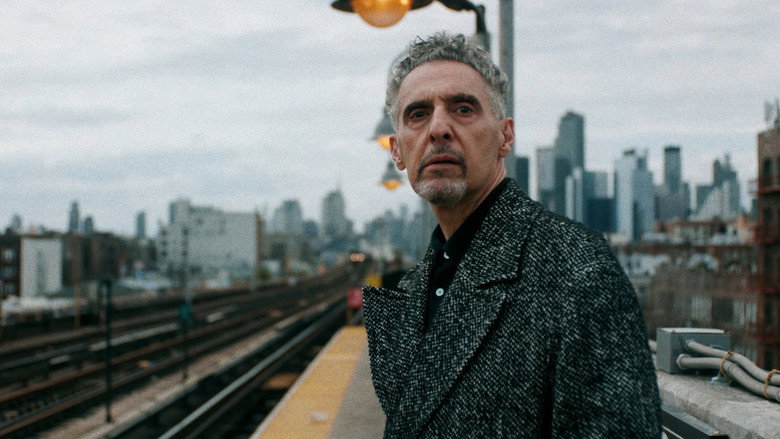
4. Getting the object back requires old contacts and old skills
Ben directs Harry toward Frank, an electronics-connected fence. Harry sells the device on, then has to retrace that decision under pressure. Detective Warren provides a lead; the trail reaches an electronics business associated with Frank’s family. Harry ultimately uses a distraction and theft to recover it.
These encounters turn an abstract problem into an itinerary of personal obligations. Harry needs other people’s knowledge, goodwill, and willingness to bend a rule. His expertise is useful, but it is not sufficient by itself.
That distinction will matter at the end. The man who seems most alone in the title is repeatedly sustained by a network. His difficulty is partly recognizing where his own authority ends and somebody else’s competence begins.
5. Recovering the device does not restore the bargain
Harry contacts Dylan after retrieving it, but learns that returning the stolen property will not necessarily end his punishment. The retrieval mission and the survival mission are no longer the same thing.
He visits Kelly, his estranged daughter. Their encounter shifts the film’s scale. A criminal can solve a practical problem with enough nerve and dexterity; a parent cannot undo a damaged relationship by arriving with the right object. Kelly gives Harry’s history a perspective that his present devotion to Rosie cannot erase.
The important change is in what Harry understands he may still be able to accomplish. If he cannot recover all the time he has lost, he can at least decide what to do with the time left to him.
6. Harry returns, but the apparent surrender conceals another theft
Harry hands back the crypto wallet. Ben and Eve help take Rosie away, while Harry is taken by car. Moira, the family’s boss, enters the final movement.
The film then reveals the concealed plan: Eve has cloned the wallet, and Harry has lifted Dylan’s smartwatch. The watch supplies the authentication needed to move the cryptocurrency. Money also reaches Kelly in an unmarked envelope.
This is the decisive reversal. Harry has not secretly become a technology expert. He supplies the physical access that Eve can use. Returning an object and restoring its owner’s control over its contents turn out to be different things.
The scheme also changes the purpose of his theft. Earlier, he took what might keep the day going. Now the gain is directed toward people whose future may have to continue without him.
7. The film leaves Harry at the water’s edge
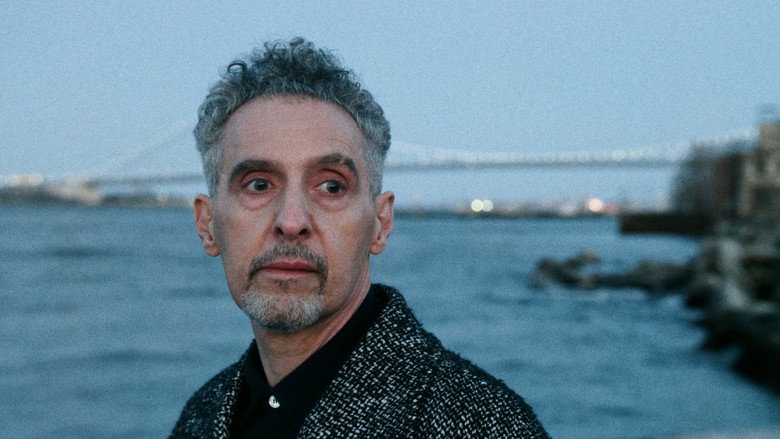
The closing waterfront passage refuses a neatly reassuring victory lap. Harry faces Manhattan, and the film’s final construction brings Rosie’s kiss into the emotional space of his departure. The city remains after he disappears from the image.
There is reason to fear the worst for him. There is also a crucial limit to what the ending establishes. In a spoiler interview with /Film, Segan challenged the interviewer’s assumption that Harry definitively dies and explained that he wanted the character’s exit to retain dignity and the feeling of a Western departure.
The most accurate conclusion is therefore narrower than “Harry is killed.” He has made his final arrangements and leaves the frame under a threat of death. The film does not resolve his physical fate into an explicit, unambiguous on-screen answer.
Cast + TMDB
Cast and Characters





The accompanying cast gallery uses the verified TMDB records for John Turturro — Harry, Giancarlo Esposito — Detective Warren, Will Price — Dylan, Tatiana Maslany — Kelly, Victoria Moroles — Eve, and Steve Buscemi — Ben, with RecapRush person-profile links.
Turturro carries the conflict between practiced composure and mounting fatigue. Esposito and Buscemi play people who know enough of Harry’s world to help without treating him as a legend. Price supplies the opposing attitude: inherited power that expects compliance. Maslany’s Kelly makes the family story resistant to Harry’s charm, while Moroles’s Eve gives the older men’s plan an indispensable source of modern expertise.
The film also credits Karina Arroyave as Rosie and Jamie Lee Curtis as Moira. Their functions differ sharply: Rosie is the person Harry is trying to protect; Moira represents the criminal power he cannot simply outwalk. The six selected gallery records are a focused cast selection, not a claim to include every credited performer.
More from RecapRush
 You Can See Everything (2026) Recap & Ending Explained: Holmes, Seyfried and the Final Ocean Scene
 Zip Wire (2026) Recap & Ending Explained: Why Amy Makes the Cure Impossible to Own
 Insidious: Out of the Further (2026) Recap & Ending Explained: How Gemma Sends the House Back
Ending Explained
How does Harry turn the crypto theft against Dylan?
The mechanism joins two forms of access: Eve’s digital knowledge and Harry’s ability to remove a physical object unnoticed. The cloned wallet alone is not the whole trick; Dylan’s stolen smartwatch enables the necessary authentication. His confidence in possessing the returned device overlooks the access he has already lost.
Read as a caper, this is a satisfying reversal of who understands the situation. Read as character drama, it is Harry learning that accepting help does not diminish the skill he still has.
Does Harry save himself?
The film does not give us a conclusive escape or an explicit confirmation of death. His material success and his physical fate are separate questions. That separation prevents the money from making everything feel settled.
Our reading is that Harry achieves a measure of agency while remaining vulnerable. He can choose what his last visible actions mean; he cannot guarantee that the world will reward them. Segan’s interview supports preserving that uncertainty rather than treating a fatalistic interpretation as a verified event.
Why is Rosie part of the final image’s emotional logic?
The return to her kiss gives the departure a private reference point. Harry’s life cannot be reduced to the criminal story unfolding around him. In RecapRush’s reading, the memory redirects our attention from what may happen next to what he wants to carry with him.
That is an interpretation of the editing, not proof of a particular afterlife, imagined reunion, or unseen rescue.
RecapRush Interpretation
The following is our reading, not an additional plot revelation. Harry’s final achievement is a change in the direction of his attention. Pickpocketing requires him to notice what other people possess. Care requires him to notice what they need.
Those forms of attention can look similar from a distance. Both demand patience, observation, and sensitivity to another person’s vulnerability. Their moral difference is enormous. One turns vulnerability into opportunity; the other accepts it as a responsibility.
That makes Harry a more interesting figure than a lovable thief with a hidden heart of gold. He has not kept a spotless moral self intact underneath a questionable occupation. He has lived with contradictions, and other people have had to live with their consequences. The closing act cannot make that history disappear.
It can, however, make a different kind of promise. A future provision is a modest form of repair: useful, incomplete, unable to purchase forgiveness. That incompleteness is where the film finds its emotional seriousness.
Deep Analysis & Key Themes
Care and theft share a grammar of touch
Harry’s working life depends on hands, proximity, and the management of attention. His home life asks the same body to become reassuring rather than deceptive. The contrast encourages us to judge an action by its relationship to another person, rather than admiring technique in isolation.
The dance for Rosie is important here. It is an expenditure of energy with no professional return. He cannot extract anything valuable from her response. He can only offer a moment. Against the calculations of a caper, that unprofitable generosity has unusual force.
Expertise becomes fragile when it becomes an identity
There is a difference between saying “I can do this well” and saying “this is what makes me worth something.” Harry’s professional pride edges toward the second claim. When his trade becomes less viable, the threat therefore feels personal before it becomes physical.
His collaboration with Eve offers a more flexible answer. You can remain useful without being self-sufficient. Knowledge passed between generations need not flow in one direction. The ending’s partnership is more persuasive, to us, than a fantasy in which age automatically defeats youth or new technology automatically makes experience worthless.
Dylan turns dependence into a weapon
Harry and Dylan both exploit advantages that other people may not recognize in time. The difference in power changes the consequences. Dylan can threaten a household because he has a criminal structure behind him. His contempt functions as permission to ignore another person’s limits.
This makes the domestic intrusion more disturbing than a dispute over property. Rosie becomes leverage precisely because she depends on someone else. Our reading is that the film’s moral test concerns the treatment of dependency: will it be protected, exploited, or dismissed as weakness?
Nostalgia is an unreliable defense
Harry’s courtesy and habits can tempt us to imagine a cleaner criminal past. Yet a code of manners is not the same thing as ethical conduct. The film’s affectionate attention to his routines works best when that distinction stays visible.
The question is not whether an earlier era had better coats, better music, or more satisfying objects. It is whether the person who misses that era can still respond to the people living now. Harry’s worth cannot depend on convincing the city to resemble his memories.
The ending declines to balance the accounts
A conventional victory could turn the last theft into compensation for every previous loss. This ending leaves an outstanding balance. Money can meet material needs; it cannot recreate lost years or ensure continued companionship.
That is why we find the unresolved exit more affecting than an explicit final punishment would be. It keeps the moral question open without making the story mechanically unfinished. Harry’s decision has a shape even when his remaining lifespan does not.
What Most Viewers Missed
Being discreet is different from being unrecorded
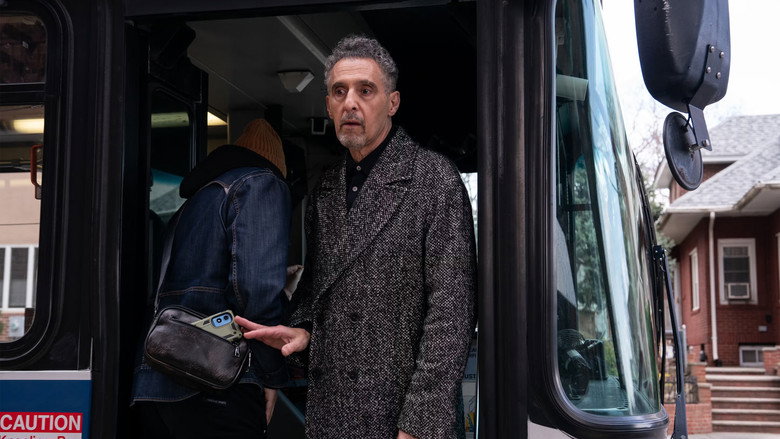
Harry’s survival method depends on controlling the immediate encounter. Surveillance changes the duration of that encounter: an action that nobody challenges in the moment can still be reconstructed afterward. The conflict is partly between two ideas of when a theft is over.
The younger generation is not one character
Treating Dylan as a stand-in for all young people misses the importance of Eve and the younger pickpocket Harry advises. Age does not assign moral value. What matters is whether knowledge becomes a means of cooperation or domination.
The title describes a feeling, not a census
Harry encounters another practitioner of his trade. The title need not be read as a factual claim that he is literally the city’s sole pickpocket. We hear it as the loneliness of believing that the context which once made your life intelligible is disappearing.
The final uncertainty does not erase the completed choice
An unresolved fate is not the same as an unresolved intention. We have enough to understand where Harry directs his efforts. Asking only whether he survives can obscure the more difficult question: what has he finally decided to be responsible for?
Mid/Post-Credits
The closing passage continues into a sustained view of the city, as discussed in Segan’s spoiler interview. We have not verified a separate mid-credits or post-credits bonus scene. This guide therefore makes no claim that one exists or that its absence has been definitively checked.
Final Thoughts
The most compelling thing about Harry is that he is neither wholly admirable nor beyond affection. He is a person whose useful qualities have been entangled with damaging habits for a very long time. Untangling them at the end cannot be easy, and it cannot be complete.
The Only Living Pickpocket in New York earns attention as a crime story that makes a practical distinction feel emotionally large: getting something back is not the same as putting things right. Harry’s last theft allows him to attempt the second. The film leaves us with the cost of that attempt, and with a city that will keep moving.
FAQ
Is The Only Living Pickpocket in New York a 2026 film?
Yes. Its Sundance world premiere was January 27, 2026. Sony Pictures Classics gives October 23 for the New York/Los Angeles opening and October 30 for the nationwide expansion. Those are different release milestones.
Is this an action movie?
Its verified TMDB genres are Crime, Drama, and Thriller. It fits the crime side of our coverage; it should not be labeled Action simply because it contains danger and a criminal scheme.
Who plays Harry and who directed the film?
John Turturro plays Harry. Noah Segan wrote and directed the film.
Is Harry definitely dead at the end?
No explicit on-screen confirmation settles that question. A fatalistic interpretation is understandable, but Segan’s /Film interview resists treating it as the only established answer.
Does the ending make Harry’s earlier behavior acceptable?
That is a judgment for the viewer. Our reading is that a meaningful act of care can coexist with an unrepaired history. Redemption need not mean acquittal.
Is the nationwide release already underway?
As of this article’s October 26, 2026 verification, the official nationwide date remains October 30. The film has opened in New York and Los Angeles; this is a released-film recap, not an upcoming preview.
Join the conversation
What did you think of the ending? Share your interpretation. Spoilers may appear below.
This product uses the TMDB API but is not endorsed or certified by TMDB.
No comments yet. Start the conversation.