

RECAPRUSH MOVIE GUIDE
It Ends (2026)
Directed by Alexander Ullom
A group of recent grads head out on a late night drive for grub, hoping to enjoy one final hangout before their paths diverge. Instead, they accidentally turn onto a never-ending, two-lane hellscape surrounded by untold horrors and cosmic forces beyond their understanding. Cramped together inside a Jeep Cherokee and with the miles stretching infinitely ahead, they face a choice: embrace their new existence or fight to escape it.
Overview, poster, and credits from TMDB.
Read and watch our full recap ↓FROM THE RECAPRUSH LIBRARY · FULL RECAP
It Ends (2026) Recap & Ending Explained: Why James Turns Back When the Road Finally Stops
13 min read · Estimated reading time— views
Intro + RecapRush Viewpoint
What if you reached the end and found no answer waiting for you? Alexander Ullom's It Ends puts that fear inside a Jeep Cherokee. Four friends head out for a late-night meal before their lives move in different directions, then find themselves trapped on a road that refuses to lead anywhere recognizable. [1]
RecapRush Viewpoint: The film's strongest reversal is that forward motion becomes a form of avoidance. James can keep driving long after he has stopped listening, and the ending asks what progress is worth when it carries him away from the people he loves.
Full spoilers ahead. This article covers the friends' departures, the literal end of the road and James's final passenger. Plot facts are separated from RecapRush interpretation; statements about intention are attributed to Ullom's interviews. Identity and release information checked October 4, 2026.
Featured Image
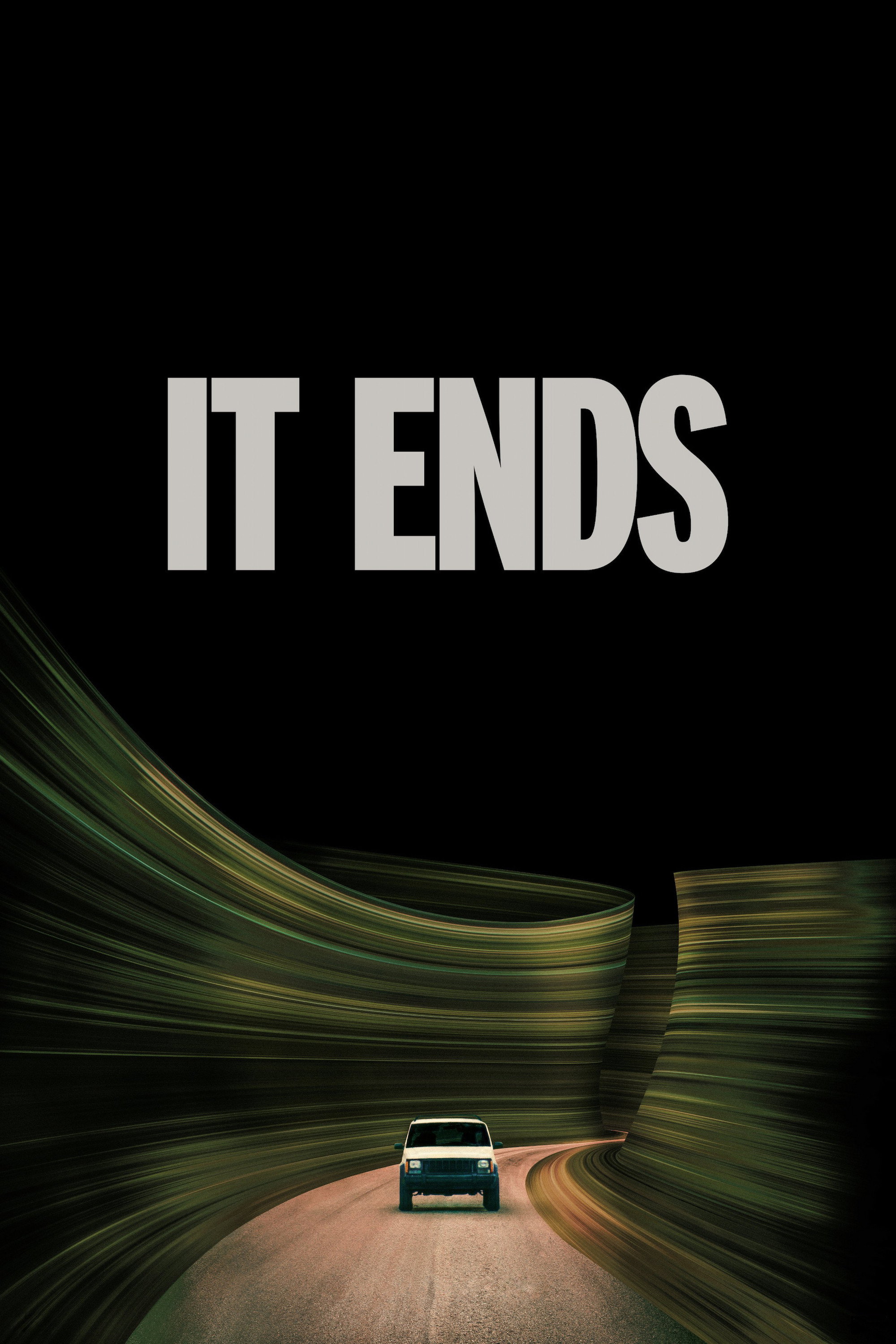
Table of Contents
Quick Facts
- Title: It Ends
- Writer, director and editor: Alexander Ullom
- Feature debut: Yes
- Festival premiere: SXSW, March 7, 2025
- U.S. theatrical release: August 21, 2026
- U.S. distributor: NEON
- Runtime: 89 minutes in TMDB and current theatrical listings
- Genres: Horror, mystery; existential and coming-of-age elements
- Language: English
- Principal cast: Phinehas Yoon, Akira Jackson, Noah Toth and Mitchell Cole
- Composer: Matthew Robert Cooper
- TMDB movie ID: 1422011
- IMDb ID: tt35519455. [2, 4, 5]
Why both 2025 and 2026 appear: The film premiered at a festival in 2025 before its 2026 theatrical rollout. Earlier availability through Letterboxd Video Store also preceded NEON's release. This article uses 2026 for the theatrical edition being discussed; it does not imply that Ullom made two different films. [4, 6]
Full Spoiler Recap
1. The friends start with a conversation, not a mission
James, Day and Fisher meet up with Tyler for a late-night drive. The plan is ordinary, and so is the banter: they debate hypothetical fights involving animals. James is approaching a new phase of his life, but the group can still make a familiar game out of arguing together. [1, 10]
RecapRush reading: This beginning establishes a kind of pleasure that requires no destination. Nobody has to win anything important for the conversation to matter. That modest freedom becomes easier to recognize once the road has stripped away the larger plan.
2. A wrong turn removes the way back
Their surroundings become unfamiliar. The road offers no useful exits, and trying to reverse their route brings them to a barrier of forest. People rush out of the woods toward the vehicle, begging to get inside. Stopping is dangerous, so driving begins to feel like the only available response. [7]
The friends discover that ordinary travel limits do not work as expected: fuel does not run out, and hunger, thirst and sleep cease to organize their experience. They establish approximately ninety seconds as their safe interval outside the car before the crowd arrives. Confessing their secrets as if the place were a punishment does not release them. [7]
3. Tyler stops participating
After an enormous distance, Tyler leaves the car and stays behind. The others continue without him. The film does not subsequently show him being killed or safely arriving elsewhere. His departure is a choice within the ordeal, not a solved account of what the forest is. [6, 9]
Ullom explained to The Direct that Tyler has already passed through the transition the others are beginning. His decision comes from a different stage of life, rather than serving simply as evidence that he is the least capable member of the group. [9]
4. The nightmare becomes a routine
Day and Fisher make a life out of the remaining company. The survivors collect things from abandoned vehicles, repeat conversations and find ways to occupy themselves. Day and Fisher also scream to release their frustration. James declines to join that ritual and keeps looking for a way out. [10]
There is no clean border between coping and exhaustion. The frightening situation persists, but the group cannot remain at its first level of panic forever. Habit changes what the same landscape feels like without explaining why it exists.
5. Day and Fisher stop the car; James cannot stop his search
Day and Fisher remove the keys, asking James to accept that continuing may not produce an escape. He takes the keys back and drives away, leaving them behind. Their shared decision and his solitary determination pull the group apart. [7]
In his interview with The Direct, Ullom described Day and Fisher as finding value in companionship while James still requires an answer. The conflict is therefore also about what each person needs before they can live with uncertainty. [9]
6. The road ends without explaining itself
James eventually reaches a cluster of abandoned cars. Beyond them is a paved dead end and a sign identifying the road's termination. No portal opens, no authority reveals the rules and no explanation turns the accumulated miles into a completed test. [8, 10]
He is devastated. After returning to the Jeep, he finally eats the Clif Bar they had kept and responds emotionally to its taste. He also screams, joining a form of expression he had refused earlier. Then he turns around and drives back. [10]
7. James lets someone else into the journey
On his return, James finds a depleted stranger beside another vehicle and brings him into the Jeep. He starts the same kind of animal debate that opened the film. The passenger responds, and an ordinary conversation becomes possible again. [11]
Ullom explicitly told Filmmaker that James is heading back for his friends. The film ends before showing that reunion. The decision is confirmed; the result remains unseen. [12]
Cast + TMDB
Cast and Characters


The cast gallery accompanying this article uses the verified TMDB record and its available portraits. Phinehas Yoon plays James, Akira Jackson plays Day, Noah Toth plays Fisher and Mitchell Cole plays Tyler. Supporting credits include Jenny Doyle as Fisher's mother in voice, Jon Linstad as the interrogated man, Ian Weir as the lost man and Ullom himself as the passenger. [2]
Browse the full cast and crew on TMDB.
Film Image

Ending Explained
Does James find an exit?
He finds a physical end, which is a different thing. The dead end supplies no demonstrated route home. It breaks the assumption that reaching a destination will explain the world or reward all the effort invested in reaching it. [10]
RecapRush interpretation: James has been treating distance as a promise. The final stretch exposes that promise as something he brought to the road. The asphalt never agreed to give him meaning in exchange for mileage.
Is turning around a defeat?
Ullom described the ending to Inverse as optimistic: reaching the dead end frees James to return. In Filmmaker, he clarified that this is a change of perspective rather than a simple restart of the same journey. [8, 12]
RecapRush interpretation: The car moves in the opposite direction, but the larger change concerns attention. James can now choose whom to travel with. The return matters because it is directed toward a relationship rather than another clue.
Are Tyler, Day and Fisher dead?
Their ultimate circumstances are not depicted in the closing scenes. That absence should not be converted into a verified death. In his Letterboxd interview, Ullom also distinguished It Ends from his subsequent project by saying that his characters do not die in this film. [6]
That statement helps rule out a literal death-count reading. It does not give us an unseen reunion, identify the friends' final locations or explain how the road changes people who remain beside it.
More from RecapRush
 Resident Evil (2026) Recap & Ending Explained: Does Bryan Ever Get the Cure?
 Captain America: The Winter Soldier (2014) Recap & Ending Explained: Why Steve Drops the Shield
 Insidious: Out of the Further (2026) Recap & Ending Explained: How Gemma Sends the House Back
Is this purgatory or a time loop?
Purgatory is a possible audience interpretation, not a revealed solution. The characters' own attempts to understand the place fail to establish its origin. There is no confirmed accident that turns the whole story into a conventional afterlife twist. [13]
Nor should the returning car be treated as proof of an exact temporal reset. Ullom rejects that simple description of the ending. James carries a changed understanding into the return, and the new passenger makes that difference visible. [12]
Why repeat the animal question?
The question does not decode the road. It gives two people a reason to talk. At the start, that argument belongs to an existing friendship; at the end, it can initiate a new connection. [11]
RecapRush interpretation: James no longer needs every question to produce useful information. A silly question can make room for another person. The ending restores the value of conversation before restoring anything about the landscape.
RecapRush Interpretation
The following is editorial interpretation, separate from the plot and the director's stated explanations.
The cruelest feature of this road is that it lets James continue. A broken engine would force a decision. An empty tank would supply an external reason to stop. Here, technical possibility becomes a trap: he can always drive farther, so he can always postpone considering whether farther is better.
This makes his determination both understandable and costly. The person who refuses to surrender can also become the person who refuses to listen. From inside his own reasoning, staying with Day and Fisher might feel like abandoning them to hopelessness. From their position, his insistence carries him away from the one thing they can still offer. Neither perspective needs to be reduced to cowardice or selfishness for the separation to hurt.
The final pickup changes that imbalance. Earlier, the car is an enclosure the friends protect from outsiders. Later, James uses it to make space for someone. The vehicle has not become less confined, but its social purpose has changed. That is a small, practical form of hope: another seat can be occupied, another voice can answer.
Deep Analysis & Key Themes
The danger of making completion a condition of living
RecapRush analysis: James postpones emotional participation while he pursues resolution. This resembles the everyday bargain of deciding that life will begin after an achievement: after moving, qualifying, earning enough or finally understanding oneself. The danger is that a condition meant to improve life can become the reason it is indefinitely deferred.
The dead end makes the bargain impossible to maintain. There is no further stretch on which to place the expected reward. James's return does not erase his desire to understand; it gives that desire a limit. He can still ask questions without making a complete answer the price of companionship.
The Clif Bar turns preservation into deprivation
RecapRush analysis: The saved snack is a particularly precise object for this story. Keeping something available for the future can be sensible. Keeping it forever can also prevent the experience for which it was saved. When James finally tastes it, the event is physically small but emotionally disproportionate.
The scene invites a distinction between possessing a possibility and using it. A friendship can suffer from the same delay: people may remain available in theory while their actual company goes unappreciated. This is an editorial comparison, not a claim that Ullom assigned the snack one exclusive symbolic meaning.
The scream is participation without a solution
RecapRush analysis: Day and Fisher's ritual produces no map. That does not make it useless. It gives frustration a shared form, allowing an experience to be acknowledged even when it cannot be fixed.
James's eventual scream can be read as permission to feel something he cannot reason away. The contrast is especially useful because the film does not require him to choose between intelligence and emotion. It shows the cost of demanding that an emotion become a solvable problem before he will express it.
The visual frame participates in the argument
Director-confirmed technique: Ullom told Letterboxd that the aspect ratio constricts when James's horror mode takes over and opens out in the hangout passages associated with Day and Fisher. He also identified a car from Two-Lane Blacktop among the vehicles at the dead end. These are confirmed formal details, not invented Easter eggs. [6]
RecapRush analysis: A wider image can offer breathing room without offering escape. That makes the change more interesting than a simple switch between danger and safety. The characters may occupy the same impossible world while having different amounts of room to experience one another within it.
The crowd can be frightening without being a solved villain
Director's account: In Inverse, Ullom described the people in the woods as victims trying to find structure themselves. He connected their condition to systems that reduce people to instinct and consumption. [8]
RecapRush analysis: This does not remove the immediate threat they pose. It complicates the comfort of sorting the road into innocent travelers and an evil external force. James's final act is meaningful precisely because someone outside the car can become a companion rather than remain a faceless part of the danger.
What Most Viewers Missed
- The reunion is a goal, not a shown event. Ullom confirms James's intention, but the film leaves the friends' reunion offscreen. [12]
- The final question is social rather than investigative. James's renewed banter invites participation instead of demanding an explanation. [11]
- Stopping and giving up are not automatically identical. The characters attach different meanings to continuing, companionship and acceptance. Ullom discusses those differences rather than ranking them as simple failures. [9]
- The aspect ratio changes are part of the tonal design. The director links them to the film's movement between horror and hanging out. [6]
- The passenger has a verified cast credit. TMDB identifies Ullom in that role; the figure is not presented here as an unverified supernatural cameo. [2]
Mid/Post-Credits
Just Jared reports no post-credits scene for It Ends (2026). [14]
A separate mid-credits sequence was not independently verified. No additional plot, sequel tease or hidden resolution is claimed here.
Final Thoughts
RecapRush assessment: It Ends earns its emotional turn by making the destination smaller than the effort spent pursuing it. The dead end is disappointing to James because he expects it to justify everything. The conversation afterward matters because it asks for far less and gives him something immediate in return.
The film leaves its impossible geography unexplained while giving its protagonist a clear decision. That balance may frustrate viewers looking for a supernatural rulebook. It is also what makes the ending linger: James cannot settle what the road means, but he can change how he behaves toward another person on it.
FAQ
Is It Ends a 2025 or 2026 film?
Its festival debut was in 2025; the U.S. theatrical release followed in 2026. Both dates describe the same Ullom film.
Does reaching the end return James home?
No return home is shown. He turns back along the road.
Does the final passenger explain the mystery?
No. The final exchange restores conversation rather than supplying the road's origin.
Does the director regard the ending as hopeful?
Yes. His Inverse interview explicitly describes it that way, while leaving the friends' reunion unseen.
Join the conversation
What did you think of the ending? Share your interpretation. Spoilers may appear below.
This product uses the TMDB API but is not endorsed or certified by TMDB.
No comments yet. Start the conversation.