
RECAPRUSH MOVIE GUIDE
Hoppers (2026)
Directed by Daniel Chong
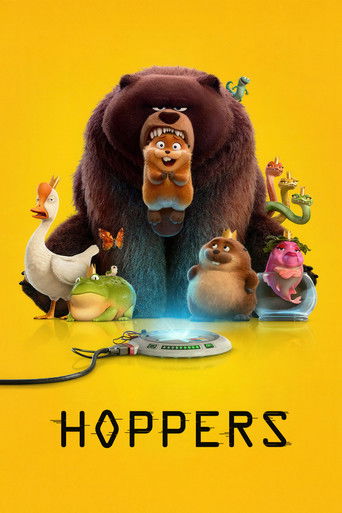
Scientists have discovered how to 'hop' human consciousness into lifelike robotic animals, allowing people to communicate with animals as animals. Animal lover Mabel seizes an opportunity to use the technology, uncovering mysteries within the animal world beyond anything she could have imagined.
Overview, poster, and credits from TMDB.
Read and watch our full recap ↓FROM THE RECAPRUSH LIBRARY · FULL RECAP
Hoppers (2026) Recap & Ending Explained: Why Saving the Glade Means Saving Jerry
18 min read · Estimated reading time— views
Intro + RecapRush Viewpoint
Mabel wants a forest saved. She does not expect to spend her adventure protecting the politician who wants to destroy it. That reversal gives Hoppers its sharpest emotional question: can you defend a place you love without deciding that the people threatening it have stopped deserving your concern?
Pixar builds the question into a wonderfully strange premise. A college student transfers her consciousness into a robotic beaver, enters an animal society, and discovers that being able to understand everyone does not make everyone agree. A shared language opens a door. It does not supply judgment, trust, or restraint.
The RecapRush viewpoint: Mabel’s love for the glade is inseparable from her grief for her grandmother. Her error is allowing the urgency of that love to become permission to use other people. The ending gives her a more demanding form of loyalty: protect what matters while accepting responsibility for the lives your actions affect. George’s final decision makes that principle concrete, with a dam his community must destroy to save a wider one.
Full spoilers ahead. This guide covers the entire released 2026 film, including the Animal Council, Insect Queen’s death, Titus’s human disguise, wildfire, restored glade, final friendship scene, and both credits extras. Research was checked October 27, 2026. Plot facts and RecapRush’s own interpretations are distinguished; no first-hand viewing is claimed.
Featured Image
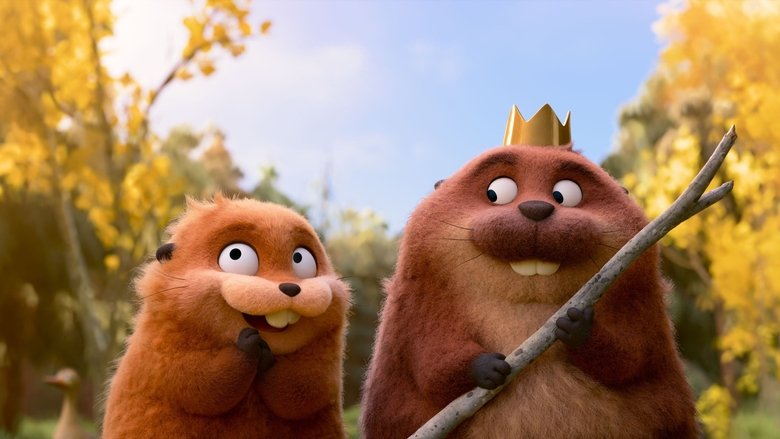
Table of Contents
Quick Facts
- Exact title / year: Hoppers (2026)
- Studio / US distributor: Pixar Animation Studios / Walt Disney Studios Motion Pictures
- Director: Daniel Chong
- Screenplay: Jesse Andrews
- Story: Daniel Chong and Jesse Andrews
- World premiere: February 23, 2026, El Capitan Theatre, Los Angeles
- US theatrical release: March 6, 2026
- Disney+ arrival: June 3, 2026, as identified on Disney’s official film page
- Runtime: approximately 105 minutes; Disney lists 105 and TMDB lists 104
- US rating: PG
- TMDB movie ID: 1327819
- All verified TMDB genres: Animation, Adventure, Comedy, Family, Science Fiction
- Coverage: complete-film spoiler recap and ending explanation
Full Spoiler Recap
1. The glade becomes Mabel’s place of belonging
As a child, Mabel tries to liberate classroom animals and causes trouble. Her grandmother offers a gentler way to direct her concern: sitting quietly in the glade, observing the wildlife, and making room for the world around her.
The place becomes part of their shared life. After her grandmother dies, Mabel continues caring for it while studying at Beaverton University. Mayor Jerry Generazzo’s proposed freeway threatens more than a pleasant landscape. It threatens the setting in which Mabel learned to feel connected and calm.
Jerry argues that the animals have left. Mabel’s attempts to oppose him through a petition fail, so she searches for a way to bring wildlife back. A beaver could help restore the habitat and undermine the justification for clearing it.
2. A robotic beaver offers a shortcut
Following what appears to be a beaver leads Mabel to a university laboratory. Dr. Sam and her colleagues have developed Hoppers technology: humans can inhabit lifelike robotic animals and communicate with wildlife from inside those bodies.
Mabel sees an opportunity to advance her campaign. Against Sam’s wishes, she enters the beaver and escapes. She can now understand animal speech, but she has also crossed a boundary without the researchers’ approval or the animals’ knowledge.
That choice carries the story’s central contradiction. Mabel wants creatures to have a say in their future, yet enters their world under a disguise that prevents them from making an informed decision about her.

3. George’s community is welcoming and unsettling
In the forest, Mabel intervenes when Ellen the bear is about to eat Loaf the beaver. Both animals react as though she has misunderstood an ordinary arrangement. Their society has rules, including an acceptance of predation that does not fit her instinctive version of harmony.
She meets King George, the mammal monarch who has gathered displaced animals into a large communal lodge. George knows his subjects by name and treats cooperation as a daily practice. He welcomes Mabel, whose impatience sits awkwardly beside his optimism.
Mabel discovers that the glade’s abandonment was engineered. Jerry installed artificial trees emitting sound that drives animals away. Her robotic body does not experience the noise as they do. She destroys a device, and the animals return and rebuild the dam. George trusts her enough to make her his adviser, the Paw of the King.
4. Mabel’s call to resist becomes a call to kill
Jerry escalates the conflict by destroying the rebuilt dam and adding more devices. Mabel and George seek help from the Animal Council, which brings together rulers of different animal groups.
Her argument succeeds in a way she did not intend. Warning that Jerry’s appetite for development will threaten everyone persuades the Council to assassinate him. While trying to stop that decision from turning into action, she accidentally kills the Insect Queen.
Mabel and George become targets themselves. The Queen’s son Titus transforms into a butterfly, assumes the insect throne, and intensifies the pursuit. George is upset by what Mabel has done, but agrees to help protect Jerry.
The mission has changed. Saving the glade now requires preventing the violence Mabel helped set in motion, including violence against her own opponent.
5. Jerry becomes the person they must rescue
Mabel, George, and their allies try to reach the mayor before the Council does. They use his phone’s text-to-speech function to communicate from their animal bodies. Meanwhile, birds deploy Diane, a shark, in an outlandish attempt to kill him.
The attack and pursuit bring the humans and animals into the same crisis. The scientists eventually reconnect with Mabel and force her out of the beaver. George discovers that the friend he trusted is human.
His hurt is about more than species. He offered Mabel a place in his community while she withheld information that could have changed how he understood her requests. Her wish to help does not erase the experience of being used.

6. Titus reverses the experiment
The Council takes the humans captive and compels the scientists to create a robotic version of Jerry. Titus will inhabit that body, appear at the mayor’s rally, and use the sound devices against the human crowd.
Hopping has now traveled in the opposite direction. Mabel entered an animal body to influence animal behavior. Titus intends to enter a human body to exploit human trust. His ambitions also extend beyond revenge against the people threatening the glade: he wants power over the other animals.
Mabel and Jerry make a truce. Jerry enters the robotic beaver to help them get free. Their cooperation does not make the original freeway dispute imaginary; it allows them to respond to a danger that neither can solve alone.
7. A borrowed face fails at a crucial moment
At the rally, Mabel cannot persuade Titus to abandon his plan. The attempt to stop him becomes a struggle involving the scientists, Jerry, and the animals. The mayor’s phone is essential to activating the attack.
Mabel tears the human-looking mask from Titus’s robotic face. Without Jerry’s face, he cannot satisfy the phone’s facial-recognition lock. The disguise that gave him access to the crowd cannot complete the final authorization.
Titus exposes his broader plans for domination and loses the Council’s support. The robotic body is destroyed when a sound tree falls, and the Amphibian King eats Titus. His defeat ends the immediate massacre threat, but the destruction starts a fire that spreads toward Beaverton.
8. George gives up the dam to protect everyone
George and the animals dismantle their dam to release water and extinguish the fire. The structure associated with their refuge becomes a resource they must sacrifice for lives beyond it.
The decision transforms the meaning of community. It is no longer enough to preserve the animals’ own stronghold. Cooperation has to include people who have not always treated them fairly.
Jerry subsequently reroutes the freeway and the glade becomes a protected wildlife preserve. He and Mabel participate in the cleanup. The practical victory is real: the original destructive plan is changed, rather than merely postponed while everyone celebrates a temporary rescue.
9. Mabel returns to the rock with a new friend
Mabel graduates and joins Dr. Sam as an assistant. The Hoppers program loses its support, ending her earlier route into direct animal communication.
She still meets George in the glade, at the rock associated with her grandmother. They use the phone to bridge the remaining gap. Neither has to pretend the deception never happened for their connection to continue.
The ending therefore preserves both change and continuity. Mabel cannot restore the life she had with her grandmother. She can carry that relationship’s influence into a new friendship and a less possessive way of caring for the place they shared.
Cast + TMDB
Cast and Characters





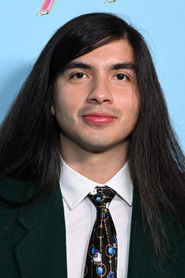
The accompanying voice-cast gallery uses six verified TMDB records and RecapRush person-profile links: Piper Curda — Mabel, Bobby Moynihan — King George, Jon Hamm — Mayor Jerry Generazzo, Kathy Najimy — Dr. Sam, Dave Franco — Insect King, and Eduardo Franco — Loaf. These are credited voice roles, with actor portraits rather than pictures of the characters.
Curda’s Mabel must make conviction, anger, and embarrassment feel like aspects of one person. Moynihan’s George supplies an appealing openness that becomes more meaningful once it can be wounded. Hamm’s Jerry gives the civic dispute a personal target, while Najimy’s Sam represents the anxious responsibility attached to an invention that can outrun its intended purpose.
Dave Franco voices the character identified in the story as Titus; the gallery retains TMDB’s credited label, Insect King. Eduardo Franco’s Loaf gives the animal world an unhurried counterpoint to Mabel’s determination. The selected gallery is not a complete credits list: the ensemble also includes Meryl Streep as the Insect Queen and Karen Huie as Grandma Tanaka, among other performers verified in Disney’s character and cast material.
Ending Explained
Why do the beavers destroy their own dam?
The released water stops the fire threatening the forest and town. George chooses to lose a structure his community depends on in order to protect a larger community.
More from RecapRush
 Clayface (2026) Recap & Ending Explained: Why Matt’s Last Love Scene Is His Cruelest Performance
 Casablanca (1942) Recap & Ending Explained: Why Rick Lets Ilsa Go
 Tazza: The Song of Beelzebub (2026): When Your Best Friend Becomes the House You Cannot Beat
Our reading is that this gives the film’s cooperation theme a material cost. A slogan about sharing is easy to repeat when nobody has to relinquish anything. George commits to it when keeping his own refuge intact would leave others exposed.
Does George survive?
Yes. The final meeting with Mabel establishes that he is alive and that their friendship continues. His sacrifice is the dam and its security, not a confirmed death followed by an imagined reunion.
Why does removing the robot’s face stop Titus?
The stolen human appearance is needed to unlock Jerry’s phone. Removing it breaks the link between the disguise and the device’s authentication. The grotesque visual reveal also strips away the reassuring public identity Titus has borrowed.
That combination makes the moment unusually effective: a mechanical limitation and an emotional exposure happen together. The film does not need the robot to look frightening merely for atmosphere; its false surface has been part of the plan.
Does the ending say Mabel was wrong to defend the glade?
No. The freeway is rerouted and the habitat receives protection. Her objective is vindicated while her methods are challenged.
RecapRush reads her growth as an enlargement of responsibility. She learns to consider the agency and safety of the people and animals she recruits. That allows the film to criticize her conduct without asking her to stop caring.
What does the final phone conversation mean?
It keeps communication possible after the extraordinary technology is gone. The bond now survives an inconvenience that neither can simply wish away.
The rock also places George within the emotional geography of Mabel’s life. We read the new friendship as an extension of her grandmother’s lesson in attention, not a replacement for her grandmother or evidence that grief has been completed.

RecapRush Interpretation
The following is our interpretation, not a new plot revelation or a claim about the director’s unspoken intentions. Mabel wants the glade to remain because it is ecologically valuable and because it holds a relationship she cannot recover elsewhere. Those reasons support each other until fear makes her confuse protecting a place with controlling everything that happens around it.
Hopping gives her the exhilarating sensation of finally being inside the conversation. She assumes that understanding words will give her the authority she lacked outside it. The Animal Council exposes the weakness in that assumption. Other beings can understand the problem and choose an answer she finds horrifying.
The film’s emotional movement, for us, is from access to obligation. Once Mabel can reach people, what does she owe them? Listening has consequences. It requires more than gathering allies who will advance a preferred outcome.
George’s eventual help is therefore especially valuable. It is given after the possibility of betrayal has become visible. His generosity is not proof that trust can never be misplaced. It is a choice to keep responding to someone as more than her worst decision.
Deep Analysis & Key Themes
Grief makes an ecological argument feel like a personal emergency
Mabel’s attachment to the glade gives her campaign a specificity beyond an abstract affection for nature. The rock, the shared stillness, and her grandmother’s presence in her memory all explain why delay feels unbearable.
That urgency is emotionally credible without becoming a universal excuse. Other creatures actually live in the habitat she wants to preserve. They cannot be reduced to symbols of her private loss. Our reading is that the adventure forces Mabel to acknowledge the living world’s independence from the memories she carries into it.
She ends with a relationship that requires adaptation. That is a more generous outcome than freezing the landscape into a monument to the past.
The robot creates an uneven version of empathy
Mabel can hear animal speech through the machine, but she does not share every animal sensation. The sound device makes that limitation concrete: the noise affects the real wildlife differently from her robotic body.
This is a particularly useful science-fiction idea. A tool can extend perception while preserving blind spots. Mabel’s new access is powerful, and still incomplete.
The moral problem is not solved by the invention functioning as designed. It remains her responsibility to understand what it does not let her experience. Technology supplies a viewpoint; it does not guarantee humility about that viewpoint.
George’s kindness is a form of work
George’s habit of learning names may initially look like a comic detail in a cheerful personality. It also describes how his leadership operates. A community is made from particular members whose existence must be noticed.
The contrast with Mabel’s urgency is productive. She tends to organize attention around a threat and an objective. George begins with the beings who have to live together before and after the crisis.
His trust has limits, and the film lets those limits matter. The friendship becomes richer when he can be hurt rather than serving as an endlessly available source of reassurance.
Predation complicates the pleasant picture
The Pond Rules place social generosity next to the practical fact of eating. The resulting jokes are startling because cooperation does not remove the food chain.
In our reading, that discomfort keeps the forest from becoming a projection of Mabel’s preferences. The animals are not simply human neighbors in fur costumes. Their community contains realities she has to encounter rather than approve in advance.
Titus’s abrupt fate returns to this comic grammar. His claim to supremacy does not release him from the ordinary vulnerabilities of his own body.
A face can authorize an action without earning trust
Titus treats a human appearance as a means of control. The rally crowd recognizes its mayor, and the phone is designed to recognize its owner. The false body exploits both expectations.
Mabel’s earlier disguise is less malicious, but it belongs to the same system of borrowed credibility. George has responded to a beaver who seems to be a fellow member of the animal world. Revealing the person inside changes what those interactions mean to him.
The two uses of hopping differ in intent and scale. Placing them in the same story nevertheless makes a pointed question available: when does access become impersonation, and what obligations follow from being believed?
The dam changes from a boundary into a gift
A dam collects and holds water. In the climax, its destruction releases that stored power toward a shared emergency. The physical action gives the ending a clear visual idea without requiring a speech to explain it.
We read the sequence as an argument about stewardship. Protecting a resource sometimes means using it for a purpose beyond preserving its present form. George can care deeply about what his community built and still choose the lives that its destruction can save.
This is also why the ending has more weight than a magical reset. Something useful is given up, and the survivors must participate in repair.
What Most Viewers Missed
Being able to translate is not the same as being able to persuade
The technology removes a language barrier. It leaves competing interests, fear, pride, and political judgment intact. The Council’s response is the clearest demonstration that Mabel’s problem cannot be solved through access alone.
The opposing disguises belong to the same invention
A human enters an animal body; an insect enters a human one. The reversal asks us to consider the power of the system independently of the intentions of its first sympathetic user.
The ending keeps practical work in view
Rerouting, legal protection, cleanup, and research assistance follow the spectacular rescue. Those outcomes matter because the fire’s defeat alone would not resolve the original habitat dispute.
The phone carries a continuing relationship
The device is used during the danger and remains useful in the final peace. It becomes a modest bridge between friends rather than a machine that eliminates all the differences between them.
Mid/Post-Credits
There are two verified extras. During the credits, the beaver, bear, and lizard play with the Jerry face mask. After the credits, ants deliver the older man’s groceries, paying off an earlier interaction in Mabel’s petition campaign. These are comic continuations of this story, not an established announcement of a sequel.
MediaStinger’s film-specific entry confirms both placements and the basic events. This guide does not confuse the Tom Lizard teaser attached to the earlier film Elio with Hoppers’ own credits scenes.
Final Thoughts
Hoppers gives its environmental adventure an unusually demanding emotional task. Mabel must keep the force of her concern while changing how she treats the people around her. George must extend cooperation beyond the point where it is comfortable.
The final friendship works because it retains a gap. Mabel and George still have to make an effort to communicate. Their connection is valuable enough to justify that effort, and the glade has become a place where remembering someone can lead to caring for someone new.
FAQ
Is Hoppers actually a 2026 release?
Yes. Its Los Angeles world premiere was February 23, 2026, followed by the US theatrical release on March 6. Disney’s official film page also identifies its June 3 Disney+ arrival. Earlier promotional material is not treated as an earlier film release.
Who voices Mabel, George, and Jerry?
Piper Curda voices Mabel, Bobby Moynihan voices King George, and Jon Hamm voices Mayor Jerry Generazzo.
Is Titus the final villain?
Yes. After the Insect Queen’s death, Titus takes power and uses a robotic mayor to pursue a mass attack. The original environmental conflict with Jerry develops into this larger threat.
Does Mabel remain a beaver?
No. The beaver is a robotic body she inhabits using the Hoppers program. She returns to human life, graduates, and continues her friendship with George using phone-assisted communication.
Do Mabel and Jerry become allies?
They cooperate against Titus and in the aftermath. Jerry changes the freeway route, and the glade is protected. Their cooperation resolves a practical conflict without making their earlier choices identical.
Does Hoppers have credits scenes?
Yes: a mid-credits mask joke and a post-credits grocery-delivery payoff. Both are described above with spoilers.
What is the runtime?
Approximately 1 hour 45 minutes. Disney lists 105 minutes; the current TMDB record lists 104. The small catalog discrepancy is preserved rather than silently presenting the figures as identical.
Join the conversation
What did you think of the ending? Share your interpretation. Spoilers may appear below.
This product uses the TMDB API but is not endorsed or certified by TMDB.
No comments yet. Start the conversation.