
RECAPRUSH MOVIE GUIDE
Tazza: The Song of Beelzebub (2026)
Directed by Choi Kook-hee
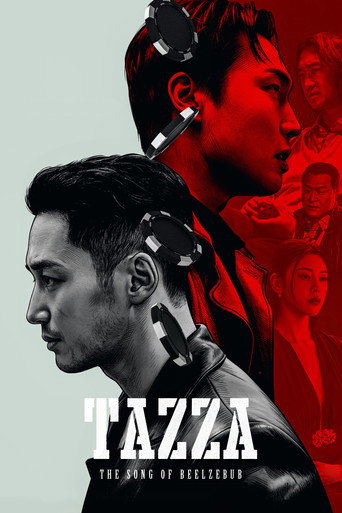
Jang Taeyoung, who believes he has everything after building a successful online casino business, loses it all to his former best friend and namesake, Park Taeyoung. The two reunite on the international poker circuit for a high-stakes battle of revenge.
Overview, poster, and credits from TMDB.
Read and watch our movie preview ↓FROM THE RECAPRUSH LIBRARY · MOVIE PREVIEW
Tazza: The Song of Beelzebub (2026): When Your Best Friend Becomes the House You Cannot Beat
12 min read · Estimated reading time— views
Intro + RecapRush Viewpoint
A stranger can take your money. A best friend can take the story you have been telling yourself about your life. That is the wound at the center of Tazza: The Song of Beelzebub: two men build a fortune together, then one decides that sharing success has become unbearable.
Choi Kook-hee's Korean crime drama stars Byun Yo-han as Jang Tae-young and Roh Jae-won as Park Tae-young. Their shared given name makes the rivalry unusually intimate. Each man is confronted by another possible version of himself, and the casino business gives that comparison a number that can always rise. What begins as partnership becomes a contest over who deserves to matter. [1, 2]
RecapRush viewpoint: the most interesting gamble here is emotional. Park cannot tolerate success that leaves Jang admired; Jang must decide what recovering his power is supposed to repair. A revenge game can settle an account without restoring a friendship.
Coverage note: this is a sourced story analysis and U.S. theatrical preview, not a firsthand review or a complete ending explanation. The film has already opened in South Korea; Well Go USA schedules its American release for October 16, 2026. The following guide discusses the official premise and limited early-story spoilers reported by published critics. It does not invent the final poker hand, character fates, or an unseen last scene. Information checked October 11, 2026. [1, 3]
Featured Image
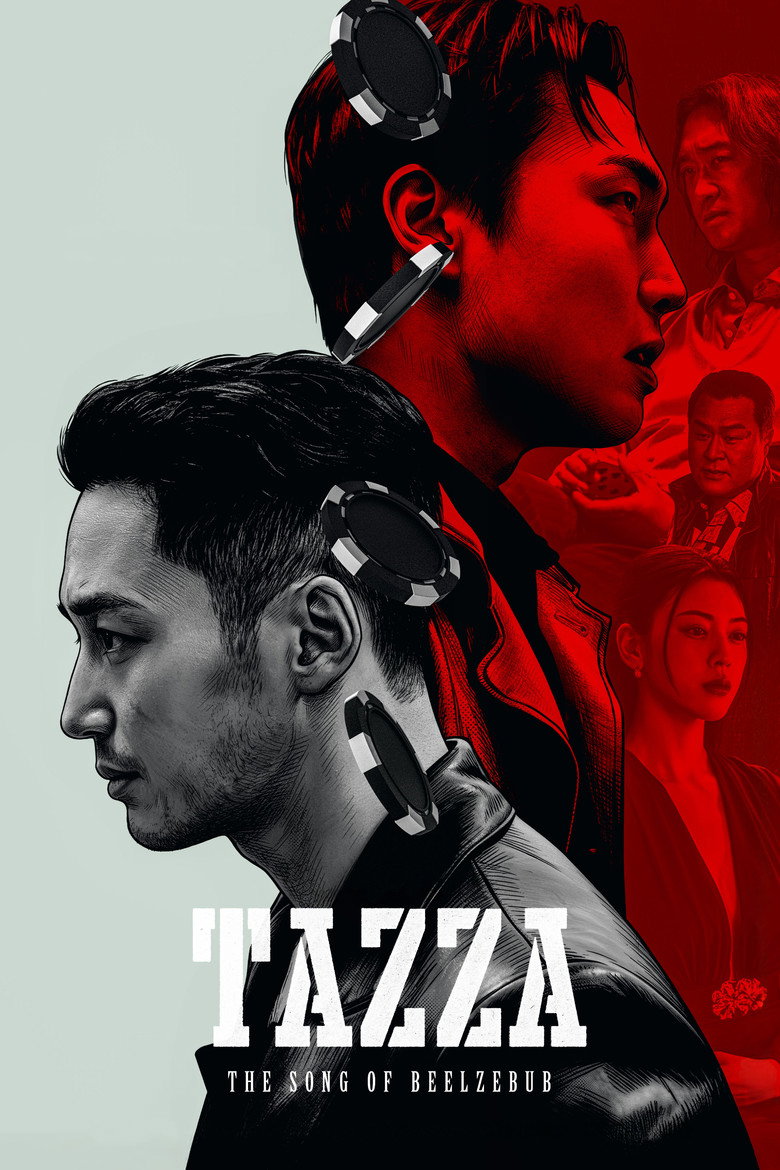
Table of Contents
Quick Facts
- Exact English title: Tazza: The Song of Beelzebub
- Korean title: 타짜: 벨제붑의 노래
- Release year: 2026
- Director: Choi Kook-hee
- Country / language: South Korea / Korean
- South Korean theatrical release: September 23, 2026
- U.S. theatrical release: October 16, 2026, through Well Go USA
- Runtime: 129 minutes in the U.S. distributor's listing; TMDB currently lists 130 minutes
- U.S. rating: NR in the distributor's listing
- TMDB genres: Crime, Drama
- TMDB movie ID: 1394740
- Franchise position: fourth feature installment, promoted as the series finale; a standalone story
- Article type: verified story analysis and U.S. preview with limited early-story spoilers
Release dates are territory-specific. The upcoming American opening does not mean that the film remains unreleased everywhere. The small runtime discrepancy is retained openly rather than silently treating the two listings as identical. [1, 3, 4]
Verified Story Guide
1. Two Tae-youngs build one business
Jang and Park have been friends since school and become successful online-casino partners. The official CJ ENM synopsis contrasts Jang's extraordinary luck and appeal with Park's intelligence and effort. As their venture grows, Jang receives the attention that Park wants. [2]
That arrangement gives the story a sharper conflict than a simple disagreement about profit. A business can divide ownership on paper. It cannot divide admiration with the same precision. For RecapRush, the premise suggests that Park experiences visibility as a resource being taken from him, even while both partners are succeeding.
2. Comparison becomes betrayal
CJ ENM identifies jealousy as the force behind Park's betrayal during a Vietnam business trip. Jang survives the attempt to destroy him, turning the broken partnership into a revenge story. [2]
The distinction matters: this is not an unlucky deal that accidentally damages a friendship. Someone chooses to make a friend's disappearance useful. The shared business history therefore becomes evidence of what has been violated, rather than a warm memory the characters can easily recover.
3. Survival precedes the comeback
Early-story spoiler: Paul Bramhall's City on Fire review describes a brutal opening involving Jang's captivity on a ship near Vietnam and an extraordinary coin toss. It also reports that he later encounters a gambling master played by Jo Woo-jin. [5]
Those details establish a change of scale: the entrepreneur who once benefited from fortune must survive circumstances in which other people control the rules. The coin image is especially useful to the premise's moral tension. Surviving an improbable event may give Jang a second chance, but a second chance does not specify what he should do with it.
4. A teacher and a larger gambling world
Indonesia's Film Censorship Institution identifies Jo Woo-jin's character as the legendary player Kwak Dong-wook, who teaches Jang poker. Its synopsis also places Kaneko, played by Ayaka Miyoshi, within the international game that brings the two former friends together. [6]
A teacher introduces something luck cannot supply by itself: repeatable knowledge. RecapRush's reading is that the comeback premise gains weight when Jang has to acquire a discipline rather than simply wait for another fortunate turn. Learning to read opponents can become a way of recognizing the betrayal he failed to read in ordinary life.
5. The confrontation is verified; its exact outcome is not
The official U.S. synopsis confirms that Jang and Park reunite on the international poker circuit for a revenge showdown. It does not reveal the deciding cards or the final fate of either man. [1]
This guide stops at that boundary. A familiar revenge structure is not evidence for a particular ending. Nor should the source comic's resolution be substituted for the film's final sequence. The useful question to carry into the screening is what each man thinks winning would prove—and whether the same victory could ever satisfy both of them.
Cast + TMDB
Cast and Characters









The TMDB portrait gallery on this detail page supplies credited names, roles, and links to RecapRush actor profiles. The principal records include Byun Yo-han as Jang Taeyoung, Roh Jae-won as Park Taeyoung, Ayaka Miyoshi as Kaneko, Jo Woo-jin as Kwak Dongwook, Yoon Kyung-ho as Cho Joonghwan, and Swings as Abraham. Romanization varies between distributors and databases; these spellings follow the credited TMDB records. [4]
Explore the exact film on TMDB. This is the 2026 fourth feature, not Tazza: The High Rollers, The Hidden Card, or One Eyed Jack.
Ending: What Is Verified
The available official material establishes a confrontation driven by betrayal and revenge. It does not establish the final hand, the survival of every participant, or the precise meaning of the last image. This article therefore does not claim to explain those events.
Cinejin's published review discusses Park's contradiction near the conclusion: resentment of Jang's luck develops into a desire to possess it. That is a critic's description of the film's thematic movement, not a sufficiently detailed record from which to reconstruct the entire finale. [7]
The distinction preserves a useful interpretive question. Does Park want justice, or does he want to become the person whose advantages he resents? If his desired result is to inherit Jang's exceptional position, then his objection has ceased to be about fairness. RecapRush reads that possibility as the rivalry's deepest trap: the man protesting an unequal game may ultimately want its inequality to favor him.
More from RecapRush
 Doctor Strange (2016) Recap & Ending Explained: Why Surrender Is Stephen's Winning Move
 Severance Season 2 Recap & Ending Explained: Why Mark Chooses Helly Over Gemma
 Klara and the Sun (2026) Recap & Ending Explained: Why Josie’s Goodbye Is Not Proof of a Cure
RecapRush Interpretation
The two Tae-youngs can be read as competing explanations of success. Jang's luck threatens Park's belief that effort should make life legible. Park's response threatens Jang's belief that intimacy makes other people trustworthy. Each man's worldview becomes fragile in the presence of the other.
This is why money alone seems an inadequate measure of the stakes. Taking the business could give Park wealth without giving him the ease he associates with Jang. Winning a revenge contest could give Jang control without returning the years in which he trusted Park. A poker table is an efficient place to resolve possession. It is a much less reliable place to resolve identity.
That analysis follows the verified setup. It is RecapRush's interpretation, not a claim that the director has endorsed every part of this reading.
Deep Analysis & Key Themes
Park: when effort becomes a moral entitlement
An intelligent, hardworking person can recognize genuine unfairness and still make destructive choices. Park's danger is not that he values effort. It is that another person's good fortune becomes proof that his own life has been wronged.
From that perspective, friendship becomes a daily comparison exercise. Appreciation is converted into accounting: whose achievement was noticed, whose charm opened a door, whose contribution went uncelebrated? Once every shared success is processed as evidence against him, even prosperity can deepen his resentment. His betrayal then seeks to eliminate the comparison rather than change his relationship to it.
Jang: survival does not restore trust
The revenge setup creates a practical mission, but the psychological problem is less straightforward. Someone Jang knew for years has reinterpreted their history as competition. Returning to the game requires confronting the possibility that affection and resentment occupied the same relationship all along.
The mentor premise offers an interesting counterpoint. Jang must accept help after trust has nearly killed him. That makes learning potentially more than a route to superior cards: it can also ask whether he can distinguish a new relationship from the one that betrayed him. This is a question raised by the setup, not a prediction of his eventual emotional resolution.
Poker makes hidden intentions public, briefly
In his September 23 Cine21 interview, Choi Kook-hee says the games were designed with professional poker players, including distinct betting tendencies. He also explains the extensive use of close-ups to make emotion readable to viewers unfamiliar with the rules. [8]
RecapRush's interpretation is that a face becomes a second playing surface. The cards give numerical possibilities; expressions give unstable human information. Someone can make a strategically sound decision for an emotionally disastrous reason. That gap is what makes the rivalry interesting even to readers who have never played hold'em.
Luck can explain a result without excusing a choice
The premise puts chance and effort in conflict, but neither concept removes responsibility. Being fortunate does not make Jang invulnerable. Feeling disadvantaged does not make Park's betrayal inevitable.
This gives the story a useful ethical distinction: people do not choose every condition of their lives, but they still participate in shaping what happens next. Park's envy may be understandable without becoming a defense. Likewise, Jang's survival can be extraordinary without proving that every action he takes afterward is wise.
The poster turns comparison into composition
The featured artwork presents the two central men facing away from each other, separated through color and direction while occupying the same image. Floating chips connect their portraits to the game. This is an observation about the inspected poster, not a description of a film scene.
For RecapRush, the design condenses the premise effectively: the men are visually linked even when their attention moves in opposite directions. A rivalry can sever cooperation while leaving both people intensely defined by one another.
What Most Viewers Missed
- The same name is part of the premise's pressure. It encourages comparison before either man becomes an opponent at the final table.
- The online-casino partnership matters. The men begin by running a gambling business together; their later rivalry turns that shared arena against them.
- Standalone does not mean disconnected from the series' concerns. A new cast and story can still revisit desire, apprenticeship, deception, and the price of winning.
- Close-ups have a stated practical purpose. The director wanted emotion to communicate the stakes even when a viewer cannot calculate the poker hand. [8]
- The U.S. date is not the worldwide premiere. The American October 16 opening follows the South Korean release. [1, 3]
Mid/Post-Credits
Cinejin's September 12 screening review reports that there is no additional “cookie” scene after the main feature. This is a sourced screening report, not a claim that RecapRush has independently inspected every territorial version. [7]
Final Thoughts
Tazza: The Song of Beelzebub offers an accessible entry point into a long-running Korean film series: a new story, two former friends, and a game whose emotional meaning is clear before every rule is understood. Its appeal lies in the collision between an external contest and an internal grievance.
For the U.S. opening, the question worth carrying into the theater is not simply who gets the money. It is what each man has asked money, luck, and revenge to prove about himself. A winning hand may end the contest. Whether it can end the comparison is the more interesting problem.
FAQ
Is Tazza: The Song of Beelzebub a 2026 movie?
Yes. The verified TMDB record identifies the release as September 23, 2026. The U.S. distributor lists October 16, 2026. [1, 4]
Must I watch the previous Tazza films first?
No. Published coverage identifies this installment as a standalone story. Familiarity with the franchise adds context but is not required to follow these characters. [3]
Who are Jang and Park Tae-young?
They are former best friends and online-casino business partners, played by Byun Yo-han and Roh Jae-won respectively. Park betrays Jang; their reunion becomes a revenge contest. [1, 2]
Is it a supernatural horror movie?
Its verified genres are Crime and Drama. The Beelzebub title should not be mistaken for a promise that this is a demon-possession film. [1, 4]
How long is the film?
Well Go USA lists 129 minutes. TMDB currently lists 130 minutes. [1, 4]
Does this article reveal the complete ending?
No. It provides verified story setup, limited early-story spoilers, sourced production context, and labeled analysis. The exact final hand and final character fates are not reconstructed from incomplete sources.
Where is the official trailer?
The linked English-subtitled U.S. trailer is published by Well Go USA Entertainment. [1]
Join the conversation
What did you think of the ending? Share your interpretation. Spoilers may appear below.
This product uses the TMDB API but is not endorsed or certified by TMDB.
No comments yet. Start the conversation.