RECAPRUSH MOVIE GUIDE
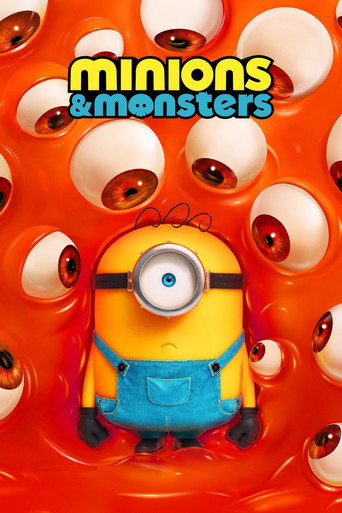
Minions & Monsters (2026)
Directed by Pierre Coffin
This is the rambunctious, ridiculous and totally true story of how the Minions conquered Hollywood, became movie stars, lost everything, unleashed monsters onto the world and then banded together to try and save the planet from the mayhem they had just created.
Overview, poster, and credits from TMDB.
Read and watch our full recap ↓FROM THE RECAPRUSH LIBRARY · FULL RECAP
Minions & Monsters (2026) Recap & Ending Explained: Why the Final Camera Pullback Changes James’s Victory
13 min read · Estimated reading time— views
Intro + RecapRush Viewpoint
Imagine finally finding a place where everyone laughs at your jokes—and then learning that your voice makes you unemployable. That is the surprisingly sharp wound beneath the banana-colored chaos of Minions & Monsters. Hollywood welcomes these creatures as moving bodies, then rejects them when movies start demanding intelligible dialogue.
James responds by trying to make a film himself. His solution is gloriously ill-advised: if a monster picture needs monsters, why settle for pretend ones? The resulting disaster gives Pierre Coffin’s 2026 animated comedy its spectacle, but the more interesting question is what James actually wants. Applause? A job? Or the freedom to turn his imagination into something other people can share?
RecapRush viewpoint: the film’s strongest idea is the movement from serving a master to making something with friends. Its final reveal complicates that movement in an enjoyable way. Even the story we have accepted as an account of James’s success turns out to be part of his filmmaking. The joke invites us to admire the construction as well as the adventure.
Full spoilers follow, including the monster scheme, the rescue, the final framing twist, and credits extras. This guide covers the released feature, not an upcoming preview.
Featured Image

Table of Contents
Quick Facts
- Film: Minions & Monsters (2026)
- Director: Pierre Coffin
- Writers: Pierre Coffin and Brian Lynch
- Production / U.S. distribution: Illumination / Universal Pictures
- Earliest verified premiere: June 21, 2026, at Annecy; this is separate from the U.S. commercial opening.
- U.S. theatrical release: July 1, 2026
- Runtime: 90 minutes in the released-film TMDB and Peacock catalogs. The Annecy event page lists 85 minutes for its festival screening.
- Verified TMDB genres: Adventure, Animation, Comedy, Family, Fantasy
- TMDB movie identity: 1315772
- Story setting: Hollywood during the transition from silent pictures to sound, with a new tribe of Minions.
- Availability note, checked October 27, 2026: Peacock advertises an October 28 streaming debut. That advertised date should not be confused with the film’s July theatrical release.
Full Spoiler Recap
1. A museum promises to explain two unlikely legends
Olivia introduces visitors to the history of James and Henry. The museum framing gives the coming nonsense an air of authority: we seem to be hearing how celebrated figures earned their place in film history.
The earlier story follows another Minion tribe searching for villains to serve. James prefers drawing and storytelling; Henry and Ed become his allies. Their disastrous employment with a sorcerer leaves them with a spellbook after an accidentally summoned creature destroys their master.
2. A mistaken robbery becomes an accidental audition
The tribe pursues an apparent outlaw, hoping to find its next boss. It has actually interrupted a movie shoot. Director Max initially sees wreckage; studio chiefs Frank and Elwood see an attraction audiences might enjoy.
The difference matters. The Minions have not planned a screen career. People with access to the screen discover that their disorder can sell tickets. Silent-film success follows, along with the pleasures and excesses of celebrity.

3. Sound arrives, and the stars become a liability
The talkies expose a commercial problem: the Minions speak Minionese. Their earlier success does not protect them from dismissal when the studio’s needs change.
Dick leads most of the tribe back toward the familiar search for a master. James chooses filmmaking instead. Henry and Ed remain with him, while Max offers encouragement and a camera. Their little production begins with friendship and equipment rather than institutional approval.
4. Goomi offers exactly the help James wants
Using the spellbook, the trio summons Goomi, a small creature whose size hardly promises an imposing screen villain. He offers access to larger monsters, bringing them to Howard and Phillips.
James thinks he is assembling a cast. Goomi has another project: release Irene, a gigantic destructive creature, and take revenge on humanity. Henry discovers the plan and is captured. His intended sacrifice is presented to James as a filmmaking requirement.

5. The other Minions discover a different kind of distraction
Meanwhile, Dick’s group attaches itself to Dort, an alien robot with ambitions to conquer Earth. Romance complicates those ambitions when Dort falls for Debbie, a women’s rights activist.
The two storylines mirror each other: one would-be filmmaker recruits creatures he misunderstands, while the aspiring conqueror develops attachments his original plan cannot comfortably accommodate. Their paths converge when Irene’s arrival turns private ambitions into a public emergency.
6. The production becomes a rescue operation
Irene breaks loose. Henry is swallowed, and James goes inside the creature to save him. The danger is no longer something James can organize for a camera; his friend needs him to act.
Attempts to stop Irene prove inadequate. Dort ultimately returns with the Minions in spacecraft, and their attack destroys her. James and Henry use the book to banish Goomi, Howard, and Phillips. The rescue depends on the separated groups coming back together.
7. Ed’s camera turns the catastrophe into a completed film
Ed has kept recording. The surviving footage lets the team finish its movie, which wins an enthusiastic audience. James receives a golden banana award—a comic version of Hollywood’s highest recognition.
Then the framing shifts again. Olivia’s museum presentation is also part of a movie. The final pullback reveals the characters as performers on a set, including figures we had treated as actual threats. James and Henry have authored a larger piece of entertainment than we initially understood.
Cast + TMDB
Cast and Characters




The accompanying gallery uses six credited TMDB voice-cast records, actor portraits, and RecapRush person-profile links. Pierre Coffin is credited as The Minions, Trey Parker as Goomi, Christoph Waltz as Max, Allison Janney as Olivia, Jesse Eisenberg as Dort, and Jeff Bridges as Frank / Elwood. These labels retain the database’s credited roles rather than inventing separate character records.
The ensemble gives the film several kinds of authority to play against: the director, the studio bosses, the narrator, the apparent helper, and the would-be planetary ruler. None has a completely secure grip on the story. The selected portrait gallery is not the entire cast; the verified ensemble also includes Zoey Deutch as Debbie, Bobby Moynihan as Phillips, and Phil LaMarr as Howard.
Ending Explained
How do the Minions stop the monsters?
Irene is defeated by the spacecraft intervention involving Dort and the reunited Minions. Goomi and his two allies are dealt with through the spellbook. The film gives the immediate adventure a resolved outcome before changing how we understand its presentation.
Is the whole adventure a movie within a movie?
Yes. The last reveal includes the museum frame, not merely the monster action James has been filming. Characters appear together as performers, dissolving the earlier distinction between Olivia’s supposedly dependable historical account and the extravagant story inside it.
That does not mean James was dreaming. The supported explanation is a staged production within the Minions’ fictional world. Nor does the reveal establish that every incidental detail is a literal historical event in franchise continuity. It deliberately loosens that claim.
More from RecapRush
 South Park Season 29 (2026): Kenny’s Death, Butters’ Revolt and the Cost of Calling It Progress
 Get Out (2017) Movie Recap & Ending Explained: What Is the Sunken Place?
 The Searchers (1956) Recap & Ending Explained: Why Ethan Saves Debbie but Stays Outside
Does the twist cancel James’s achievement?
Our interpretation: it enlarges his achievement. His success is no longer limited to finishing the movie described by the plot. He and Henry have helped create the very experience we have been watching.
There is a cost, too: a viewer invested primarily in literal peril may feel the rug move beneath the rescue. The ending trades some of that danger for a filmmaking joke. Whether that trade feels delightful or evasive depends on what you wanted the climax to settle.
RecapRush Interpretation
We read this as a comedy about changing your relationship to authority. A henchman asks whom to obey. A filmmaker must decide what to show—and accept responsibility for the consequences of those decisions.
James has learned the first half of that lesson before he learns the second. Wanting a creative life does not automatically give him good judgment. A useful collaborator can flatter a project while quietly using it. The distinction between imagination and wishful thinking becomes the story’s pressure point.
Henry and Ed offer a healthier model of collaboration. Their value is not that they can confer status on James. They remain involved when status has disappeared. The emotional payoff therefore belongs to a small working friendship as much as to any award.
This is RecapRush’s reading of the film, not a claim about Coffin’s stated intention.
Deep Analysis & Key Themes
Being marketable is different from being understood
The silent-to-sound transition makes an unusually apt obstacle for these characters. A change in presentation can make the same performer look newly valuable or suddenly obsolete. Their bodies have not stopped being expressive; the institution has changed its test.
That is why the loss of fame has more bite than a simple punishment for vanity. The Minions discover that acceptance can be conditional. James’s turn toward authorship is appealing because it seeks a space where his abilities can determine the form, instead of submitting endlessly to someone else’s form.
Friendship becomes an alternative production system
The camera still requires people around it. The fantasy of a lone genius cannot explain a film assembled by friends, witnesses, and returning allies. James supplies an ambition; other characters supply trust, labor, and capacities he lacks.
Ed is especially useful to this reading. A person behind the apparatus can be narratively decisive without commanding every conversation. The film’s interest in expression also makes his use of sign language worth noticing on its own terms. Communication is larger than the studio’s narrow demand for conventional dialogue.
Small and cute are unreliable measures of danger
Goomi’s scale encourages the wrong assessment. In animation, a rounded or miniature design can make a character seem manageable before the story has supplied evidence of trustworthiness. The gap between appearance and purpose produces the joke—and the vulnerability he exploits.
The reverse is available too. A frightening design need not permanently determine a creature’s relationship to others. The film keeps allowing behavior and context to disrupt the first impression an image creates.
Animation makes the movie machinery visible
The inspected stills move between candlelit fantasy, exaggerated wealth, and old-fashioned filmmaking equipment. Those environments can share the same elastic character bodies while suggesting very different kinds of performance.
The camera is a particularly good object to place beside a Minion. Its bulk makes the act of recording physical and faintly ridiculous. Behind the comic mismatch lies a serious question: who gets to point the machine? The concluding change of frame answers that question by giving these habitual background figures control over the foreground.

What Most Viewers Missed
These are details worth revisiting, rather than claims about what audiences statistically noticed.
- The narrator is part of the trick. A museum usually suggests settled knowledge. Reframing that space asks us to reconsider the packaging of a story, not just its events.
- The central change is a change of job. Moving from henchman to filmmaker changes who gets to choose the objective. That is a more substantial transformation than acquiring celebrity.
- Recording and directing are separate contributions. Ed’s work reminds us that an idea needs to survive outside its creator’s imagination to become a movie.
- The reward is deliberately Minion-shaped. A golden banana makes Hollywood prestige legible in the characters’ own comic vocabulary. Their success need not erase their difference.
- The final reveal is also a reunion. Seeing supposed enemies as fellow performers allows the story to end in cooperation at another level, beyond the alliance that resolves its action plot.
Mid/Post-Credits
There are extras during the credits. A playful fictional credits sequence recognizes the Minion filmmakers, and subsequent spellbook gags connect the film to familiar Despicable Me characters. They include Kyle’s transformation, magical trouble for Dr. Nefario, and Bob and Agnes’s encounter with the large pink rabbit creature.
The credits specialist What’s After the Credits and The Express Tribune distinguish these rolling-credits extras from an additional scene after the credits finish; both report no separate post-credits scene. The magic is used for comic franchise connections here. A specific future sequel plot should not be treated as confirmed by these gags.
Final Thoughts
The most satisfying thing about Minions & Monsters is that its little creatures want to do something with their expressive chaos. Hollywood first discovers them, then discards them, but neither response has to be the final definition of what they can make.
For RecapRush, the film works best when its spectacle serves that tension between dependence and authorship. The final pullback is a cheeky farewell: we have spent a movie watching unlikely artists find a voice, only to discover that they have been shaping our view all along.
FAQ
Is this a released 2026 film?
Yes. The verified Annecy premiere was June 21, 2026, followed by the July 1 U.S. theatrical opening. Its first verified release is in 2026, not a later U.S. release of a 2025 film.
Are James, Henry, and Ed the same trio as Kevin, Stuart, and Bob?
No. The main story introduces another Minion group. Familiar franchise characters appear in the credits material.
Who is the main villain?
Goomi manipulates the filmmaking plan to release Irene. His apparent usefulness hides a destructive agenda involving Howard and Phillips.
Do James and Henry survive?
Yes. They reach the successful filmmaking conclusion, and the final framing reveal presents the adventure as a production rather than a literal account of the cast’s deaths.
Is this a documentary about silent Hollywood?
No. The film uses the move to sound as a comic premise. Its magical events, exaggerated history, and final staging reveal belong to fiction.
When does it arrive on Peacock?
The official Peacock page advertises October 28, 2026, as checked on October 27. Release timing and availability can vary by territory; this guide does not claim it is already streaming there before that date.
Join the conversation
What did you think of the ending? Share your interpretation. Spoilers may appear below.
This product uses the TMDB API but is not endorsed or certified by TMDB.
No comments yet. Start the conversation.