

RECAPRUSH TV GUIDE
MINDHUNTER (2017)
An agent in the FBI's Elite Serial Crime Unit develops profiling techniques as he pursues notorious serial killers and rapists.
Overview, poster, and credits from TMDB.
Read and watch our full series recap ↓FROM THE RECAPRUSH LIBRARY · FULL SERIES RECAP
MINDHUNTER (2017–2019) Recap & Ending Explained: Why Closing Atlanta Solves Nothing
16 min read · Estimated reading time— views
The most unsettling idea in MINDHUNTER is not that murderers are unknowable monsters. It is that they can be patient, ordinary, articulate—and willing to explain themselves to anyone vain enough to believe understanding means control. Across two seasons, FBI agents Holden Ford and Bill Tench, joined by psychologist Wendy Carr, build the language of criminal profiling. Every breakthrough also exposes a danger: a theory can illuminate behavior, but institutions may turn it into certainty long before the evidence is ready.
RecapRush viewpoint: MINDHUNTER makes procedure feel like psychological horror. Its ending refuses the satisfaction of a solved television case because the Atlanta investigation, Bill's collapsing family, Holden's unchecked certainty, and the recurring BTK glimpses all prove the same point: naming a pattern is not the same as containing it.
> Spoiler warning: This article reveals both seasons, the Atlanta investigation, the Tench family story, Holden's breakdown, and the final BTK sequence.
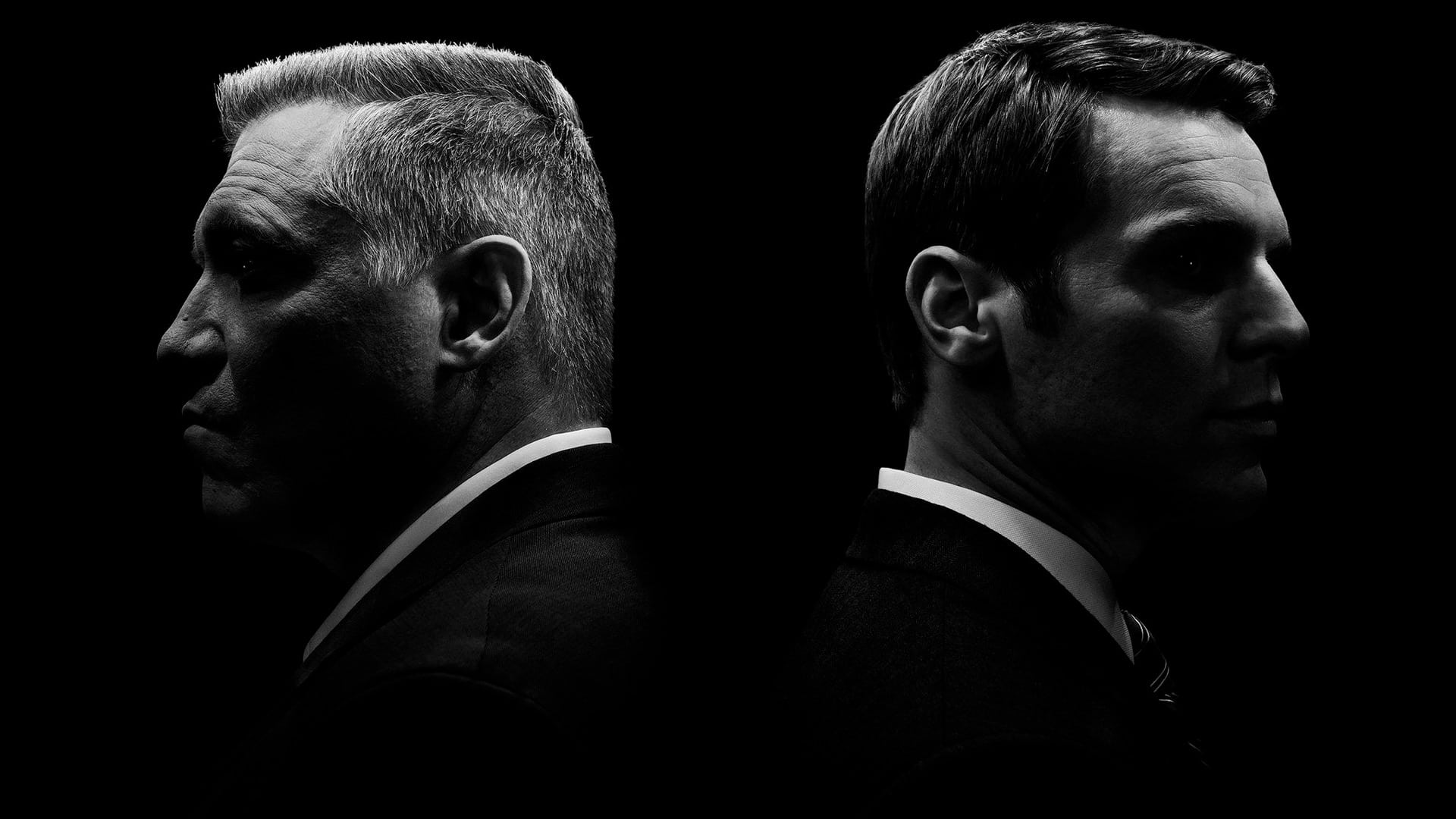
Table of Contents
Quick Facts
- Title: MINDHUNTER
- Original run: 2017–2019
- Seasons / episodes: 2 seasons, 19 episodes
- Genres: Drama, Crime
- Creator: Joe Penhall
- Principal cast: Jonathan Groff, Holt McCallany, Anna Torv, and Stacey Roca
- Based on: Mindhunter: Inside the FBI's Elite Serial Crime Unit by John E. Douglas and Mark Olshaker
- TMDB TV ID: 67744
- Article type: Full series spoiler recap and ending explanation
Full Spoiler Recap
1. Holden asks why the old rules no longer work
In 1977, FBI hostage negotiator Holden Ford follows Bureau procedure during a standoff, but the armed man kills himself. Although no hostage dies, Holden is disturbed by a system that calls the outcome successful without understanding the person at its center. Transferred to teaching at Quantico, he becomes fascinated by crimes without traditional motives and by the possibility that psychology might explain apparently senseless violence.
Holden meets sociology graduate student Debbie Mitford, whose ideas challenge his institutional assumptions. He also joins veteran agent Bill Tench on training visits to local police departments. Bill values experience, hierarchy, and practical restraint. Holden keeps asking questions that embarrass traditional law enforcement but occasionally reveal what the old vocabulary cannot describe.
The pair begin visiting imprisoned killers without formal permission. Their most important early subject is Edmund Kemper, the intelligent and unnervingly courteous “Co-ed Killer.” Kemper recognizes Holden's hunger to understand and feeds it. The interviews offer genuine information about fantasy, escalation, family resentment, and the emotional rituals surrounding murder. They also flatter Holden into believing he has a special connection with the men he studies.
2. The basement project becomes the Behavioral Science Unit
Holden and Bill's interviews attract academic support from Dr. Wendy Carr. She insists that anecdotes must become structured research: questions should be consistent, responses coded, and conclusions tested. Their unofficial conversations begin evolving into a legitimate FBI program.
The team applies its developing ideas to local cases. Holden's insights can be startlingly effective, particularly when he identifies the role fantasy and personal history play in apparently motiveless crimes. Yet his method depends on performance. He mirrors killers' language, provokes them, and sometimes crosses ethical lines to keep them talking.
That tension becomes dangerous during the investigation of principal Roger Wade, whose disturbing behavior around schoolchildren is not a charged crime. Holden treats his intuition as sufficient proof of future danger. The institution removes Wade, but the case leaves an unresolved question: has Holden prevented harm, or used a speculative framework to destroy a man's life?
3. Richard Speck exposes the cost of Holden's performance
During an interview with mass murderer Richard Speck, Holden uses vulgar language and invents an obscene story to provoke a response. The tactic works, but a transcript exposes how far he departed from approved procedure. Agent Gregg Smith, added to the unit partly as institutional oversight, forwards the unedited material.
An internal investigation follows. Holden becomes defensive and increasingly certain that results justify whatever he does to obtain them. Bill and Wendy understand the value of the work but recognize that Holden's ego threatens it. The unit survives, yet trust inside the basement fractures.
Holden's personal life deteriorates at the same time. Debbie sees that his ability to imitate manipulative men is changing him. He ends their relationship before she can, framing rejection as another situation he can control.
4. Kemper turns understanding into a threat
When Kemper attempts suicide, Holden visits him alone in the hospital. Kemper confronts him about their relationship, physically embraces him, and makes clear how vulnerable Holden is in the room. Holden escapes and suffers a panic attack.
The moment ends Season 1 by reversing the power Holden imagined he possessed. The interviews were never emotionally neutral. Kemper had been studying Holden too. Holden's body recognizes the danger his intellect kept converting into professional excitement.
Throughout the season, brief scenes also follow a quiet ADT employee in Kansas. Viewers gradually understand that he is Dennis Rader, the BTK killer. While the FBI develops its new science, Rader continues living an outwardly ordinary life. His presence warns that the team's theories are developing far from the crimes they will eventually need to stop.
5. Season 2 begins with a promotion and a concealed weakness
New leadership embraces the Behavioral Science Unit, but Holden's panic attacks are hidden to protect the program. Bill and Wendy agree to monitor him. The arrangement repeats the institution's central habit: uncomfortable information is managed privately when public disclosure might threaten prestige.
The unit interviews David Berkowitz, the “Son of Sam,” who admits that his story about demonic commands was a fabrication. The revelation supports the team's belief that offenders construct narratives for police, courts, and the press. They also interview Charles Manson and Tex Watson. Manson performs celebrity and refuses responsibility, while Watson describes how group pressure and ideology helped produce violence.
These interviews enrich the research, but the season increasingly asks whether retrospective explanations can help with an active crisis.
6. Bill's professional theories enter his home
Bill and Nancy Tench learn that their adopted son Brian was present when older boys killed a toddler in a vacant house Nancy was selling. Brian did not commit the killing, but he suggested placing the body on a cross, apparently believing the act might bring the child back to life.
The case terrifies Bill because it resists the categories he teaches. Brian is young, largely silent, and impossible to interview like the adult offenders in the unit's files. Bill wants to protect his son while also watching for signs that professional experience has trained him to fear.
Nancy faces suspicion from neighbors and scrutiny from social services. Bill repeatedly leaves for work, promising to return and then being pulled away by the next interview or investigation. His absence is understandable and still destructive. He can analyze distant families with precision while failing to remain emotionally present in his own.
7. Wendy's authority remains conditional
Wendy begins interviewing offenders herself and forms a relationship with bartender Kay. At work, she is valued for giving the project academic credibility, but leadership increasingly pushes her away from field interviews and toward analysis. Her sexuality must remain guarded inside the Bureau's culture, and Gregg mistakes a personal disclosure used during an interview for mere technique.
Her relationship with Kay also exposes Wendy's habit of turning emotion into observation. When she hears Kay minimizing their relationship while speaking to her ex-husband, Wendy leaves. The choice is self-protective, but it also mirrors the controlled distance she maintains at work. She can identify power imbalances with clinical clarity while struggling to tolerate the vulnerability required to negotiate one.
8. The Atlanta child murders challenge Holden's profile
In Atlanta, mothers of missing and murdered Black children approach Holden for help. Their persistence forces federal attention onto a growing crisis. Holden predicts that the killer is likely a Black man because a white offender moving through the affected neighborhoods with Black children would attract notice. The profile is operationally useful but politically explosive.
Atlanta officials fear racial unrest and the consequences of publicly narrowing the suspect pool. Holden sees resistance as cowardice; local investigators see the social reality he treats as interference. The investigation becomes a contest among grieving families, city leadership, police jurisdictions, federal ambition, and incomplete evidence.
Holden organizes a memorial event hoping the killer will appear or seek proximity to the investigation. Logistical failures and political sensitivities undermine the plan. The sequence demonstrates the limits of a profiler who understands an imagined offender better than the community in which the crimes occur.
9. Wayne Williams is caught—but the pattern remains incomplete
The team predicts that the offender may begin dumping bodies in water to destroy trace evidence, and surveillance is established near bridges. Officers hear a splash beneath one bridge and stop Wayne Williams's car. Fibers and other circumstantial evidence connect Williams to victims, and he is eventually charged with the murders of two adults.
Authorities then close many of the child murder cases by attribution, even though Williams is not tried for those deaths. Holden believes Williams killed some of the victims, but the differences among cases trouble him. The official conclusion supplies institutional closure without answering every family's question.
The mothers who first sought Holden's help receive no complete accounting. His profile contributed to the suspect's capture, yet it cannot transform contested evidence into certainty. For the first time, Holden confronts the possibility that being substantially right may still leave the most important truth unresolved.
10. Bill returns to an empty house
Bill comes home after the Atlanta case and discovers that Nancy has left with Brian. The nearly empty rooms turn his domestic life into another scene he arrived too late to understand. There is no melodramatic confrontation because Nancy has already spent the season explaining what she needs. Bill's shock reveals how thoroughly he mistook listening for participation.
More from RecapRush
 Swapped (2026) Recap & Ending Explained: Why Boogle Changes Shape but Never Changes His Mind
 Buddy (2026) Recap & Ending Explained: Why Freddy Escapes the Show but Cannot Go Home
 Clayface (2026) Recap & Ending Explained: Why Matt’s Last Love Scene Is His Cruelest Performance
His family story and the Atlanta ending echo each other. In both, Bill wants a manageable conclusion to a frightening pattern. In both, human beings refuse to remain inside the professional categories available to him.
11. BTK remains beyond the frame of the investigation
The final sequence returns to Dennis Rader. Dressed in women's clothing and wearing a mask, he practices autoerotic asphyxiation while surrounded by trophies from victims. He is not arrested, interrupted, or even known to the central team as the man viewers have been watching.
The series ends with the investigators' biggest case administratively closed while another serial killer continues in private. The contrast is the point. Behavioral science has advanced, but knowledge is not omniscience, and a developing method cannot protect people from threats no institution has successfully connected.
Cast and Characters
Cast and Characters




The gallery below is generated from verified TMDB credits. Select a performer to open that person's RecapRush profile.
Jonathan Groff plays Holden Ford as curiosity hardening into certainty. Holt McCallany's Bill Tench provides experience and restraint, even as his home life reveals the limits of professional composure. Anna Torv's Wendy Carr supplies the research framework that turns interviews into knowledge. Stacey Roca's Nancy Tench gives the institutional story its most painful domestic consequence.
Ending Explained
Did Wayne Williams commit all the Atlanta child murders?
The series does not claim that he did. Williams is charged and convicted in connection with two adult murders, while authorities attribute many child cases to him and close them. Holden believes the evidence indicates Williams killed some victims, but inconsistencies prevent him from accepting the official conclusion as a complete solution.
The ambiguity is deliberate and historically grounded. The finale distinguishes a prosecutable case, a behavioral inference, and political closure. They overlap, but they are not identical.
Why are the Atlanta cases closed if doubts remain?
Institutions need an endpoint. Williams's arrest, fiber evidence, and conviction give authorities a defensible suspect, while continued uncertainty carries financial and political costs. Closing the cases converts a complex public crisis into an administratively resolved one.
For the families, however, closure without individual proof is not justice. Holden finally sees that a successful profile can help produce an arrest while failing to answer which person killed which child.
Why does Nancy leave Bill?
Nancy leaves because Bill is repeatedly absent during the crisis surrounding Brian. His work is important, but he uses its urgency to postpone emotional engagement at home. Nancy has to manage neighbors, social services, Brian's regression, and her own fear largely alone.
Bill's tragedy is not that he lacks love. It is that he assumes love will remain secure while duty consumes every action that might express it.
What does the final BTK scene mean?
BTK represents the gap between theory and detection. The unit can interview captured killers and use their accounts to classify behavior, yet Rader remains active, private, and unidentified. His trophies show that his violence has a ritual structure the profilers might recognize—if they knew where to look.
The scene also denies the audience a comfortable ending. Atlanta may be declared closed, but predatory violence has not paused to respect an official announcement.
Is Holden proven right or wrong?
Both answers are too simple. His prediction helps focus the Atlanta investigation and points toward Williams. His insistence that a profile should carry decisive authority also risks collapsing uncertain cases into one preferred theory. The ending validates profiling as a tool and rejects it as a substitute for evidence.
RecapRush Interpretation
Our reading is that MINDHUNTER ends by putting the investigators inside the same psychological trap they study. Serial offenders create stories that make them feel powerful; institutions create stories that make disorder feel solved. Holden is most vulnerable when he confuses the elegance of his story with the completeness of the truth.
The Atlanta conclusion wounds him because it cannot be narrated as pure victory or failure. Williams is not an arbitrary suspect, yet the closed files exceed what the prosecution proved. Holden must live in the space between insight and certainty—the exact space his ego has spent two seasons trying to eliminate.
Deep Analysis and Key Themes
Understanding can become another form of appetite
Holden begins with humane curiosity: if investigators understand offenders, perhaps they can prevent violence. Over time, his fascination starts serving his identity. Interviews become stages on which he demonstrates that he can go where colleagues cannot.
Kemper recognizes this hunger. His hospital embrace reveals that Holden has mistaken access for control. The more fluently Holden speaks the killers' language, the harder it becomes to tell whether he is gathering information or seeking recognition from them.
Classification creates power—and blind spots
Wendy's structured methodology is necessary. Without it, the project is a collection of dramatic conversations. Yet every category excludes detail. Organized and disorganized behavior, fantasy, escalation, and victim selection can guide an investigation, but no label recreates a unique crime.
Atlanta exposes this limit on a vast scale. A profile describes probability. Political and police systems are tempted to treat it as identity because uncertainty is expensive.
The home is not separate from the work
Bill assumes he can keep prison interviews outside his family. Brian's involvement in the toddler's death destroys that boundary. Suddenly the developmental questions discussed in the basement are present at the breakfast table, where Bill has neither institutional distance nor a script.
Wendy and Holden experience parallel failures. Wendy analyzes intimacy instead of inhabiting it; Holden imports manipulative interview techniques into his relationship with Debbie. The work does not simply exhaust them. It trains habits that follow them home.
Performance is evidence in every interview
Berkowitz's invented demon, Manson's celebrity routine, Kemper's politeness, and Holden's provocative language all demonstrate that an interview is a performance between people with goals. A confession may reveal truth and still be shaped for an audience.
This is why the series avoids treating dialogue as transparent access to a criminal mind. The agents learn from what offenders say, how they say it, what they omit, and what response they are trying to produce.
Progress does not move in a straight line
The unit develops concepts that will influence modern behavioral analysis, but the drama refuses a triumphant origin story. Institutional prejudice restricts Wendy. Bureau politics distort research. Local authorities resist outside pressure. Profiles are useful and misused.
The BTK thread makes this historical perspective especially sharp. Viewers know Rader will remain uncaught for years. The montage of progress at Quantico therefore exists beside a fact the characters cannot yet see: innovation does not arrive everywhere it is needed at the same time.
What Most Viewers Missed
The BTK scenes are not a conventional mystery
The audience is not asked to guess the man's identity. His ordinary routines and private rituals create dramatic irony. We know a dangerous pattern exists while the protagonists remain elsewhere, demonstrating that expertise is limited by access to information.
Bill and Holden fail in opposite directions
Holden overidentifies with theory and pushes it too far. Bill distrusts abstraction but hides inside duty and procedure. Holden risks seeing a profile instead of evidence; Bill risks seeing responsibility instead of relationship.
Wendy's marginalization weakens the science
Leadership celebrates the unit while narrowing Wendy's role. The choice is not merely unfair to her; it separates research design from field experience. The Bureau wants the authority her expertise provides without fully sharing operational power.
The Atlanta mothers change the direction of the season
They are not background figures waiting for federal rescue. Their records, organizing, and pressure force the case into Holden's view. The finale's dissatisfaction belongs first to them: the government accepts an answer broader than the available proof, while their losses remain individual.
The empty Tench house is another unsolved scene
Bill can reconstruct crimes from trace evidence, but the missing furniture tells him only the outcome of his marriage, not a single moment when it ended. Nancy's departure is the domestic equivalent of the season's central warning: recognizing the final pattern does not mean you understood it while it formed.
Mid/Post-Credits
MINDHUNTER does not use a separate mid-credits or post-credits scene. The final BTK vignette occurs before the closing credits and serves as the ending's narrative coda, leaving the larger threat unresolved.
Final Thoughts
MINDHUNTER ends without granting the agents or the audience the comfort of mastery. Holden's profile matters. Williams's arrest matters. So do the cases that cannot be cleanly attached to him, the family Bill cannot recover by arriving home, and the killer still practicing unseen in Kansas.
That refusal is the series' most honest insight. Criminal profiling can reveal patterns hidden by older assumptions, but it cannot replace proof, repair grief, or abolish uncertainty. The work advances when its practitioners ask better questions. It becomes dangerous when they decide the questions have made them infallible.
FAQ
How many seasons and episodes does *MINDHUNTER* have?
The series has two seasons and 19 episodes, released by Netflix in 2017 and 2019.
Who is the man shown in the recurring Kansas scenes?
He is Dennis Rader, later known as the BTK killer. The main investigators do not identify or arrest him during the series.
Does Holden catch the Atlanta child murderer?
The investigation focuses on Wayne Williams, who is convicted of two adult murders. Authorities attribute many child cases to him, but the series emphasizes that not every death is conclusively resolved.
Why does Holden have panic attacks?
His panic attacks begin after Ed Kemper physically confronts him in the hospital. They reflect the psychological cost of Holden's belief that he can safely control intimate contact with violent offenders.
What happens to Bill Tench's family?
After months of strain surrounding Brian and Bill's repeated absences, Nancy leaves their home with Brian while Bill is working in Atlanta.
Is the final Atlanta ending meant to be a victory?
No. It is a partial investigative success overshadowed by unresolved cases, grieving families, and political pressure to declare the crisis closed.
Does *MINDHUNTER* have a post-credits scene?
No. The BTK sequence is part of the episode before the closing credits, not an extra credits scene.
Join the conversation
What did you think of the ending? Share your interpretation. Spoilers may appear below.
This product uses the TMDB API but is not endorsed or certified by TMDB.
No comments yet. Start the conversation.