

RECAPRUSH TV GUIDE
Breaking Bad (2008)
After a lung-cancer diagnosis, chemistry teacher Walter White partners with former student Jesse Pinkman to manufacture methamphetamine, discovering that control and pride matter to him as much as money.
Overview, poster, and credits from TMDB.
Read and watch our full season recap ↓FROM THE RECAPRUSH LIBRARY · FULL SEASON RECAP
Breaking Bad Season 1 (2008) Recap & Ending Explained: Walt’s First Lie Is the Real Point of No Return
19 min read · Estimated reading time— views
Intro + RecapRush Viewpoint
Walter White does not begin Breaking Bad Season 1 as a criminal mastermind. He begins as a man whose life has become a sequence of small humiliations: teaching distracted teenagers, washing the sports car of one of those students, counting money beside a pregnant wife, and watching his loud, confident brother-in-law command every room. Then lung cancer gives him a deadline. Walt says he turns to methamphetamine because his family will need money after he dies. The seven episodes of Season 1 test that explanation until the words remain plausible but no longer complete.
The decisive clue is not the first cook, the first death, or even the first appearance of “Heisenberg.” It is Walt's rejection of Elliott Schwartz's offer to pay for his treatment. A legal, generous escape exists. Walt refuses it because accepting help would force him to admit dependence and confront an old wound to his pride. Crime becomes attractive not merely because it produces cash, but because it lets him feel singular, feared and in control.
RecapRush's viewpoint: Season 1 is a compact moral origin story about the difference between desperation and permission. Cancer creates Walt's crisis; it does not dictate his choices. The chemistry teacher repeatedly frames decisions as equations with only one possible answer, yet each episode exposes an alternative he dismisses. Jesse Pinkman, supposedly the irresponsible student, often shows the more immediate conscience. Skyler White, often excluded from Walt's private calculations, recognizes that secrecy is changing her marriage before she knows what the secret is.
Full spoilers follow for Breaking Bad Season 1 only—the original seven episodes broadcast in 2008. This article does not reveal later-season events, identities, or outcomes.
Featured Image

Table of Contents
Quick Facts
- Series: Breaking Bad
- Season covered: Season 1 only
- Episodes: 7
- Original U.S. run: January 20–March 9, 2008
- Creator: Vince Gilligan
- Network: AMC
- Primary setting: Albuquerque, New Mexico
- Verified TMDB genres: Drama, Crime
- TMDB identity: TV 1396, Season 1
- Season boundary: This recap ends immediately after Walt and Jesse's first large exchange with Tuco Salamanca and Tuco's assault on No-Doze.
Full Spoiler Recap
Episode 1 — “Pilot”: a diagnosis becomes an excuse
On his fiftieth birthday, Albuquerque chemistry teacher Walter White appears almost invisible within his own life. His students disregard him. His car-wash boss makes him perform work outside his normal duties. At home, Skyler is pregnant, their son Walter Jr. lives with cerebral palsy, and money is tight. DEA agent Hank Schrader, Skyler's brother-in-law, dominates Walt's birthday gathering and appears on television after a meth-lab bust. Walt notices the seized cash.
After collapsing at the car wash, Walt learns he has inoperable lung cancer. He initially hides the diagnosis. When he asks Hank to take him on a DEA ride-along, Hank assumes the timid teacher is seeking excitement. At a raid, Walt sees former student Jesse Pinkman escaping from a neighboring window. Walt later tracks Jesse down and gives him a brutal choice: partner with him or be reported.
The partnership is unequal from the beginning. Jesse knows the market; Walt understands chemistry. They buy an RV and cook in the desert, where Walt's product is purer than anything Jesse has seen. Jesse contacts distributor Krazy-8 through Emilio, but Emilio recognizes Walt from the raid and believes Jesse informed on him. The dealers force Walt into the RV at gunpoint. Walt asks to show them his process, then creates toxic phosphine gas, escapes, and holds the door shut while Emilio and Krazy-8 collapse.
Believing police sirens are approaching, Walt records a farewell message to his family and tries to shoot himself. The safety is on; when the gun finally fires, the shot misses. The “sirens” belong to fire engines passing toward a brush fire. Walt survives the crisis he had mentally staged as his final stand. He returns home and initiates unusually forceful intimacy with Skyler. Fear has not only frightened him—it has awakened an appetite for agency.
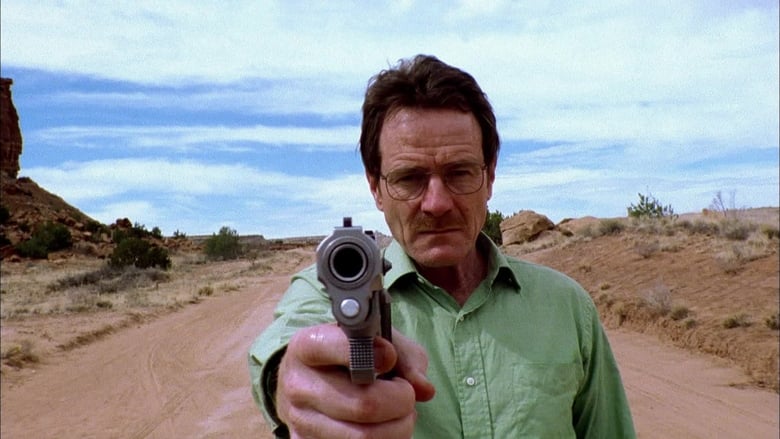
Episode 2 — “Cat's in the Bag...”: consequences fall through the ceiling
Walt and Jesse return to the RV and discover that Emilio is dead but Krazy-8 is alive. They restrain Krazy-8 in Jesse's basement. Neither partner wants to kill him, yet neither can safely release him. They divide the work by coin toss: Jesse must dispose of Emilio's body while Walt handles Krazy-8.
Walt instructs Jesse to dissolve Emilio in hydrofluoric acid inside a specific plastic container. Jesse ignores the instruction and uses his upstairs bathtub. The acid eats through the tub and floor, dropping liquefied remains into the hallway below. The grotesque collapse is more than black comedy. Jesse wants a shortcut around careful method, while Walt wants scientific method to remove moral consequence. The ruined house proves that consequence does not disappear because the men refuse to look at it.
Skyler traces a call and visits Jesse, believing he is supplying Walt with marijuana. Her warning reveals how rapidly Walt's lie has colonized other people's lives. Jesse must protect a teacher who threatened him, and Skyler must investigate a marriage whose rules have changed without her consent.
Episode 3 — “...And the Bag's in the River”: the broken plate
After cleaning Emilio's remains, Walt brings food to Krazy-8. The captive identifies himself as Domingo and speaks about his family and his father's furniture store. Walt makes a written list of reasons to kill him and reasons to let him go. The exercise looks rational, but the lists cannot calculate whether Krazy-8 will attack. Walt prefers the form of an equation because it lets him postpone ownership of the answer.
Walt collapses and breaks a plate while bringing food downstairs. After recovering, he decides to release Krazy-8. Upstairs, however, he reconstructs the shattered plate and notices a missing triangular piece. Krazy-8 has concealed it as a weapon. Walt returns to the basement, confronts him, and uses the bicycle lock around his neck to strangle him when he attacks.
The scene refuses a clean label. Walt correctly identifies an immediate threat, but that threat exists because Walt imprisoned Krazy-8 after poisoning him. Self-defense and culpability occupy the same moment. Walt weeps and apologizes as he kills, proving he still recognizes the victim's humanity. Recognition does not stop him.
Elsewhere, Skyler tells Marie that Walt has been acting strangely. Walt finally tells his family that he has cancer. This revelation is true, but it functions as camouflage: it explains enough of his behavior to keep the larger secret hidden.

Episode 4 — “Cancer Man”: humiliation looks for a target
At a family gathering, Walt reveals his diagnosis. Hank brings the case of the high-grade meth to the DEA and assumes its maker is a mysterious new player. Walt sits close enough to hear the investigation form around him while remaining socially invisible.
Jesse retreats to his parents' home and briefly attempts to become the son they want. His younger brother Jake appears accomplished, but Jesse discovers marijuana in Jake's room. When the parents find it, Jesse accepts the blame and leaves rather than expose his brother. The moment complicates the family's judgment of him. Jesse is unreliable, but he is also capable of loyalty without reward.
Walt, meanwhile, encounters an obnoxious businessman who humiliates a cashier and loudly boasts. Walt sabotages the man's car and walks away as it burns. No money is gained and no family is protected. The act matters because it isolates the emotional reward: Walt enjoys punishing someone who embodies the entitlement he resents. Cancer may have loosened his fear of consequence, but wounded pride chooses the target.
Episode 5 — “Gray Matter”: the honest exit Walt refuses
Former colleagues Elliott and Gretchen Schwartz invite Walt and Skyler to Elliott's birthday party. Their company, Gray Matter Technologies, has become extremely successful, and Walt's discomfort suggests a painful history with the business he helped begin. After learning about the cancer, Elliott offers Walt a job with excellent health insurance. Walt recognizes the offer as charity and refuses. Gretchen later offers to pay for treatment directly; he refuses again.
The White family stages an intervention using a “talking pillow.” Skyler wants treatment. Hank initially defends Walt's right to decide, while Marie argues that dying on one's own terms can also be a choice. Walt says treatment may leave him sick and dependent only to extend a life he no longer experiences as his own. His argument deserves to be heard. Yet after agreeing to treatment, he tells Skyler that Elliott and Gretchen will pay while privately returning to Jesse.
Jesse attempts to cook alone and produces inferior meth. Walt's decision to resume the partnership is therefore not made in a vacuum. A dignified legal solution exists, and he actively rejects it. He chooses the arena in which his rare expertise gives him authority. “Providing” has begun to merge with proving.
Episode 6 — “Crazy Handful of Nothin'”: Heisenberg enters
Chemotherapy begins. Walt establishes rules for the renewed partnership, insisting that there will be no bloodshed. Jesse tries to expand distribution through Skinny Pete, who introduces him to volatile dealer Tuco Salamanca. Tuco takes the meth and savagely beats Jesse rather than paying him.
Walt shaves his head as his hair begins falling out, then visits Tuco under the name “Heisenberg.” He carries crystals that look like meth but are fulminated mercury. When Tuco mocks him, Walt throws one crystal to the floor, causing an explosion that tears through the office. He walks out with payment for the stolen product, compensation for Jesse's beating, and an agreement for a much larger order.
The bluff is exhilarating because Walt converts knowledge into spectacle. At school he can explain chemistry and be ignored; in Tuco's office, chemistry makes everyone listen. His new name also divides his identity. “Heisenberg” seems like a mask that frees Walter White from guilt, but the man beneath the hat made every decision.
Episode 7 — “A No-Rough-Stuff-Type Deal”: the new process, the same violence
Tuco demands far more meth than Walt and Jesse can produce with over-the-counter pseudoephedrine. Walt changes the synthesis and identifies methylamine as the necessary precursor. He and Jesse break into a chemical warehouse, using thermite to defeat a lock and stealing a barrel of methylamine.
The theft shows their growing competence, but domestic life keeps intersecting with the criminal project. Jesse's house is on the market, forcing the partners to cook in the basement while prospective buyers walk through upstairs. Walt lies to Skyler about his whereabouts and emotionally performs normality while building a second life beneath it.
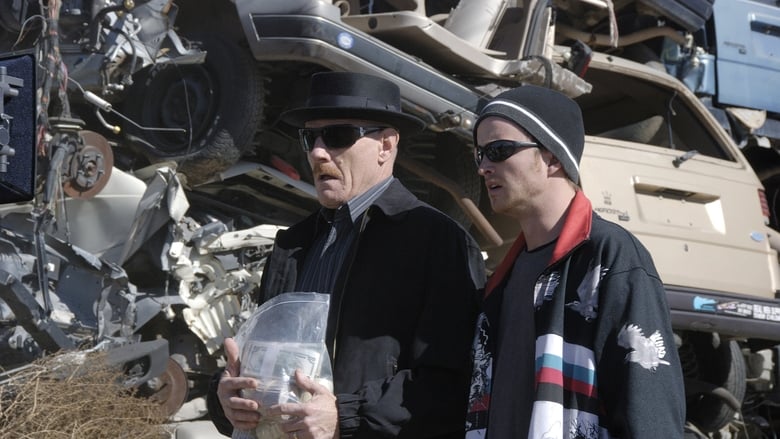
The new process produces blue meth. At the junkyard meeting, Tuco pays Walt and Jesse, apparently validating the risk. Then No-Doze makes a harmless remark, and Tuco beats him with terrifying violence. Walt and Jesse stand frozen beside their money. They wanted a distributor powerful enough to scale the business; they have found one whose power is inseparable from unpredictability and cruelty.
The season ends before the partnership can pretend this is merely commerce. Walt's “no bloodshed” rule has not controlled anything. His methods may be precise, but the market he chose is ruled by force.
Cast + TMDB
Cast and Characters





The portrait gallery is season-scoped to TMDB's credited Season 1 ensemble: Bryan Cranston as Walter White, Aaron Paul as Jesse Pinkman, Anna Gunn as Skyler White, RJ Mitte as Walter White Jr., Dean Norris as Hank Schrader, and Betsy Brandt as Marie Schrader. Each portrait links to its RecapRush performer profile.
Ending Explained
What happens at the end of Breaking Bad Season 1?
Walt and Jesse complete a larger batch using Walt's methylamine-based process and deliver it to Tuco at a junkyard. Tuco pays them, but an insignificant comment from No-Doze triggers a brutal assault. The season cuts away with Walt and Jesse forced to understand their new position: they have achieved distribution and profit, but they are now tied to a man whose violence cannot be managed through reason or rules.
More from RecapRush
 Man on Wire (2008) Recap & Ending Explained: What the Walk Costs Philippe Petit’s Friends
 Spider-Man: No Way Home (2021) Recap & Ending Explained: The Promise Peter Cannot Keep
 Young Washington (2026) Recap & Ending Explained: The Battle That Forged a Future Leader
Does Walt become Heisenberg in Season 1?
He adopts the name and visual identity in Episode 6 when confronting Tuco. More importantly, Season 1 shows the psychological function of the persona. Heisenberg lets Walt perform decisiveness, demand recognition and treat danger as proof of competence. The name does not create a separate person; it gives Walt language for desires he previously suppressed.
Why does Walt refuse Elliott's money?
The episode establishes that Elliott can offer legitimate employment and that Gretchen is willing to pay for treatment. Walt interprets both offers as pity. RecapRush's reading is that accepting would solve the financial problem but intensify his deeper wound: the belief that other people possess the success and status his talent deserved. Refusal preserves his pride while transferring the cost to Skyler, Jesse and everyone endangered by the meth business.
Why is the blue meth important?
Within Season 1, the blue product marks Walt's switch to a different chemical process after pseudoephedrine becomes a bottleneck. It is also a signature. Walt wants money, but the distinctive product makes his authorship visible. The color turns scientific adaptation into branding before he openly admits he wants recognition.
Is Tuco the ending's main threat?
Yes, at this exact season boundary. The finale presents Tuco as the immediate external danger. Yet the deeper threat is Walt's belief that technical brilliance can control a violent system. No-Doze's beating disproves that belief in front of him.
Is Season 1's ending complete?
It is intentionally unresolved. The season was broadcast as seven episodes, and the finale ends at an escalation rather than a conventional closure. The emotional arc is complete enough to identify Walt's transformation: he has rejected legal help, killed, adopted an alias, intimidated a distributor, stolen industrial chemicals and accepted payment from a violent organization. The consequences remain open.
RecapRush Interpretation
The cleanest way to read Season 1 is not “a good man becomes bad because he has cancer.” It is “a constrained man discovers that crisis can be used as moral permission.” Walt's illness is real, frightening and economically devastating. The show never asks us to dismiss those pressures. Instead, it repeatedly supplies choices that reveal what pressure alone cannot explain.
Elliott's offer is the control experiment. If Walt's sole objective were medical care and family security, the offer would satisfy it. He refuses because the solution does not satisfy his need to be the author of the rescue. He would rather give his family money they cannot safely understand than receive help whose meaning he cannot control.
Jesse functions as an uncomfortable mirror. Walt calls him careless and ignorant, often accurately. Yet Jesse accepts blame for Jake, recoils from death, and responds to murdered or injured people as people rather than variables. Walt's education gives him better tools for rationalization. He can describe reactions, probabilities and necessary procedures until choice resembles inevitability.
Skyler senses the moral change through intimacy. She notices absence, evasion and shifts in behavior long before she can know the criminal facts. Her questions are not obstacles placed in Walt's way; they are consequences of his decision to make his family the stated reason for actions from which he excludes them.
Deep Analysis & Key Themes
Chemistry is both truth and alibi
Chemistry offers objective transformations: reactants become products under knowable conditions. Walt tries to carry that certainty into human life. If cancer equals death and death equals lost income, then meth appears as the balanced answer. But people are not closed systems. Krazy-8 has a family history. Jesse has shame and loyalty. Skyler has agency. Tuco does not behave predictably. The more Walt treats human beings as components, the less accurate his calculations become.
The show's famous interest in transformation begins here as a moral problem. Matter changes without intention; people change through repeated choices. Walt prefers the first model because it lets him describe transformation as something that happens to him.
Masculinity becomes a competition for authorship
Hank embodies a conventional masculine confidence that Walt lacks: physical ease, professional authority, loud humor. Elliott embodies financial success and social polish. Walt does not merely want security beside these men. He wants proof that his intelligence can command a room more completely than Hank's badge or Elliott's wealth.
Tuco's office gives him that proof. The explosion is dangerous and strategically clever, but its emotional charge comes from public recognition. Everyone is forced to see Walt's power. That is why the scene cannot be reduced to providing for his family.
The broken plate is the season in miniature
Walt believes he can reason his way to mercy. The missing shard reveals that his evidence was incomplete. He then acts under immediate threat, but his correct deduction does not erase the chain of choices that created the basement prison.
The reconstructed plate also visualizes Walt's mind. He is meticulous, patient and able to see what others miss. Those admirable capacities become dangerous when used to make a violent situation feel intellectually solvable. The shard completes the picture while destroying the possibility of innocence.
Money is a measurable substitute for love
Walt cannot control whether his family grieves, forgives or understands him. He can calculate a dollar amount. Money therefore becomes a fantasy of emotional control: if he leaves enough, he can define what his absence means. But the method requires lies that damage the relationships he claims to protect.
The first season keeps placing cash beside bodies, illness and humiliation. Money is never abstract. It carries the conditions under which it was obtained.
Jesse is a student Walt refuses to truly teach
Walt can teach Jesse chemistry, but he often uses instruction to reinforce hierarchy. Calling Jesse stupid protects Walt from admitting dependence on his street knowledge. Jesse's failures are visible and messy—the bathtub collapsing is spectacular evidence. Walt's failures are often conceptual: he believes a rule like “no bloodshed” has force merely because he stated it.
Their partnership works because each has knowledge the other lacks. It becomes toxic when Walt treats unequal expertise as unequal human worth.
Skyler's suspicion restores cause and effect
Walt imagines secrecy as a wall separating crime from home. Skyler's investigation shows that behavior crosses the wall even when information does not. A missed conversation, a strange phone call, sexual aggression and unexplained absence all arrive at home as evidence. Her suspicion is the domestic form of scientific observation.
The desert and the house are connected laboratories
The desert appears empty enough for reinvention. The RV, its protective suits and drifting smoke make Walt's new life look detached from suburbia. Yet the finale moves a cook beneath Jesse's open house, literally placing the criminal laboratory under domestic real estate. The separation was always false. Every experiment has a location, and every location belongs to someone's life.
What Most Viewers Missed
- The pilot's failed suicide interrupts Walt's preferred ending. Walt tries to control the narrative by recording a message and choosing his final moment. The gun's safety and the passing fire engines expose how little he controls. His later obsession with mastery grows from that humiliation.
- Walt tells the truth about cancer at exactly the moment truth becomes useful camouflage. The disclosure explains his withdrawal and anger, allowing his family to stop searching for another cause. A fact can still be used deceptively.
- Jesse protects Jake without demanding credit. This is the season's quiet counterexample to Walt's version of sacrifice. Jesse absorbs punishment for family and leaves with no heroic story about himself.
- Elliott's offer changes the genre of Walt's decision. Before “Gray Matter,” the story can look like economic desperation. After the offer, it becomes a study of pride under economic pressure. The hardship remains real, but criminality is no longer the only available path.
- Walt's “no bloodshed” rule is about self-image, not enforcement. He wants a criminal business that permits him to feel civilized. Jesse's beating and No-Doze's assault show that the rule cannot govern partners whose power comes from violence.
- The bathtub and the basement repeat the same lesson. Jesse ignores material constraints and acid crosses the floor. Walt ignores moral and social constraints and the meth business crosses into his home. Both men believe containment is easier than it is.
- Heisenberg first appears as negotiation theater. The hat, shaved head and alias concentrate Walt's authority for Tuco. The performance succeeds, which makes it psychologically addictive.
Mid/Post-Credits
Breaking Bad Season 1 does not use Marvel-style mid- or post-credits scenes to extend its plot. The seven episodes use cold opens before the title and conclude before the standard end credits. Streaming services may offer next-episode previews or interface elements, but those are not additional narrative scenes within the original episodes.
Final Thoughts
Breaking Bad Season 1 is only seven episodes, yet its argument is remarkably complete. Walt begins by fearing that illness has removed every choice. The season ends after he has made choice after choice—and built a story in which each one was supposedly unavoidable.
That is what makes the first season tragic rather than merely thrilling. Walt's intelligence is genuine. His love for his family is not necessarily false. His humiliation, fear and financial anxiety deserve compassion. But love mixed with possession can become control, and intelligence used to avoid accountability becomes rationalization.
At the junkyard, Walt finally has the cash, the product and the dangerous respect he pursued. The terrified look he shares with Jesse is the bill arriving early. They have not escaped powerlessness; they have entered a system where power is measured by who can frighten whom most.
FAQ
How many episodes are in Breaking Bad Season 1?
The original first season contains seven episodes. AMC aired them from January 20 through March 9, 2008.
Why does Walter White start cooking meth?
He says he wants to leave money for his family after a lung-cancer diagnosis. Season 1 also demonstrates motives involving pride, resentment, authorship and the desire to feel powerful. His refusal of Elliott and Gretchen's help is the clearest evidence that money is not the whole explanation.
Who is Heisenberg in Season 1?
Heisenberg is the alias Walt adopts when confronting Tuco in Episode 6. The persona allows him to present himself as a fearless criminal negotiator.
Why does Walt kill Krazy-8?
Walt initially plans to free him, then discovers a shard missing from a broken plate and realizes Krazy-8 intends to stab him. Walt strangles him when Krazy-8 attacks. The immediate act is defensive, but the danger was created by Walt's earlier criminal choices.
What happens to Jesse in Season 1?
Jesse becomes Walt's partner, helps dispose of Emilio, tries unsuccessfully to cook alone, is beaten by Tuco, and returns to the business. His responses to death, family and violence repeatedly show more conscience than Walt expects.
Why is Walter White's meth blue?
In the Season 1 finale, Walt changes to a methylamine-based process when obtaining enough pseudoephedrine becomes impossible. The new product appears blue and becomes visually distinctive.
Who does Tuco beat in the finale?
Tuco beats No-Doze after interpreting a minor comment as disrespect. Walt and Jesse witness the assault, which reveals the danger behind their new distribution deal.
Does Breaking Bad Season 1 have a post-credits scene?
No. There is no additional story scene after the standard credits in the original seven Season 1 episodes.
Join the conversation
What did you think of the ending? Share your interpretation. Spoilers may appear below.
This product uses the TMDB API but is not endorsed or certified by TMDB.
No comments yet. Start the conversation.