
RECAPRUSH TV GUIDE
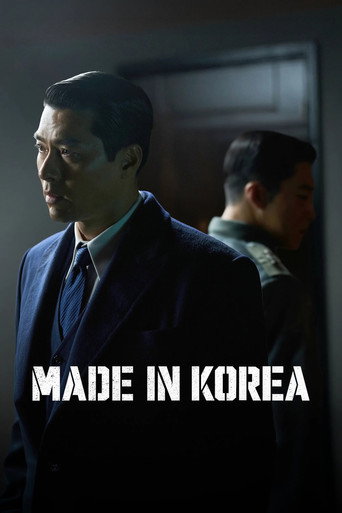
Made in Korea (2026)
Nine years after Season 1, Baek Kitae stands at the height of his power, while Jang Geonyoung is preparing to strike back. Meanwhile, Baek Kihyun is pursuing a path to a different kind of power than his brother. Their ambitions run rampant, creating an irreversible rift that threatens to upend everything.
Overview, poster, and credits from TMDB.
Read and watch our full season recap ↓FROM THE RECAPRUSH LIBRARY · FULL SEASON RECAP
Made in Korea Season 2 (2026) Ending Explained: Ki-tae Survives, but His Idea of Power Does Not
16 min read · Estimated reading time— views
Intro + RecapRush Viewpoint
Baek Ki-tae can move money across borders, turn rivals into assets and treat a government office like an extension of his own business. What he cannot do is make his younger brother stop mattering. Made in Korea Season 2 puts that weakness at the center of a political crime thriller in which nearly every relationship eventually becomes a means of applying pressure.
The second season advances the story nine years into 1979. Ki-tae has climbed higher, but the ground beneath his success is moving. Prosecutor Jang Geon-yeong returns with a case, military power is consolidating around Hwang Dae-sik, and Ki-tae’s brother Ki-hyeon can no longer accept the family story that excuses everything the older man does.
RecapRush’s viewpoint: the season’s strongest idea is that losing power does not automatically produce moral understanding. Ki-tae discovers the limits of his control; Geon-yeong discovers that a successful prosecution can serve another ambitious man. Neither revelation makes the damage disappear. The ending asks who benefits when a personal enemy falls—and whether that beneficiary is any better.
Full spoilers for completed Season 2, Episodes 1–6, including the finale. Coverage and postrelease reporting checked October 24, 2026. Season 1 context appears only where necessary. No later-season story is recapped. The characters’ criminal schemes are fictional drama, not evidence about real historical people. RecapRush’s psychological and thematic readings are distinguished below from plot events and the director’s reported comments.
Featured Image

Table of Contents
Quick Facts
- English title: Made in Korea — Season 2
- Korean title: 메이드 인 코리아
- Country / language: South Korea / primarily Korean
- Season year and status: 2026; all six episodes released
- Release: Disney+, September 9–23, 2026; two episodes on September 9, 16 and 23
- Series premiere: December 24, 2025. The series’ first-release year and Season 2’s year are different.
- Director: Woo Min-ho
- Writer: Park Eun-kyo
- Production: Hive Media Corp
- Genres: Crime, Drama
- Principal performers: Hyun Bin, Jung Woo-sung and Woo Do-hwan
- TMDB: TV 246473; Season 2 record 534309
- Scope: complete Season 2 recap, with the September 29 director interview reported September 30 used to clarify the final gunshot
Full Spoiler Recap
Episode 1 — Success makes Ki-tae more exposed
Nine years after the earlier confrontation with Geon-yeong, Ki-tae operates near the top of the intelligence establishment. His illicit business and political connections reinforce one another. He still draws distinctions that flatter his self-image, including resistance to domestic drug distribution: he wants to regard himself as useful to the country while profiting from conduct that harms people elsewhere.
In Japan, Ikeda Yuji’s succession struggle shows how readily Ki-tae converts violence into a business arrangement. Her initial setback is reversed with his intervention. At home, competing political patrons demand money and loyalty. The assassination crisis of October 26 breaks the apparent security of his position. His proximity to power becomes a liability as the people who can authorize force begin to change.
The important turn is structural: Ki-tae’s network was built to function inside an order he understood. He now has to survive a transition he cannot simply purchase.
Episode 2 — A promotion and a narrowing escape route
Ki-tae helps maneuver the response against Director Cho and advances into the acting leadership of the KCIA. The appointment looks like vindication. It also ties him more tightly to a struggle involving Cheon Seok-jung, military leaders and the rising Hwang Dae-sik.
Hwang’s investigative machinery brings Ki-hyeon closer to the case against his brother. The family relationship is therefore no longer a private refuge from politics; it becomes an instrument within politics. Meanwhile, an enormous transfer from Japan—70 billion won—connects Cheon’s ambitions to Ki-tae’s overseas network.
Geon-yeong’s reappearance interrupts that flow. The prosecutor has not accepted the defeat that ended their earlier struggle. Ki-tae’s apparent ascent and the renewed investigation are happening at the same time, which gives the episode its pressure: a higher title offers no protection against an enemy who has spent years preparing.
Episode 3 — The evidence has an owner before it has a verdict
Geon-yeong returns to official work through an arrangement with the forces pursuing Ki-tae. The money is seized, Yuji is subjected to brutal pressure, and the hunt for a ledger pulls Kazuo into the confrontation. Ki-tae survives that immediate threat, but Geon-yeong obtains the record he needs.
The case is not allowed to develop on purely legal terms. Hwang’s interests determine which lines of inquiry can proceed. Oh Ye-jin objects to the violence around the investigation and follows the family connection through Baek So-yeong. Geon-yeong, too, applies pressure through Ki-hyeon’s concern for his sister and her child.
Cheon pushes Ki-tae toward eliminating Hwang. What might look like a prosecutor-versus-criminal contest is now visibly larger: evidence, institutional authority and family vulnerability can all be redirected by people seeking a political advantage.
Episode 4 — The debt between brothers becomes unbearable
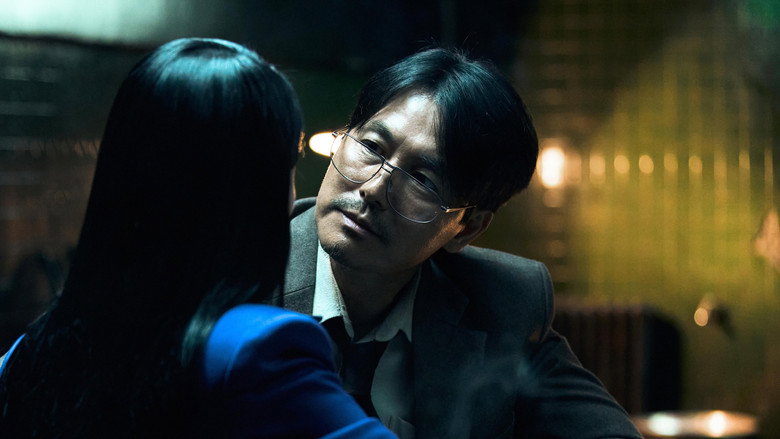
A childhood flashback complicates the brothers’ relationship. After Ki-hyeon killed a bully, Ki-tae concealed what happened. The older brother’s protection helped create a lasting debt, one that now contaminates every claim that he has acted for the family.
So-yeong’s drug problem makes the cost of that claim harder to ignore. Ki-hyeon sees harm inside the very household Ki-tae says he is defending. Yuji offers the possibility of leaving, but departure would mean surrendering the position Ki-tae has built.
Information supplied through Madam Shin helps him prepare an attack on Hwang at a gathering. Then Ki-hyeon’s unexpected presence changes the calculation. Ki-tae moves to stop his own plan. Family feeling proves real, but its arrival comes after he has already created the danger. That contradiction carries directly into the next episode.
Episode 5 — Saving one person does not end the machinery
Ki-tae stops the immediate bombing threat and saves his brother, but the attempted assassination has exposed the instability of his position. Geon-yeong’s presence at the venue further entangles the competing investigations and schemes.
Hwang’s protection carries demands of loyalty, with family safety functioning as leverage. Pyo Hak-su’s resentment and ambition become useful to the other side. He supplies information about a further operation involving Captain Min and the investigative command.
Ki-tae and Cheon communicate through a coded plan, and Geon-yeong works out what they are arranging. The season now moves toward a second attempt on Hwang. The first failed attack has not produced restraint; it has produced adaptation. Each faction learns from the danger while leaving the underlying willingness to sacrifice others intact.
Episode 6 — The trap succeeds because Ki-tae turns back
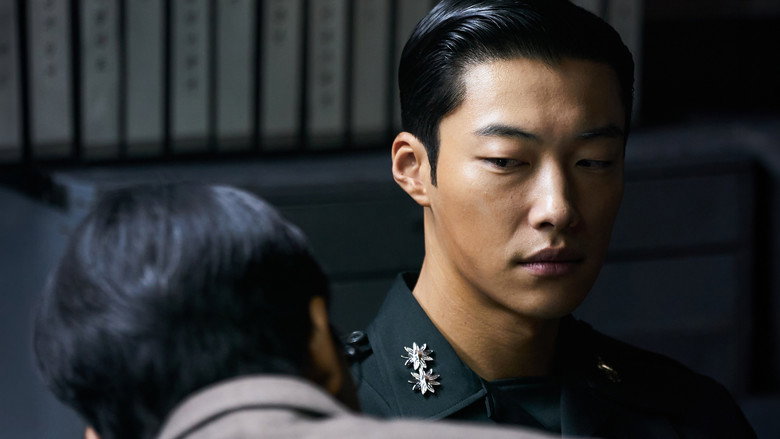
The final assassination scheme uses a bombing threat to draw Hwang toward a safer location and an ambush. Ki-hyeon is instead caught in the operation and injured. Ki-tae pulls back. Cheon distances himself from the conspiracy, while Pyo’s information exposes Ki-tae’s hiding places.
Yuji arranges a route toward Japan, but Ki-tae delays escape to retaliate against Cheon and Pyo, leaving both alive. News of his brother’s condition then brings him to the hospital and into another trap. An aide’s sacrifice helps him get out, wounded. Geon-yeong catches up with him but ultimately allows him to leave.
Ki-hyeon later confronts his brother at gunpoint under the pressure Hwang has placed on the family. A shot is heard without a confirming aftermath. Elsewhere, Hwang consolidates power; Geon-yeong faces the compromised meaning of his victory. The closing presidential-chair image is a flashback, not Ki-tae’s accession to office.
Cast + TMDB
Cast and Characters




The gallery below uses the verified Season 2 TMDB cast records, portrait paths and RecapRush actor-profile links. Spellings vary across English subtitles and databases: TMDB’s Baek Kitae and Jang Geonyoung correspond to Baek Ki-tae and Jang Geon-yeong in this article.
Hyun Bin makes Ki-tae’s composure part of the threat. His character prefers to sound as though a decision has already become inevitable; the late-season urgency matters because it breaks that impression. Jung Woo-sung gives Geon-yeong’s persistence a different weight: the prosecutor’s refusal to stop can resemble integrity until the means and beneficiaries of his pursuit come into view.
Woo Do-hwan plays Ki-hyeon, the brother whose military obligations and personal debt collide. Seo Eun-soo’s Ye-jin supplies a crucial challenge to Geon-yeong’s methods. These officially credited performers are discussed here without adding unverified portrait records to the season gallery. Cha Hee’s So-yeong matters because the family’s damage cannot be reduced to a contest between its two brothers.
Ending Explained
Does Ki-tae die after Ki-hyeon raises the gun?
The screen withholds a definitive aftermath; the director subsequently clarified that Ki-tae survives. These are two different kinds of evidence and should not be collapsed into one claim.
The finale presents Ki-hyeon aiming at his brother and lets the gunshot carry the uncertainty. It does not show a completed escape or explain the mechanics of survival. In a September 29 interview, reported by allkpop on September 30, Woo Min-ho said that Ki-tae remained alive and discussed his return. The same reporting describes an earlier death version of the script that changed during production.
Accordingly, a current explanation should not declare Ki-tae dead, but it should not invent a rescue, a missed shot or a secret agreement either. His survival is the director’s reported clarification; the precise intervening events remain undisclosed in the checked material.
More from RecapRush
 Casablanca (1942) Recap & Ending Explained: Why Rick Lets Ilsa Go
 Resident Evil (2026) Recap & Ending Explained: Does Bryan Ever Get the Cure?
 MINDHUNTER (2017–2019) Recap & Ending Explained: Why Closing Atlanta Solves Nothing
Why does Ki-hyeon turn on the brother he owes so much?
The childhood incident explains why a clean break has been so difficult. Ki-tae did protect him. That truth has also become a claim on his future obedience. By the finale, Hwang’s pressure and the danger to the family make Ki-hyeon’s position coercive rather than freely chosen.
RecapRush reads the confrontation as the collapse of a relationship governed by accumulated debt. Affection and resentment coexist. Recognizing the older brother’s wrongdoing does not cancel love, while loving him does not make the consequences bearable. The gun is the final expression of a conflict that has been developing through the season, not a substitute for that conflict.
Why does Geon-yeong let Ki-tae go?
Geon-yeong finally sees how his pursuit fits another man’s acquisition of power. Removing Ki-tae is not equivalent to establishing an independent system of justice. Cheon’s accommodation and Hwang’s rewards expose the selective nature of the new order.
His decision to stop short of completing the pursuit is not a legal acquittal or proof that Ki-tae is innocent. RecapRush’s reading is that Geon-yeong can no longer pretend his obsession has remained separate from the machinery employing it. He has reached his target and lost confidence in the meaning of reaching it.
Who actually wins?
Hwang gains the clearest institutional advantage. Ki-tae loses his position, Geon-yeong’s investigation serves purposes beyond his control, and accommodating figures find ways to survive the transition. Hwang can offer Geon-yeong professional recognition without answering the prosecutor’s larger doubts.
The finale therefore does not deliver a simple victory for law over crime. It shows one concentration of power being displaced by another. That conclusion concerns the drama’s fictional arrangements; it should not be treated as a documentary account of every historical event in its setting.
Does the final chair scene mean Ki-tae becomes president?
No. The scene returns to an earlier moment in which Ki-tae occupies the presidential chair. Its placement encourages us to revisit the scale of his ambition after witnessing its defeat. The chair supplies an image of desire, not a new office he has obtained after the gunshot.
RecapRush Interpretation
The season exposes a weakness in Ki-tae’s favorite form of self-justification: he treats the ability to provide as permission to control. Money, protection and access become evidence that he deserves to make decisions for other people. His family is supposed to validate that bargain by remaining grateful.
Ki-hyeon’s resistance makes the bargain impossible to maintain. A brother can acknowledge being protected and still reject the life built around that protection. Ki-tae struggles because he understands loyalty as something his earlier actions have already purchased. He cannot simply negotiate away the present consequences.
His return to the hospital reveals the part of him that the political player cannot fully manage. It is an attachment he cannot price. Yet the decision is also tragic because family danger has become the predictable route through his defenses. He has helped create a world in which the people he loves are the easiest way to reach him.
Geon-yeong faces a parallel reckoning. His ability to endure does not ensure that his endurance serves justice. The more completely his identity rests on defeating Ki-tae, the easier it becomes for someone else to offer him the resources to do it. Both men have built impressive versions of themselves around an idea that the ending makes inadequate.
Deep Analysis & Key Themes
Protection can become a permanent invoice
The brothers’ childhood history does more than explain closeness. It gives Ki-tae a story in which he is indispensable. That story has emotional truth, which is why its controlling effect is difficult to confront. An obviously false promise would be easier for Ki-hyeon to reject.
The bombing reversal makes this contradiction concrete. Ki-tae acts to save his brother, but the rescue cannot erase who arranged the threat. Love can be present inside a destructive relationship. The season’s sharper moments allow those facts to remain uncomfortable together.
Selective morality sustains the respectable self
Ki-tae’s distinction between harming people abroad and distributing drugs at home lets him preserve a patriotic account of himself. The boundary matters to him because it separates his behavior from a category he finds unacceptable without requiring him to abandon the profitable enterprise.
So-yeong undermines that arrangement. Damage refuses to stay outside the family boundary. RecapRush reads the contradiction as a critique of moral accounting that counts only the people close enough to recognize. A restricted conscience can feel sincere while remaining profoundly convenient.
Revenge needs an institution, and institutions make demands
Geon-yeong’s ledger and money trail ought to be instruments of accountability. Their use depends on who authorizes the investigation and what that authority wants. Ye-jin’s objections matter because they interrupt the temptation to admire every harsh tactic as evidence of determination.
The prosecutor’s final dissatisfaction is more interesting than a triumphant arrest would have been. It arrives when personal success and public good separate. His problem is no longer whether he can reach Ki-tae; it is whether he understands the work his pursuit has performed for Hwang.
The season distinguishes love from escape
Yuji represents a possible route out, but a departure requires more than transportation. Ki-tae must relinquish the story of himself as the person who can still settle every debt, punish every betrayal and protect every relative. His detours reveal how much remains attached to that identity.
This is why the closing chair image works as more than a symbol of greed. It recalls a bodily experience of power: sitting where decisions originate. After the frantic movements of the finale, the remembered stillness becomes revealing. He wants not merely money, but the position from which other people must move.
What Most Viewers Missed
The first interrupted bombing prepares the hospital decision. Both turns show family attachment disrupting a plan built on calculation. The finale’s vulnerability is established before the final trap.
The ledger’s importance is political as well as evidentiary. Possessing information does not determine how it will be used. The shifting restrictions on the case help explain why Geon-yeong’s apparent breakthrough cannot deliver the moral resolution he expected.
Leaving Cheon and Pyo alive prevents the revenge sequence from functioning as a clean ending. Ki-tae can injure people and still fail to remove the relationships that sustain the system. Punishment provides an immediate assertion of control without restoring his lost position.
The chair is a flashback. Reading it as a literal post-finale promotion reverses the meaning of the ending. It revisits the ambition we have just seen come apart.
An offscreen sound is not an onscreen death certificate. The subsequent interview settles the director’s intended survival outcome, but it does not turn an unshown chain of events into something the viewer has already witnessed.
Final Thoughts
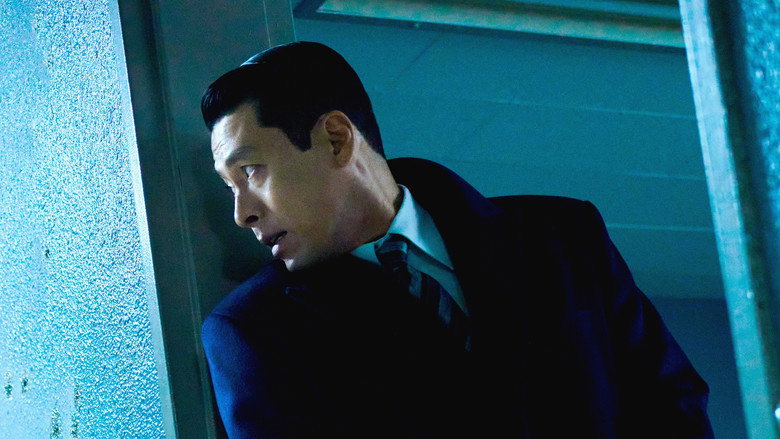
Made in Korea Season 2 is most compelling when it makes victory feel insufficient. Its powerful men can obtain money, evidence and appointments, then discover that none answers the question they have been avoiding. Ki-tae cannot make family loyalty permanent by supplying protection. Geon-yeong cannot make his campaign just by refusing to abandon it.
The finale’s compressed confrontations leave some mechanics unresolved, especially around the gunshot. The director’s later survival clarification should be acknowledged without pretending it supplies missing scenes. What the season does establish is a collapse of certainty: Ki-tae no longer controls the terms of his world, and his pursuer no longer trusts the purpose of winning inside it.
FAQ
How many episodes are in Made in Korea Season 2?
Six. Disney+ released two episodes each on September 9, September 16 and September 23, 2026. This article covers all six, not a season-so-far selection.
Is Season 2 a 2025 or 2026 release?
Season 2 is a 2026 release. The series itself began on December 24, 2025, which explains why database searches may display 2025 beside the overall title.
Is Baek Ki-tae alive?
Woo Min-ho said he is alive in the September 29 interview reported September 30. The finale itself withholds the aftermath of the gunshot. No specific escape mechanism is established here.
Does Ki-tae become president at the end?
No. The presidential-chair scene is a return to an earlier moment, not proof that he gains the presidency after the finale’s confrontation.
Is Made in Korea a true story?
It is a fictional crime drama using a real historical period as its setting. Its central characters, personal relationships and criminal arrangements should not be treated as verified historical findings.
Do I need Season 1 first?
Yes, for the fullest effect. Season 2 revisits an established prosecution, the brothers’ relationship and Ki-tae’s network. The nine-year time jump changes their positions without resetting those conflicts.
Where can I watch it?
Disney+ carries the series in the markets covered by its official guide; availability and U.S. Hulu access depend on region and subscription. Check the service listing in your own location.
Is there a verified post-credits scene?
The checked sources establish the finale and closing flashback but do not independently establish a separate mid- or post-credits scene. This article makes no claim that an additional credits scene exists or that its absence has been confirmed.
Join the conversation
What did you think of the ending? Share your interpretation. Spoilers may appear below.
This product uses the TMDB API but is not endorsed or certified by TMDB.
No comments yet. Start the conversation.