
RECAPRUSH TV GUIDE
South Park (2026)
Season-so-far coverage of the released first two episodes: the boys’ e-bike conflict and Butters’ revolt against backyard data centers.
Overview, poster, and credits from TMDB.
Read and watch our tv season guide ↓FROM THE RECAPRUSH LIBRARY · TV SEASON GUIDE
South Park Season 29 (2026): Kenny’s Death, Butters’ Revolt and the Cost of Calling It Progress
12 min read · Estimated reading time— views
Intro + RecapRush Viewpoint
A child tries to negotiate peace and becomes the excuse for a ban. Another child asks why his backyard keeps losing power and discovers that the people causing the problem control the conversation about it. South Park Season 29 begins with two different scales of the same conflict: adults and institutions claiming to protect ordinary people while making those people carry the consequences.
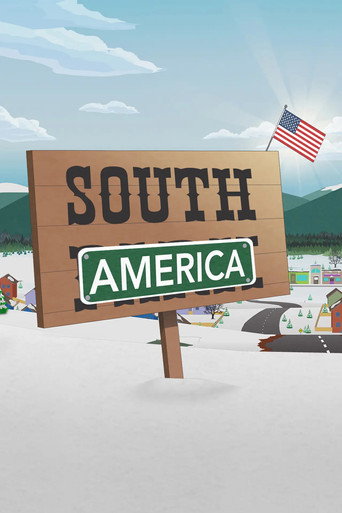
The season’s “South America” rebranding is part of that satire, not a change to the series identity used here. The familiar town remains recognizable even when its label changes. Randy wants authority over the streets; Butters wants his own home to remain livable. Both stories make a small, tangible pleasure—riding a bike or watching a relaxing television program—collide with an adult claim about what society supposedly needs.
RecapRush’s viewpoint: the first two episodes work best when their outrageous images reveal ordinary evasions. “Safety” can disguise territorial power. “Progress” can disguise someone else’s inconvenience. Children notice the contradiction because they experience the loss before learning the language used to explain it away.
Coverage note and spoiler warning: verified October 13, 2026. This is a season-so-far recap and analysis of Episodes 1–2, followed by a confirmed schedule preview. Four announced episodes have not aired at this verification date. There is no Season 29 finale to explain yet. Later-season events are excluded.
Featured Image
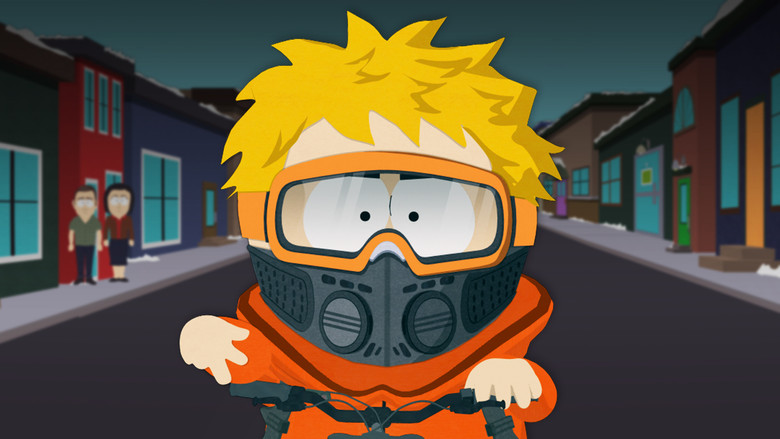
Table of Contents
Official Trailer / Premiere Promo
Watch “South Park Returns September 16th” on the official South Park Studios YouTube channel.
This is the verified official premiere-date promo, rather than a full narrative trailer for the completed season. YouTube metadata confirms its title and South Park Studios uploader. The official studio announcement confirms the release campaign and every-other-Wednesday schedule. [1, 2]
Quick Facts
- Series: South Park
- Season: 29
- Year: 2026
- Creators: Trey Parker and Matt Stone
- TMDB TV ID: 2190
- TMDB Season 29 ID: 517335
- Verified TMDB genres: Animation, Comedy
- Original broadcaster: Comedy Central
- U.S. streaming: Paramount+ the following day
- Premiere: September 16, 2026
- Announced season length: six episodes
- Released at this article’s verification date: two episodes
- Remaining announced air dates: October 14, October 28, November 11 and November 25, 2026
- Content rating: TV-MA; adult animation
- Article scope: Episodes 1–2 spoilers and a verified schedule preview
The official schedule and TMDB episode records agree on six slots. A future slot is not evidence that its title, plot or ending has already been announced. [1, 3]
Spoiler Recap: The Season So Far
Episode 1 — “South American Biker Gangs” — September 16, 2026
Cartman persuades Liane to buy him an e-bike by presenting it as an answer to his weight-related humiliation. The bike quickly becomes a status object. Stan, Kyle and Kenny want the same freedom but cannot afford the same purchase, so they obtain cheap alternatives from Mr. Kim.
Randy’s cycling group treats the children’s motorized bikes as an invasion. The adults organize, intimidate businesses and claim the language of public safety. Their campaign becomes more disruptive than the activity they want stopped. Kenny approaches them in disguise to explain that Cartman’s obnoxious behavior does not represent every child riding a bike.
After the apparent negotiation, Kenny’s bike explodes and kills him. Faulty batteries offer an explanation inside the story, but Randy’s suspicious reference to a bomb and the gang’s behavior strongly imply sabotage. The episode does not show a definitive on-screen bomb planting. Kenny’s death becomes the justification for an ordinance banning e-bikes, and the children lose their rides. [4, 5]
Character analysis: Cartman begins with an understandable wish—avoid shame—then translates it into superiority over friends. Randy begins with a complaint about boundaries and translates it into permission to control everyone. Kenny is the person trying to distinguish individual misbehavior from collective punishment. His death is therefore more than a revived running gag: the negotiator becomes evidence for the policy he hoped to avoid.
Episode 2 — “Billionaire Weenietown” — September 30, 2026
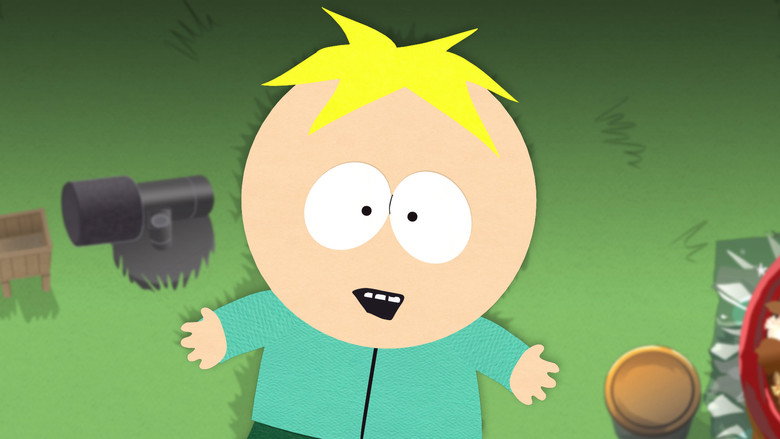
Butters protests AI data centers that disrupt electricity at home. His parents are enthusiastic about AI-assisted remodeling and treat his objection as an ideological defect rather than a practical complaint. His concern is simple: he wants to enjoy Dr. Pimple Popper without the power failing.
The episode makes its insult literal. A miniature community of anthropomorphic “weenies” inhabits the backyard. Its loudest billionaires cannot resist public commentary, podcasts and self-promotion, while the community’s mayor worries that visibility will turn outsiders against them. Butters tries to obtain help, but even news coverage is vulnerable to the technology and interests he is challenging.
He finally offers an audience to the attention-hungry residents, gathers them and relocates the troublesome group to Nashville. The remaining community agrees to move elsewhere. The closing sequence is a deliberately grotesque fictional deepfake parody of Donald Trump, using a singing, detached body part as its final visual gag. It is a satirical construction, not footage of a real incident. [6, 7]
Character analysis: Butters wins by observing appetite rather than arguing principles. His opponents cannot resist a microphone. That makes his solution effective locally but incomplete morally: the nuisance moves to another community. The episode gives him relief, not a systemic victory.
Episodes 3–6 — Confirmed Schedule Preview
The next four announced broadcasts are October 14, October 28, November 11 and November 25. At verification, TMDB still uses placeholder titles for these slots and provides no episode overviews. This article therefore assigns them no invented stories, character outcomes or finale predictions. [1, 3]
The useful question for the remaining season is analytical rather than predictive: will these stories keep testing the gap between institutional language and ordinary experience? That is a pattern in the released episodes, not a confirmed plan for future ones.
Cast + TMDB
Cast and Characters






The cast gallery uses the verified Season 29 aggregate-credit records rather than filling six spaces with guessed performers. Trey Parker is credited for Eric Cartman / Stan Marsh, Matt Stone for Kyle Broflovski / Kenny McCormick, Mona Marshall for Sheila Broflovski, and Jennifer Howell for Bebe Stevens. Guest records include Brad Paisley as the “We Are South America” singer and Mike Judge as Kenny’s voice. [3]
Aggregate credits may include planned season appearances. They should not be read as proof that every performer appears in every released episode. The gallery links each performer to a RecapRush actor profile.
Endings Explained So Far
Did Randy kill Kenny?
The premiere strongly points toward Randy’s gang being responsible, but the distinction between implication and direct depiction matters. Kenny dies in an explosion; Randy reveals suspicious knowledge about a bomb, and the adult gang benefits from the death. The show invites us to infer sabotage. It does not supply an uninterrupted shot of Randy installing an explosive. [4, 5]
More from RecapRush
 The Walking Dead: Daryl Dixon Season 2 Recap & Ending Explained: Why Carol Jumps From the Plane
 Buddy (2026) Recap & Ending Explained: Why Freddy Escapes the Show but Cannot Go Home
 Colony (2026) Movie Recap & Ending Explained: Why the Hive Turns Against Seo
The more important consequence is visible: Randy’s side converts a death into authority. Whether we focus on the hinted cause or the confirmed aftermath, the public-safety narrative protects the adults from scrutiny.
Why does the e-bike ban feel so bleak?
The ban punishes the group that lost someone. It does not require the cyclists to examine their intimidation. The funeral and collective grief lend emotional legitimacy to a political result already desired by the adults.
RecapRush reads the ending as a story about manufactured consent: a community can sincerely mourn while accepting a false or incomplete explanation of why the tragedy occurred.
Does Butters solve the billionaire problem?
He clears his immediate surroundings by exploiting the residents’ hunger to speak. The relocation is a victory for his household, but the ending preserves the larger absurdity. Moving a problem does not eliminate its incentives or prevent its arrival somewhere else. [6, 7]
What does the final Trump parody mean?
The closing visual disconnects public self-promotion from dignity and self-control. Its grotesque anatomy reduces grandiose authority to a ridiculous spectacle. This is RecapRush’s reading of the fictional scene, not a factual claim about Trump’s body or private conduct.
How does Season 29 end?
It has not ended at the verification date. The announced final broadcast is November 25, 2026. Any complete-season ending explanation would currently be speculation. [1]
RecapRush Interpretation
Randy and Butters approach power from opposite sides. Randy wants the world arranged around his preference and learns to present that preference as a universal need. Butters wants relief from an imposed condition and discovers that adults evaluate his politics before they evaluate his evidence.
That contrast makes Butters the more interesting moral center. He is not pure: his solution exports the nuisance. Yet he retains a connection between what he says and what he experiences. Randy loses that connection as soon as the gang gives him an identity larger than “annoyed father.”
Cartman sits between them. He is genuinely vulnerable to humiliation, but he weaponizes vulnerability to obtain status. The season’s early characters are united by the temptation to make personal discomfort somebody else’s responsibility. Their differences lie in how much power they possess to enforce the transfer.
Deep Analysis & Key Themes
Progress has a location
A data center may sound abstract until it affects a backyard and a television. Episode 2 shrinks large economic power into a physical infestation. The visual joke makes the cost impossible to dismiss as merely theoretical.
The same structure governs the bikes. Adults discuss safety in general terms; children experience the confiscation of a specific thing that gave them joy. The season repeatedly returns lofty vocabulary to the place where someone actually loses something.
Tribal identity turns recreation into enforcement
Randy’s cycling group starts with a shared hobby and grows into a claim over public space. Matching behavior and collective grievance provide permission that an individual would struggle to justify. A group can call itself responsible while its members escalate each other’s worst impulses.
Kenny’s negotiation briefly offers another model: describe the actual behavior, distinguish people, and seek a practical agreement. The tragedy is that this reasonable approach confronts a movement already invested in victory.
Attention is a vulnerability
Butters does not need greater wealth to defeat the residents. He needs a correct model of what they crave. The microphone becomes bait because attention has displaced discretion.
RecapRush reads this as a criticism of influence that cannot remain private. Money purchases reach, but reach creates new opportunities for embarrassment, resistance and manipulation. The powerful characters are trapped by the need to keep announcing their power.
Innocence can produce sharp observation
Butters’ modest desire makes the adults’ rhetoric look inflated. He does not begin with a grand theory of technology. He begins with a disrupted evening. That small scale gives the satire a stable reference point: the audience can judge promises against an observable inconvenience.
His eventual tactic also complicates innocence. Learning how power works makes him more capable, but it does not automatically make him more just.

What Most Viewers Missed
Kenny is heard before he is lost
The premiere’s unmasked negotiation gives Kenny space to explain himself. Mike Judge’s credited guest voice makes the moment especially noticeable. The character normally muffled by his clothing becomes the clearest advocate for a peaceful outcome. His death then removes the voice the conflict needed. [3, 4]
The rebranding is an active joke
“South America” is not just a headline attached to the season. It alters the familiar frame through which characters and audiences recognize the town. The studio’s official announcement is deliberately satirical; its corporate thank-you should be read in that register. [8]
The backyard makes the complaint hard to outsource
The premise gives Butters no distance from the effects. His parents can celebrate an idea, but he cannot escape the resulting interruption merely by agreeing with them. The physical setting makes that contradiction concrete.
Two endings move blame away from power
The bike ban locates the problem in the children’s machines. The relocation moves the billionaire nuisance to another place. Both offer a visible resolution while leaving the underlying incentive available for repetition. That parallel is RecapRush’s interpretation, not a claim of confirmed creator intent.

Mid/Post-Credits
No separate Season 29 finale or finale credit scene exists at this article’s verification date. A distinct mid- or post-credits story scene for either released episode was not reliably verified. The endings described above are the documented narrative conclusions; no additional stinger is claimed.
Final Thoughts
Two episodes cannot establish the final shape of a six-episode season. They can establish a useful tension. Season 29 has returned to conflicts recognizable at the scale of a street and a home while letting those spaces expose much larger systems of status, information and coercion.
The strongest material is not simply that Randy behaves badly or that billionaires are rendered grotesquely. It is the way reasonable-sounding language makes the behavior easier to accept. Kenny asks for a distinction. Butters asks for a working household. The adult world answers with identities, promises and displaced responsibility.
RecapRush verdict so far: the early season is most incisive when it lets the children’s concrete losses puncture adult abstractions. Its completed-season judgment must wait for the remaining episodes.
FAQ
Is South Park Season 29 a 2026 season?
Yes. It premiered September 16, 2026.
Is it really called South America?
The creators announced a satirical “South America” rebrand for the season. The series identity and TMDB record remain South Park.
How many episodes are planned?
Six broadcasts are announced. Two had aired by October 13, 2026.
What is the next episode date?
The announced next broadcast is October 14, 2026.
When is the announced final episode?
November 25, 2026. This is a schedule fact, not a verified finale plot.
Does this article explain the entire season ending?
No. It explains the released episode endings and clearly marks the remaining schedule as a preview.
What is the TMDB ID?
South Park is TV 2190. Season 29 is TMDB season 517335.
Is the closing Trump sequence real footage?
No. It is a fictional deepfake parody, not documentation of a real event.
Is South Park family animation?
No. The official episode listings identify it as TV-MA adult animation.
Join the conversation
What did you think of the ending? Share your interpretation. Spoilers may appear below.
This product uses the TMDB API but is not endorsed or certified by TMDB.
No comments yet. Start the conversation.