
RECAPRUSH MOVIE GUIDE
GOAT (2026)
Directed by Tyree Dillihay
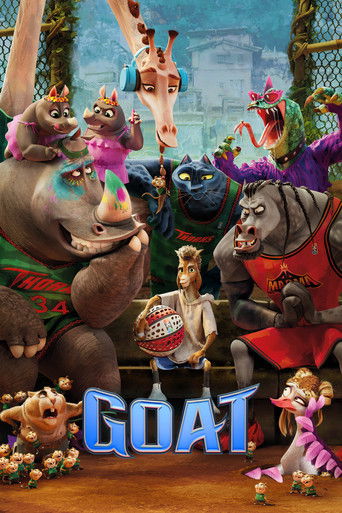
A small goat with big dreams gets a once-in-a-lifetime shot to join the pros and play roarball, a high-intensity, co-ed, full-contact sport dominated by the fastest, fiercest animals in the world.
Overview, poster, and credits from TMDB.
Read and watch our full recap ↓FROM THE RECAPRUSH LIBRARY · FULL RECAP
GOAT (2026) Recap & Ending Explained: Why Jett’s Final Pass Matters as Much as Will’s Winning Shot
14 min read · Estimated reading time— views
Intro + RecapRush Viewpoint
Getting onto your favorite team should be the happiest day of your life. For Will Harris, it means discovering that the player who taught him to dream would prefer him to stay on the bench. GOAT puts its little hero in an emotionally uncomfortable position: how do you keep loving a sport when your idol becomes an obstacle to playing it?
Sony Pictures Animation’s 2026 feature turns that question into roarball, an aggressive basketball-like game played by animals whose bodies seem designed to intimidate a small goat. The physical mismatch supplies the action. The more consequential mismatch is between Will’s need to belong and Jett Fillmore’s fear of becoming replaceable.
RecapRush viewpoint: the championship is satisfying because two people must change their relationship to admiration. Will needs to speak honestly to someone he reveres. Jett needs to understand that helping another player succeed can extend her legacy rather than erase it. The final shot gives Will the highlight; the pass gives Jett her answer.
Full spoilers follow, covering the complete released movie, the relocation threat, the championship, the ownership reveal, and the verified after-credits audio. This is the animated GOAT directed by Tyree Dillihay, not another film with a similar title.
Featured Image

Table of Contents
Quick Facts
- Title / year: GOAT (2026)
- Director: Tyree Dillihay
- Co-director: Adam Rosette
- Screenplay: Aaron Buchsbaum and Teddy Riley
- Story: Nicolas Curcio and Peter Chiarelli
- Production / distribution: Sony Pictures Animation and Columbia Pictures; Sony Pictures Releasing
- Earliest verified premiere: February 6, 2026, Los Angeles. Premiere coverage is distinct from the commercial opening.
- U.S. wide theatrical opening: February 13, 2026
- Runtime: approximately 100 minutes, matching TMDB and the U.S. theatrical catalog
- All verified TMDB genres: Animation, Comedy, Family. Sports describes the subject; it is not an additional genre in this TMDB record.
- Exact TMDB movie: 1297842
- Coverage: full released feature; a new 2026 film rather than an older title receiving a rerelease
Full Spoiler Recap
1. Will inherits a dream, then has to support it himself
As a child in Vineland, Will attends a Thorns game with his mother, Louise. Jett Fillmore, the team’s star black panther, becomes the image of the player he hopes to be.
Years later, Louise has died. Will works at a diner and struggles to pay rent while continuing to practice. Roarball is both an ambition and a surviving connection to the person who believed in him. That makes rejection feel larger than a professional setback: his dream carries an emotional history no recruiter can see.
2. A defeat becomes his unlikely introduction to the league
Needing money, Will wagers against Mane Attraction, a celebrated horse who plays for the Magma. He briefly troubles the larger player but loses the contest and his money. His housing situation collapses, and friends Hannah and Daryl take him in.
The encounter nevertheless produces a viral video. Thorns owner Flo Everson notices Will and offers him a place on a struggling roster. Public attention opens a door that conventional expectations about his size would have kept shut.
3. His hero protects her territory
Jett resents the signing. Will’s enthusiasm is met with condescension, and the team keeps losing while he sits out. Coach Dennis Cooper has a roster full of distinct personalities, but its most powerful player limits what the others can become together.
When a technical foul takes Jett out of a game, Will finally gets an opening. He helps deliver a win. Success earns him respect without solving Jett’s anxiety: a promotional attempt to acknowledge the next generation makes her recoil from surrendering the spotlight.

4. The diner gives Jett a different view of her audience
Away from the arena, Will brings Jett into his community. The diner’s affection for the Thorns reminds her that a poor run has not canceled what she means to the city. Will also shares the support he received after losing Louise.
Jett begins defending her teammates rather than treating them as disappointments. Dennis gains room to coach, and the players start using their individual strengths. A run of victories turns them into championship contenders.
5. Flo’s deal exposes the limits of winning
Before the semifinal, Flo tells Jett that the team has been sold and will leave Vineland, with the current players losing their places. Will overhears. Jett wants silence until the competitive task is finished; Will eventually tells the others.
They win the game, but Jett’s selfish play deepens the rupture. Her teammates walk away. The scoreboard gives the Thorns what they wanted while the experience destroys their willingness to remain a team.
6. An apology makes the final possible
Jett finds Will and admits her fear of losing her place in the sport’s memory. They reunite the players for the championship against Mane’s team.
This is the necessary repair before the last contest. A tactical plan alone cannot recover trust. Jett has to acknowledge the damage her pursuit of greatness has done to the people whose work makes greatness possible.
7. Jett gives the decisive opportunity away
The final is costly. Mane’s play leaves Jett with a serious leg injury. Archie is ejected after retaliating against Mane, leaving the Thorns shorthanded. Jett returns, and Dennis organizes a last play.
Instead of insisting on finishing the action herself, Jett draws attention and passes to Will. He scores the winning basket. The Thorns take the Claw, their championship trophy, through a coordinated play rather than one star’s refusal to share.
8. The city needs more than a trophy
Back in Vineland, the celebration initially sits beside the threat of departure. Modo then reveals that he has won ownership of the team in a game of Uno. The Thorns can stay.
The reveal supplies a comic solution to a separate problem. Will’s shot wins the competition; Modo’s acquisition preserves the team’s home. Neither result should be confused with the other.
Cast + TMDB
Cast and Characters


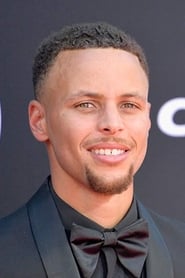


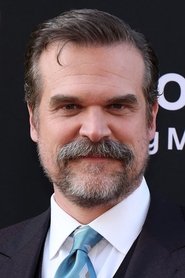
The voice-cast gallery uses six verified TMDB credits with actor portraits and RecapRush person-profile links: Caleb McLaughlin — Will Harris, Gabrielle Union — Jett Fillmore, Stephen Curry — Lenny Williamson, Aaron Pierre — Mane Attraction, Nicola Coughlan — Olivia Burke, and David Harbour — Archie Everhardt. These are voice performers, not live-action depictions of the animals.
The selected gallery is not a complete credits list. Sony’s ensemble also includes Nick Kroll, whose Modo supplies the ownership surprise, Jenifer Lewis as Flo, Patton Oswalt as Dennis, and Jennifer Hudson as Louise. Keeping those relationships clear matters more than treating every name as a celebrity cameo: the story needs a coach, an owner, a parent’s memory, rivals, and teammates around its aspiring star.
Ending Explained
Why is Jett’s pass the emotional climax?
Earlier, another player’s success threatens her sense of uniqueness. In the final, she helps create it. Will’s basket is therefore evidence of two achievements: his ability to compete and her ability to lead without possessing the decisive moment.
Our reading: Jett does not become less important when the ball leaves her hands. Her influence becomes more generous. The film allows an established athlete to contribute to the future instead of treating the future as a hostile replacement.
Who wins the Claw, and who saves the Thorns from relocation?
The Thorns win the championship, with Will scoring the decisive basket. Modo’s separate ownership reveal keeps them in Vineland. The trophy itself does not overturn Flo’s business arrangement.
This distinction gives the ending two kinds of closure: sporting recognition and continued belonging. A city can celebrate a victory and still lose its team unless the ownership problem changes too.
Is Jett’s career definitely over?
The injury is serious, but a definitive retirement or complete recovery should not be invented. Her decision in the final resolves the question of trust, not every question about her athletic future.
More from RecapRush
 The Scandal (2026) Recap & Ending Explained: Why Hui-yeon’s Survival Matters More Than Cho Won’s Last Letter
 Once Upon a Time in the West (1968) Recap & Ending Explained: Why Harmonica Leaves Jill
 The Fixers (2026) Full Series Recap & Ending Explained – Primordial Files Breakdown
That limit makes the moment more interesting. She cannot guarantee that her body will keep delivering the old version of greatness. She can choose how to treat another player now.
Does Will have to stop admiring Jett?
No. He has to stop confusing admiration with obedience. The relationship improves when he can challenge her conduct and she can hear him as a teammate. Growing up does not require pretending his childhood inspiration meant nothing; it requires seeing the person behind it more clearly.
RecapRush Interpretation
GOAT presents two anxieties that can look like opposites. Will worries that nobody will let him begin. Jett worries that everyone is preparing for her to end. Both attach belonging to a public judgment about whether they are still useful.
The difference lies in how they answer that worry. Will keeps seeking participation. Jett initially narrows participation so that her own place feels secure. That is why the film needs more than a montage of the newcomer improving. The obstacle is also a social arrangement that mistakes one athlete’s prominence for the whole team’s health.
We read the diner as the story’s corrective to that arrangement. Its affection has not waited for a perfect season. A community can remember effort, companionship, and shared experience in ways a scoreboard cannot record. Jett needs to encounter that kind of memory before she can imagine a legacy that includes someone else.
This interpretation is RecapRush’s, rather than a statement attributed to the filmmakers. Co-director Adam Rosette did, however, tell Animation World Network that Will’s emotional motivation involves proving his mother right. That documented emphasis helps explain why his dream carries more weight than a desire to become famous.
Deep Analysis & Key Themes
Size is a visual argument before it becomes a slogan
A small character can be easy to overlook in a crowded image. GOAT turns that compositional problem into its subject: the viewer must keep locating Will among bodies that seem better suited to occupying the court.
Head of character animation Daniel Pozo explained to Animation World Network that the production deliberately maintained and sometimes exaggerated differences in scale. This was a design choice, not an accidental impression created by the cast. The visual hierarchy makes Will’s exclusion instantly comprehensible, then lets his movement challenge it.
The appealing idea is that a useful ability need not resemble the ability a system already celebrates. Will does not have to become a larger animal for the game to make room for him.
Jett’s contradiction makes her more than a bully
Jett wants the team to improve, yet resists a newcomer who might improve it. The contradiction is psychologically legible: she wants change that confirms her centrality, not change that makes her confront its limits.
Her insecurity explains the behavior without excusing it. The semifinal is especially important because a win arrives without emotional repair. Achievement cannot retroactively make humiliation or secrecy harmless. The team’s refusal to carry on creates a consequence her talent cannot simply outscore.

A team is not only the people who appear in the highlight
The final play offers a better model of credit than the solitary-star fantasy. Moving an opponent, making a pass, accepting a role, and trusting the coach can all matter even when one player gets the basket.
Modo’s reveal extends that idea beyond the court. It is an abrupt, intentionally silly resolution, and it can make the economic threat feel easier to fix than the interpersonal one. Still, it also prevents the ending from pretending that athletic excellence alone controls what an owner does. Talent needs a place to continue existing.
The animation keeps bodies readable inside spectacle
Pozo described a production approach that combined strong poses with varied frame rates and avoided motion blur. The practical goal was to choose which information a viewer should notice, rather than let speed wash every action into the next.
That choice fits the film’s drama. A sports climax needs a legible decision, not merely movement. We must understand who has the ball and who chooses to release it for Jett’s action to register as a change in character.
The arenas add another expressive layer. Different terrain makes adaptation part of the competition, while saturated uniforms and sharply contrasting silhouettes help separate players. The world is exuberant, but the emotional test remains simple: can these athletes recognize an opportunity that belongs to somebody else?
What Most Viewers Missed
These are details worth revisiting, not claims about measured audience behavior.
- The viral clip and the actual contest tell different stories. Will loses to Mane, yet the recorded moment creates his opportunity. Visibility can reveal potential without being a complete measure of performance.
- The diner offers a different audience. Its support is personal and local, giving Jett a perspective she cannot obtain from protecting a statistical legacy.
- A semifinal win can function as a failure. The result advances the bracket while the conduct breaks the group. The movie asks the audience to judge the way a victory is produced.
- The final has two resolutions. The sporting comeback and the ownership solution answer different threats; one is not proof that the other has disappeared.
- Animal anatomy is part of the play. Height, bulk, posture, and agility give the ensemble different possibilities. The characters’ differences are useful resources, not simply visual decorations.

Mid/Post-Credits
The consistently corroborated extra is audio after the credits, repeating the encouragement “Dream big.” What’s After the Credits identifies the voice as Will’s mother; MediaStinger and RunPee also report the closing audio cue.
Sources differ on material during the rolling credits: MediaStinger describes animated clips, while What’s After the Credits lists no during-credits extras. We can confirm the final audio from multiple accounts without presenting the disputed classification as settled. It is not evidence of a sequel plot or a new scene establishing Jett’s future.
Final Thoughts
GOAT offers the familiar pleasure of an underestimated player earning his chance. Its more rewarding idea is that the person guarding that chance may also be frightened, gifted, and capable of change.
For RecapRush, Jett’s pass earns its place beside Will’s shot because it turns admiration into a working relationship. A hero who once seemed untouchable becomes someone who can listen. A fan who once wanted to be just like her becomes someone she can trust with a different future.
FAQ
Is GOAT really a 2026 animated feature?
Yes. Sony identifies it as a 2026 film. Its Los Angeles premiere was February 6, followed by the February 13 U.S. wide opening. Those are separate events within the same year.
What does GOAT mean in the title?
Will is literally a goat, while GOAT also means “greatest of all time.” The story plays with the gap between an animal others underestimate and the superlative athletes want attached to their names.
Is roarball the same as basketball?
It is a fictional, co-ed, full-contact sport inspired by basketball. The animal players and hazardous environments change the spectacle; this guide does not treat it as a documentary account of NBA rules.
Why does Jett reject Will at first?
His arrival threatens her established status. Her later admission about fearing the loss of her legacy makes that insecurity explicit, while the story holds her responsible for how she treats the team.
Do the Thorns leave Vineland?
No. Modo’s ownership reveal allows them to remain. Winning the championship and keeping their home are separate parts of the conclusion.
Does the ending confirm a sequel or Jett’s retirement?
No confirmed sequel story or definitive retirement is established by the material covered here. The championship and team’s continued home are resolved; Jett’s longer-term recovery should not be invented.
Join the conversation
What did you think of the ending? Share your interpretation. Spoilers may appear below.
This product uses the TMDB API but is not endorsed or certified by TMDB.
No comments yet. Start the conversation.