
RECAPRUSH MOVIE GUIDE
Spider-Man: No Way Home (2021)
Peter Parker is unmasked and no longer able to separate his normal life from the high-stakes of being a super-hero. When he asks for help from Doctor Strange the stakes become even more dangerous, forcing him to discover what it truly means to be Spider-Man.
Overview, poster, and credits from TMDB.
Read and watch our full recap ↓FROM THE RECAPRUSH LIBRARY · FULL RECAP
Spider-Man: No Way Home (2021) Recap & Ending Explained: The Promise Peter Cannot Keep
15 min read · Estimated reading time— views
Intro + RecapRush Viewpoint
Imagine saving the people you love, then meeting them as a stranger. The cruelest moment in Spider-Man: No Way Home happens at a coffee-shop counter, where Peter Parker has rehearsed the words that could bring his life back. He opens his mouth—and chooses a different future.
Jon Watts's film turns a spectacular reunion into an intimate question: what does responsibility cost when it cannot be rewarded with recognition? The returning heroes and villains matter because each carries a version of the answer. Some have mistaken power for permission. Some have learned how grief can change them. Peter is still finding out.
RecapRush Viewpoint: The ending is moving because Peter's sacrifice is voluntary, but it is also troubling because he decides what safety should mean for his friends. This is a story about growing into responsibility, with a final choice that remains painfully imperfect.
Full spoilers ahead: This article discusses May's death, Tobey Maguire and Andrew Garfield's returns, the villains' cures, the memory spell, and the original theatrical release's credits material. The analysis is RecapRush's reading of the film, not a claim about the director's stated intentions.
Featured Image
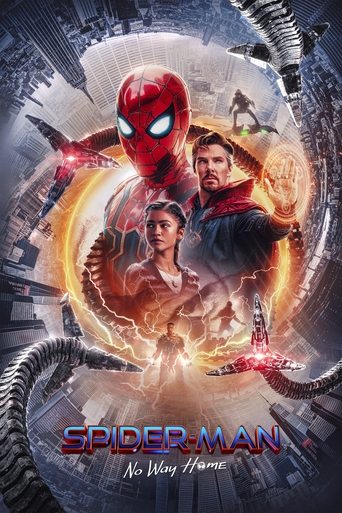
Featured image: TMDB theatrical poster for Spider-Man: No Way Home (2021), movie ID 634649.
Source: https://www.themoviedb.org/movie/634649
Caption: Peter's attempt to repair his private life opens a crisis that reaches across realities. Poster via TMDB; artwork belongs to its respective rights holders.
Table of Contents
Quick Facts
- Title: Spider-Man: No Way Home
- Year: 2021
- Type: Live-action feature film
- Genres: Action, Adventure, Science Fiction; superhero drama
- Director: Jon Watts
- Screenwriters: Chris McKenna and Erik Sommers
- U.S. theatrical release: December 17, 2021
- Runtime: 148 minutes, original theatrical version
- TMDB movie ID: 634649
- Distributor: Sony Pictures Releasing
- Article scope: The original theatrical story and its credits material; this guide does not recap the later extended edition or subsequent films.
Sony confirms the film's identity and creative credits; TMDB supplies its catalog record and credited cast. The published revised final-cut screenplay is a primary reference for the narrative and scene analysis. [1–4]
Full Spoiler Recap
1. A public accusation reaches into private life
Quentin Beck's manipulated account of the London confrontation has exposed Peter as Spider-Man. Peter, MJ, Ned, and May face official questioning and relentless attention. Matt Murdock helps resolve Peter's legal predicament, but a favorable legal outcome cannot make his identity private again.
The damage spreads beyond him. Peter, MJ, and Ned receive MIT rejections amid the controversy. That is the emotional trigger: he can endure people disliking Spider-Man, but he cannot bear the thought that his friends' futures are being narrowed by knowing him.
Notice the difference between those pressures. The accusations attack Peter's reputation; the admissions decisions attack his sense of responsibility. He seeks a solution to the second problem by trying to erase the first.
2. The requested shortcut changes while it is being made
Peter asks Doctor Strange for help. Without the Time Stone, Strange cannot simply reverse events, but he can cast a forgetting spell. Peter then realizes that its reach includes the people closest to him. He repeatedly asks for exceptions while Strange is already working.
The spell becomes unstable. Strange contains it, but the boundaries between realities have already been disturbed. His later discovery that Peter has not first pursued an ordinary admissions appeal makes the entire intervention feel even more reckless.
Peter is frightened rather than malicious. Still, fear does not make the consequences disappear. Strange brings immense capability to a conversation whose terms neither participant has properly settled. The disaster grows out of that mismatch.
3. Old enemies meet the wrong Spider-Man
Peter approaches an MIT official and encounters Otto Octavius on the highway. Otto recognizes Spider-Man's costume, but the face beneath it is unfamiliar. Peter's nanotechnology gives him a way to gain control over Otto's mechanical arms, turning an overwhelming attack into a rescue opportunity.
Strange brings Peter back to the Sanctum, where the interdimensional visitors are being contained. Peter and his friends help locate the remaining arrivals: Electro, Sandman, and Norman Osborn join Otto and the Lizard in the crisis.
The recognition problem becomes the film's central pattern. A familiar role does not guarantee a familiar person. The same name can contain different histories, different losses, and different choices.
4. Returning people is not the same as saving them
Norman, temporarily separated from his Goblin persona, seeks help at May's shelter. The visitors compare their memories, and Peter learns that sending some of them back may return them to the deaths awaiting them in their original stories.
Strange wants to restore the boundary immediately. Peter wants to alter the conditions that made these men dangerous. Their disagreement is about risk: Strange prioritizes a threatened world, while Peter refuses to reduce the visitors to problems that can be exported.
Peter takes the spell-containing device and defeats Strange in the Mirror Dimension through an understanding of its geometry. He leaves Strange trapped and brings the visitors to Happy's apartment, where he has access to technology for developing cures.
The movie does not make Peter's choice cost-free. His compassion is meaningful precisely because its practical judgment can fail. Wanting to help and knowing how to help are different achievements.
5. The first cure works, then the room falls apart
Peter repairs Otto's damaged inhibitor system, restoring the scientist's ability to control his own actions. That success provides evidence that treatment can change the situation. It also encourages Peter to believe that the entire plan can hold together.
Then the Goblin persona resurfaces. Norman's apparent vulnerability becomes an opening for manipulation. The Goblin appeals to the others' desires and fears, presenting Peter's cures as an attempt to take away their power.
The apartment becomes a battleground. May is fatally injured during the Goblin's attack. Before she dies, she insists that helping was the right thing to attempt and gives Peter the principle connecting great power with great responsibility.
Peter is left with an unbearable contradiction: the person who encouraged his compassion has died because she stood beside it. The temptation is to conclude that the entire moral project was foolish. That is the Goblin's deepest victory if Peter accepts it.
6. Two older selves find a younger one in grief
Using Strange's sling ring, Ned opens portals while trying to find Peter. Instead, he and MJ encounter the Spider-Men played by Andrew Garfield and Tobey Maguire. Together, they locate Holland's Peter after May's death.
The older Peters recognize his anger because they have lived their own versions of it. Maguire's Peter speaks from the loss of Uncle Ben. Garfield's Peter carries the death of Gwen Stacy and describes the damage grief did to his behavior afterward.
They cannot prove that everything will be fine. Their more useful gift is to refuse Peter's isolation. They help him return to the work May believed in, and the three develop the remaining cures together.
This is why the reunion works beyond nostalgia. Peter meets people who do not require an explanation of his pain before they are willing to stay with him.
7. The final battle requires a team, not three solos
The Spider-Men lure the villains to the Statue of Liberty. At first, their different fighting habits interfere with coordination. Holland's Peter draws on his team experience to organize them, allowing their shared abilities to become a collective advantage.
The Lizard and Sandman are cured. Otto returns to help remove Electro's power. Ned also inadvertently opens a route that releases Strange from the Mirror Dimension.
When the Goblin attacks, he destroys the device containing the unstable spell. The multiverse breaks open further, and Strange struggles to hold back the incoming threat. MJ falls from the collapsing structure; Garfield's Peter catches her when Holland's Peter cannot reach her.
The rescue is an emotional echo of Gwen's death, not its erasure. Garfield's Peter cannot revise his own loss. He can use the person he has become to prevent another one.
8. Peter nearly turns the cure into an execution
Holland's Peter attacks the Goblin with rage that has become intensely personal. At the decisive moment, he raises the glider to kill him. Maguire's Peter physically stops the strike, holding the younger hero back without a lecture.
The Goblin stabs the older Peter, who survives the injury. Garfield's Peter supplies the cure, and Holland's Peter administers it. Norman returns to himself.
The difference between defeating an enemy and refusing to become him is made visible through bodies: one Peter stands between another and the act he would regret. The film lets intervention do the work that a speech might have weakened.
9. The last spell costs more than the first one
Curing the villains does not repair the ruptured multiverse. Peter proposes a new spell: everyone must forget Peter Parker himself. Strange makes its personal consequence clear. The people who know and love him will no longer remember him.
Peter accepts. He says goodbye to the other Spider-Men and promises MJ and Ned that he will find them and explain everything afterward. Strange casts the spell, and the visitors return to their own realities.
There is no exception carved out for Peter's comfort this time. He understands the price before the intervention begins and stops asking the world to bear it for him.
10. The coffee shop makes the victory harder
Peter visits the shop where MJ works, prepared to tell her and Ned who he is. They are moving toward their college future without remembering their relationship with him. He sees the injury MJ sustained during the battle and abandons his planned explanation.
More from RecapRush
 The Assassin(s) (2026) Story Analysis: What Happens When Loyalty Requires Asking Forbidden Questions?
 Unforgiven (1992) Recap & Ending Explained: Why Munny’s Victory Cannot Make Him Innocent
 Tuner (2026): When a Gift for Listening Becomes a Dangerous Way to Make a Living
At May's grave, Happy remembers knowing her through Spider-Man but does not recognize Peter. Peter later moves into a modest apartment and makes a new suit. The closing swing returns him to the city with his abilities intact and his familiar support system gone.
He has survived. He has saved people. He has also chosen to carry the memory of a relationship without inviting its other participants to decide what should happen next. That is where the ending becomes more interesting than a clean declaration of maturity.
Cast + TMDB
Cast and Characters








Verified catalog match: TMDB movie 634649 — https://www.themoviedb.org/movie/634649
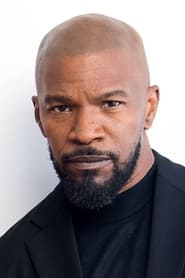
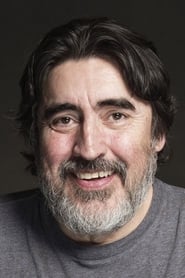
Tom Holland plays the central Peter Parker, with Zendaya as MJ, Jacob Batalon as Ned, and Marisa Tomei as May. Benedict Cumberbatch's Strange supplies the intervention Peter initially believes will fix his life. The returning Spider-Men are played by Andrew Garfield and Tobey Maguire; the principal returning enemies include Willem Dafoe, Alfred Molina, Jamie Foxx, Thomas Haden Church, and Rhys Ifans. The cast gallery below uses this title's credited roles. [1, 3]
Ending Explained
What does everyone forget?
The final request is broader than forgetting that Peter is Spider-Man: people forget Peter Parker. The coffee-shop encounter and Happy's conversation at the grave demonstrate the personal result. Spider-Man still exists, and Peter retains his powers and his own memories.
The film does not comprehensively explain how every photograph, record, or past event is reconciled. Its emotional outcome is explicit; all of its administrative mechanics are not. Treat detailed claims about rewritten documents or every universe's memory as speculation unless another source establishes them.
Why does Peter refuse to tell MJ and Ned?
The screenplay emphasizes MJ's injury and her new life at the moment Peter hesitates. RecapRush reads his silence as protective fear: he sees visible evidence of what proximity to him has cost and decides not to restart that danger.
That explanation does not make the choice unquestionably right. MJ asked him to return. He fulfills the physical part of the promise but withholds the information she wanted. Love motivates the decision, yet fear determines what she is allowed to know.
Did the villains survive their original endings?
The film shows the cures and sends the visitors home. It does not show a complete revised future for every character. The intervention offers the possibility of changed outcomes; it does not provide a documentary tour of those outcomes. Saying that every original death is conclusively undone goes beyond what this film depicts.
Does Peter become less of a hero at the end?
He loses recognition, resources, and relationships, but keeps choosing service. The new suit and final swing make that distinction concrete. His identity as a hero survives the loss of his public and personal place in the world.
RecapRush Interpretation
The beginning and ending mirror each other. Initially, Peter wants a spell that solves the problem while protecting his exceptions. Finally, he accepts a spell that leaves him without them. The movement is from bargaining over consequences to consenting to them.
But the coffee-shop scene prevents that arc from becoming too tidy. Accepting a cost yourself is not identical to making a decision for someone else. Peter grows in courage while remaining vulnerable to the idea that he must manage everyone else's risk alone.
That is the ending's productive tension. We can admire the sacrifice without pretending isolation is automatically wisdom. A hero capable of saving strangers may still struggle to trust people who want to love him.
Deep Analysis & Key Themes
Compassion is tested after it becomes inconvenient
Before May's death, curing the villains feels like an ambitious expression of decency. Afterward, it requires Peter to act against his anger. The moral principle has not changed; the emotional difficulty has.
May's importance is therefore larger than the lesson she states. Her shelter work places care in the film before any spectacular rescue. She sees need where Peter initially sees danger. The final act asks whether he can continue that way of seeing when it hurts.
Otto provides an argument that revenge cannot answer
The repaired inhibitor system gives Peter's plan a tangible success. Otto becomes capable of helping rather than attacking. The same person who once seemed to be a threat becomes necessary to the final rescue.
This does not excuse every violent act. It challenges the assumption that punishment is the only possible response. If an intervention can restore agency, refusing even to attempt it carries its own moral weight.
The Goblin attacks Peter's interpretation of himself
Physical violence is only one part of the Goblin's strategy. He tries to make kindness feel humiliating, a weakness that stronger people exploit. Peter's near-execution would validate that argument: grief would become permission to abandon the very principle May defended.
Maguire's intervention breaks the sequence. Peter does not have to solve the crisis of his own anger without help. The film's clearest act of protection is one hero preventing another from harming himself through revenge.
Three Peters turn repetition into solidarity
The returning heroes are not interchangeable. Their experiences supply distinct warnings and possibilities. Garfield's Peter knows how grief can harden behavior; Maguire's Peter brings a steadier capacity to interrupt a destructive choice. Holland's Peter contributes experience in working with a team.
Each has something the others need. The reunion becomes a model of mutual support rather than a ranking of which Spider-Man is strongest or most authentic.
A public monument carries a private ethical crisis
The Statue of Liberty is being fitted with a Captain America shield, layering one heroic symbol onto another. Against that monumental backdrop, the crucial choices are intimate: catch someone, stop a killing, administer a cure, say goodbye.
RecapRush reads the contrast as a reminder that symbols cannot perform responsibility for us. A hero's meaning is established through actions taken when a symbol is too large and distant to be useful.
What Most Viewers Missed
Peter's scientific thinking matters alongside his strength
The Mirror Dimension sequence and the work on cures place intelligence at the center of his agency. He is not merely borrowing Strange's magic or Stark's resources. He can recognize a pattern, test a solution, and cooperate with other minds.
Garfield's rescue does not erase Gwen
His emotional reaction after catching MJ keeps the earlier loss present. The scene offers another chance to act, not a claim that a new success cancels an old failure. Its tenderness comes from that difference.
The coffee-shop injury is a narrative pivot
MJ's bandage links a quiet everyday scene to the spectacular battle. Peter does not need a new disaster to change his mind; a small remaining mark carries the entire fear. It is a specific visual trigger, not merely a general mood of sadness.
Happy's memory separates the hero from the person
Happy still associates May with Spider-Man while failing to recognize Peter. That conversation helps clarify the spell's visible effect without explaining every technical rule. A public heroic connection can remain while personal recognition disappears.
Mid/Post-Credits
Original theatrical release: The mid-credits sequence shows Eddie Brock and Venom at a bar, trying to understand the unfamiliar superhero world. They are returned to their reality, but a small piece of symbiote remains behind. This is a setup, not proof within this film that Peter will become its host.
The final credits material is a preview for Doctor Strange in the Multiverse of Madness, rather than a second conventional scene extending Peter's story. The later extended edition has different additional material, so reports about alternate credits should not be folded into an account of the original release. [5]
Neither sequence reverses Peter's sacrifice. The main film's last emotional statement remains his return to ordinary heroism without the people who once knew him.
Final Thoughts
No Way Home gives its audience the pleasure of reunion, then asks its central character to surrender his own. That reversal makes the familiar faces feel connected to a real dramatic cost.
The final Peter is more responsible than the one who entered the Sanctum. He is also lonelier, frightened of intimacy, and capable of mistaking silence for protection. Those qualities can coexist. The film earns its ending by letting the victory remain unfinished inside the person who achieved it.
The question to carry away is not simply whether Peter saved the world. It is whether he can eventually accept that the people he saved deserve a voice in how they return to him.
FAQ
Is No Way Home a sequel to Far From Home?
Yes. It begins with the fallout from Peter's exposed identity at the end of Spider-Man: Far From Home. It also brings in characters from earlier live-action Spider-Man film continuities.
Are Tobey Maguire and Andrew Garfield actually in the film?
Yes. They portray their respective versions of Peter Parker and participate in both the emotional recovery and final confrontation.
Does Aunt May survive?
No. May dies after the apartment confrontation. The final memory spell does not resurrect her; Peter visits her grave afterward.
Does MJ remember Peter at the end?
She does not recognize him in the coffee shop. The scene leaves emotional room for the audience to wonder about connection, but it does not establish that her memories have returned.
What is the exact TMDB ID?
The movie ID is 634649. This is a movie record, not a TV-series ID.
Is this a recap of the extended edition?
No. The narrative and credits discussion use the original theatrical release, with differences acknowledged where relevant.
Join the conversation
What did you think of the ending? Share your interpretation. Spoilers may appear below.
This product uses the TMDB API but is not endorsed or certified by TMDB.
Peter saves everyone, but loses his place in their lives. That final coffee shop scene hurts more than any fight. Do you think he was right to leave MJ and Ned without telling them who he was?