
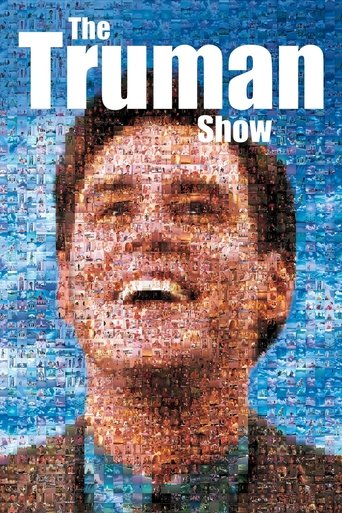
RECAPRUSH MOVIE GUIDE
The Truman Show (1998)
Directed by Peter Weir
In a picture-perfect seaside town, an insurance salesman begins to realize that his entire existence may be staged and observed by a vast unseen audience as part of a long-running real-time reality TV show.
Overview, poster, and credits from TMDB.
Read and watch our full recap ↓FROM THE RECAPRUSH LIBRARY · FULL RECAP
The Truman Show (1998) Recap & Ending Explained: Why Truman Chooses the Unknown
10 min read · Estimated reading time— views
Intro + RecapRush Viewpoint
What if the people who knew you best had been paid to keep you from knowing yourself? The Truman Show turns that question into a funny, frightening escape story. Truman Burbank has a home, a marriage, a best friend, and a cheerful routine. What he lacks is the information that would let him choose any of them freely.
Peter Weir’s 1998 film, written by Andrew Niccol, follows a man whose everyday life is secretly a television production. [1] Its central conflict is not simply reality against illusion. It is a person’s right to uncertainty against a powerful institution’s insistence that managed happiness is enough.
RecapRush viewpoint: The ending is moving because Truman does not discover a perfect life waiting outside. He chooses the right to have an imperfect life that belongs to him. The final audience reaction makes that victory more complicated: he escapes the show, but the appetite that sustained it survives.
Full spoilers ahead: This article covers Seahaven’s artificial world, Sylvia’s removal, Truman’s staged family history, his escape across the water, Christof’s final appeal, and the audience’s response. Plot facts and RecapRush interpretation are distinguished throughout.
Featured Image
Table of Contents
Quick Facts
- Title: The Truman Show
- Year: 1998
- Director: Peter Weir
- Writer: Andrew Niccol
- Genres: Comedy, Drama
- U.S. theatrical release: June 5, 1998
- Runtime: 103 minutes
- Distributor: Paramount Pictures
- Language: English
- TMDB movie ID: 37165
- Article type: Full spoiler recap and ending explanation
The U.S. date is distinguished from the earlier date in TMDB’s general release field. Credits and genres are checked against the title record; U.S. release information is cross-checked against the film’s release history. [1, 3]
Full Spoiler Recap
1. Truman’s ordinary life is somebody else’s production
Truman lives in Seahaven, unaware that hidden cameras broadcast him continuously. Christof oversees the enormous set, while performers fill the roles of family, neighbors, colleagues, and friends. [1]
RecapRush analysis: The cruelty begins with unequal knowledge. Truman must treat interactions as real while everyone around him can treat them as work. His emotional risks are genuine; their professional risks are contractual.
2. Fear keeps the boundaries in place
A childhood boating incident staged as his father’s death gives Truman a lasting fear of water. Messages about travel reinforce the idea that leaving home is dangerous. [1]
The resulting prison does not need a guard at every door. Our reading: Christof has made the boundary feel like Truman’s own preference. Control becomes especially effective when a person experiences it as common sense.
3. Sylvia gives him a reason to look beyond Seahaven
Truman falls for Sylvia, who appears in the show as Lauren. She tries to expose the deception, but is taken away. The explanation that she has moved to Fiji becomes a destination Truman keeps imagining. Outside the production, she supports his liberation. [1, 4]
His attachment matters because it was not the relationship the production planned. RecapRush interpretation: desire becomes evidence of an inner life that cannot be reduced to Christof’s script. Sylvia represents both a person he wants to find and an unresolved contradiction he cannot forget.
4. Technical mistakes turn suspicion into investigation
A falling studio light, a radio transmission describing his movements, and the unexpected reappearance of the actor playing his father disrupt Truman’s assumptions. He begins testing patterns rather than accepting explanations. Attempts to travel encounter conveniently timed obstructions. [4, 5]
The important change is psychological. Truman starts asking whether his experience is being arranged for someone else. Familiarity stops guaranteeing trust.
5. Meryl’s performance breaks under pressure
Meryl repeatedly presents household products in the manner of advertisements. When Truman confronts her, the gap between wife and performer becomes harder to conceal. Marlon offers reassurance while receiving direction from Christof. [4, 5]
Our reading: product placement turns intimacy into inventory. The people closest to Truman are selling access to his attention while claiming to care about his happiness. The betrayal is not merely that they lie. It is that his need for affection becomes useful material for the production.
6. Christof tries to turn discovery into another storyline
The reunion with Truman’s supposedly dead father provides a powerful emotional spectacle. Later, Truman deceives the surveillance system into believing he is still sleeping, slips away, and prompts a search. [5]
RecapRush analysis: an institution built around watching him assumes that visibility equals understanding. His escape begins when he makes that assumption unreliable. He has learned enough about performance to perform for his captors.
7. Truman crosses the fear that held him captive
He sails away. Christof escalates the artificial weather into a dangerous storm, but Truman persists. His boat eventually strikes the painted boundary of the set. [6]
The collision is devastating because it makes an abstract suspicion tangible. Our reading: the horizon was a promise that the world continued; touching it reveals that someone had decided where his world should stop.
8. The creator speaks, and the subject refuses
At the exit, Christof addresses Truman directly and argues for remaining inside. Truman responds with his familiar greeting, bows, and leaves. Sylvia rushes out, viewers celebrate, and the film ends with spectators looking for something else to watch. [4, 6]
The escape is completed. A reunion and a settled future are not shown. Those possibilities remain beyond the film’s ending.
Cast + TMDB
Cast and Characters







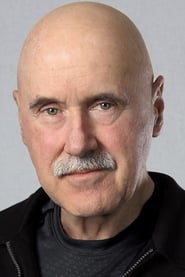


The Cast and Characters gallery uses TMDB movie 37165 for credited roles, portraits, and actor profile links. [3]
The doubled names in several credits matter: the story distinguishes a performer’s identity from the role that performer plays in Truman’s manufactured community. There is no duplicate actor/character table in this article.
Ending Explained
Why does Truman leave if Christof offers safety?
Because safety without meaningful consent is not freedom. RecapRush interpretation: Truman’s decision rejects the claim that comfortable surroundings can compensate for having his choices managed. He does not need to prove the outside world is kind. He needs the chance to encounter it himself.
Does Christof love Truman?
The film presents attachment alongside manipulation, culminating in the storm and the final appeal. [5, 6] Our reading: Christof may feel protective, but he repeatedly treats that feeling as permission to decide what another person should fear, love, and know. Affection becomes possessive when the loved person is denied the right to refuse it.
More from RecapRush
 Minions & Monsters (2026) Recap & Ending Explained: Why the Final Camera Pullback Changes James’s Victory
 Sinners (2025) Recap & Ending Explained: Why Sammie Chooses Music Over Immortality
 The Shawshank Redemption (1994) — Full Spoiler Recap & Ending Explained
Why does Truman use his familiar greeting before exiting?
The greeting was part of his daily routine; at the doorway, he chooses its timing and audience. [4] RecapRush interpretation: a familiar habit becomes an intentional farewell. He does not have to erase every part of his former life to take ownership of it.
Does he reunite with Sylvia?
The film shows her reacting to his departure and rushing out, but does not show their reunion. [6] Hope is justified; a completed romantic future is not a verified plot fact.
Why end with viewers seeking another program?
The spectators’ response punctures the celebration. [6] Our reading: their emotional investment does not automatically become moral responsibility. They can applaud a person’s freedom and still remain consumers of the spectacle that denied it.
RecapRush Interpretation
The doorway offers a more radical ending than a detailed epilogue would. A montage of Truman finding love, work, and happiness could reassure us that leaving was profitable. The actual ending makes his choice valuable before its benefits are known.
That is the ethical center of our reading. Freedom is not a prize awarded to people who can demonstrate they will use it successfully. Truman should have been allowed to choose even if his first independent decisions were foolish, painful, or disappointing.
Christof’s argument relies on comparing a carefully managed environment with the dangers of ordinary life. Truman changes the terms of that comparison. The decisive difference is who gets to choose, not which world contains fewer unpleasant experiences.
Deep Analysis & Key Themes
Manufactured fear and borrowed judgment
The staged drowning makes water an emotional barrier. [1] RecapRush analysis: this gives the escape a double movement. Truman must cross a physical boundary and reconsider an inherited account of danger. Courage here is not the absence of fear; it is the willingness to test the authority behind that fear.
This distinction reaches beyond the story’s machinery. A belief can feel deeply personal while having been shaped by somebody who benefits from it. The film asks us to notice that possibility without dismissing Truman’s pain as imaginary.
Friendship becomes an instrument
Marlon’s reassurance is mediated by Christof. [5] Our reading: the scene exposes how power can borrow the voice of trust. An argument delivered by an executive might provoke resistance; the same argument delivered by a lifelong friend enters through affection.
The injury is therefore relational. Discovering the manipulation means Truman must rethink not only information but memories. He has to ask which shared moments contained care and which contained a direction from elsewhere.
The painted sky and the limits of a worldview
The boat’s encounter with the set boundary supplies the ending’s central image. [6] RecapRush interpretation: the painted sky is convincing until Truman physically tests it. An attractive explanation of the world becomes inadequate when it cannot accommodate the person moving through it.
The door is important for the opposite reason. It offers little visual reassurance about what follows. The manufactured horizon was beautiful and false; the opening is uncertain and usable.
The audience is implicated without being identical to Christof
Watching is not the same act as directing a storm. Nevertheless, the program requires an audience. Our reading: the film distributes responsibility without flattening its differences. Christof exercises direct control; advertisers profit; performers participate; spectators reward the result with continued attention.
The final channel-searching response suggests that liberation alone does not reform that system. The individual story ends, while the commercial habits surrounding it remain available for another story.
What Most Viewers Missed
The ending refuses to make happiness a condition of freedom
We never receive a finished account of Truman’s life beyond Seahaven. That omission keeps his decision from becoming a calculation about guaranteed rewards. This is RecapRush’s interpretation of the film’s ending, not a confirmed statement of Weir’s intention.
Truman uses performance to escape performance
His deception of the cameras and final bow complicate a simple opposition between acting and authenticity. [4, 5] Our reading: performance becomes liberating when he chooses its purpose. The problem was never that he could play a role; it was that everyone else had chosen his role for him.
Sylvia’s importance extends beyond romance
Her attempted disclosure violates the production’s rules. [1] RecapRush analysis: she treats Truman as somebody entitled to the truth, rather than somebody whose ignorance keeps the program working. That recognition is a form of respect before it is a romantic promise.
Mid/Post-Credits
The final spectators’ reaction belongs to the closing narrative, not an imagined sequel tease. [6] IMDb records an unusual end-credit arrangement separating the production’s different worlds. [7]
A separate bonus scene after the credits has not been independently verified for this article. The interpretation above rests on the film’s documented ending, not on an alleged alternate or hidden scene.
Final Thoughts
The Truman Show gives its hero an exit without pretending that an exit answers every question. Truman’s future will require judgment, relationships, and mistakes that nobody has scripted for him.
RecapRush verdict: The painted sky is the spectacular reveal; the choice at the door is the real climax. Truman wins when he stops accepting someone else’s certainty as a substitute for his own life. The audience’s last response asks whether we are ready to value that life when it no longer exists for our entertainment.
FAQ
Is The Truman Show a film or a television series?
It is a 1998 feature film about a fictional television production. TMDB 37165 is a movie ID. [3]
Is everybody in Seahaven acting?
The community is populated by performers and production personnel; Truman is the unwitting subject. [1] His reactions and feelings are not a performance knowingly given for the cameras.
Is Truman’s father actually dead?
The childhood death was staged to create a fear of water, and the performer later reappears. [1, 5]
Does Truman die in the storm?
No. He survives, reaches the boundary, and leaves the set. [6]
Is the outside world another confirmed television set?
The released film does not establish that theory. Its documented ending presents his departure from Christof’s production. Speculation should not be substituted for what is shown.
Join the conversation
What did you think of the ending? Share your interpretation. Spoilers may appear below.
This product uses the TMDB API but is not endorsed or certified by TMDB.
No comments yet. Start the conversation.