
RECAPRUSH MOVIE GUIDE
The Intern (2026)
Directed by Kim Do-young
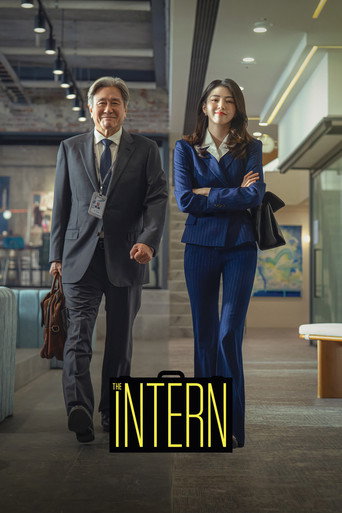
A story about what happens when Seon-wu, the CEO of a fashion company who is more passionate than anyone when it comes to work, hires Ki-ho, who has a wealth of life experience, as a silver intern.
Overview, poster, and credits from TMDB.
Read and watch our movie review ↓FROM THE RECAPRUSH LIBRARY · MOVIE REVIEW
The Intern (2026): Why Seon-wu’s New Beginning Requires More Than a Helpful Colleague
13 min read · Estimated reading time— views
Intro + RecapRush Viewpoint
Being good at your job does not guarantee that your life will feel manageable. You can build something people admire and still spend every day wondering when you will lose control of it. The Korean The Intern (인턴) places that pressure beside a different kind of uncertainty: the fear that, after decades of work, nobody needs what you know anymore.
Han So-hee plays fashion entrepreneur Seon-wu; Choi Min-sik plays Ki-ho, the older newcomer assigned to assist her. Their meeting makes a promising workplace comedy because neither arrives with the answer the other expects. Experience does not automatically translate into fluency with a young company’s tools, and professional authority does not make its founder emotionally invulnerable.
RecapRush viewpoint: The most interesting question here is what support should actually do. A good colleague can help you make your own decisions. That is a more demanding kind of kindness than simply telling you how to repair your life.
Reading guide: This is a sourced story and thematic analysis of Kim Do-young’s Korean adaptation, released in South Korea on September 16, 2026. It is not a firsthand screening review or a complete scene-by-scene recap. Official promotional material establishes the workplace setup, while interviews verify the central ending choice discussed below. Spoilers for that choice follow. Unverified final-scene details are left open.
Featured Image
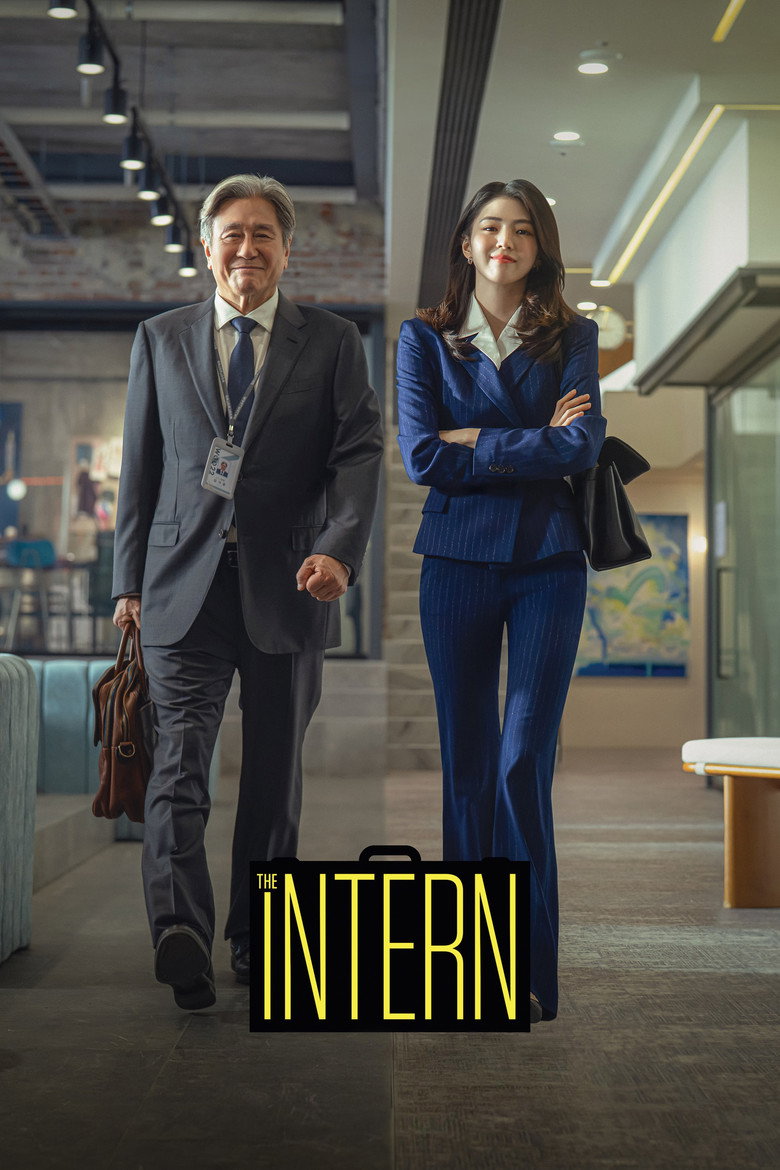
Table of Contents
Quick Facts
| Detail | Verified information |
|---|---|
| English title | The Intern |
| Korean title | 인턴 |
| Release year used here | 2026, based on theatrical release |
| Director | Kim Do-young |
| Country / language | South Korea / Korean |
| TMDB movie ID | 607833 |
| TMDB genres | Drama, Comedy |
| South Korean theatrical opening | September 16, 2026 |
| Runtime | TMDB lists 133 minutes; Cine21 and Weekly Kyunghyang list 132 minutes |
| Korean classification | 12 and older, according to Cine21 |
| Korean distributor | Warner Bros. Korea |
| Adaptation | Korean remake of Nancy Meyers’s 2015 American The Intern |
| Article scope | Verified story guide and character analysis, with a sourced central-ending discussion |
Some catalog pages retain a 2025 production-year label. That should not be confused with the verified September 2026 Korean release. Likewise, runtime listings differ by one minute; neither discrepancy makes this the American movie.
Verified Story Guide
1. A successful company meets an unfamiliar recruit
The company is WOO22, also rendered phonetically as Wootutu. Seon-wu has turned it into a notable fashion business within three years. Ki-ho joins through its senior-intern program after a working life spanning 37 years. Cine21’s synopsis describes an experienced man struggling with digital workflows and a freewheeling office culture before his diligence and communication begin to win her confidence.
There is a useful reversal in that setup. Ki-ho is highly experienced, yet the organization labels him a beginner. Seon-wu occupies the senior position, yet she is still learning how to live with the responsibilities she created. The office can measure hierarchy more easily than maturity.
2. The first obstacle is finding something meaningful to do
Soompi’s account of the character teaser reports Ki-ho’s disappointment when he is given little work, alongside moments of careful, responsive professionalism. Seon-wu is awkward about the idea of an older employee working beneath her.
That awkwardness gives the premise more substance than a simple technology joke. A person can be welcomed ceremonially and still be sidelined practically. In RecapRush’s reading, the challenge is whether an internship offers participation or merely a reassuring label. Being included in a staff photograph is different from being trusted with a responsibility.
3. The surrounding staff make the office a social system
The teaser identifies Young-hwan as the deputy executive and Min-ah as the management-support leader. It also introduces merchandising staff and fellow interns, placing Ki-ho among several kinds of workplace behavior rather than isolating him in a two-person story.
Young-hwan’s promotional reference to the program’s tax benefit is particularly revealing. The company can have a financial reason to hire an older intern even when the resulting relationships become sincere. Motives need not be perfectly pure for a worthwhile connection to develop, but the practical incentive should remain visible.
4. Ki-ho is rebuilding a daily life
Weekly Kyunghyang’s review describes him as a widower whose daughter lives abroad. Applying for the internship offers a way to interrupt his isolation. His return to work therefore carries personal stakes beyond proving that he is still employable.
A schedule can provide structure after loss. It cannot replace the person who has died. Reading Ki-ho through that distinction makes his eagerness more moving: he is entering a new environment with a history he cannot simply leave at the reception desk.
5. Seon-wu’s personal choice changes the adaptation’s direction
Ending spoiler: A September 10 Celuv Media interview with Han So-hee, carried by Nate, confirms that Seon-wu chooses divorce after her husband Min-uk’s infidelity. The report identifies a seven-year marriage and a childless couple. This gives the Korean adaptation a specific separation decision that must not be replaced with an assumed ending borrowed from the American film.
The sources establish that choice. They do not establish every intervening confrontation, the exact legal chronology, or a shot-by-shot final sequence. Those gaps matter when describing a remake: knowing the destination does not authorize inventing its route.
Cast + TMDB
Cast and Characters
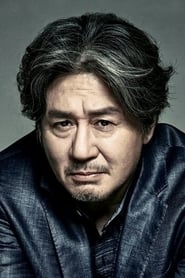








The cast gallery accompanies this section with TMDB portraits, credited character names, and RecapRush actor-profile links. The principal cast records are Choi Min-sik as Kim Ki-ho, Han So-hee as Lee Seon-wu, Kim Jun-han as Young-hwan, Ryu Hye-young as Choi Min-ah, Kim Keum-soon as Hee-sook, and Kim Yo-han as Ju-seong.
Names vary in English reporting: Ki-ho also appears as Gi-ho, and Seon-wu as Sun-woo. These are transliteration differences. This article uses the TMDB character spellings consistently while retaining the spellings found in source titles in References.
The pairing of Ki-ho and Seon-wu supplies the central contrast. He needs an opportunity to contribute; she needs room to acknowledge that competence does not remove the need for other people. The supporting staff keep those needs inside a functioning workplace, where relationships have to coexist with tasks, incentives, and rank.
Ending Explained: The Choice We Can Verify
Does Seon-wu leave her husband?
Yes. Han So-hee’s Celuv Media interview explicitly discusses the divorce ending. Kim Do-young’s YTN interview separately explains the adaptation’s emphasis on Seon-wu moving toward independence. These are stronger grounds than simply guessing from the 2015 story.
Why is the choice important?
RecapRush interpretation: Her decision gives support a boundary. Accepting help from Ki-ho does not require accepting a relationship that has betrayed her. Personal growth can involve becoming more open to trustworthy people while becoming clearer about what she will no longer accept.
The significance is not that separation automatically solves every problem. It is that Seon-wu has a choice to make, and the film’s reported outcome allows her to make it. A reassuring ending can become less honest if it treats the restoration of an existing arrangement as the only possible definition of healing.
More from RecapRush
 Swapped (2026) Recap & Ending Explained: Why Boogle Changes Shape but Never Changes His Mind
 Sinners (2025) Recap & Ending Explained: Why Sammie Chooses Music Over Immortality
 The Social Reckoning (2026) Review & Ending Explained: Why Exposing Facebook Is Only the Beginning
What does Ki-ho’s support accomplish?
The verified setup describes trust developing through work and communication. RecapRush reads that relationship as a potential model of assistance without ownership: helping someone think clearly need not mean taking responsibility for their entire future.
We cannot verify a specific final conversation’s wording, a last-minute executive appointment, or the final image from the sources used here. This article therefore explains the documented decision and its implications, rather than presenting an invented final scene as evidence.
RecapRush Interpretation
The title is a small provocation. “Intern” normally suggests a brief period at the bottom of a career ladder. Giving that label to a veteran asks whether experience has an expiration date—and whether starting again has to be humiliating.
Ki-ho and Seon-wu are vulnerable in different ways. One risks being underestimated because his useful knowledge does not look current. The other risks being overestimated because her authority makes exhaustion difficult to admit. Their contrasting positions suggest a shared problem: other people can mistake a role for a complete description of a person.
The warmth of the premise becomes worthwhile when it creates room for both to change. Ki-ho cannot contribute by insisting that an unfamiliar office become the one he remembers. Seon-wu cannot build trust if she believes needing assistance invalidates everything she has accomplished. Reciprocity requires each to make some space.
Deep Analysis & Key Themes
Experience includes the ability to learn
Cine21’s synopsis places Ki-ho’s initial difficulty with digital work beside the eventual value of his communication. RecapRush’s reading is that these are separate forms of competence. Struggling with a tool does not erase judgment, and good judgment does not excuse refusing to learn the tool.
That distinction prevents an easy generational victory. The older employee does not have to be secretly better at everything for his contribution to matter. Nor do younger colleagues have to be shallow for their practices to feel unfamiliar to him.
Being useful and being valued are different needs
The promotional moment in which Ki-ho has too little to do suggests how quickly welcome can become emptiness. A workplace may reassure someone that they belong while giving them no way to demonstrate it.
The ethical question is larger than productivity. People need roles in which their attention has consequences. For a character seeking structure after bereavement, answering a request or completing a task can carry an emotional importance that the organization does not immediately recognize.
A founder’s dream can become a source of pressure
Seon-wu’s rapid business growth is a verified part of the setup. It creates an analytical tension without requiring invented boardroom events: the thing she wanted now depends on her repeatedly making difficult decisions.
In RecapRush’s reading, asking for support can feel risky to a founder because the company bears her identity. If the dream is personal, a practical problem may start to feel like a verdict on the dreamer. That is why everyday companionship can matter alongside formal business advice.

The poster makes rank less visible than partnership
The featured artwork puts the gray-suited newcomer beside the executive in a blue pinstripe suit. His badge identifies him with the institution; her folded arms and bag give her a different visual presence. They occupy the same office image without dressing alike.
This is an interpretation of the inspected poster, not a claim about an unseen shot. Its appeal lies in showing company before explaining hierarchy. The advertising invites you to imagine them together before asking how their professional positions differ.
A remake needs a reason to make a different choice
The verified divorce outcome gives the adaptation an identifiable point of departure. RecapRush’s reading is that a remake earns interest when its changes alter what the audience is asked to accept, rather than merely updating names and locations.
That does not prove every scene works. Weekly Kyunghyang’s September 16 review is openly critical of the adaptation’s overall execution. The existence of a meaningful change and the success of the complete film are separate questions. Readers deserve that distinction, especially in an analysis assembled from sources rather than a personal screening.
What Most Viewers Missed
These are details worth noticing in the verified materials, not claims about what an entire audience failed to understand.
- The title changes meaning with the recruit. Ki-ho’s seniority in life does not cancel his junior position in this particular organization.
- WOO22 and Wootutu identify the same company. Differences in English rendering can make reports look less consistent than they are.
- Practical hiring incentives remain part of the warmth. Young-hwan’s teaser remark keeps organizational self-interest in view.
- The English spellings vary more than the identity does. Gi-ho/Ki-ho and Sun-woo/Seon-wu should not generate duplicate characters or separate movie entries.
- The ending cannot safely be inferred from the original. The documented separation is precisely why a familiar remake still needs its own fact-checking.
Mid/Post-Credits
We have not independently verified the credit-scene content through an official source or a sufficiently reliable detailed account. Audience posts describe an additional short scene, but those reports alone are not enough for this article to assert its placement, contents, or significance. Credit-scene details remain unconfirmed here.
Final Thoughts
The Korean The Intern offers an appealing question for anyone who has felt either too experienced to begin again or too responsible to ask for help: what would it mean to work beside someone without having to perform invulnerability?
The verified materials point toward a story about mutual recognition, and the reported central ending gives its warmth a sharper edge. Support can make a person more independent. It does not have to return them to the life they were living before the conflict began.
For RecapRush, that is the strongest reason to discuss this adaptation on its own terms. Its characters deserve their own names, circumstances, and choices—not a substituted recap of an earlier movie.
FAQ
Is this the Robert De Niro and Anne Hathaway movie?
This page covers the Korean adaptation directed by Kim Do-young, starring Choi Min-sik and Han So-hee. The American film is its 2015 source material.
When did the Korean film open?
Its South Korean theatrical release was September 16, 2026. The embedded Malaysian trailer promotes October 1 in its own territory.
Why do some websites say 2025?
Some catalogs use a production-year label. The verified theatrical-release year used for this article is 2026.
Is the runtime 132 or 133 minutes?
Cine21 and Weekly Kyunghyang list 132 minutes; TMDB lists 133. Check the local cinema listing for the version being screened.
What is the verified ending spoiler?
Seon-wu chooses divorce after Min-uk’s infidelity, as discussed in Han So-hee’s interview. This guide does not reconstruct every final scene.
Is this a full spoiler recap?
No. It is a sourced story analysis with a verified central-ending explanation. Available reliable sources do not establish a complete scene-by-scene narrative.
Are streaming availability and credit scenes confirmed?
No verified streaming launch or official credit-scene description is established by the sources used here. Neither is invented or inferred from the American film.
Join the conversation
What did you think of the ending? Share your interpretation. Spoilers may appear below.
This product uses the TMDB API but is not endorsed or certified by TMDB.
No comments yet. Start the conversation.