
RECAPRUSH MOVIE GUIDE
Thunderbolts* (2025)
After finding themselves ensnared in a death trap, seven disillusioned castoffs must embark on a dangerous mission that will force them to confront the darkest corners of their pasts.
Overview, poster, and credits from TMDB.
Read and watch our full recap ↓FROM THE RECAPRUSH LIBRARY · FULL RECAP
Thunderbolts* (2025) Recap & Ending Explained: They Save Bob, but Who Owns Their Victory?
15 min read · Estimated reading time— views
Intro + RecapRush Viewpoint
Yelena Belova can complete a dangerous assignment without finding a reason to care about the next day. That is the unsettling place where Thunderbolts begins: survival has become routine, while living feels increasingly remote. The mission that finally changes her life is supposed to erase her from it.
Jake Schreier's 2025 Marvel film brings together people valued for what they can do and discarded for what they have done. Their most powerful opponent is another person caught in the same transaction. Bob Reynolds is promised significance through a superhero identity, but the offer comes from someone who wants to own him.
RecapRush Viewpoint: The film's strongest idea is that belonging must be offered before someone becomes useful, successful, or easy to love. Its ending complicates that idea beautifully: the group earns its solidarity, then watches a politician turn that achievement into a brand.
Full spoilers ahead: This guide reveals Taskmaster's death, Bob's transformation into Sentry and the Void, the team's intervention, the New Avengers announcement, and both credits scenes. The psychological and thematic readings are RecapRush interpretations unless a direct interview is identified.
Featured Image
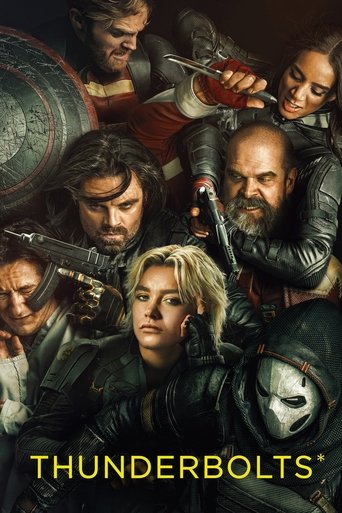
Featured image: TMDB poster for Thunderbolts (2025), movie ID 986056.
Source: https://www.themoviedb.org/movie/986056
Caption: Marvel's unlikely allies confront the consequences of Valentina's secret operations. Poster via TMDB; artwork belongs to its respective rights holders.
Table of Contents
Quick Facts
- Title: Thunderbolts; also promoted after release as The New Avengers*
- Year: 2025
- Type: Live-action feature film
- Genres: Action, adventure, science fiction; superhero drama
- Director: Jake Schreier
- Screenwriters: Eric Pearson and Joanna Calo
- U.S. theatrical release: May 2, 2025
- Runtime: Approximately 126–127 minutes; Disney lists 2 hours 6 minutes, while TMDB lists 127 minutes
- U.S. rating: PG-13
- TMDB movie ID: 986056
The American release date is distinct from TMDB's earlier international release field. The runtime difference above reflects the sources rather than an invented alternate cut. [2, 3]
Full Spoiler Recap
1. Yelena cleans up someone else's secrets
Yelena destroys a laboratory connected to the O.X.E. Group's Sentry project for CIA director Valentina Allegra de Fontaine. Valentina is facing scrutiny of her activities and wants incriminating evidence removed. Yelena, meanwhile, feels disconnected from the work that occupies her life. [4]
RecapRush reads the opening as a sharp division between competence and purpose. Yelena is not ineffective. She is frighteningly effective at a life that has ceased to sustain her. Giving her a more difficult assignment cannot resolve the emptiness she brings to it.
2. The final assignment is a disposal plan
At the Vault, Yelena encounters John Walker, Ghost, and Taskmaster. They have been sent against one another. Ghost kills Taskmaster before the survivors recognize that Valentina is trying to eliminate the operatives along with the evidence. A civilian named Bob is also trapped there. [5]
The surviving strangers must cooperate to escape the incineration trap. Their combined abilities are more useful than their initial rivalry. The rescue establishes the team's first achievement before anyone names it: they stop carrying out the roles their employer assigned them.
Taskmaster's abrupt death also makes the second chance uneven. The movie is not offering redemption to everybody it introduces. One exploited operative is removed before the group can develop a different relationship to her. That loss remains a troubling cost beneath the eventual celebration.
3. Bob's vulnerability conceals extraordinary power
Contact with Bob exposes painful memories, while his own understanding of his situation is fragmented. When he draws Valentina's armed forces away from the others, their bullets fail to stop him. He flies, loses control, and is captured. Valentina realizes that the presumed failed experiment has produced a survivor with immense power. [6]
Bob changes categories in her eyes. Before his abilities become clear, he belongs among the material to be erased. Afterward, he becomes an asset to recover. Nothing about his needs has changed; only his value to her has.
4. Bucky joins the people he first treats as evidence
Alexei helps the escaped operatives, and Bucky Barnes intervenes in their flight from Valentina's forces. Now a congressman seeking evidence against her, Bucky initially regards them as a way to expose the operation. Information from her assistant Mel turns their attention toward Bob and the Sentry project. [6]
The group heads to Valentina's Watchtower in New York. Their cooperation is still prickly rather than polished. They are not suddenly intimate friends because the plot puts them in the same vehicle. What they acquire is a shared reason to act against the person who has used them.
5. Valentina sells Bob a heroic identity
Valentina transforms Bob into Sentry: a costume, altered appearance, and a role as her powerful new champion. He defeats the approaching team with ease. But his power also makes him harder for her to command. When he turns on her, Mel activates the failsafe intended to disable him. [7]
The transformation answers Bob's wish to matter in the worst possible way. It offers superiority instead of security, visibility instead of understanding. Valentina has built an image he is expected to inhabit before she has reckoned with the person inside it.
6. The Void turns private suffering into a public catastrophe
Disabling Sentry does not end the danger. Bob's dark counterpart, the Void, emerges and spreads over New York, turning people into shadows and trapping them in painful memory spaces. The group reunites, and Yelena enters the darkness to reach him. [4]
The film shifts the terrain of the rescue. Conventional firepower has already failed. Inside the Void, Yelena must confront what violence cannot remove from her own history. The enemy is no longer simply a body across the room; the room itself becomes an experience of shame that seems to have no exit.
7. Yelena changes the advice she gives Bob
Yelena finds Bob within his memories. Earlier she has treated painful feelings as something to bury; now she refuses to abandon him inside them. The others follow. When Bob's attempt to fight the Void intensifies the danger, they hold him and help him pull away from it. New York's victims return. [5]
This is the team's decisive change in behavior. They do not discover a stronger weapon or secretly reveal that they were stronger all along. They stop treating the vulnerable person as the obstacle to the mission. Reaching him becomes the mission.
The embrace is not just a sentimental pause after the action. It is the action the climax has been organizing toward: people who have learned isolation choosing to stay present when another person's pain becomes frightening.
8. Valentina takes the microphone before she takes the blame
After the rescue, the group approaches Valentina. She instead stages a public introduction and presents them as the New Avengers, taking credit for bringing them together. Yelena accepts the public position while privately making clear that Valentina's relationship with the team has changed. [4]
The city has genuinely been saved. The explanation offered to the cameras is nevertheless false. That split is the ending's political sting. A good outcome does not ensure that the person responsible for the crisis will be held accountable, especially when she controls the public account of the solution.
Cast + TMDB
Cast and Characters








TMDB movie ID: 986056.
Credited cast and character record: https://www.themoviedb.org/movie/986056/cast
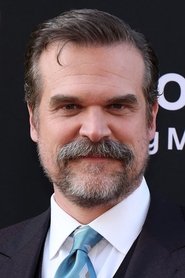
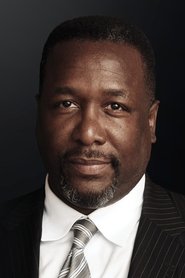
Florence Pugh plays Yelena Belova, Lewis Pullman plays Bob Reynolds, Sebastian Stan plays Bucky Barnes, David Harbour plays Alexei Shostakov, Wyatt Russell plays John Walker, Hannah John-Kamen plays Ava Starr, Julia Louis-Dreyfus plays Valentina Allegra de Fontaine, and Geraldine Viswanathan plays Mel. Olga Kurylenko returns as Antonia Dreykov / Taskmaster. [2, 3]
Pugh gives the film an emotional register that survives the jokes. Yelena's irritation and vulnerability can coexist without requiring one to be a disguise for the other. Pullman's performance has a different task: make Bob's uncertainty, Sentry's confidence, and the Void's destructive pull recognizable as connected aspects of one character.
Harbour's Alexei contributes warmth through an imperfect parent who wants his daughter to feel the value he sees in her. Louis-Dreyfus makes Valentina's power conversational. She does not need to announce herself as a monster when she can make exploitation sound like opportunity.
Ending Explained
How can a group hug stop someone this powerful?
The film has established that overpowering Sentry physically does not work. Its final conflict is internal, and the group's contact interrupts Bob's isolation while helping him separate from the Void. The rescue does not involve secretly defeating a stronger opponent with superior strength. [5]
Schreier directly explains in his ComingSoon interview that the story could not resolve its particular conflict through punching and that the embrace also functions as an active effort to pull Bob back. Eric Pearson's Den of Geek interview confirms that emotional connection was central to his proposed ending. [8, 9]
More from RecapRush
 Paths of Glory (1957) Recap & Ending Explained: Why Dax Cannot Save the Men
 Matchbox The Movie (2026) Recap & Ending Explained: Why Sean Needs His Old Friends to Stop Helen
 Adolescence (2025) Recap & Ending Explained: Why Jamie’s Guilty Plea Cannot Give His Father Closure
RecapRush interpretation: The team succeeds because it refuses the condition Valentina attached to Bob's importance. He does not have to perform invulnerability to deserve their presence. They reach the man precisely when the superhero persona has failed him.
Is Bob permanently cured?
The film does not establish that. Its later credits scene shows Bob avoiding his powers because he fears another emergence of the Void. The immediate catastrophe ends; the risk and the need for ongoing care do not disappear. [10]
As a story about isolation, the ending is strongest when read as the beginning of support rather than the completion of recovery. Its fantasy mechanism is not a literal model of mental health treatment. Within the film's own logic, a moment of connection changes what is possible without promising that nothing difficult remains.
Why do they become the New Avengers?
Valentina publicly supplies the name after their actual rescue. The team has earned recognition, but her announcement also lets her present the results of her failed operation as evidence of her successful leadership. The title's asterisk leads to this new identity. [4, 7]
There are therefore two origin stories. The group is created by the people choosing to help one another. The public superhero team is created by a political announcement. The final scene asks us to notice the distance between those origins.
Has Valentina won?
She has avoided immediate public defeat, but she no longer holds the same unquestioned control over the operatives. Yelena's private warning asserts leverage. The film ends with a compromised arrangement rather than a clean acquittal or punishment. [4]
RecapRush reads that compromise as deliberately uncomfortable. A public name can grant the group resources and visibility while attaching it to the official who harmed its members. Their next challenge is not simply another opponent; it is maintaining their autonomy inside a structure willing to market it.
RecapRush Interpretation
Thunderbolts distinguishes being assembled from becoming a team. Valentina puts operatives in relation to one another to destroy them. Their cooperation reverses the purpose of that arrangement. She can place people in a room, but she cannot take moral ownership of the trust they develop there.
The same distinction shapes Bob's story. A costume can produce a recognizable superhero image without producing a person who feels safe in it. Sentry's grandeur and Bob's insecurity do not cancel one another; the former can become a way of avoiding the latter.
The ending's modest achievement is that the group can see him without demanding the image. Its unresolved problem is that the wider world is still offered an image of the group. Saving Bob and becoming the New Avengers happen close together, but they are not the same kind of success.
Deep Analysis & Key Themes
Yelena's emotional exhaustion is not a shortage of talent
The plot does not reward her with meaning merely by escalating the danger. Her skill has already sustained dangerous work. What changes is the relationship between her actions and other people: she stops clearing away evidence for an employer and starts making herself present for a person.
This is a more interesting character movement than discovering confidence. She needs a reason to use the confidence she possesses. The rescue allows her experience of pain to become a bridge, rather than something she must conceal to remain employable.
Valentina offers conditional recognition
Valentina's vocabulary of improvement serves her priorities. Bob matters because he can become a useful symbol. The operatives matter when they can be converted into a useful team. Their pasts are obstacles or bargaining material rather than histories she feels responsible for acknowledging.
RecapRush reads the contradiction as the film's sharpest account of exploitation. Recognition can be flattering and still coercive. Being told you are important is not equivalent to being treated as someone with the right to refuse.
The memory rooms give shame a physical architecture
The Void turns painful recollection into a space its captives cannot easily leave. That makes the experience of being stuck legible through doors, rooms, and repeated encounters rather than a speech explaining distress.
Pearson's interview credits Schreier with developing the visual rooms that gave the internal conflict concrete form. [9] Our reading is that the architecture creates a useful difference between escape and accompaniment. Yelena cannot simply delete Bob's history. She can enter the space and prevent his being alone in it.
The film's empathy does not erase the Taskmaster problem
Taskmaster's death is an especially uneasy element in a movie asking us to care about exploited people. The film grants some operatives time to form relationships and gives another almost none. That asymmetry is visible even if the later emotional resolution works for the surviving characters.
RecapRush does not read her death as proof that she is less redeemable. It reveals a limit in where the film directs its attention. A moving account of second chances can still leave the audience wondering why one person never receives the narrative space to take hers.
Bucky's role connects experience to responsibility
Bucky's involvement carries the weight of a person familiar with being used as an instrument. Here he also possesses an institutional role. RecapRush reads the combination as productive tension: he seeks an official route to accountability but must respond to what the people in front of him reveal.
His contribution is not to become the most spectacular figure in the climax. It is to participate in a collective response that does not reproduce the logic of the people who treated these lives as disposable.
What Most Viewers Missed
The first successful team action happens before the name
Cooperating in the Vault is already a rejection of the intended script. The group does not begin because Alexei produces a label or because Valentina announces one. Those names arrive after people start behaving differently toward each other.
Bob's three presentations are not three unrelated people
In Disney's interview, Pullman says he and Schreier worked to preserve connections among Bob's different facets. [7] That is worth watching in the changes of confidence and posture: the performances need differences, but the story needs continuity. Treating the Void as an entirely unrelated intruder would weaken the internal conflict the ending resolves.
The victory has two audiences
Bob experiences people refusing to leave him. The press conference audience sees an official presenting a superhero team. RecapRush reads the separation as the final irony: an intimate act of solidarity becomes evidence in someone else's story about authority.
The final credits refuse an effortless power upgrade
Bob's continued caution prevents the rescue from becoming a convenient way to give the team an unrestricted superweapon. It preserves a consequence. The others must live with the person they saved, not simply deploy the power he contains. [10]
Mid/Post-Credits
Mid-credits: Alexei proudly promotes a cereal box featuring the New Avengers to an uninterested shopper. The gag turns his longing for public recognition into a small, awkward moment rather than a universal celebration. [10]
Post-credits: Fourteen months later, the team discusses a naming dispute with Sam Wilson, Bob's reluctance to use his powers, and a space crisis. An alert reveals an arriving extra-dimensional spacecraft bearing the Fantastic Four's “4” emblem. [10]
The image identifies a connection; it does not, by itself, explain every motive of the arriving characters. This guide does not turn that brief setup into an invented plot for another movie.
Final Thoughts
The most satisfying thing about Thunderbolts is that its characters become heroic before their public image catches up. They make a difficult choice for a person who cannot guarantee their safety or reward. Their value comes from that choice, not from the official label attached afterward.
The film is less tidy about who gets redemption and who escapes accountability, and those rough edges deserve attention. Yet its central rescue gives the spectacle a human purpose. Bob is not saved because he finally becomes the perfect hero. He is saved when the others decide he does not need to be perfect to stay with them.
FAQ
Is Thunderbolts* the same film as The New Avengers?
Yes. The New Avengers identity is revealed at the end and used in post-release promotion; it is not a separate movie in this article. [7]
Does Taskmaster survive?
No. Ghost kills Antonia Dreykov during the Vault confrontation. Do not confuse her appearance in the cast or marketing with membership in the final surviving team. [5]
Who is Bob?
Robert Reynolds, the surviving Sentry experiment subject played by Lewis Pullman. His powers and the Void are central to the crisis. [2, 7]
Why does Yelena enter the Void?
She chooses to reach Bob when physical force has failed. The decision makes personal connection part of the rescue rather than a reward after it. [5, 8]
Are there two credits scenes?
Yes: Alexei's cereal encounter and the later Watchtower scene featuring the incoming spacecraft. [10]
Does the ending permanently remove the Void?
No permanent guarantee is established. Bob's later concern about using his powers explicitly leaves the danger unresolved. [10]
Join the conversation
What did you think of the ending? Share your interpretation. Spoilers may appear below.
This product uses the TMDB API but is not endorsed or certified by TMDB.
No comments yet. Start the conversation.