
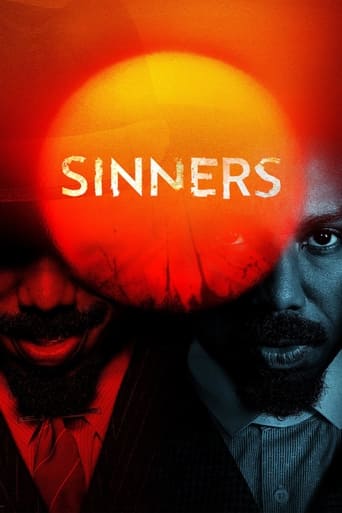
RECAPRUSH MOVIE GUIDE
Sinners (2025)
Trying to leave their troubled lives behind, twin brothers return to their hometown to start again, only to discover that an even greater evil is waiting to welcome them back.
Overview, poster, and credits from TMDB.
Read and watch our full recap ↓FROM THE RECAPRUSH LIBRARY · FULL RECAP
Sinners (2025) Recap & Ending Explained: Why Sammie Chooses Music Over Immortality
12 min read · Estimated reading time— views
Intro + RecapRush Viewpoint
Major spoilers ahead. In Sinners, a single night of music becomes a battle over who gets to own a culture, a memory, and a soul. Ryan Coogler begins with twin brothers trying to build one free room in 1932 Mississippi, then turns that room into the target of a vampire congregation that promises safety by erasing difference.
RecapRush’s view is that the film’s deepest conflict is not simply human beings versus monsters. It is a contest between two kinds of togetherness. Inside the juke joint, people create community through distinct voices, imperfect desires, arguments, labor, and rhythm. Outside, Remmick offers a painless collective in which every voice becomes part of his own. Sammie survives because he chooses the harder freedom: a mortal life, a personal sound, and memories that still hurt.
Featured Image
Table of Contents
Quick Facts
- Title: Sinners
- Year: 2025
- Genre: Horror, action, thriller, music drama
- U.S. theatrical release: April 18, 2025
- Runtime: 138 minutes
- Writer and director: Ryan Coogler
- TMDB movie ID: 1233413 — TMDB title page
- Spoiler status: The complete plot, ending, and both credits scenes are discussed below
Full Spoiler Recap
1. Smoke and Stack come home with a plan
In 1932, identical twins Smoke and Stack return to the Mississippi Delta after years in Chicago’s criminal world. They have cash, liquor, confidence, and an ambition that is both practical and defiant: they buy an old sawmill from the racist landowner Hogwood and plan to open a juke joint that very night. In a landscape governed by segregation and white violence, the brothers are trying to create a Black-owned place where their community can make money, dance, drink, and briefly belong to itself.
The twins recruit people who give the building a pulse. Their cousin Sammie, a preacher’s son, brings his guitar and an extraordinary blues voice. Cornbread provides muscle at the door. Grace and Bo Chow supply food and signs. Delta Slim, a seasoned musician carrying his own scars, takes the piano and harmonica. Pearline arrives as a singer, and the room quickly becomes more than a business.
The brothers also reopen old emotional wounds. Smoke reconnects with Annie, a Hoodoo practitioner and the woman with whom he once shared a child who died. Stack meets Mary, the white woman he loved and left behind. Stack believed distance would protect her from the dangers attached to him; Mary experienced that choice as abandonment.
2. Sammie’s song opens more than a party
When the juke joint opens, Sammie’s performance transforms the night. Coogler visualizes the idea that rare musicians can reach across time: past and future performers seem to enter the room, with instruments and styles from different eras sharing the same groove. The sequence does not play like a literal history lesson. It makes cultural inheritance visible. Sammie is not producing music alone; he is receiving, changing, and passing forward a living tradition.
That power also attracts Remmick. Before reaching the juke joint, the Irish vampire has attacked Joan and Bert, a white couple living nearby, and folded them into his group. Remmick hears Sammie’s music and wants access to the gift behind it. His vampires cannot enter the juke joint without an invitation, so they stand outside, smiling, singing, and presenting themselves as harmless musicians in search of shelter.
The people inside are suspicious. Annie recognizes the danger and explains the rules as she understands them: the creatures can imitate familiarity, but the threshold still matters. The door therefore becomes more than a horror device. It marks the border between a community choosing its members and a power demanding to be welcomed in.
3. Mary returns, but she is no longer alone
Stack steps outside to meet Mary. Their unfinished love makes him vulnerable, and she turns him. When Stack later appears at the door, his face and memories still look like his own, but his will is now connected to Remmick’s collective. The film’s tragedy is that genuine affection remains inside the corruption. Mary loves Stack; Stack still cares about Smoke and Sammie. Yet the vampire bond converts those feelings into channels through which the group can gain entry.
Meanwhile, the juke joint’s fragile peace breaks down. Wounded pride, desire, fear, and confusion separate people who were safe only while they acted together. Grace eventually invites the vampires inside in the hope of recovering Bo, not understanding—or refusing to accept—the price of that invitation. Once the threshold is crossed, the communal sanctuary becomes a slaughterhouse.
4. The night turns into a siege
Remmick’s group attacks. Friends and neighbors are bitten and absorbed into the vampire chorus. The transformed do not become mindless animals; they speak with the voices and knowledge of the people they used to be. That makes every confrontation more painful. The survivors must fight bodies they recognize while hearing intimate memories used against them.
Annie’s knowledge gives Smoke and Sammie a chance. Wooden stakes, garlic, silver, and sunlight have practical value, but survival also depends on refusing the vampires’ emotional bargains. Delta Slim sacrifices himself so others can move. Annie is mortally wounded after protecting Smoke, forcing him to lose the person who represented both his greatest love and his unresolved grief.
Smoke, Sammie, and the remaining survivors fight their way toward dawn. Pearline is turned, and the growing collective closes around the musicians. Sammie’s talent remains Remmick’s main prize: if Remmick can possess the artist, he believes he can gain the spiritual reach carried by the music.
5. Sunrise destroys Remmick’s promise
Smoke incapacitates the vampiric Stack rather than destroying his twin. Sammie and Smoke then confront Remmick. They hold him long enough for sunrise, and daylight burns Remmick and the linked horde. The victory exposes the weakness inside his offer of eternity. Remmick promised that nobody would be alone, yet the entire community depended on one dominating center. When that center falls, the forced unity collapses with it.
The night is over, but the human threat has not disappeared. Hogwood arrives with Ku Klux Klan gunmen to take the property and kill the brothers. Smoke has been wounded and knows he is unlikely to leave. He sends Sammie away, then faces the attackers. Smoke kills them, but his injuries are fatal.
As Smoke dies, he sees Annie and the daughter they lost. The vision does not erase the violence or certify a simple religious answer. It gives his death an emotional shape: after a life built around control, toughness, and protection, he can finally stop fighting and imagine himself reunited with the family he could not save.
Sammie returns to his father’s church, bloodied and carrying his damaged guitar. His father asks him to give up the blues. Sammie refuses. He walks away to pursue music, carrying the joy and the horror of the juke joint with him.
Cast + TMDB
Cast and Characters










The gallery below is generated from the film’s verified TMDB credits. Select a performer to open the RecapRush profile and filmography page. Michael B. Jordan plays both Smoke and Stack, while the ensemble’s credited roles connect every major strand of the juke-joint story.
Ending Explained
Why does Smoke spare Stack?
Smoke cannot reduce his brother to a monster, even after Stack has been turned. Their bond is the one relationship that Remmick’s collective never fully owns. The mid-credits scene later confirms that Smoke let Stack and Mary leave after Stack promised not to harm Sammie. That choice is compassionate but not sentimental: Smoke accepts that his brother will continue in a form he does not understand, while drawing a boundary around the young artist they both protected.
More from RecapRush
 Mousetrap (2026) Full Series Recap & Ending Explained – Who Is the Real Rat?
 Beware Boiúna (2026) Recap & Ending Explained: Why Lena Survives Without Killing the Serpent
 Avengers: Endgame Encore (2026) Recap & Ending Explained: What the New Footage Changes
Why does Smoke fight the Klan when he is already wounded?
The vampires are supernatural, but Hogwood’s men represent the older system waiting outside the fantasy. Smoke’s final fight prevents the morning from becoming a restoration of white control. He cannot keep the juke joint, and he cannot survive, but he can stop its killers from taking Sammie too. The sequence makes clear that dawn ends one danger, not the conditions that produced the brothers’ need for a sanctuary.
Why does Sammie reject immortality?
Remmick and, later, Stack can offer an endless lifespan. Sammie chooses authorship instead. His music matters because it comes from a particular human being living through time, loss, faith, temptation, and change. Immortality would preserve his body while threatening to freeze or absorb the individual voice that makes his art meaningful.
What does Smoke’s final vision mean?
The film shows Smoke seeing Annie and their child as he dies. Whether the moment is an afterlife, a dying vision, or an emotional image is left open. In narrative terms, it resolves the grief he carried in silence. His hard exterior was partly an attempt to survive a loss he could not repair. The vision allows him a form of peace without pretending that the world was fair to him.
RecapRush Interpretation
The juke joint is the film’s central image of freedom, but it is not a perfect refuge. Money changes hands, jealousy flares, marriages strain, and the brothers enforce their own rules. Its value comes from that human messiness. People enter as themselves and add something particular to the room.
Remmick’s gathering offers the opposite. He speaks persuasively about escaping hatred and division, and his group performs together with seductive precision. The cost is consent, privacy, and difference. Every new vampire contributes memories to the whole, but nobody retains complete ownership of those memories. RecapRush reads the vampires as an image of cultural consumption: they admire Sammie’s gift so intensely that they decide they must possess its source.
Sammie’s survival therefore does not mean purity has defeated sin. He has crossed lines his father warned him about, and he will live with trauma. What he protects is the right to transform experience into a voice of his own.
Deep Analysis & Key Themes
Music as memory and a door through time
Sammie’s performance joins generations that could never physically share a stage. The blues contains pain, labor, humor, desire, and resistance accumulated across lives. By showing future musical forms inside the 1932 performance, the film frames tradition as movement rather than museum preservation. A tradition survives when artists answer it in their own language.
That is why the vampires’ interest is so dangerous. They do not merely want to hear the song. They want permanent access to the force that creates it. Appreciation turns into extraction.
Smoke and Stack: protection versus escape
Michael B. Jordan’s twins embody different survival strategies. Smoke tries to control risk through preparation and force. Stack treats charm, speed, and departure as forms of protection. Both methods fail the people they love in different ways. Smoke cannot protect Annie from the night, while Stack’s attempt to protect Mary by leaving creates the wound through which she reaches him.
Their names also function as a pair: a smokestack is a single structure, but the brothers spend much of the film trying to operate as separate men. Their final separation is literal. Smoke dies in daylight; Stack continues in darkness.
Faith, folklore, and the false comfort of simple categories
Sammie’s father treats sacred music and the blues as opposing roads. The film complicates that divide. Annie’s spiritual knowledge saves lives, Sammie’s supposedly dangerous blues creates transcendent beauty, and religious language can be used either to guide or to frighten. The closing song does not cancel Sammie’s blues career. It suggests that the sacred and secular sounds have always spoken to each other inside him.
The threshold and the politics of invitation
The vampire rule that requires an invitation gives each doorway moral weight. Grace opens the door because grief makes the impossible promise of reunion feel reasonable. Her choice is understandable, but it dissolves the protection shared by everyone inside. The sequence turns consent into a communal issue: one person’s desperate yes can expose an entire group when the power requesting entry is dishonest about what inclusion means.
What Most Viewers Missed
- The supernatural and historical climaxes are deliberately separate. Remmick dies at sunrise, but the Klan arrives afterward. The ordering refuses to let a monster story replace the ordinary terror of racist power.
- The vampires preserve memory but destroy context. They can repeat personal knowledge and cultural material, yet they flatten different histories into one shared consciousness. Remembering everything is not the same as understanding someone.
- Sammie’s broken guitar is not a sign that music failed. He carries it out as evidence that art can be damaged, repaired, and continued. The instrument survives the night in the same imperfect way he does.
- Smoke’s mercy shapes the real epilogue. Stack and Mary’s survival is not a late reversal of the climax. It reveals a private choice Smoke made while still protecting Sammie.
- The church song completes rather than corrects the blues. Young Sammie singing “This Little Light of Mine” after the full credits joins his religious upbringing to the musical future he chooses.
Mid/Post-Credits
Sinners contains two important credits sequences.
The mid-credits scene jumps to Chicago in 1992. An elderly Sammie, now a successful blues musician, receives two visitors who have not aged: Stack and Mary. They offer to turn him, but he declines. Stack honors the promise made to Smoke and does not force the choice. Sammie plays for them and admits that although the juke-joint night still gives him nightmares, the hours before the violence were the best time of his life. Survival has not simplified the memory. Joy and trauma remain attached to the same song.
The post-credits scene returns to young Sammie before the main events, singing “This Little Light of Mine” with his guitar. It leaves the audience not with the vampire attack but with the source of his voice. His later blues is not a rejection of everything he learned in church; it grows from the same need to make inner experience audible.
Final Thoughts
Sinners works because its horror never overwhelms its people. The vampires are frightening, but the film spends enough time building the juke joint that its destruction feels like the loss of a possible world. Every plate of food, painted sign, musical cue, and reunion helps create that world before the doors fail.
The ending is tragic without being defeated. Smoke and Annie are gone, Stack and Mary live outside ordinary time, and Sammie carries wounds into a long career. Yet the music reaches 1992—and, through the film’s time-crossing performance, far beyond it. Remmick wanted to own that reach. Sammie proves that art travels further when nobody owns the artist.
FAQ
Is Sinners based on a true story?
No. It is an original film written and directed by Ryan Coogler. Its setting and racial violence draw on real American history, while its central characters and vampire plot are fictional.
Who plays the twins Smoke and Stack?
Michael B. Jordan performs both roles.
Who is the main vampire?
Jack O’Connell plays Remmick, the vampire who leads the collective surrounding the juke joint.
Does Stack die?
No. The mid-credits scene confirms that Smoke spared the transformed Stack, who continues living as a vampire with Mary.
Does Sammie become a vampire?
No. He survives the night, refuses immortality when it is offered decades later, and becomes a successful blues musician.
Are there scenes after the credits begin?
Yes. There is a substantial mid-credits epilogue set in 1992 and a shorter post-credits scene featuring young Sammie.
Join the conversation
What did you think of the ending? Share your interpretation. Spoilers may appear below.
This product uses the TMDB API but is not endorsed or certified by TMDB.
No comments yet. Start the conversation.