

RECAPRUSH TV GUIDE
Take Charge of My Heart (2026)
An electrically charged screenwriter and a resort heir with a failing artificial heart enter a three-month arrangement that tests the difference between dependence and love.
Overview, poster, and credits from TMDB.
Read and watch our full season recap ↓FROM THE RECAPRUSH LIBRARY · FULL SEASON RECAP
Take Charge of My Heart (2026) Recap & Ending Explained: Why Bo-bae Must Be More Than Ho-rang’s Lifeline
16 min read · Estimated reading time— views
Intro + RecapRush Viewpoint
Imagine finally finding someone you can touch, then learning that touching him could kill him. That reversal gives Take Charge of My Heart its most effective emotional problem. The supernatural arrangement that opens a door to intimacy becomes another reason for Na Bo-bae to stand outside it.
Netflix’s ten-episode Korean romantic comedy pairs a screenwriter whose body emits electricity with a corporate heir whose artificial heart needs power. Their solution sounds like a perfect contract: she keeps him alive while he supplies the dating experience her writing lacks. The difficulty is that a useful arrangement can become an uncomfortable hiding place. It allows two people to remain close without admitting that they want to be chosen.
RecapRush’s viewpoint: the romance becomes convincing when the charging bargain stops being sufficient. Ho-rang must want Bo-bae when she cannot serve as his solution. Bo-bae must believe her presence has value beyond what her body can provide. The finale’s emotional payoff is therefore larger than a functioning heart: it is the possibility of being loved without having to earn that love through usefulness.
Full spoilers follow for all ten episodes, including the anniversary attack, Do-yoon’s downfall and the final sofa scene. The electrical powers and artificial-heart mechanics are fantasy devices within the series. Interpretations below are RecapRush readings, not statements of confirmed creator intent.
Featured Image

Table of Contents
Quick Facts
- English title: Take Charge of My Heart
- Korean title: 나를 충전해줘
- Year: 2026
- Country / original language: South Korea / Korean
- Format: completed ten-episode limited series
- Release: all ten episodes on Netflix, October 9, 2026
- Director: Park Soo-won
- Writer: Song You-chae
- Source material: Haebeon’s Naver web novel Charge Me Up
- Lead performers: Kim Young-kwang and Chae Soo-bin
- TMDB TV ID: 289423
- Season scope: Season 1, Episodes 1–10
- TMDB genres: Sci-Fi & Fantasy, Comedy, Drama
- Episode lengths: approximately 59–67 minutes
- Coverage verified: October 24, 2026
Netflix confirms the production, leads, release and ten episode descriptions. The TV identity, genres, cast mapping and TMDB-hosted images were cross-checked through a TMDB-backed record.
Full Spoiler Recap
1. Episodes 1–2: Two bodies become each other’s exception
Bo-bae is a struggling television writer who has spent years managing the danger of ordinary contact. A childhood lightning strike left her capable of shocking people. Gloves and distance are practical protections, but they also separate her from experiences she is expected to write about convincingly.
Ho-rang, an executive at TS Resort and a candidate to lead his family’s TS Group, hides a different vulnerability beneath his controlled public appearance: his artificial heart is losing power. Their accidental encounter reveals an extraordinary exception. Bo-bae does not hurt him, and her proximity can recharge his heart.
A hospital power failure and a three-month wait for another operation make that discovery urgent. Meanwhile, Bo-bae faces a deadline for her romance-writing contract. Ho-rang proposes a bargain that links the two clocks: she will keep him charged, and he will help her work through a romance bucket list.
The arrangement is comic because the characters can describe it as logistics. It is moving because each has found somebody around whom a private limitation briefly stops being isolating.
2. Episodes 3–4: Domestic proximity changes the deal
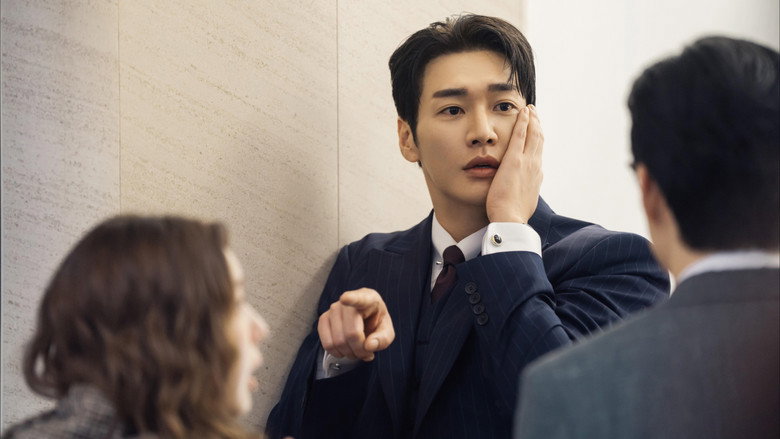
Bo-bae moves into Ho-rang’s home, and their first contracted date turns writing research into lived experience. She also becomes his personal assistant, giving their closeness a workplace explanation as well as a medical one.
A difficult birthday meal with Ho-rang’s family exposes the difference between being valued as a successor and being cared for as a person. Bo-bae’s small surprise reaches him in a way the family performance cannot. The gesture matters because it is not a demand that he prove anything.
Their routines begin to exceed the contract’s purpose. Staying close is necessary, but attention, embarrassment and pleasure do not remain neatly inside that necessity. The series lets the same physical arrangement carry two meanings: keeping a battery charged and discovering what companionship feels like.
3. Episodes 5–7: Other relationships expose what neither wants to name
Han Seol-hee brings Ho-rang a marriage proposal, which he rejects. Actor Ji Eun-ho grows closer to Bo-bae, whose writing ability begins to receive recognition. Ho-rang’s jealousy reveals that his attachment is no longer merely concern about access to a charger.
Eun-ho’s interest also gives Bo-bae an identity outside the house and the medical bargain. She is a writer and a person someone can admire, not simply an unusual condition to be managed. Yet fear persists: getting close to someone she cares about might make her responsible for another injury.
The emotional distance gives the succession conflict room to tighten. Ho-rang’s cousin Choi Do-yoon wants the position Ho-rang is expected to inherit, while Seol-hee’s calculations intersect with that rivalry. The romance and corporate plot meet around a shared question: who gets to decide what another person is worth?
The cousin’s resentment has a terrible history. As a child, Do-yoon falsely told Ho-rang’s parents that their son was in danger. They died in a crash while hurrying to the hospital. His jealousy set that tragedy in motion; it is not evidence that he deliberately engineered the collision. Years later, remorse has not freed him from comparison.
4. Episodes 8–9: The anniversary attack turns intimacy into a rescue
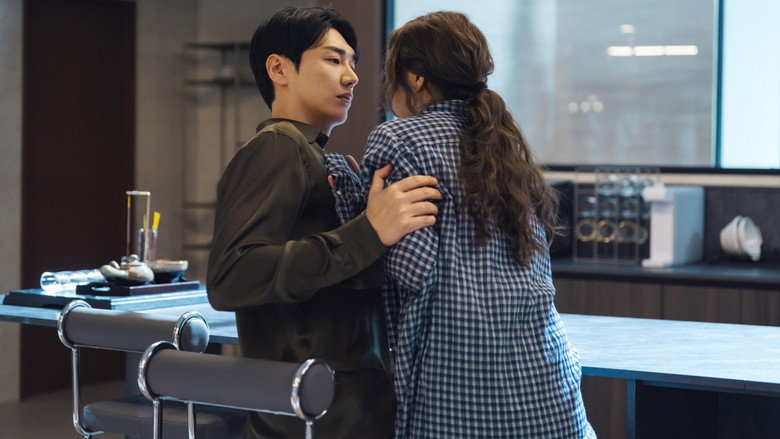
Bo-bae and Ho-rang begin dating. As Ho-rang prepares for the succession announcement at TS Group’s thirtieth-anniversary celebration, Do-yoon removes the person most capable of keeping him alive. Bo-bae is abducted and confined at a temple, while Ho-rang’s drink is tampered with so his heart battery drains rapidly.
Ho-rang collapses during his speech. Bo-bae escapes using her power and arrives with Jae-ho. She sends a massive electrical discharge through Ho-rang while trying to revive him. His heartbeat returns, but the effort leaves her unconscious.
The rescue does not restore the previous arrangement. Ho-rang receives a new artificial heart, and Bo-bae is warned that her electrical touch could interfere with it fatally. The quality that once made them uniquely compatible now appears to make them incompatible.
Bo-bae leaves for her family home in Daejeon. This is a retreat born of love and fear rather than indifference. But making the decision alone also protects her from hearing an answer she cannot control.
5. Episode 10: Love survives the loss of its original excuse
Bo-bae discovers that her shocks have stopped. Previous heavy discharges produced temporary interruptions, so she cannot immediately treat the silence as permanent. Ho-rang follows her to Daejeon rather than accepting separation as the only responsible response.
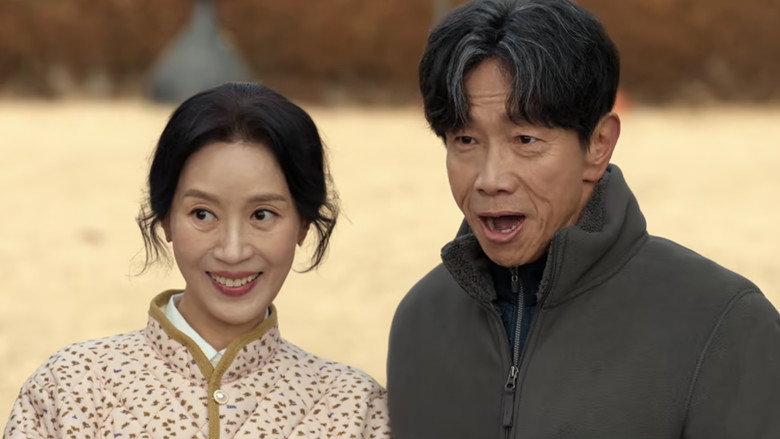
Helping with her parents’ grape-jam business gives him a different kind of test. His title cannot substitute for showing up. Her father’s reminder about responsibilities also keeps the romance from becoming an escape from the rest of life. Bo-bae eventually chooses to return to Seoul with him.
Do-yoon’s temporary advantage collapses under his own conduct. His relationship with Seol-hee deteriorates, and a drunken driving incident leads to arrest. His involvement in the attack further destroys his succession prospects. Ho-rang is restored to the family’s leadership path, with expectations still attached.
Bo-bae’s professional story receives its own resolution. The Bodyguard in My Heart goes into production with her friend Seo-jeong directing and Eun-ho appearing in a cameo. Ho-rang supports the work instead of merely financing a solution to her life.
The couple finish together, watching her drama. Ho-rang becomes emotional when her writing credit appears. A small final shock is treated in their exchange as possible static. It does not injure him. The story closes on a shared life rather than a new separation.
Cast + TMDB
Cast and Characters



The gallery uses three verified principal performer records from the TMDB-backed series listing and links their RecapRush profiles: Kim Young-kwang as Baek Ho-rang, Chae Soo-bin as Na Bo-bae, and Cha Woo-min as Ji Eun-ho. It does not fill additional portrait slots with unverified records.
The credited supporting story also includes Jung Jae-kwang as Choi Do-yoon, Shin Do-hyun as Han Seol-hee, and Heo Dong-won as Yun Jae-ho. Spellings vary slightly across English-language coverage; this article uses a consistent form rather than treating those variations as different characters.
Ending Explained
Do Bo-bae and Ho-rang end up together?
Yes. They reunite, return to Seoul and share the final domestic scene. The relationship survives the collapse of the charging contract. That distinction matters: being medically useful brought Bo-bae into Ho-rang’s life, but usefulness is no longer the reason she stays.
Why does Bo-bae leave after saving him?
The operation changes the fictional medical stakes. She is told her electricity could damage his new heart. Leaving feels like the safest way to protect him, especially because she has spent years anticipating the harm her touch might cause.
More from RecapRush
 Spirited Away (2001) — Full Spoiler Recap & Ending Explained
 Freefall: A Reckoning for Boeing (2026) Explained: What Accountability Means After the Warnings
 The Scandal (2026) Recap & Ending Explained: Why Hui-yeon’s Survival Matters More Than Cho Won’s Last Letter
RecapRush reads this as the return of an old coping method. Distance has kept other people safe, but it has also taught Bo-bae to experience her own presence as a threat. The reunion requires a decision about the relationship, not merely a favorable technical result.
Does Bo-bae permanently lose her powers?
Her power remains absent far beyond the short interruptions previously known to her family. The final jolt, however, has divided published interpretations. Some coverage reads it as a possible return; other accounts describe it as ordinary static or do not treat it as a supernatural event at all.
The most careful conclusion is narrower than either certainty: the couple experience a small shock without injury, discuss static, and remain together. No verified creator explanation establishes a permanent cure or a confirmed return of the old power.
RecapRush’s reading: static fits the scene’s emotional scale. An everyday inconvenience replaces a lifelong source of fear. But that is interpretation, not a scientific answer to the fantasy.
What happens to Do-yoon?
His attempt to replace Ho-rang fails. Reckless behavior, arrest and exposure of his actions remove the credibility his temporary position depended on. His downfall is not simply that he loses a contest. He repeatedly chooses to damage people rather than endure being measured against his cousin.
Why does Ho-rang cry at Bo-bae’s writing credit?
Her name on the screen recognizes work that existed before their arrangement and continues beyond it. Earlier, she needed romantic experience to solve a writing problem. At the end, he becomes the audience for what she has made.
This reverses their original imbalance. She is no longer inside his story primarily as a means of keeping him alive. He is inside hers as someone able to celebrate her achievement.
RecapRush Interpretation
Bo-bae’s electrical condition makes a familiar emotional belief visible: closeness is dangerous, and someone will eventually pay for wanting it. Ho-rang’s heart provides the opposite fantasy. He is the exception around whom she can stop calculating every gesture.
The series wisely makes that exception insufficient. If their future depended only on compatible equipment, the romance would remain a lucky technical match. The changed heart forces them to ask whether affection can survive when the original explanation for being together no longer works.
Ho-rang has a parallel problem. Wealth gives him the language of contracts, succession and control, while illness exposes how little those things guarantee. His growth is clearest when he enters Bo-bae’s ordinary family routine. Helping with jam is small beside running a resort, but smallness is the point: it makes care measurable without a title.
Neither the power loss nor the family’s approval proves their lives will become effortless. The final scene offers something more modest: they have learned to sit inside uncertainty without immediately turning it into distance.
Deep Analysis & Key Themes
The contract protects both characters from rejection
A bargain gives them a reason to meet and a reason not to confess. If a date goes badly, it can be called research. If Ho-rang needs Bo-bae near him, it can be called charging. Each can preserve pride by pretending the closeness is required.
The danger is that neither knows when obligation ends and desire begins. Jealousy helps expose that ambiguity, but it cannot resolve it. Only a choice made after the original exchange breaks down can establish that the relationship is wanted.
Gloves turn self-protection into a daily performance
Bo-bae’s gloves protect others, yet they also announce a boundary before she has spoken. The fantasy turns emotional caution into costume. Removing that barrier with Ho-rang is therefore more than a romantic gesture; it briefly changes how she occupies a room.
Her professional difficulty deepens the irony. She must write intimacy while continually rehearsing avoidance. The series does not suggest that writers need to live every scene they create. It uses her blocked romance script to dramatize how fear can narrow the experiences she permits herself to imagine.
The two three-month deadlines are deliberately unequal
Ho-rang needs a bridge to surgery. Bo-bae needs a path toward a viable script. One deadline involves survival and the other a threatened career, so their arrangement is never perfectly symmetrical.
Yet the drama gives both stakes emotional weight. Bo-bae’s work is not an optional decoration around his crisis. The finale’s writing credit corrects the temptation to treat the woman’s ambition as something that can wait until the man is saved.
Do-yoon cannot imagine worth outside comparison
The cousin’s childhood lie and adult attack share a logic: if Ho-rang’s advantage is removed, Do-yoon will finally become enough. But sabotaging someone else does not create the competence or emotional security he lacks.
His family environment helps explain the wound without excusing his choices. The story’s moral distinction is between suffering comparison and making others suffer because of it. Bo-bae also feels inadequate, but her movement is toward creating something; Do-yoon’s is toward disabling a rival.
The rescue reverses the meaning of touch
At first, contact seems dangerous to everyone except Ho-rang. Later, contact saves him. After surgery, the warning makes it dangerous again. These reversals stop touch from functioning as a simple symbol of healing.
RecapRush reads the pattern as an argument against treating love as automatic rescue. Care requires attention to changed circumstances. The series resolves this through fantasy, but its emotional question remains recognizable: how do you stay close without assuming yesterday’s way of helping will always work?
The final screen is a better reward than another boardroom
The succession result settles an external struggle. Bo-bae’s credit settles the more intimate question of whether her life can expand. Watching together turns Ho-rang from someone who hires her presence into someone who witnesses her accomplishment.
The distinction is subtle but valuable. He does not need to be the author of her success for her success to move him.
What Most Viewers Missed
The birthday surprise anticipates the family-business detour
Both situations strip care of grandeur. A modest gesture reaches Ho-rang after a tense family performance; ordinary work later lets him show commitment to Bo-bae’s parents. The romance becomes legible through attention rather than spectacle.
Removing her power also removes an excuse
The absence of electricity gives Bo-bae relief, but it also unsettles the explanation that made her indispensable to Ho-rang. She must discover that being needed and being loved are not interchangeable. His pursuit matters because it answers that fear through continued presence.
The writing project mirrors the relationship without replacing it
Bo-bae’s romantic research becomes part of a creative result, but the finale does not reduce their experience to material she has collected. His tears at her credit acknowledge the labor and vulnerability behind the finished fiction.
The final shock should not be inflated into a sequel announcement
A small unresolved beat is not confirmation of another season, a new villain or a medical catastrophe. The closing tone remains affectionate. The useful question is what that uncertainty does to their behavior: this time, they stay together.
Mid/Post-Credits
A separate mid-credits or post-credits narrative scene was not reliably verified in the sources checked. The sofa scene and Bo-bae’s on-screen writing credit belong to the described finale resolution; the credit for her fictional drama is not evidence of a hidden stinger in the actual series.
Final Thoughts
Take Charge of My Heart asks its fantasy machinery to do a great deal. Charging ranges, surgical changes and disappearing powers are flexible enough that viewers seeking a hard set of supernatural rules may remain dissatisfied. The relationship works on a different level.
Bo-bae begins by hoping one exceptional man can make her ordinary. The ending gives her a more generous possibility: an ordinary shared life can make room for what remains unresolved about her. Ho-rang begins by needing her body’s usefulness and ends by crying at the evidence of her voice.
RecapRush verdict: the series’ best payoff is not that love recharges a heart. It is that love eventually becomes more than a charging arrangement. The final uncertainty is small enough for two people to hold together.
FAQ
How many episodes does Take Charge of My Heart have?
The completed limited series has ten episodes, released on Netflix on October 9, 2026.
What is the Korean title?
나를 충전해줘, commonly romanized as Nareul Chungjeonhaejwo.
Is it based on a webtoon?
Netflix identifies the source as Haebeon’s Naver web novel Charge Me Up. It should not be relabeled a webtoon without separate evidence.
Who plays Bo-bae and Ho-rang?
Chae Soo-bin plays Na Bo-bae. Kim Young-kwang plays Baek Ho-rang.
What is the verified TMDB identity?
The series is TMDB TV 289423. This article covers its first and only released ten-episode limited-series season.
Does Ho-rang survive?
Yes. Bo-bae revives him, he receives another artificial heart, and he is alive with her at the end.
Is the final spark proof that her powers return?
No definitive return is established. The characters discuss static, the small shock does not harm him, and published explanations differ.
Does Bo-bae succeed as a writer?
Yes. Her drama enters production and airs; the couple watch her writing credit together.
Is the ending happy?
The central couple reunite, her work moves forward and Do-yoon’s scheme fails. The story leaves a small uncertainty about electricity without undoing their shared future.
Join the conversation
What did you think of the ending? Share your interpretation. Spoilers may appear below.
This product uses the TMDB API but is not endorsed or certified by TMDB.
No comments yet. Start the conversation.