
RECAPRUSH MOVIE GUIDE
Titanic (1997)
Directed by James Cameron
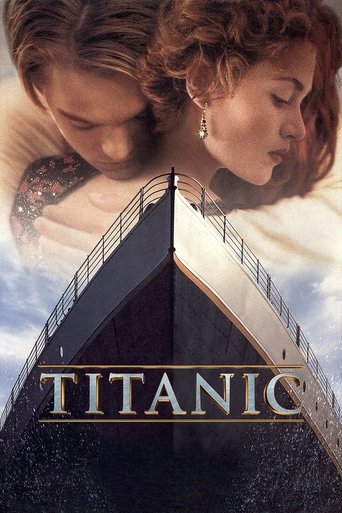
An elderly survivor recounts how her romance with a young artist aboard Titanic changed her life before the ship’s disastrous maiden voyage ended.
Overview, poster, and credits from TMDB.
Read and watch our full recap ↓FROM THE RECAPRUSH LIBRARY · FULL RECAP
Titanic (1997) Recap & Ending Explained: The Life Rose Chooses to Keep
12 min read · Estimated reading time— views
Intro + RecapRush Viewpoint
Everyone knows the ship will sink. Titanic finds its suspense in a different uncertainty: whether Rose will get to decide what her life is for. James Cameron places a brief, fictional romance inside a historical catastrophe, then lets the survivor determine how that romance will be remembered.
The RecapRush viewpoint: the film’s real destination is the life after the love story. Its tragedy would be smaller if Rose’s only meaningful act were to mourn Jack. What makes the ending moving is the suggestion that remembering someone can include doing things they never lived to see.
This is a full-spoiler recap of Cameron’s released 1997 theatrical film, not an earlier Titanic adaptation or a reconstruction of every historical event. Jack and Rose are fictional central characters. Interpretive passages below are original RecapRush analysis; the recap, credits and film identity are sourced separately.
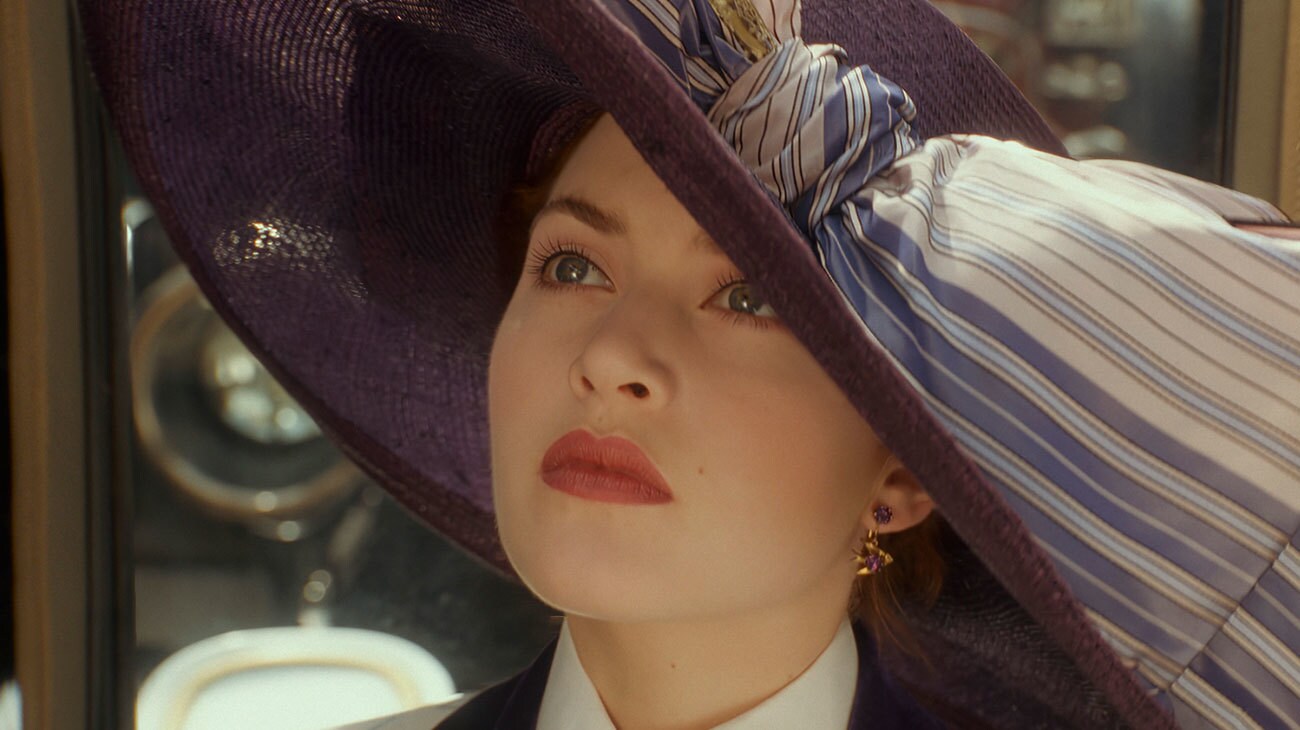
Featured Image
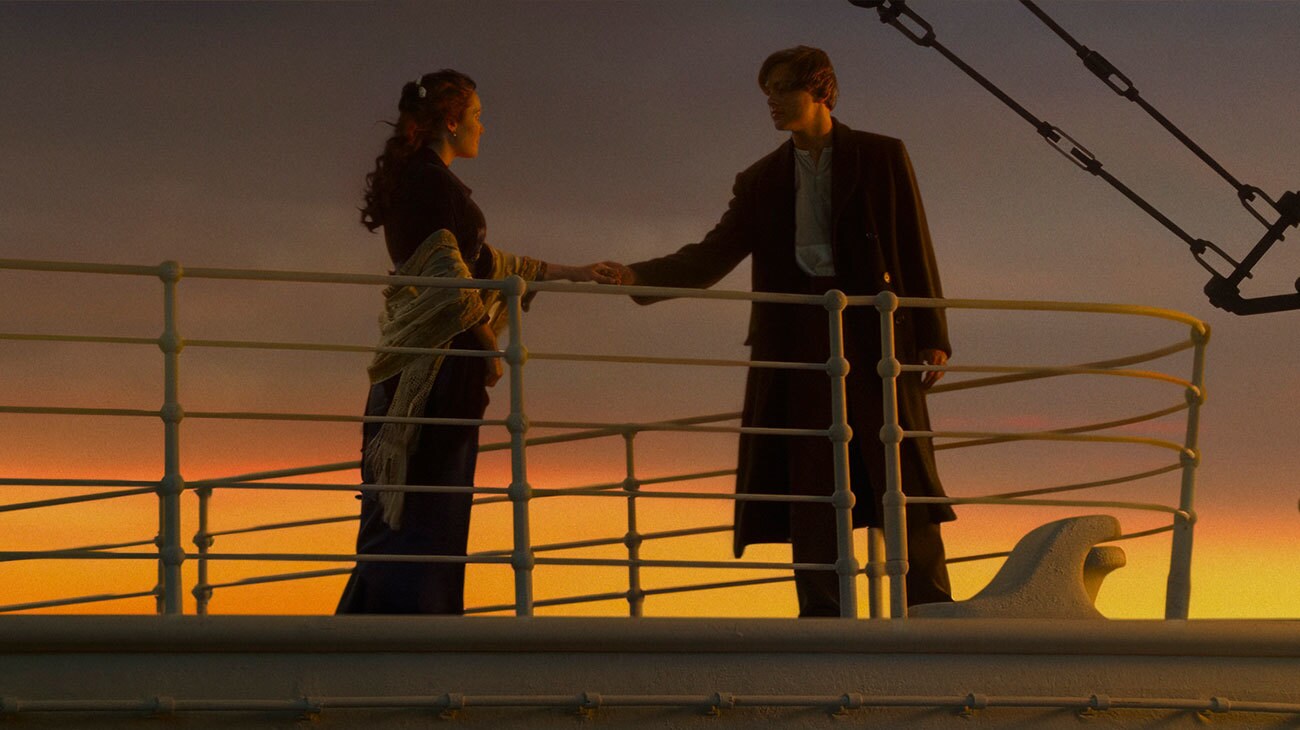
Table of Contents
Quick Facts
- Exact title / year: Titanic / 1997
- Writer and director: James Cameron
- Producers: James Cameron and Jon Landau
- Original US theatrical release: December 19, 1997
- Runtime: approximately 3 hours 15 minutes; catalogue and release-version listings differ by a few minutes
- Original language: English
- Genres: drama and romance; a historical disaster setting
- US rating: PG-13
- Collection position: #6 in RecapRush’s fixed October 29, 2026 Worldwide lifetime box-office snapshot; independent of Weekly Box Office
AFI verifies the original release and filmmaking credits. ACMI identifies the exact work as tmdb-movie-597. Later anniversary and 3D releases concern the same underlying film. The saved collection rank is not a claim about a new 2026 movie. No gross figure is displayed here. [1, 2, 3, 4]
Full Spoiler Recap
1. A treasure hunt encounters a witness
In 1996, Brock Lovett’s expedition searches the wreck for the Heart of the Ocean diamond. A recovered drawing leads to the elderly Rose, who recognizes herself as its subject. She joins the research vessel and begins describing a voyage the team has approached mainly through its objects. [2]
The framing matters: we learn about the ship through a person with a reason to remember it differently from the men searching it. Their equipment can retrieve evidence, but cannot tell them what a few days meant to the people living through them.
2. Rose’s future has already been negotiated
In April 1912, Rose boards Titanic with her mother Ruth and fiancé Cal Hockley. Marriage to Cal is supposed to protect the family’s finances and social standing. Jack Dawson, meanwhile, wins passage in a poker game. When Rose approaches the stern in despair, Jack persuades her to step back from the edge. [1]
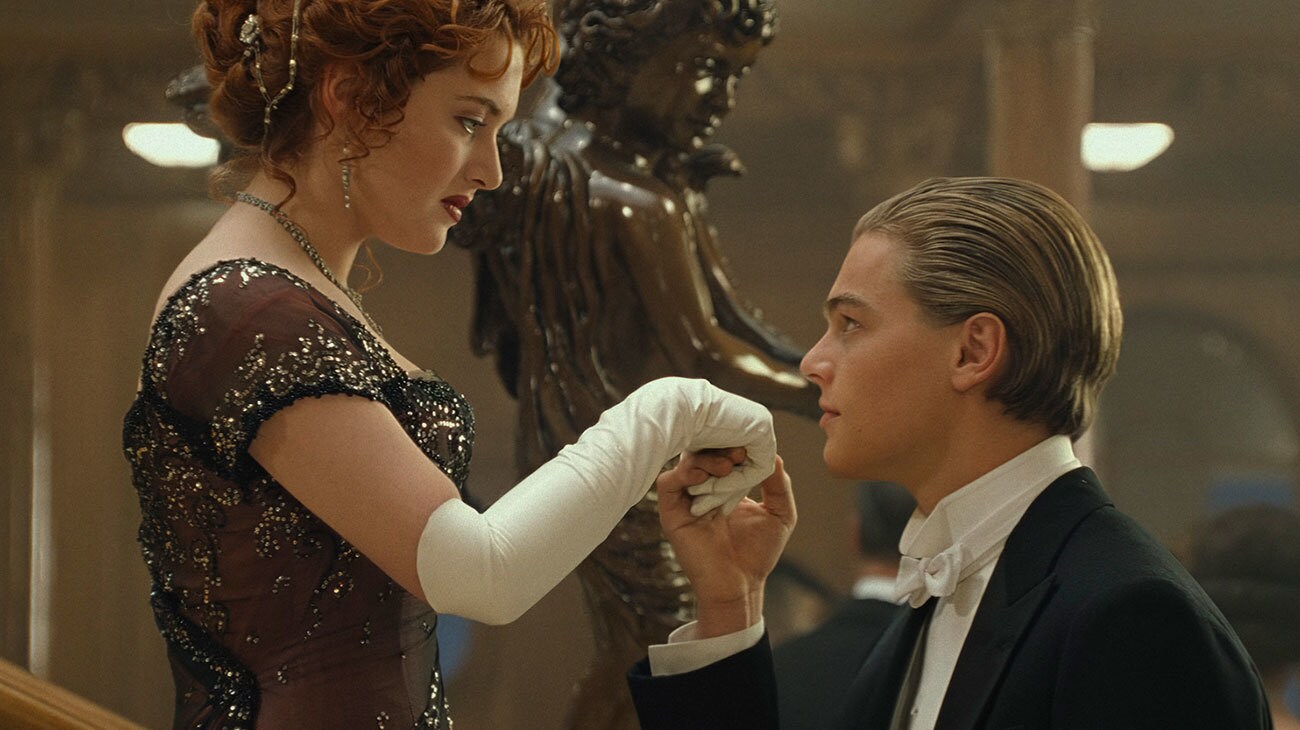
Rose explains that he saved her, and Jack receives an invitation to a first-class dinner. Their growing attraction crosses an order that treats his presence as a temporary exception. He then introduces her to the much less formal celebration below decks. [1, 5]
3. Attraction becomes a choice
Rose chooses Jack despite the pressure to remain with Cal. She asks Jack to draw her wearing the diamond, then leaves the portrait for her fiancé. The lovers evade Lovejoy, find privacy in a car, and later witness the collision with the iceberg. [5, 6]
Cal discovers the portrait. The necklace is planted on Jack, allowing Cal to have him detained as a thief. What Rose experienced as a declaration of independence becomes, in Cal’s hands, an accusation against the person who helped her imagine it. [6]
4. Rescue requires returning
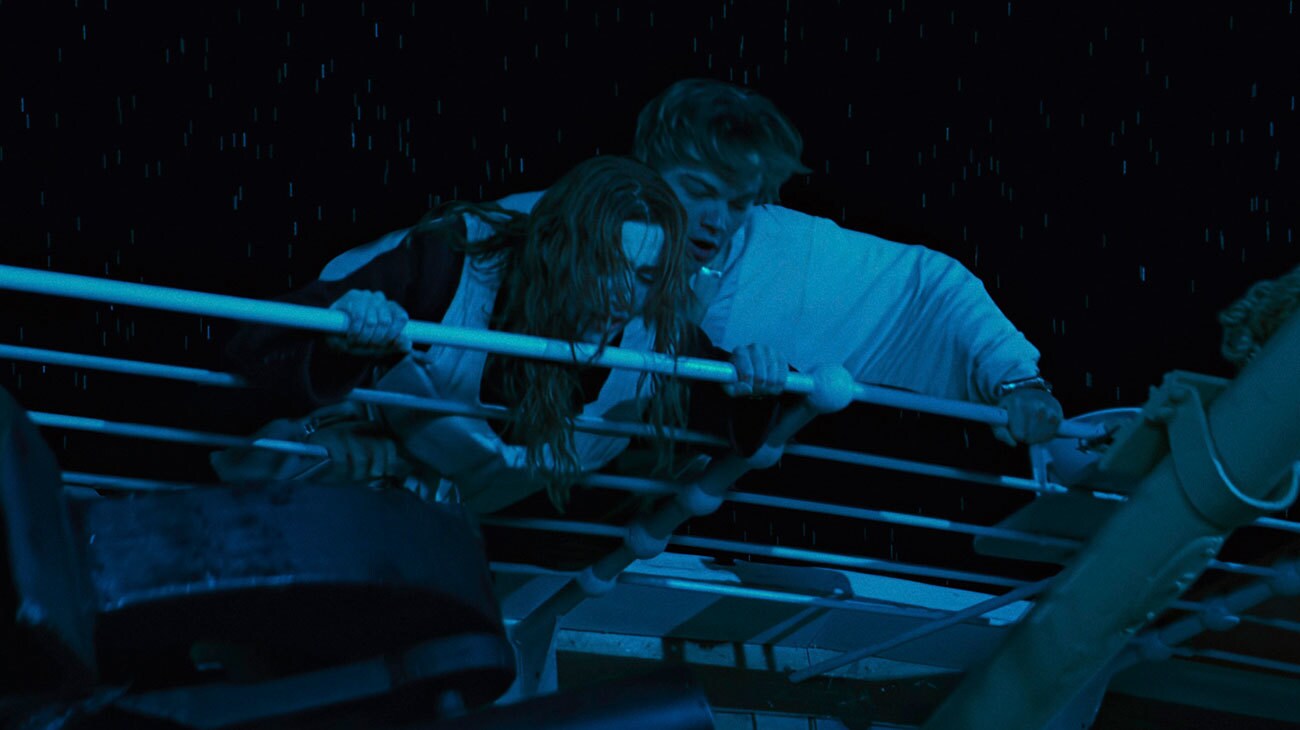
As the ship floods, Rose goes back for Jack and frees his handcuffed wrist with an axe. They return to the boat deck. Cal urges Rose into a lifeboat while falsely reassuring her about Jack’s prospects. Rose climbs back aboard Titanic rather than leave him. Cal fires at the couple as they escape into the flooding interior. He later gains a lifeboat place by pretending to be a child’s father. [6]
This is the point where the rescue story becomes reciprocal. Jack’s earlier intervention does not remove Rose’s capacity to act. The crisis gives that capacity increasingly physical consequences.
5. The ship disappears; the promise remains
Jack and Rose reach the stern as the ship rises, breaks and sinks. In the freezing water, he helps her onto floating wooden wreckage. Their attempt to share it fails; Jack stays in the water. He urges her to survive, but dies before help reaches them. Rose lets his body go, uses a whistle to attract a returning boat and is rescued. [5, 7]
On Carpathia, Rose avoids Cal and gives her name as Rose Dawson. She has survived the catastrophe without returning to the future arranged for her. [7]
6. The last possession is not the last word
Back in the present, Rose secretly returns the diamond to the sea above the wreck. The film shows photographs of her later life before returning to a restored Titanic, where the young Rose meets Jack at the Grand Staircase amid applause. [7, 8]
The literal sequence is clear; its final transition is open to interpretation. The ship has not physically risen, and Jack has not returned to ordinary life. We have moved into an image of reunion.
Cast + TMDB
Cast and Characters
The roles below are verified against Paramount’s official cast listing and AFI. They refer to the 1997 film. Some supporting characters portray real passengers or crew; the romantic leads are fictional. [1, 3, 9]
- Leonardo DiCaprio: Jack Dawson
- Kate Winslet: Rose DeWitt Bukater
- Gloria Stuart: elderly Rose
- Billy Zane: Cal Hockley
- Kathy Bates: Molly Brown
- Frances Fisher: Ruth DeWitt Bukater
- Bill Paxton: Brock Lovett
- Bernard Hill: Captain Smith
- David Warner: Spicer Lovejoy
- Victor Garber: Thomas Andrews
James Cameron wrote and directed the film; James Horner composed its score. The exact catalogue identity is Titanic — TMDB movie 597, independently linked by ACMI. [1, 2, 3]
Ending Explained
Does Jack die?
Yes. The rescue belongs to Rose. The reunion that closes the film does not undo Jack’s death. [5, 7]
RecapRush interpretation: the promise to keep living makes the romance more demanding than a promise to remain emotionally frozen. Jack cannot supervise Rose’s future or share all of it. The gift he leaves is permission to have one. That makes survival an unfinished action rather than a prize handed over at the moment a lifeboat arrives.
Is the last scene Rose’s dream or her death?
The film does not supply an explicit medical confirmation of Rose’s death. It shows her in bed and moves into the reunion. A dream and an afterlife reunion are both possible readings. Reporting on Cameron’s commentary also identifies the ending’s ambiguity. [8, 10]
Our reading does not require choosing one as a proven fact. The photographs and the restored ship perform different tasks: one acknowledges a life lived over many years; the other gives an emotional shape to a connection interrupted by catastrophe. The older woman does not need to deny her later life to remember the person who changed its direction.
More from RecapRush
 Swapped (2026) Recap & Ending Explained: Why Boogle Changes Shape but Never Changes His Mind
 The Final Problem (2026) Ending Explained: Basil Solves the Crime—But Can He Judge the Killer?
 The Man with the Bag (2026) — Official Teaser & Movie Preview
The final applause can be understood as imagined welcome. It is not evidence that every historical victim experienced the same afterlife, nor does the film establish such a claim.
Why does Rose throw away the diamond?
The theatrical ending keeps the act private. A deleted alternative brought Lovett and other characters into the moment; that alternative is not the ending being recapped here. [8]
RecapRush interpretation: returning the jewel prevents the expedition’s preferred object from becoming the final measure of Rose’s experience. Her story has already reached its listeners. The valuable thing she has transmitted is not something they can lock away, sell or exhibit.
That choice need not be turned into practical financial advice. It is a dramatic decision within a romantic film: the image concludes a conflict over what other people think Rose, her possessions and her past are worth.
Deep Analysis & Key Themes
The listener has to change before the story can end
Lovett’s search supplies the audience with a familiar starting point: a mystery and a prize. Rose brings a form of knowledge that is inconvenient to that structure. A lived experience refuses to arrange itself neatly around the location of an object.
RecapRush reads the frame as an education in attention. The appropriate response to a survivor’s account is not necessarily a more efficient search. It may be a willingness to stop asking the question that brought the listener there. The film’s enormous scale finally depends on a quiet transaction: someone tells a story, and someone else begins to hear it differently.
This also changes our position as viewers. Knowing the ship’s fate can encourage us to watch the people as illustrations of an outcome already settled. The romance pushes against that distance. For its characters, the future is still something to anticipate, dispute and choose.
Class determines who gets to move
The ship is a particularly effective setting for social hierarchy because it turns rank into physical space. The difference between belonging and trespassing can be a doorway, a staircase or the wrong clothes. A person can be close enough to see another world while remaining unable to enter it freely.
Our interpretation is that the courtship makes those restrictions visible before the disaster intensifies them. Jack’s freedom is partly a freedom of attitude; it should not be mistaken for equal material power. Rose’s money and position, meanwhile, give her comforts without granting the autonomy she wants.
The film becomes richer when those two constraints are allowed to coexist. Wealth does not make every desire possible, and a lack of wealth does not make every life carefree. The lovers each recognize something the other has been encouraged to conceal.
Rose becomes the person who can describe herself
Names, portraits and recollection offer three ways of defining a person. An engagement can attach Rose to someone else’s future. A commissioned image can capture a moment she has chosen. A first-person account can place that moment inside a history no observer could recover merely by finding the picture.
For RecapRush, this is why Rose’s agency cannot be reduced to which man she chooses. Choosing Jack is meaningful because it opens a larger question: can she become the author of decisions whose consequences extend beyond either man?
Her adult life matters to that question. The romance is a beginning in her development, even though the disaster prevents it from becoming the long shared life the couple might have wanted. The film’s grief and its affirmation do not cancel one another.
The spectacle makes competence look fragile
A disaster film can turn survival into a test that the most capable characters pass. Titanic is less comforting. Courage and resourcefulness matter, but they do not create unlimited time, space or rescue capacity.
The romantic focus should not be taken to imply that other people die because they love less or try less. The catastrophe exceeds individual merit. That is an essential limit on an inspirational reading of Rose’s survival: her determination matters without making survival a moral ranking.
Our interpretation is that the film’s scale places a boundary around the fantasy of personal control. Rose can change the direction of her life, but cannot command the ocean or save everyone. Meaning comes from the choices available within that limit, rather than from pretending the limit can be overcome by wanting enough.
What Most Viewers Missed
These are original interpretive connections to consider on a rewatch, not claims that the film conceals one mandatory explanation.
- The expedition’s question and Rose’s answer are different kinds of knowledge. Track the change from locating a possession to understanding a person. The frame is part of the drama, not simply a device for reaching 1912.
- The love story repeatedly changes who is helping whom. That reciprocity prevents Rose from existing only as the recipient of Jack’s courage.
- The jewel and the drawing preserve different things. One is an object sought for its value; the other becomes a point of entry into a remembered relationship. Their physical proximity does not make their meanings identical.
- A future can honor a lost relationship without duplicating it. The later-life images make the ending larger than an endless return to the night of the sinking.
- The last scene changes the register of the film. The reunion is an emotional image after a sequence of physical losses. Reading it literally as a reversal of those losses makes the ending less coherent, not more hopeful.
Mid/Post-Credits
There is no additional story scene during or after the credits of the 1997 film. MediaStinger’s verified listing records no stinger and identifies Céline Dion’s “My Heart Will Go On” as the credits song. [11]
The Grand Staircase reunion belongs to the ending before the credits, not to a hidden bonus scene. A deleted alternative ending found in supplemental material should likewise not be confused with a theatrical post-credits scene.
Final Thoughts
Titanic asks us to mourn a future that never happens while recognizing the value of one that does. That double movement is the source of its emotional durability. Rose’s survival does not make the disaster less terrible; Jack’s death does not make the rest of her life meaningless.
The final image offers reunion. The life around it offers something harder and more substantial: continuation. RecapRush’s reading is that keeping a promise to someone can mean becoming a person they never had the opportunity to meet.
Join the conversation
What did you think of the ending? Share your interpretation. Spoilers may appear below.
This product uses the TMDB API but is not endorsed or certified by TMDB.
No comments yet. Start the conversation.