
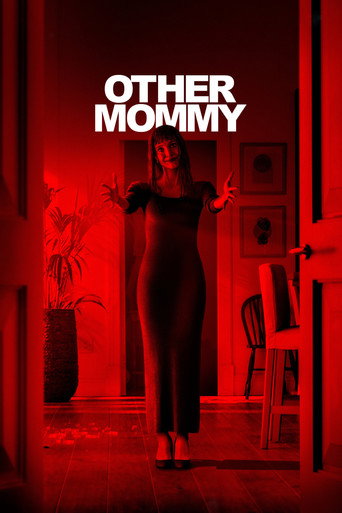
RECAPRUSH MOVIE GUIDE
Other Mommy (2026)
Directed by Rob Savage
Young Bela forms a relationship with a sinister entity in her home that looks uncannily like her own mother, drawing her into a terrifying and increasingly dark world.
Overview, poster, and credits from TMDB.
Read and watch our sourced spoiler review ↓FROM THE RECAPRUSH LIBRARY · SOURCED SPOILER REVIEW
Other Mommy (2026) Review & Ending Explained: Why Bela’s Monster Wears Ursula’s Face
12 min read · Estimated reading time— views
Intro + RecapRush Viewpoint
The cruelest monster in Other Mommy does not arrive looking strange. It arrives looking familiar, kneels at a child’s height, offers the attention she feels she is missing, and calls that imitation love.
Rob Savage’s supernatural horror film adapts Josh Malerman’s novel Incidents Around the House. Jessica Chastain plays two connected roles: Ursula, a mother stretched thin by work and a damaged marriage, and the entity Bela calls “Other Mommy.” Arabella Olivia Clark plays Bela, while Jay Duplass plays her father, Russ—whom Bela calls Daddo. The premise turns an ordinary childhood fear into a family accusation: what happens when a child’s imagined replacement for an absent parent answers back?
RecapRush viewpoint: the doppelgänger is frightening because it turns Ursula’s guilt into a body. Other Mommy does not merely copy a face; she offers a simplified fantasy of motherhood—always present, endlessly attentive, and free of adult limits. The horror lies in the bargain beneath that fantasy. To be perfectly available, this “mother” must erase the complicated human being she imitates.
> Spoiler notice and coverage: This is a sourced release-day review, verified story overview, and ending analysis. It discusses the film’s central deaths, apparent return to family normality, and post-credits stinger. Reliable release-day sources do not yet support an exhaustive scene-by-scene reconstruction, so this article does not invent connective events or present the novel’s different ending as film fact.
Featured Image
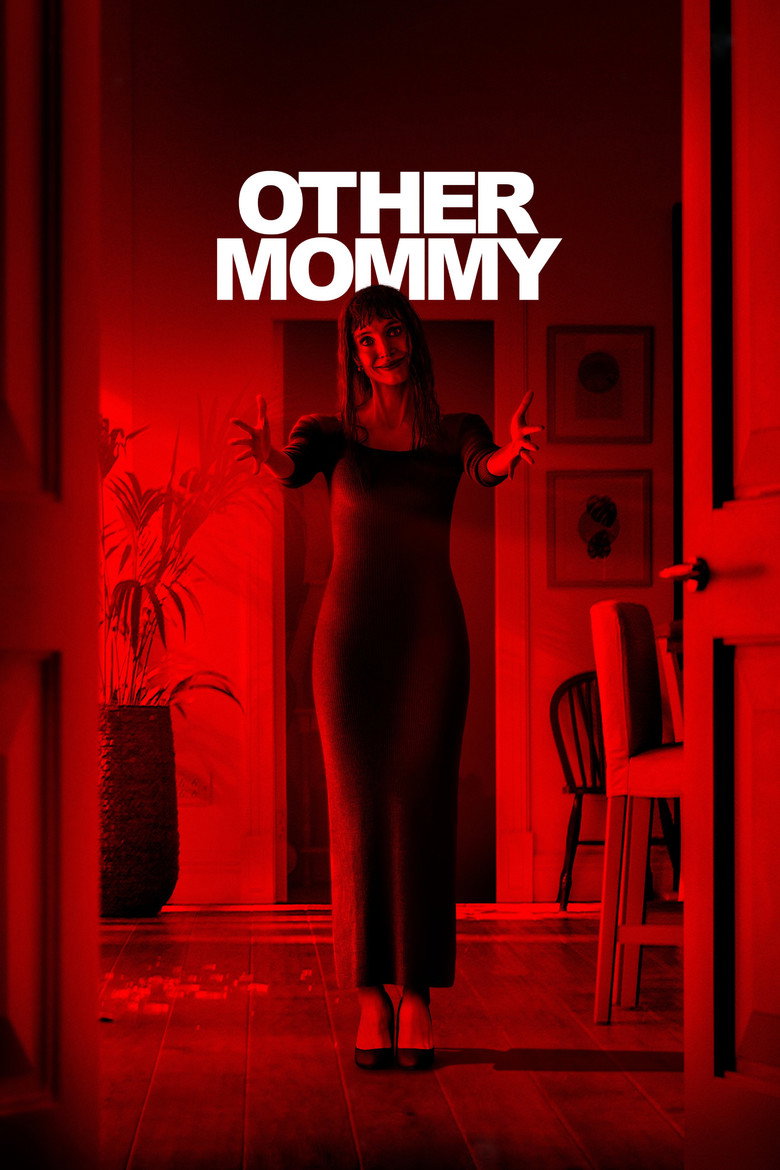
Other Mommy (2026) theatrical poster featuring Jessica Chastain in the film’s maternal doppelgänger horror story.
Table of Contents
Quick Facts
- Exact title: Other Mommy
- Year: 2026
- TMDB release-date field: October 7, 2026
- U.S. theatrical release: October 9, 2026
- Runtime: 93 minutes
- Director: Rob Savage
- Screenplay: Nathan Elston
- Based on: Josh Malerman’s novel Incidents Around the House
- TMDB movie ID: 1400837
- Verified TMDB genre: Horror
- U.S. distributor: Universal Pictures
- Production companies: Atomic Monster, Blumhouse Productions, Spin a Black Yarn
- Principal cast: Jessica Chastain, Arabella Olivia Clark, Jay Duplass, Dichen Lachman, Arian Moayed, Karen Allen
- Coverage type: Sourced spoiler review and verified ending analysis
Verified Spoiler Story Overview
1. Bela names the absence in her home
Bela lives with Ursula and Russ in a household already under strain. Reviews consistently describe Ursula as a busy, guilt-ridden mother and Russ as the more casually available parent. Their marriage is fraying, and Bela experiences the emotional distance without possessing an adult vocabulary for it.
Then she begins talking about Other Mommy.
At first the name sounds like a child’s invention: a second mother who lives inside the house and gives Bela the attention she wants. But the figure is not imaginary. She can appear in Ursula’s form, twist that familiar body into impossible shapes, and move beyond Bela’s private encounters.
2. The imitation makes itself useful
Other Mommy’s first weapon is not violence but availability. She occupies the emotional gap created by the adults’ conflict. Bela can experience her as attentive before she understands her as predatory.
That sequence is essential to the film’s psychology. A monster that attacked immediately would remain external. By behaving like a substitute parent, Other Mommy makes Bela participate in the haunting. The child’s need becomes the door through which the threat enters family life.
3. Ursula meets her own distorted reflection
Jessica Chastain’s dual performance turns the haunting into a confrontation between a woman and an impossible standard. Ursula must protect Bela from a being that looks like her while also facing the reason Bela found the copy emotionally attractive.
The resemblance produces confusion but not a conventional secret-double plot. Contemporary reviews note that multiple characters can see the entity. Other Mommy is not only Bela’s projection or Ursula’s private hallucination. The supernatural danger is real within the film, even though its chosen appearance is psychologically meaningful.
4. The family can no longer treat the problem as imagination
The entity becomes openly destructive. Release-day coverage confirms that the threat expands beyond the immediate household and that Uncle Frank is killed. The family discusses how to stop the being even as the film refuses to provide a clean, stable rulebook for its powers.
That looseness is one reason reviews have divided sharply. Some critics find the escalating set pieces energetic and Chastain’s physical performance memorable; others argue that the film’s mythology becomes incoherent. The verified story point is simpler: Other Mommy feeds on a fractured family situation, takes Ursula’s image, and turns Bela’s longing into access.
5. Grandma Ruth’s home does not provide a simple refuge
The family’s attempt to escape brings them into Grandma Ruth’s sphere, but a change of location cannot solve a threat rooted in emotional consent and family rupture. Reviews identify the grandmother’s large home as part of the final movement, while also criticizing the film for explaining the entity in hurried or confusing terms.
This is where the adaptation most clearly shifts from the novel’s claustrophobic child’s-eye terror toward a louder cinematic confrontation. The story moves through multiple scare mechanisms, but its central conflict remains the same: Bela must distinguish care from possession.
6. The apparent victory restores the family image
The film’s closing material presents Russ and Bela sharing a happy, ordinary family moment while Ursula appears emotionally removed. That image can be read as survival, but it is not uncomplicated reassurance. The family may look normal again, yet the person whose face the monster borrowed remains isolated inside the restored arrangement.
The final beat after the credits confirms that Other Mommy has not been reduced to a neatly closed case. The entity looks toward the audience, raises a finger to her lips, and says “shhh.” Whatever the family believes it has contained, the monster retains the last word—and turns spectators into silent witnesses.
Cast + TMDB
Cast and Characters




The gallery below uses the credited cast records for TMDB movie 1400837. It renders available portraits, actor names, credited characters, and RecapRush profile links without duplicating them in a second actor-character table.
Ending Explained
Does the family defeat Other Mommy?
The ending provides an apparent return to normality rather than proof of total destruction. Russ and Bela can still share warmth, but Ursula’s visible sadness prevents the scene from functioning as a simple happy ending. The post-credits appearance of Other Mommy confirms that the entity—or at least its power to address and unsettle us—persists.
Why does Other Mommy look like Ursula?
The film’s verified premise does not identify the entity as a literal alternate Ursula. It is a supernatural imitator. RecapRush reads the chosen face as strategic: Bela wants more of her mother, not a random replacement. By wearing Ursula’s appearance, the creature converts a child’s unmet need into trust and converts Ursula’s guilt into terror.
What does the final family scene mean?
It restores the shape of a family without proving that the family’s original wounds have healed. Russ and Bela’s happiness creates an image of normality; Ursula’s distance keeps emotional damage visible. A supernatural crisis can force people together, but survival does not automatically repair betrayal, neglect, resentment, or guilt.
The scene therefore works better as uneasy aftermath than victory. The monster exploited a real opening. Closing the supernatural doorway does not erase the opening’s human cause.
Why does Other Mommy say “shhh” after the credits?
The gesture extends the film’s logic of secrecy. Other Mommy first grows in the gap between what Bela experiences and what the adults understand. By asking the audience for silence, the stinger recruits viewers into the same structure: we have seen that she remains, but are playfully instructed not to warn anyone.
More from RecapRush
 Young Washington (2026) Recap & Ending Explained: The Battle That Forged a Future Leader
 Get Out (2017) Movie Recap & Ending Explained: What Is the Sunken Place?
 Howl’s Moving Castle (2004) — Full Spoiler Recap & Ending Explained
It also keeps the entity larger than one household. The direct look into the camera breaks the safety of the ending and turns a conventional credits surprise into a final act of intimacy.
Is the ending the same as the novel?
No reliable source checked for this article supports treating the novel’s ending as an exact map of the film. The book ends on a much darker and more ambiguous note centered on Bela and the entity. The movie uses different emphases, an expanded external confrontation, and a post-credits stinger. Readers should not import book-only outcomes into the film recap.
RecapRush Interpretation
Other Mommy is a fantasy of perfect motherhood built from a child’s incomplete understanding of adults. Bela sees presence or absence, attention or neglect. She cannot yet see the economic, emotional, and marital pressures that make constant availability impossible.
The entity exploits that binary. It offers a mother without work, boundaries, exhaustion, or competing needs. But a caregiver with no independent self is not a person; it is a consuming role. The monster’s promise of perfect attention is therefore inseparable from possession.
Ursula’s fear contains a painful contradiction. She must prove that imperfect human love is safer than a supernatural imitation that appears to meet Bela’s needs more completely. Her battle is not won by claiming she never failed. It depends on accepting that failure without surrendering her place to the thing that weaponizes it.
These are RecapRush’s interpretations of the film’s verified premise and ending imagery, not claims of confirmed authorial intention.
Deep Analysis & Key Themes
Maternal guilt becomes creature design
The doppelgänger’s body turns guilt into visual horror. Jessica Chastain’s familiar face remains recognizable while posture, movement, and expression stop obeying normal human limits. The effect says something precise: Ursula’s fear is not that Bela will choose a completely different mother. It is that Bela will choose an “improved” Ursula who exposes every way the real woman feels inadequate.
That is why the under-table image works so well in the campaign. A domestic space associated with meals and family connection becomes the hiding place for an impossible version of care.
Attention is not the same as love
Other Mommy’s offer initially feels attractive because attention is measurable. A child can count who is present, who listens, and who arrives on time. Love is more difficult. It includes limits, disagreement, and the caregiver’s separate humanity.
The film’s monster removes those complications. Her availability is absolute because it is a lure. The story asks viewers to distinguish care that helps a child grow from attention designed to make the child dependent.
The haunted house is an emotional system
The family home does not merely contain the entity. It organizes the conditions that allow the entity to matter: closed rooms, unheard conversations, marital tension, and Bela’s private attempts to interpret adult behavior.
Moving to another building cannot automatically solve that system. The fear travels with the family because the monster’s most useful shelter is not a closet; it is the silence between family members.
Childhood language gives the horror its power
“Other Mommy” is simple, direct, and terrifyingly adequate. Bela names the being according to relationship rather than species. She does not need a demonology to understand what threatens her. The name tells us everything she fears: replacement, duplication, and a mother who is close enough to trust but wrong enough to consume.
The adaptation loses some of the novel’s sustained child’s-eye narration, according to critics, but the name preserves its central insight. Children often explain horror with language adults underestimate.
Normality can be another performance
The final family image invites relief, yet Ursula’s sadness complicates it. Families can perform recovery before they have processed what happened. A shared laugh can be real and still coexist with unresolved damage.
The post-credits stinger makes that tension literal. The story has ended in public, but the monster survives in the hidden space after the apparent conclusion.
What Most Viewers Missed
- The copy is tailored to Bela’s need. Other Mommy does not simply steal Ursula’s face; she makes herself the fantasy of an always-available Ursula.
- Being visible to others does not make the entity easy to understand. The film confirms a real supernatural presence while keeping its rules unstable.
- Ursula’s guilt and Ursula’s culpability are different. Feeling that she failed Bela makes her vulnerable, but it does not make her responsible for the monster’s violence.
- The ending restores appearance before trust. Russ and Bela’s happiness does not prove the family’s deeper conflicts are resolved.
- The novel is not a spoiler key. The film changes structure and emphasis; book-only events should not be asserted as screen facts.
- The last “shhh” is relational. Other Mommy ends by addressing us with the same false intimacy she used to approach Bela.
Mid/Post-Credits
There is no reported mid-credits scene, but there is a post-credits stinger at the very end. Other Mommy looks into the camera, places a finger to her lips, and says “shhh.”
The moment does not provide a detailed sequel setup. It confirms the entity’s lingering presence and extends her secretive relationship with Bela to the audience.
Final Thoughts
Other Mommy has a sharper metaphor than many of its reviews credit: a child’s wish for uncomplicated attention becomes a predator wearing the face of maternal perfection. The film’s most memorable images understand that idea immediately, even when critics argue its rules and plot become noisy.
The ending’s value lies in refusing to equate survival with repair. Ursula can protect her daughter and still face the emotional distance the monster exploited. Bela can return to family life and still have encountered a being that made love sound like surrender. And the post-credits whisper makes one final point: threats built from silence are never fully defeated by pretending everything is normal again.
FAQ
Is Other Mommy released?
Yes. Universal Pictures opened it in U.S. theaters on October 9, 2026. TMDB lists October 7 as its earliest release-date field.
What is Other Mommy about?
Young Bela forms a relationship with a sinister entity in her home that resembles her mother, Ursula. The being uses that likeness and Bela’s emotional needs to enter the family’s life.
Who plays Ursula and Other Mommy?
Jessica Chastain performs both Ursula and the entity that copies her appearance.
Who plays Bela and Russ?
Arabella Olivia Clark plays Bela. Jay Duplass plays Russ, whom Bela calls Daddo.
Is Other Mommy based on a book?
Yes. It is adapted from Josh Malerman’s novel Incidents Around the House, with a screenplay by Nathan Elston.
Is Other Mommy just Bela’s imagination?
No. Release-day reviews describe other characters seeing and responding to the entity. The film presents a real supernatural threat within its story.
What does the ending mean?
The family reaches an apparent normality, but Ursula remains emotionally isolated and the post-credits stinger shows Other Mommy still present. RecapRush reads this as survival without complete emotional repair.
Does Other Mommy have a post-credits scene?
Yes. At the very end of the credits, Other Mommy looks at the audience and says “shhh.”
What is the TMDB ID?
The verified TMDB movie ID is 1400837.
Join the conversation
What did you think of the ending? Share your interpretation. Spoilers may appear below.
This product uses the TMDB API but is not endorsed or certified by TMDB.
No comments yet. Start the conversation.