
RECAPRUSH MOVIE GUIDE
Ne Zha 2 (2025)
Directed by Jiaozi (Yang Yu)
Ne Zha and Ao Bing share a fragile second chance at life, undertaking trials that expose a conspiracy among the immortals.
Overview, poster, and credits from TMDB.
Read and watch our full recap ↓FROM THE RECAPRUSH LIBRARY · FULL RECAP
Ne Zha 2 (2025) Recap & Ending Explained: A Hero Beyond Heaven’s Approval
12 min read · Estimated reading time— views
Intro + RecapRush Viewpoint
What happens when the authority that promises to recognize a hero is itself the obstacle? Ne Zha 2 begins with the practical problem of repairing two broken bodies. Its more interesting problem is deciding whose judgment deserves to shape a life.
The RecapRush viewpoint: the film makes friendship a more demanding achievement than immortality. Friendship requires giving another person room to act; the immortal hierarchy demands that others fit into its categories. That contrast gives the spectacle a human center. Ne Zha has to learn the difference between being accepted by powerful people and becoming someone worthy of trust.
This article covers the released 2025 animated sequel to Ne Zha (2019), including its ending and credits scene. A24 markets the English-language dub as Ne Zha II; it is the same underlying film, not a different sequel. Factual recap and original editorial interpretation are identified separately. Full spoilers follow.
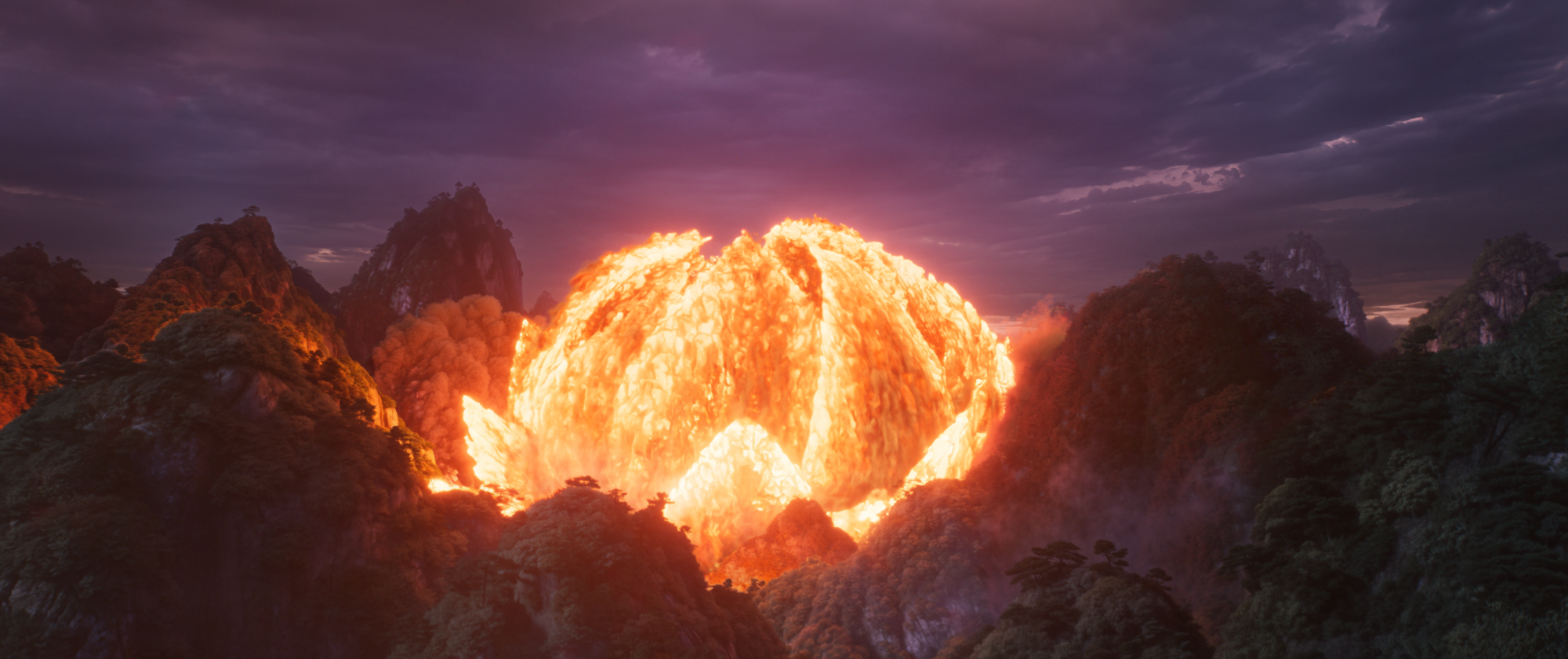
Featured Image

Table of Contents
Quick Facts
- Title / year: Ne Zha 2 / 2025; original title 哪吒之魔童闹海
- English-dub release title: Ne Zha II
- Writer and director: Jiaozi, also credited as Jiao Zi / Yang Yu
- Original language / country: Mandarin / China
- China theatrical release: January 29, 2025
- US original-language theatrical release: February 14, 2025
- A24 English-dub theatrical release: August 22, 2025
- Runtime: approximately 144 minutes
- Genres: animation, action, adventure, fantasy
- Collection position: #5 in RecapRush’s fixed October 29, 2026 Worldwide lifetime box-office snapshot; separate from Weekly Box Office
The release dates refer to distinct territories or language versions. Trinity CineAsia’s official film page links directly to TMDB movie 980477; A24 confirms its dub’s title, director, cast and August opening. No current gross is asserted here. [1, 2, 3, 4, 5]
Full Spoiler Recap
1. Survival creates a shared responsibility
The lightning catastrophe from the first film has destroyed Ne Zha and Ao Bing’s bodies, but Taiyi has preserved their souls. His Sacred Lotus can provide new bodies, though these are vulnerable. Ao Guang’s retaliation against Chentang Pass creates another crisis: Ao Bing intervenes to protect the town, and his restored body cannot withstand the strain. [6]
The temporary solution is extraordinary intimacy: Ao Bing’s spirit occupies Ne Zha’s body. A seven-day agreement gives them a chance to obtain the elixir needed to restore the lotus and rebuild Ao Bing. The route runs through the immortals’ trials. What looks like an individual advancement quest therefore begins as an obligation to a friend. [7]
2. The route upward passes through other people’s lives
Ne Zha and Ao Bing alternate control, concealing Ne Zha’s demonic identity. Sleeping pills turn cooperation into slapstick. Wuliang’s disciples oversee trials involving marmot demons and a waterfall master, Shen Zhengdao. The latter is Shen Gongbao’s father; Gongbao’s younger brother Xiaobao becomes caught in the violence surrounding the capture. [6, 7]
The emotional cost is easy to overlook amid the combat. Ne Zha is seeking help, yet the quest positions him against people whose own family attachments are no less real. The adventure’s scoring system does not adequately describe its casualties.
3. Grief makes an accusation feel certain
News of Chentang Pass’s destruction interrupts the quest. Believing his parents dead and the dragons responsible, Ne Zha turns against Ao Bing. After defeating the stone spirit Shi Ji, he completes the trials. Taiyi obtains the means to restore Ao Bing while Ne Zha joins Wuliang’s assault on Ao Guang. [6]
The apparent rescue mission now converges on Wuliang’s cauldron. Dragons become prisoners, destined to be refined into pills. Ne Zha has been directed toward an enemy by a version of events that serves someone else. [8]
4. The supposed protector is exposed
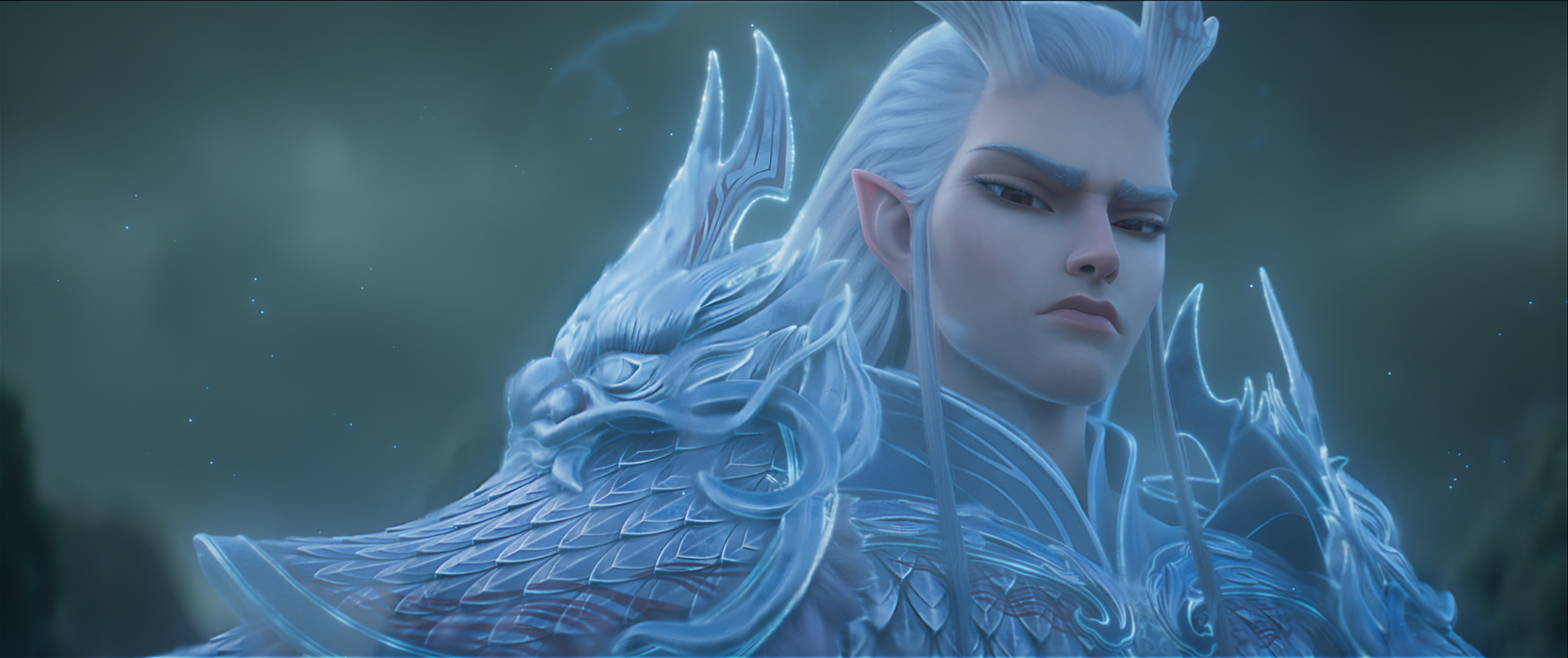
Li Jing and Lady Yin arrive alive with Taiyi and Ao Bing. Their account exposes Wuliang’s responsibility for Chentang Pass’s destruction and the framing of the dragons. Shen Gongbao helped the parents escape. Wuliang’s benevolent public identity has concealed a scheme for domination. [8]
The revelation changes the target, but does not immediately free anyone. Wuliang immobilizes Ne Zha and Ao Bing with a heart-piercing curse and confines the heroes in the cauldron. Lady Yin reaches for her son despite the deadly danger. She dies; the moment is not a fake-out followed by a reunion. [9, 10]
5. Escape does not erase the loss
Ne Zha draws on the cauldron’s fire, breaks the curse and emerges in a stronger, older-looking form. With Ao Bing and the trapped beings, he breaks out. The boys defeat Wuliang, who retreats rather than dying. Ao Guang takes surviving forces into hiding; Ao Bing stays with Ne Zha. Their alliance continues beyond this battle. [8, 9]
Cast + TMDB
Cast and Characters
The original Mandarin cast and the A24 English cast belong to different voice tracks. They should not be merged into one unlabelled cast list. Original voice credits below follow the TMDB-attributed catalogue, cross-checked against distributor credits for the leads. [1, 3, 11]
- Lü Yanting: young Ne Zha, original Mandarin voice
- Joseph: adolescent Ne Zha, original Mandarin voice
- Han Mo: Ao Bing, original Mandarin voice
- Chen Hao: Li Jing, original Mandarin voice
- Lü Qi: Lady Yin, original Mandarin voice
- Zhang Jiaming: Taiyi Zhenren, original Mandarin voice
- Yang Wei: Shen Gongbao, original Mandarin voice
- Wang Deshun: Wuliang, original Mandarin voice
- Zhou Yongxi: Ao Run, original Mandarin voice
- Yuze Han: Ao Shun, among other voice roles
The principal English-dub cast includes Crystal Lee as Ne Zha, Aleks Le as Ao Bing, Vincent Rodriguez III as Li Jing, and Michelle Yeoh as Lady Yin. A24 lists these performers; the English-version synopsis and AP’s interview with Yeoh corroborate their roles. [2, 7, 12]
Exact film record: Ne Zha 2 — TMDB movie 980477. This is neither the 2019 first film nor New Gods: Nezha Reborn.
Ending Explained
What does Ne Zha actually win?
He wins escape and the ability to oppose Wuliang. He does not win a restored family or an entirely repaired world. The villain’s survival and Ao Guang’s withdrawal keep the ending from becoming a clean transfer of authority.
RecapRush interpretation: the decisive change is Ne Zha’s relationship to approval. A prize can be granted by a corrupt judge; accepting that prize does not make the judge trustworthy. By the ending, the more meaningful measure of his actions is who can live because of them. This also makes the victory collective. A larger body alone would merely reproduce the story’s fascination with superior power; cooperation supplies a different principle for using it.
More from RecapRush
 MINDHUNTER (2017–2019) Recap & Ending Explained: Why Closing Atlanta Solves Nothing
 Whiplash (2014) Recap & Ending Explained: Does Andrew Beat Fletcher or Become His Proof?
 Made in Korea Season 2 (2026) Ending Explained: Ki-tae Survives, but His Idea of Power Does Not
Why does Lady Yin’s embrace matter?
The earlier farewell contains a hug that the embarrassed child does not accept. The cauldron returns to that ordinary gesture under unbearable conditions. [7, 10]
Our reading is that the embrace gives intimacy the weight normally reserved for combat. A hug cannot defeat an army, earn a title or repair the political order. Its value does not depend on doing any of those things. That is why it can interrupt a story dominated by tests of usefulness. Lady Yin recognizes her son before any institution certifies him.
The film does not confirm her resurrection. Emotional continuity, remembrance and physical survival are different claims; the ending supports the loss, not a guaranteed reversal.
Deep Analysis & Key Themes
A shared body is an education in consent
A conventional training story asks whether the hero can master his own abilities. This story makes room for a stranger question: can he allow someone else to use them? Ne Zha cannot solve the practical arrangement by becoming louder or stronger. He has to tolerate intervals in which his friend acts and he does not.
That is a useful way to read the comedy. Control becomes a negotiated resource rather than proof of personal superiority. The jokes can be broad, but the underlying arrangement gives friendship a physical grammar. Trust includes surrendering the center of attention. For a protagonist who resists being defined by others, learning to make room for another will is a significant challenge.
A trial can reward the wrong skill
An examination gives an answer to a limited question. A moral failure begins when the institution treats that answer as a complete portrait of a person. Defeating an opponent proves an ability to defeat that opponent; it cannot by itself prove justice, compassion or sound judgment.
RecapRush reads the trial structure as a warning about confusing progress with goodness. It is possible to keep advancing while understanding less about the people affected by the ascent. The most revealing test therefore takes place outside the advertised rules: whether the hero can reconsider the institution’s account of its enemies.
Grief needs witnesses, not a convenient enemy
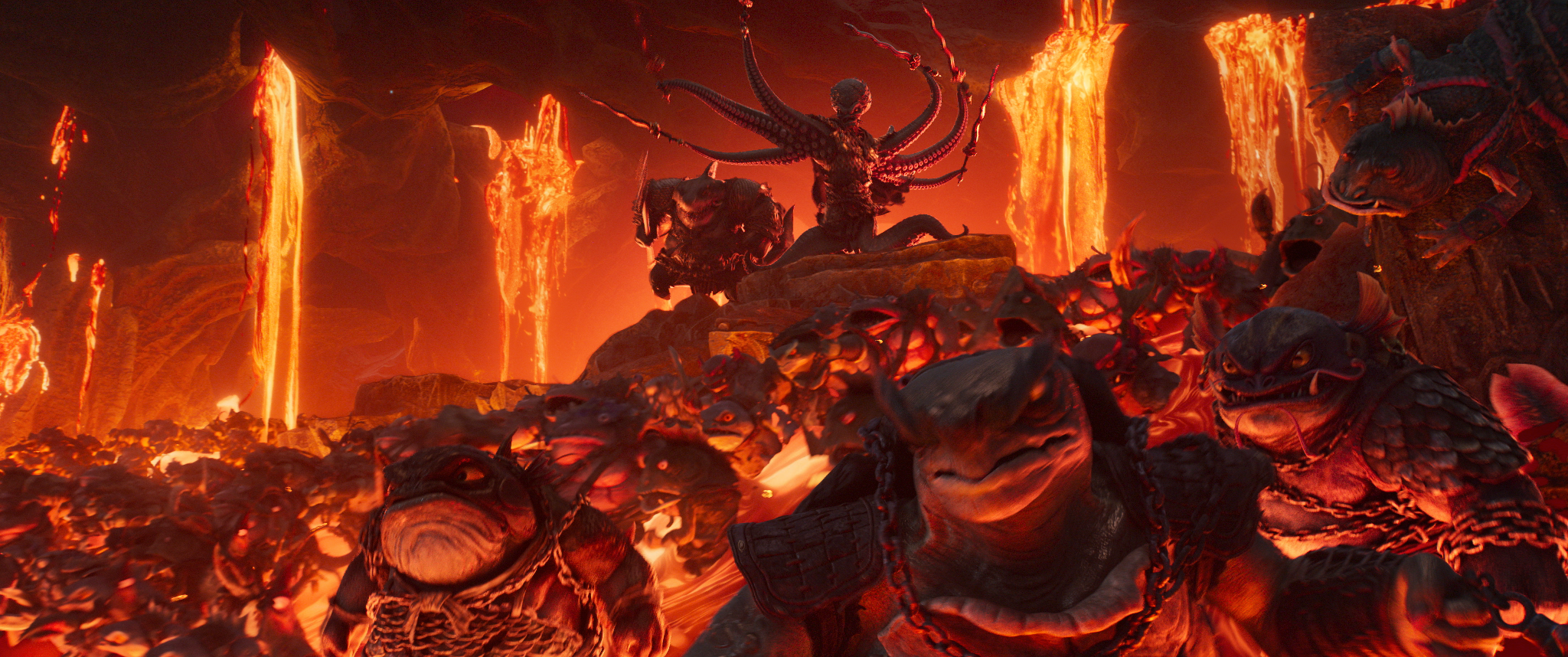
The dangerous thing about an accusation offered during grief is the relief it can provide. It converts an incomprehensible injury into a task with an apparent target. That makes the accusation emotionally usable before it becomes evidentially secure.
Ne Zha’s arc invites a distinction between honoring pain and obeying every conclusion pain suggests. Changing his mind need not mean loving his parents less. It can mean refusing to let another person choose the direction of that love. Our interpretation gives the later alliance its difficulty: reconciliation involves revising a conviction at the very moment anger makes revision feel like betrayal.
Size is not the same as maturity
The change in Ne Zha’s physical form makes a spectacular visual statement, but appearance should not settle the question of growth. A taller, more forceful hero could still repeat the habits that made him vulnerable to manipulation.
For us, maturity lies in the continued partnership rather than in the new silhouette. A hero willing to be corrected has developed a capacity that cannot be measured by the scale of an explosion. This leaves the character room to remain unruly without treating every impulse as wisdom.
What Most Viewers Missed
These are interpretive details to revisit, not claims that the film hides a single secret answer.
- The borrowed body changes the meaning of power. An ability can serve more than the person who visibly possesses it. Watch how cooperation complicates the idea of an isolated chosen hero.
- The quest’s direction and its ethical direction can diverge. Moving closer to a reward is not a guarantee that the characters are moving toward a better understanding.
- Family feeling does not belong to one side. Reading opponents as people with attachments makes victories less morally automatic, without requiring every participant to be equally innocent.
- The embrace offers recognition without examination. Compare the emotional quality of being loved with that of being admitted to a hierarchy. They answer different needs.
- The surviving friendship is an ongoing practice. An agreement to continue together carries obligations into the future; it is more open-ended than a single triumphant pose.
Mid/Post-Credits
Yes: stay for the extended scene during the credits. Wuliang and his disciples visit the imprisoned Shen Gongbao and his father, attempting to secure cooperation. A facial-recognition gag then punctures the villain’s dignity: his healing face no longer matches the swollen face registered at the door, and his disciples resort to beating it back into the required condition. [13]
The scene leaves coercion and unfinished business in play. Our interpretation: its joke is sharper because the man claiming elevated wisdom is reduced to a humiliating administrative problem. His power survives; his image of perfect control does not. It is setup for continuing conflict, not proof of a particular sequel’s release date or story.
Final Thoughts
Ne Zha 2 works best when its vast confrontations return to small questions: who gets to speak, who is believed, and who is allowed to belong without proving useful first? Those questions keep the film’s appetite for scale from being its only source of significance.
The ending earns its optimism through companionship rather than completeness. Loss remains, authority remains contested, and the work of deciding whom to trust is unfinished. RecapRush’s reading is that this uncertainty gives the final partnership substance: the boys choose to continue without receiving a guarantee that the next choice will be easier.
Join the conversation
What did you think of the ending? Share your interpretation. Spoilers may appear below.
This product uses the TMDB API but is not endorsed or certified by TMDB.
No comments yet. Start the conversation.