
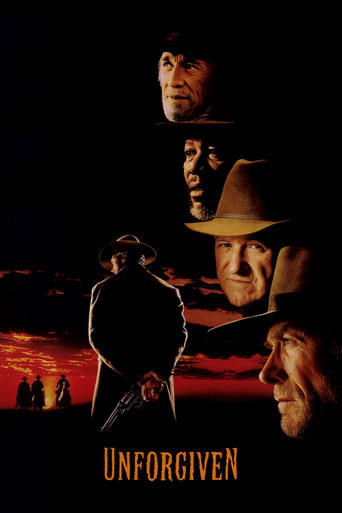
RECAPRUSH MOVIE GUIDE
Unforgiven (1992)
Directed by Clint Eastwood
William Munny is a retired, once-ruthless killer turned gentle widower and hog farmer. To help support his two motherless children, he accepts one last bounty-hunter mission to find the men who brutalized a prostitute. Joined by his former partner and a cocky greenhorn, he takes on a corrupt sheriff.
Overview, poster, and credits from TMDB.
Read and watch our full recap ↓FROM THE RECAPRUSH LIBRARY · FULL RECAP
Unforgiven (1992) Recap & Ending Explained: Why Munny’s Victory Cannot Make Him Innocent
9 min read · Estimated reading time— views
Intro + RecapRush Viewpoint
Unforgiven makes the familiar Western ending feel like a moral trap. The dangerous man returns, the sheriff falls, and the survivor rides away. Yet William Munny’s success does not establish that he deserves our admiration. Clint Eastwood’s film asks a harder question: what happens when a community’s only effective answer to cruelty is another person who knows how to be cruel?
RecapRush interpretation: The ending separates protecting someone from becoming a good person. Munny can demand a decent burial for his friend and still leave behind a terrifying example of how authority works.
Spoiler warning: This guide discusses the complete 1992 film, including Ned’s death, the saloon confrontation and the closing epilogue. It contains discussion of assault and violence. Plot details were checked against the references below; the interpretive sections are RecapRush commentary, not a claim of first-hand viewing.

Table of Contents
Quick Facts
- Film: Unforgiven (1992)
- Director: Clint Eastwood
- Screenplay: David Webb Peoples
- U.S. theatrical release: August 7, 1992
- Runtime: 130 minutes
- TMDB genre: Western
- Country / language: United States / English
- Principal performers: Clint Eastwood, Gene Hackman, Morgan Freeman, Jaimz Woolvett, Richard Harris and Saul Rubinek
- TMDB movie ID: 33
Release and production information: AFI Catalog. Image and cast metadata: TMDB.
Full Spoiler Recap
A punishment that ignores the injured woman
In Big Whiskey, Wyoming, cowboy Quick Mike cuts sex worker Delilah Fitzgerald’s face after she laughs at him. Sheriff Little Bill Daggett settles the matter by ordering horses paid to her employer, Skinny. Delilah’s suffering becomes an employer’s financial loss. Strawberry Alice and the other women pool a $1,000 bounty for Mike and his companion Davey Bunting. [1]
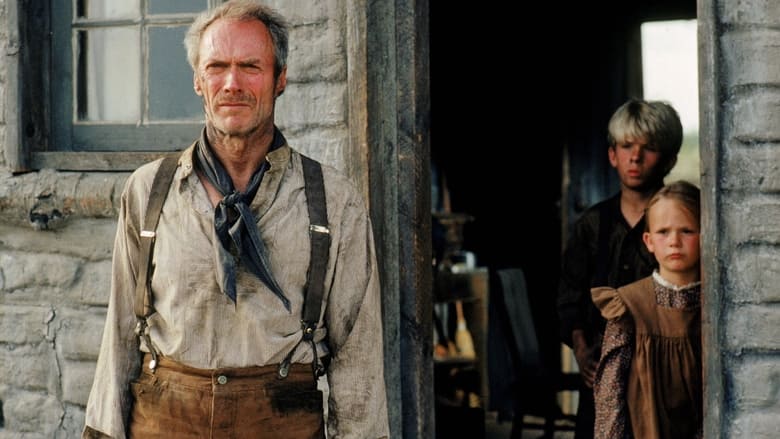
In Kansas, widowed farmer William Munny is raising two children. The Schofield Kid recruits him for the bounty. Munny says his late wife Claudia changed him, but poverty gives him a reason to return to killing. He brings his former partner Ned Logan. [1]
The sheriff controls the town and its stories
Another bounty hunter, English Bob, arrives with writer W.W. Beauchamp. Little Bill brutally disarms and humiliates Bob, then attracts the writer’s attention with his own account of gunfighting. When Munny arrives ill and exhausted, Little Bill beats him too. Munny’s companions get him out of town to recover. [2, 5]
The contrast matters: a dangerous reputation does not make a sick man physically invulnerable. Before the finale supplies the image of an unstoppable gunman, the story makes room for a body that can be hurt.
The job destroys the fantasy
The men find Davey. Ned cannot finish the killing, so Munny shoots him. Davey’s slow death gives the bounty a human cost that the recruitment story avoided. Ned leaves. Munny and the Kid continue; the Kid kills Quick Mike in an outhouse, then admits his earlier claims of killing experience were false. [3]
Ned’s departure does not save him. Captured on his way home, he dies under Little Bill’s interrogation. When news reaches Munny, he starts drinking again and takes the Kid’s revolver. The Kid wants no more killing; Munny leaves him to carry money back to the families. [3, 4]
The last night in Big Whiskey
Munny returns and sees Ned’s body displayed outside the saloon. Inside, he kills Skinny. His shotgun fails when he turns on Little Bill, but he uses the revolver to survive the ensuing gunfight. After the others flee, he kills the wounded sheriff. He leaves under threats, demanding a proper burial for Ned and an end to abuse of the women. [4]
The epilogue does not show a peaceful new life. It reports that Munny and his children disappeared, with a rumor that he prospered in San Francisco. Claudia’s mother remains unable to explain her daughter’s marriage to him. [1]
Cast and Characters
Cast and Characters
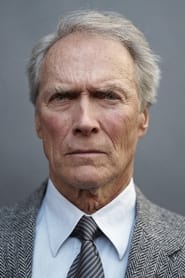

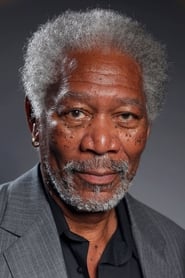


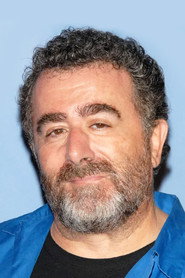
The TMDB portrait gallery accompanying this section links the performers to their RecapRush profiles. Eastwood’s Munny, Hackman’s Little Bill and Freeman’s Ned embody three different relationships with the capacity to hurt people: return, justification and refusal. Woolvett’s Kid supplies the inexperienced spectator who learns that wanting a reputation is different from living with an act.
Ending Explained
Does Munny become a hero by killing Little Bill?
He removes a brutal sheriff, but the method prevents an uncomplicated heroic reading. His final demands depend on the same mechanism that made the town obey Little Bill: the expectation of overwhelming punishment. Protecting the women is a meaningful demand. Threatening anyone who interferes does not create an accountable system of protection.
This distinction is the ending’s uncomfortable strength. Viewers can want the sheriff stopped without treating the man who stops him as morally cleansed. A satisfying result and a trustworthy moral authority are separate things.
What does “Deserve’s got nothin’ to do with it” mean?
Munny’s reply denies Little Bill the assumption that the universe will distribute outcomes according to personal merit. [3] It is not a reliable philosophical excuse for murder. It comes from the armed man deciding whether another man lives.
More from RecapRush
 The Pitt Season 1 Recap & Ending Explained: Why Robby Finally Breaks
 The Avengers (2012) Review: Why Conflicting Personalities Make Marvel's Team Work
 Evil Dead Burn (2026) Recap & Ending Explained: Why Alice Must Kill the Family Story That Trapped Her
RecapRush interpretation: The line also challenges the audience’s preferred bookkeeping. Counting the sheriff’s sins may explain why we welcome his defeat. It cannot refund Ned’s life, undo Delilah’s injury or erase Munny’s earlier victims. The ending refuses to balance those losses into one triumphant account.

Is the San Francisco ending proof of redemption?
No. The epilogue presents prosperity as a reported possibility, not an observed final scene. It closes the public record without settling the private question of who Munny becomes. [1]
Money could improve his children’s circumstances. That is different from forgiveness. In our reading, the uncertainty makes the ending more disturbing: a person may leave violence behind geographically while its consequences remain elsewhere. A successful later business would not make the deaths in Big Whiskey disappear.
Deep Analysis: Three Ways of Leaving Violence
Ned’s refusal is a decision, not a failure of skill
The Library of Congress essay identifies Ned’s inability to complete the killing as a moment of moral honesty. [5] That is a useful corrective to the Western habit of measuring character through nerve. The ability to carry out an act does not settle whether carrying it out is right.
RecapRush interpretation: Ned’s death also separates moral choice from guaranteed reward. A story that lets every decent decision produce safety teaches a comforting bargain. Here, withdrawal remains worth considering even though it offers no protection. That makes responsibility harder, not meaningless.
The Kid can revise his idea of himself
The Kid’s false biography initially treats killing as a qualification. After the real experience, he no longer wants the identity he advertised. [3] His shame opens a possibility that pride would close: he can admit he was wrong about what he wanted.
That is a more useful contrast with Munny than simply young versus old. A person who cannot acknowledge a mistaken ambition has to keep performing it. A person who can acknowledge it has at least a chance to stop. The film offers that chance without supplying an effortless recovery story.
Little Bill mistakes possession of order for moral legitimacy
Little Bill’s badge lets him define which violence counts as enforcement. The women’s decision to seek another remedy follows the failure of that authority to recognize their grievance. [2, 5]
Our reading is that the problem is not solved merely by replacing the person with the gun. A town needs ways to hear an injured person without forcing her to purchase a killer’s attention. That missing institution is why the final departure feels precarious: intimidation may stop a particular abuse while leaving the conditions for another intact.

What Most Viewers Missed
A witness is not necessarily a moral judge
Beauchamp follows men who can supply compelling accounts of violence. [5] His presence invites a question that applies to the viewer too: does being impressed by a story make us less attentive to the people it leaves outside the frame?
Survival is narrower than vindication
Munny survives the confrontation; the epilogue does not convene a court to pronounce him innocent. Those are different narrative events. Treating the first as proof of the second would restore precisely the easy moral logic the film makes uncomfortable.
An ending can close an action while leaving a judgment open
We know the confrontation’s outcome. We do not receive an authoritative answer about Claudia’s love or Munny’s final moral condition. The absence is purposeful as an interpretive problem, not evidence of a secret sequel scene.
Mid/Post-Credits
AFI records the closing epilogue and the dedication to Sergio Leone and Don Siegel in the end credits. The sources checked for this guide do not establish an additional mid-credits or post-credits narrative scene. We therefore do not claim that an extra scene changes Munny’s fate. [1]
Final Thoughts
Unforgiven is most valuable when its ending resists the wish to make victory equal virtue. The survivor can enforce a demand, provide for children and remain a frightening man. The people he helps need not be wrong to want help for that contradiction to matter.
The question worth carrying beyond the credits is not simply whether Munny has changed. It is what kind of change would count: a better story about himself, a more comfortable life, or a sustained refusal to make another person pay for his needs.
FAQ
Is this the 2013 Japanese Unforgiven?
No. This guide covers Clint Eastwood’s American film released in 1992, TMDB movie 33.
Who kills the two cowboys?
Munny kills Davey; the Schofield Kid kills Quick Mike. Ned leaves the job. [3]
Why does Munny go back after the bounty is collected?
News of Ned’s death turns the return into personal retaliation. Collecting payment no longer explains the confrontation. [4]
Is the ending’s business success certain?
No. The closing account frames that later prosperity as a rumor. [1]
Join the conversation
What did you think of the ending? Share your interpretation. Spoilers may appear below.
This product uses the TMDB API but is not endorsed or certified by TMDB.
No comments yet. Start the conversation.