
RECAPRUSH MOVIE GUIDE
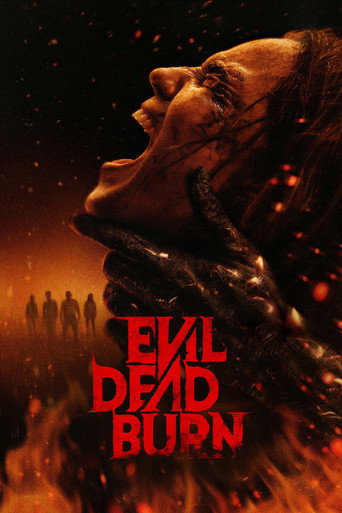
Evil Dead Burn (2026)
Directed by Sébastien Vaniček
After her husband's abrupt death, Alice seeks solace with his remaining family — descendants of a leading researcher on demonic possession. As her in-laws transform one by one into creatures that feed on fear, she comes to discover that the vows she took in life survive even in death.
Overview, poster, and credits from TMDB.
Read and watch our full movie recap ↓FROM THE RECAPRUSH LIBRARY · FULL MOVIE RECAP
Evil Dead Burn (2026) Recap & Ending Explained: Why Alice Must Kill the Family Story That Trapped Her
14 min read · Estimated reading time— views
Intro + RecapRush Viewpoint
The most frightening thing waiting for Alice Price is not a Deadite. It is a family that has already decided what her marriage meant, what kind of man her husband was, and how much grief a “good” widow ought to display. Evil Dead Burn turns that suffocating social judgment into literal possession. Once the Price family begins changing, the demons do not invent new wounds; they weaponize resentments that were already seated at the dinner table.
Sébastien Vaniček's 2026 entry keeps the franchise's familiar ingredients—recorded incantations, the Kandarian Dagger, predatory camera movement and bodies treated like unstable machinery—but builds its emotional spine around coercive control. Alice has survived a husband whose family preferred the respectable version of him. Her final battle is therefore more than another final-girl endurance test. She must reject the idea that marriage obliges her to keep protecting an abuser's image after his death.
RecapRush's viewpoint: The title's “burn” is both physical and psychological. Fire fails to erase Will because the damage surrounding him was never only bodily. Alice survives by naming the truth the Prices refuse to see, then using the family's own inherited weapon against the lineage that protected him. The finale is cathartic not because violence heals trauma, but because Alice finally acts without asking that family to validate her reality.
Full spoilers follow for Evil Dead Burn (2026), including its ending, mid-credits scene and post-credits scene.
Featured Image
Table of Contents
Quick Facts
- Title: Evil Dead Burn
- Release year: 2026
- Release date: July 7, 2026 in TMDB's primary release record; July 10, 2026 for the U.S. theatrical opening
- Runtime: 110 minutes
- Director: Sébastien Vaniček
- Screenplay: Sébastien Vaniček and Florent Bernard
- Producers: Rob Tapert and Sam Raimi
- Verified TMDB genre: Horror
- Rating: R for strong bloody horror violence, gore and language
- TMDB identity: Movie 1212763
- Story focus: Alice, a grieving widow, joins her late husband's family at an isolated home as Deadite possession tears through the household.
Full Spoiler Recap
1. An old recording awakens something at the lake
The film opens by returning to the lakeside territory associated with Evil Dead Rise. Joseph Price, an aspiring writer consumed by his grandfather Benjamin's research into demonic possession, listens to an old recording connected to the Book of the Dead. The words are not inert history. A Deadite presence attacks two young men near the water, establishing that Joseph's private fascination has consequences beyond the archive.
This opening reframes curiosity as responsibility. Joseph does not intend to hurt anyone, but he treats forbidden knowledge as material for a project. The franchise has always punished the person who presses play; here the mistake also exposes a family already primed to turn on itself.
2. Will's death interrupts a birthday and exposes a marriage
Joseph's birthday celebration brings together his girlfriend Thya, his brother Will and Will's French wife Alice. Will is controlling and aggressive toward Alice. Joseph and Thya recognize the hostility, but the evening still operates according to the familiar rules of an abusive family system: discomfort is visible, intervention is hesitant, and the person causing the fear expects the room to accommodate him.
Will drives away after drinking and arguing. A drenched Deadite woman appears in the road. He crashes, and the encounter ends with the vehicle burning and Will dead. The supernatural event kills him, but it does not rewrite him as a loving husband. Alice's grief is complicated by relief, anger and the social pressure to mourn a version of Will she did not experience.
3. The funeral becomes the first breach
Alice attends the funeral despite her reluctance to honor her abuser and her dread of facing his relatives. Joseph and Thya show her sympathy. Will's parents, Edgar and Susan, are colder. They see Alice's inability to perform uncomplicated grief as evidence against her, while grandmother Polly's dementia adds another unstable current to the gathering.
Construction noise repeatedly interrupts the service, turning solemn ritual into abrasive black comedy. Edgar insists on seeing his son one final time before cremation. The choice gives the evil inside Will a route into the living family: Edgar is possessed. The funeral, designed to close the relationship between the dead and the living, instead carries Will's violence back home.
4. The Price house makes every resentment inescapable
After the funeral, the family gathers at an isolated, deteriorating property Joseph has inherited. Its disrepair is another source of contempt from Edgar, who already regards Joseph as a disappointment. Susan's gestures of support toward Alice cannot hide her preference for a story in which Will was the wronged son. Polly distrusts Thya. Joseph wants recognition for his research and for the home he cannot successfully maintain.
The house works like a physical model of the Price family: inherited, decaying and defended long after it stops sheltering anyone. Dinner does not create the conflict. It concentrates it. When Edgar's possession surfaces, the Deadite knows exactly which humiliation to repeat and which insecurity to press.
5. Edgar changes, and the family loses control of the night
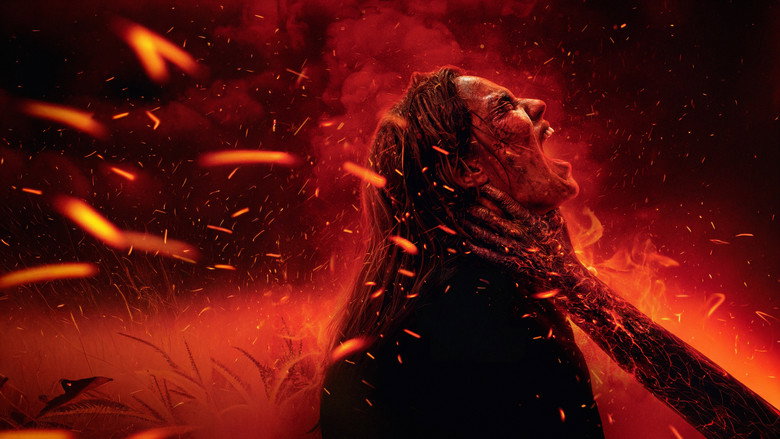
Edgar's strange behavior becomes openly inhuman. Ordinary tools and household fixtures become weapons as the attack moves from the car to the house. Vaniček stages the violence with long, mobile compositions that often deny the viewer the relief of a cut. The camera watches bodies struggle through rooms whose domestic familiarity has become hostile.
Thya suffers a catastrophic injury involving a car headrest. When she returns to the house, the person the family knew is gone. The Deadite version of Thya turns the language of affection and family harmony into mockery. Her toast to the “perfect family” is cruel because perfection is precisely the fiction the Prices have been enforcing.
The possessions spread. Physical contact and bodily fluids make evil feel contagious, but resentment accelerates its work. Deadites are not merely attackers; they impersonate the dead and wounded well enough to manipulate survivors into hesitation. Every attempt to preserve one more family member creates another opening.
6. Joseph's research finally reveals the purpose of the Dagger
Joseph's grandfather did more than study the Deadites. His materials point to the Kandarian Dagger, a weapon capable of cleansing or destroying the possessing force. The Deadites' hunt is therefore strategic: the Price house contains something that can end them.
Joseph's pursuit of the truth might have redeemed his earlier recklessness, but he is eventually possessed and turns on Alice. His tragedy is built into his motive. He wanted Benjamin's research to prove that his obsession had value and that he was not the failure Edgar saw. The supernatural threat offers that proof only after making him part of the disaster.
7. Alice stops asking the family to believe her
As Susan, Edgar, Polly, Joseph and Thya are consumed or weaponized by possession, Alice becomes the last person able to act. She searches Benjamin's collection and locates the real Kandarian Dagger among other blades. The weapon is less impressive than legend suggests, which fits the movie's larger argument: survival does not arrive as a grand rescue. It arrives as a small, usable truth found inside inherited clutter.
Alice fights the Deadite Prices through the house, refusing their attempts to confuse obligation with love. She uses the Dagger against them, breaking the immediate hold the family has over her. Yet the night is not over because the cremation that should have destroyed Will was interrupted. His body remains available to the demonic force.
8. Will returns, and the final battle moves into the construction site
Possessed Will chases Alice away from the family home and into the construction area near the funeral facility. The setting completes the movie's visual progression. A marriage once hidden behind domestic appearances is now exposed in a raw place of concrete, machinery and unfinished surfaces.
Alice uses the environment rather than waiting for a conventional heroic weapon. Tar, a jackhammer and the Kandarian Dagger become parts of the same improvised counterattack. She finally stabs Will with the Dagger, briefly returning him to himself before his death. The moment does not excuse his abuse. It separates the human being from the possessing force long enough for Alice to end both the supernatural threat and his last physical claim on her.
More from RecapRush
 Tuner (2026): When a Gift for Listening Becomes a Dangerous Way to Make a Living
 The Truman Show (1998) Recap & Ending Explained: Why Truman Chooses the Unknown
 Take Charge of My Heart (2026) Recap & Ending Explained: Why Bo-bae Must Be More Than Ho-rang’s Lifeline
Paramedics race toward the scene as dawn breaks. Alice survives. The sunrise is not proof that every Deadite is gone—the credits will immediately complicate that idea—but it ends the single night in which the Price family's protected secrets became monsters she could fight in the open.
Cast + TMDB
Cast and Characters









RecapRush displays the verified cast gallery from TMDB Movie 1212763 with portraits, credited character names and links to each performer's profile. The six principal credits used for this article are:
- Souheila Yacoub as Alice
- Tandi Wright as Susan
- Hunter Doohan as Joseph
- Luciane Buchanan as Thya
- Erroll Shand as Edgar
- Maude Davey as Polly
George Pullar is additionally credited by TMDB as Will, whose death and return drive the film's central conflict.
Ending Explained
Does Alice survive Evil Dead Burn?
Yes. Alice kills the possessed Will at the construction site and remains alive as emergency responders approach at sunrise. The ending presents her as the story's final survivor, but it does not suggest that she is emotionally untouched. Survival is the first moment in which she can begin defining her life outside Will and the Prices.
Why does the Kandarian Dagger matter?
Benjamin Price's research identifies the Dagger as a weapon the Deadites fear. Alice discovers it among his blades and uses it to defeat the possessed family members. When she stabs Will, the possession recedes long enough for his human self to surface before death. The Dagger therefore does more than injure a body: it interrupts the entity's control.
Why was Will still possessed if he was supposed to be cremated?
The funeral-parlor chaos prevents the cremation from completing properly. Because Will's body is not destroyed, it remains a vessel. The apparent closure of his funeral is therefore false—just like the Price family's idealized account of his marriage.
What does the sunrise mean?
The sunrise is a literal end to the night's siege and a visual release from the Price house's darkness. In RecapRush's reading, it also marks the first time Alice's future is not being narrated by Will or his family. The light does not erase trauma; it makes continued life possible.
RecapRush Interpretation
Evil Dead Burn uses possession as an extreme version of family denial. Long before Edgar becomes a Deadite, the Prices speak through Will. They preserve his authority by blaming Alice, excusing his conduct and demanding the correct performance of grief. After possession, the demons simply make that ventriloquism visible: dead people use living mouths to keep old power active.
That is why Alice's final confrontation cannot end at the house. Killing the possessed relatives addresses the system that protected Will, but Will himself remains. The construction site strips away the family portrait and stages the conflict as it always was—Alice against the person who controlled her. The supernatural Dagger is necessary, yet her decisive change is psychological. She no longer needs his parents to agree that what happened to her was real.
Deep Analysis & Key Themes
Grief without compulsory forgiveness
Alice's mourning is morally untidy. She has lost her husband and escaped him at the same time. The movie refuses the cultural shortcut that death automatically purifies a person's behavior. Her silence at the funeral is not emotional emptiness. It is the pressure of incompatible truths: Will is dead, the marriage mattered, and the man being praised caused harm.
The inherited house as an inherited lie
Joseph's deteriorating home is filled with Benjamin's research and the residue of earlier generations. It is an inheritance that demands maintenance while offering danger instead of security. The same is true of the Price family's story about itself. Joseph cannot earn Edgar's approval by preserving the property; Alice cannot earn Susan's love by preserving Will's reputation. The house must stop functioning as proof that the family is whole.
Fire does not automatically cleanse
The title promises flame, and Will appears to die in a burning crash. Later, cremation seems capable of giving everyone closure. Neither fire finishes the work. In this film, destruction without recognition is incomplete. Alice has to understand the weapon, identify the real source of danger and choose where to strike.
Deadites turn intimacy into access
The Deadites imitate voices, memories and emotional needs. Their advantage is not simply strength; it is familiarity. A stranger at the door can be refused. A parent, partner or sibling calling from the other side of it can trigger mercy. Evil Dead Burn repeatedly asks when compassion becomes vulnerability—and answers that the fault lies with the manipulator, not with the person who cared.
Violence as spectacle versus violence as meaning
The film's practical gore and elaborate set pieces are designed to provoke visceral reaction. Critical responses split over whether the excess deepens the domestic-abuse theme or overwhelms it. Both readings are defensible. RecapRush's interpretation is that the best sequences make hidden family violence physically undeniable; the weaker moments risk turning that pain into another endurance stunt.
What Most Viewers Missed
The opening is connected to Evil Dead Rise
The lakeside prologue and Jessica's presence connect Burn to the opening movement of Evil Dead Rise. The film can be followed as a standalone story, but its evil is not sealed inside one family's house.
The Dagger's ordinary scale is the point
Viewers expecting an ornate fantasy relic may initially doubt the small blade. Its unglamorous appearance separates useful knowledge from Joseph's romantic obsession with occult history. The real weapon does not look like the legend.
Construction noise predicts the ending location
The funeral's construction sounds first play as disrespectful interruption and grim comedy. The finale relocates Alice and Will into that unfinished industrial space, transforming background irritation into the arena where their relationship finally ends.
The Deadites preserve personality as a weapon
The possessed family members do not become interchangeable monsters. They retain recognizable grievances, rhythms and relationships. That variation lets the movie dramatize a family system rather than a simple infection: the demon uses each person's established role.
Mid/Post-Credits
Evil Dead Burn has two verified credit scenes.
Mid-credits scene
Deadite Polly survives by detaching her prosthetic leg and freeing herself. When a driver stops to help, she grabs him and transfers the threat into a stronger body. The beat works primarily as a grotesque joke and a reminder that Alice's victory was local, not a universal exorcism.
Post-credits scene
At the crematorium, a manager brings her daughter to work. The child finds an urn labeled Ellie Bixler, the possessed mother from Evil Dead Rise. Deadite Ellie appears in a mirror, kills the girl and announces her return. The sequence makes the continuity link explicit and leaves Ellie's status deliberately unresolved.
Final Thoughts
Evil Dead Burn is at its strongest when its gore has emotional direction. The Price family is terrifying before possession because its members understand how to protect the story they prefer. The Deadites only remove restraint.
Alice's victory is therefore not a clean triumph over grief. She cannot recover the life she expected, and the credits refuse to promise a demon-free world. What she gains is authorship. Will's death no longer forces her to repeat his version of their marriage, and his family can no longer make silence the price of belonging. In a franchise built around dangerous words spoken aloud, that reclaimed right to tell the truth is the ending's sharpest weapon.
FAQ
What is Evil Dead Burn about?
It follows Alice, a widow who joins her late husband's family at a secluded home. Their inherited connection to demonic research draws Deadites into a gathering already fractured by grief, resentment and denial.
Is Evil Dead Burn connected to Evil Dead Rise?
Yes. It tells a largely standalone Price-family story, but the lakeside opening and the post-credits appearance of Ellie Bixler connect it directly to Evil Dead Rise.
Who is the main survivor?
Alice survives the final confrontation and is alive when paramedics approach at dawn.
Who directed Evil Dead Burn?
Sébastien Vaniček directed the film and co-wrote it with Florent Bernard.
What is the TMDB ID for Evil Dead Burn?
The verified TMDB movie ID is 1212763.
Does Evil Dead Burn have post-credits scenes?
Yes. It has a mid-credits scene involving Polly and a post-credits scene involving Ellie Bixler.
Join the conversation
What did you think of the ending? Share your interpretation. Spoilers may appear below.
This product uses the TMDB API but is not endorsed or certified by TMDB.
No comments yet. Start the conversation.