
RECAPRUSH TV GUIDE
The Pitt (2025)
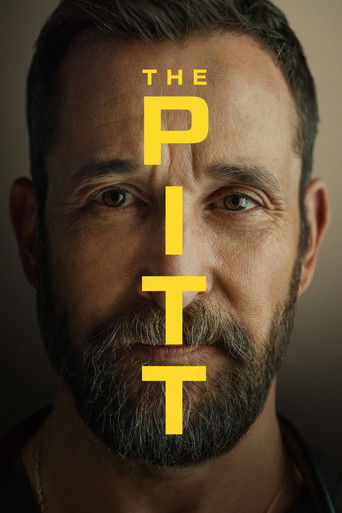
The staff of Pittsburgh's Trauma Medical Center work around the clock to save lives in an overcrowded and underfunded emergency department.
Overview, poster, and credits from TMDB.
Read and watch our full recap ↓FROM THE RECAPRUSH LIBRARY · FULL RECAP
The Pitt Season 1 Recap & Ending Explained: Why Robby Finally Breaks
16 min read · Estimated reading time— views
Intro + RecapRush Viewpoint
*Major spoilers for all 15 episodes of The Pitt Season 1 follow.* Dr. Michael “Robby” Robinavitch begins his shift as the person everyone else can lean on. Fifteen punishing hours later, that identity has become the most dangerous thing he carries. Around him, Pittsburgh Trauma Medical Center absorbs addiction, grief, violence, poverty, preventable illness, and finally a mass-casualty shooting. Robby keeps moving because stopping would mean feeling all of it.
The Pitt is gripping medical drama, but its real subject is moral injury: the damage caused when competent people are repeatedly forced to deliver care inside conditions that make good care nearly impossible. RecapRush reads the Season 1 finale not as Robby’s defeat, but as the moment his heroic self-image finally fails him. Only then can another doctor stand beside him, and only then can the shift truly end.
Featured Image
Table of Contents
Quick Facts
- Title: The Pitt — Season 1
- Year: 2025
- Genre: Medical drama
- U.S. premiere: January 9, 2025 on Max
- Season length: 15 episodes
- Story span: One 15-hour emergency-department shift, from 7:00 A.M. through 9:00 P.M.
- Creator: R. Scott Gemmill
- TMDB TV ID: 250307 — TMDB series page
- Spoiler status: The complete Season 1 story and finale are discussed below
Full Spoiler Recap
1. 7:00 A.M. — Robby begins a shift already carrying the past
The day starts at Pittsburgh Trauma Medical Center, where the emergency department is overcrowded before the new team has found its footing. Chief attending Dr. Michael “Robby” Robinavitch welcomes a group of trainees and immediately begins sorting people by skill, urgency, and temperament. Student doctor Victoria Javadi is brilliant but inexperienced. Dennis Whitaker is compassionate and nervous. Trinity Santos is bold, observant, and sometimes abrasive. Melissa King is careful with patients even when social interaction costs her extra effort.
Robby appears composed, but the date is the fifth anniversary of the death of his mentor, Dr. Adamson, during the COVID-19 pandemic. Memories intrude whenever Robby slows down. He has built his authority around the belief that he can keep functioning, teach everyone else, and save the next patient without acknowledging what the previous losses did to him.
The Pitt operates as a teaching hospital under strain. Charge nurse Dana Evans holds the room together while residents Frank Langdon, Cassie McKay, Samira Mohan, and Heather Collins juggle cases with almost no margin for error. The trainees quickly discover that medical knowledge is only one part of emergency care. They must also deal with frightened relatives, institutional delays, scarce beds, misinformation, and patients whose lives cannot be repaired by a single procedure.
2. The trainees discover what kind of doctors they might become
Each new doctor is tested differently. Javadi, a 20-year-old third-year medical student, begins badly when the physical reality of the ER overwhelms her. Yet she absorbs instruction quickly and returns to the work instead of letting embarrassment define the day.
Whitaker repeatedly connects with vulnerable patients, though his uncertainty makes him look less decisive than Santos. His private crisis is financial: he has been secretly sleeping inside the hospital because he cannot afford stable housing. Santos initially reads his awkwardness as weakness, then learns what he has been hiding and offers him her spare room. Her action complicates the harsher image she projects at work.
King’s patience becomes one of the department’s quiet strengths. In the final stretch of the shift, she performs a spinal tap on a young measles patient despite resistance from the child’s parents. The case shows how misinformation turns a treatable clinical problem into an ethical and emotional confrontation. After the shift, King picks up her autistic twin sister, Becca. Their reunion reframes King’s precise communication and sensitivity without reducing her to a diagnosis.
3. Collins’s miscarriage exposes the cost of pretending to be fine
Dr. Heather Collins tries to work while experiencing a miscarriage. Robby eventually recognizes that she cannot safely continue and sends her home. Their conversation also reveals unresolved personal history: the two were once romantically involved, and Collins previously had an abortion after becoming pregnant during that relationship.
The revelation does not turn their history into a simple lost-love subplot. It shows how medicine trains both of them to keep intensely private pain behind professional performance. Robby can order Collins to stop because her physical condition makes the danger visible. He cannot apply the same judgment to himself, even though his own grief is shaping every hour of the shift.
4. Santos sees what everyone else has missed about Langdon
Santos becomes suspicious of Dr. Frank Langdon after noticing inconsistencies around missing medication. Her confrontational style makes it easy for others to treat her concern as another example of overconfidence. The evidence eventually proves that Langdon has been stealing narcotics and is dealing with addiction.
The discovery devastates Robby. Langdon is not merely another employee; he is a trusted physician and an important part of the team. Robby removes him from the department, but the betrayal lands during a shift when Robby is already using control as his defense against grief. Their later confrontation is painful because both men understand the professional and human consequences.
Robby offers a severe route back: inpatient treatment, ongoing testing, and a long recovery program. Langdon resists being reduced to his addiction and accuses Robby of hypocrisy. Robby is right that Langdon cannot continue treating patients while stealing medication, yet Langdon also identifies something true: Robby demands honesty about another doctor’s impairment while concealing his own collapse behind competence.
5. Dana is attacked by the system’s accumulated anger
Dana spends the day managing the flow of patients and protecting staff from chaos. A disgruntled patient punches her, turning the abstract problem of violence against healthcare workers into a direct personal injury. The assault is not treated as a dramatic anomaly. It emerges from an environment where waiting, fear, understaffing, and rage have all been allowed to build.
Dana returns to her responsibilities, but the cost appears near the end of the shift when she takes down personal photographs and suggests she may not come back. The hospital depends on people like Dana continuing after every injury. Her quiet withdrawal asks what happens when the person who makes everyone else’s work possible can no longer accept that bargain.
6. A mass-casualty alert transforms the department
The final hours are dominated by a shooting at PittFest. Victims arrive faster than the department can comfortably receive them. The medical team shifts into disaster procedure: triage, rapid decisions, abbreviated histories, blood, surgery, and the constant calculation of where limited attention can save the most lives.
The earlier episodes have prepared both the trainees and the audience for this. Skills that once seemed small become essential. Javadi’s recovery from her early fear, Whitaker’s empathy, Santos’s decisiveness, King’s concentration, and the residents’ experience all feed into a collective response. No single doctor controls the room. Survival depends on the network.
Dr. Jack Abbott, the night attending, arrives and helps carry the department through the surge. McKay’s ankle monitor malfunctions during the crisis, and she disables it so she can continue working. When the legal consequences threaten to interrupt the response, Robby emphasizes that she has been saving lives, including an injured officer. The moment does not erase her legal restrictions; it demonstrates how rigid systems can collide with urgent moral reality.
7. Leah’s death destroys Robby’s belief that effort guarantees rescue
Among the shooting victims is Leah, the girlfriend of Jake, a young man Robby treats like a stepson. Robby tries to save her and cannot. Jake responds from shock and grief by blaming him. The accusation reaches the fear Robby has spent the entire day avoiding: if his value comes from being the person who saves everyone, then every death becomes evidence that he is a failure.
The Pitt’s results are extraordinary—112 patients treated in the emergency response and 106 surviving—but statistics offer Robby no shelter from the six lives lost. Emergency medicine requires clinicians to act decisively while accepting that correct decisions do not always produce life. Robby has taught that lesson to others. He cannot yet grant it to himself.
8. The shift ends, but nobody receives a clean ending
As the mass-casualty response subsides, each character experiences the aftermath differently. Mohan, who has maintained her gentleness under relentless pressure, finally cries in a bathroom. Santos’s offer to Whitaker creates the possibility of a home. Javadi joins the group for an after-shift beer, no longer defined by the student who fainted at the beginning of the day.
McKay confronts teenager David about a disturbing list of girls he wants to “eliminate,” refusing to let a warning sign disappear merely because a larger disaster has consumed the department. Dana’s possible departure remains unresolved. Langdon and Robby separate without reconciliation. The night team takes over, and the waiting room begins filling again.
Robby retreats to the rooftop and stands on the ledge. Abbott finds him there. He does not deliver a speech that magically repairs the day; he stays, recognizes the danger, and brings Robby back toward other people. The two eventually join colleagues for a beer. Robby has not conquered his trauma, but for one evening he allows himself to be accompanied.
Cast + TMDB
Cast and Characters










The gallery below is generated from verified TMDB television credits. Select a performer to open the RecapRush profile and filmography page. Featured Season 1 roles include Noah Wyle as Dr. Michael “Robby” Robinavitch, Patrick Ball as Dr. Frank Langdon, Katherine LaNasa as charge nurse Dana Evans, Supriya Ganesh as Dr. Samira Mohan, Fiona Dourif as Dr. Cassie McKay, Taylor Dearden as Dr. Melissa King, Isa Briones as Dr. Trinity Santos, Gerran Howell as Dennis Whitaker, and Shabana Azeez as Victoria Javadi.
Ending Explained
Why does Robby stand on the rooftop ledge?
The series does not give Robby a tidy diagnosis or reduce the scene to one thought. What it shows is a man in acute crisis after professional and personal defenses have failed. The anniversary of Adamson’s death, Langdon’s addiction, the PittFest shooting, Leah’s death, and Jake’s blame converge after Robby has spent 15 hours refusing himself the vulnerability he permits in patients.
More from RecapRush
 Adolescence (2025) Recap & Ending Explained: Why Jamie’s Guilty Plea Cannot Give His Father Closure
 Fall 2: Deadpoint (2026) Recap & Ending Explained: Why Jax Keeps the Last Canister
 Roman Holiday (1953) Recap & Ending Explained: Why Joe Gives Up the Story, Not Just the Princess
Standing on the ledge visualizes his dangerous isolation. He has made himself responsible for holding everyone else away from the edge, but he has no practice asking someone to do the same for him. Abbott’s arrival matters because it interrupts that isolation without demanding that Robby instantly explain or recover.
Does Robby save Jake’s girlfriend Leah?
No. Robby and the team attempt to save Leah, but she dies from her injuries. Jake blames Robby in the immediate aftermath. The series does not present that blame as a fair clinical judgment; it is grief searching for a person close enough to hold responsible.
What happens to Langdon?
Langdon is removed from clinical duty after his narcotics theft and addiction become clear. Robby lays out a demanding treatment and monitoring path, but the season ends before Langdon’s recovery is resolved. Their relationship remains damaged. The absence of quick forgiveness is important: compassion for addiction does not eliminate the need to protect patients or rebuild trust.
Is Dana leaving the Pitt?
Season 1 leaves the question open. After being assaulted and enduring the mass-casualty shift, Dana removes photographs from her workspace and indicates that she may be finished. Her uncertainty is the point. Burnout is not only exhaustion; it is the moment a person can no longer imagine that the same sacrifice tomorrow will produce a different system.
Why does the waiting room fill again at the end?
The returning crowd denies the audience a fantasy that one heroic shift solved the hospital’s problems. The emergency department is cyclical. New patients arrive as the day team leaves, and the institutional pressures remain. Individual courage saved lives, but it did not fix overcrowding, staffing shortages, violence, misinformation, addiction, or unequal access to care.
What does the beer in the final scene mean?
The beer is not a cure. It is a modest act of connection after a day defined by professional distance. Robby’s healthiest final action is not another procedure; it is allowing himself to sit with colleagues. The gesture suggests that survival may begin with shared witness rather than solitary mastery.
RecapRush Interpretation
Robby’s deepest contradiction is that his compassion has become inseparable from control. He genuinely wants to protect patients and train younger doctors, but he also needs to be the person who can withstand what breaks everyone else. That need makes him effective in a crisis and emotionally unreachable afterward.
The season repeatedly places a vulnerable doctor in front of him. Collins is miscarrying. Langdon is addicted. Dana has been assaulted. Mohan is emotionally spent. Robby can recognize the practical response for each of them, yet he treats his own grief as an exception. His identity depends on the belief that leadership means never becoming the patient.
RecapRush reads Abbott’s rooftop intervention as the season’s most important act of care because it reverses the hierarchy. The night doctor takes responsibility for the day doctor. Robby does not earn rescue by performing strength; he receives it because another person sees him.
Deep Analysis & Key Themes
Competence is both a gift and a form of armor
The show makes technical skill exciting without pretending skill solves every moral problem. Robby’s speed, memory, and judgment save lives, but those abilities also help him avoid reflection. The more useful he becomes to the institution, the easier it is for both Robby and the institution to ignore his trauma.
The trainees offer alternative models. Whitaker’s uncertainty coexists with empathy. King’s careful pace can reveal what hurried people miss. Santos’s bluntness uncovers Langdon’s theft. The team succeeds because different forms of attention correct one another.
The 15-hour structure turns time into pressure
Each episode covers roughly one hour of the same shift. That design prevents emotional consequences from being reset between installments. A mistake at breakfast remains in the room at lunch. Fatigue changes judgment. Private problems cannot be postponed forever because another patient keeps entering.
The clock also challenges the conventions of a medical procedural. The season cannot pretend every case reaches closure within an episode. Some patients leave, some die, some remain, and some questions simply transfer to the next team.
Moral injury is different from ordinary fatigue
The staff are tired, but exhaustion alone does not explain their pain. They repeatedly know what humane care should look like and then confront limits imposed by capacity, law, family conflict, institutional policy, or time. Moral injury grows in the gap between the care they believe people deserve and the care the environment lets them provide.
Dana’s assault intensifies this theme. She is expected to absorb public frustration generated by failures she did not create. When she considers leaving, the hospital risks losing precisely the person whose competence has been compensating for those failures.
Addiction tests the limits of professional solidarity
Langdon’s story resists two easy conclusions. He is neither a villain unworthy of help nor a colleague whose illness excuses patient risk. Santos is right to investigate. Robby is right to remove him. Langdon is also right that shame and hypocrisy cannot form the whole basis of recovery.
Their conflict asks whether a medical culture that celebrates endurance can respond honestly when a doctor’s coping mechanism becomes dangerous. Treatment requires accountability, but durable recovery also requires an identity beyond disgrace.
The mass-casualty response rejects the lone-hero fantasy
The PittFest crisis is not solved by Robby’s brilliance alone. Nurses, doctors, students, transport staff, and the incoming night team contribute to the outcome. The season’s most hopeful claim is structural: care works when knowledge is distributed and people trust one another enough to act.
That is why Leah’s death is so destructive to Robby. He interprets an unavoidable loss through an individual-hero model the show has already disproved. The department saved 106 people because it behaved like a network. Robby breaks because he still judges himself as if he were the whole system.
The hospital never truly closes
The final return to the waiting room is more than realism. It changes what victory can mean. The team cannot finish suffering; it can only respond ethically to the people present during its watch and then hand responsibility onward.
The ending therefore offers continuity instead of closure. That may feel unsettling, but it is also humane. No one should have to remain on duty forever. Passing the work to another person is not abandonment—it is the condition that makes care sustainable.
What Most Viewers Missed
- The season opens and closes with handoffs. Robby begins by receiving responsibility and ends only when Abbott can carry some of it. The medical handoff becomes an emotional lesson he has resisted all day.
- Santos and Whitaker exchange apparent strengths. Santos looks self-sufficient but demonstrates care by offering Whitaker a room. Whitaker looks fragile but repeatedly brings moral steadiness to patients. Neither first impression is complete.
- Collins’s departure foreshadows Robby’s breakdown. Robby correctly tells another doctor that personal crisis makes continuing unsafe. His inability to apply that standard to himself reveals the blind spot at the center of his leadership.
- Dana’s photographs make burnout visible before she announces it. Removing personal objects turns a private thought into physical preparation. Her possible exit is not impulsive; it has been accumulating throughout the shift.
- The measles case and PittFest shooting share a theme. One emergency grows from misinformation and the other from violence, but both force clinicians to treat consequences they had no power to prevent.
- The survival count is both triumph and trap. Saving 106 of 112 patients is an extraordinary team achievement. Robby’s mind fixes on those who died, showing why outcome statistics cannot resolve traumatic guilt.
- The finale refuses a conventional cliffhanger. The unresolved stories are not teasers pasted onto the end. They reflect a workplace where people leave one shift with life still in progress.
Mid/Post-Credits
The Pitt Season 1 does not use a mid-credits or post-credits scene to extend its story. The narrative ending is Robby reconnecting with colleagues while the hospital continues into the next shift. Viewers do not need to wait through the credits for an additional twist.
Final Thoughts
Season 1 of The Pitt finds suspense in the distance between what a hospital team knows and what its circumstances allow. Its urgency comes from medicine, but its emotional power comes from accumulation: every compromise, loss, insult, and successful rescue remains inside the characters until somebody can no longer carry the weight alone.
Robby’s breakdown is not a reversal of his heroism. It is the consequence of defining heroism too narrowly. He has treated endurance as an individual obligation, while the season keeps demonstrating that care is collective. Abbott does not erase Leah’s death or Adamson’s memory. He simply prevents Robby from facing them alone.
The shift ends without the hospital being healed. That is exactly why the final beer matters. For a few minutes, the people who have spent all day witnessing strangers’ pain witness one another. In The Pitt, that small act is not separate from medicine. It may be what lets the doctors return.
FAQ
Is The Pitt Season 1 set during one day?
Yes. Its 15 episodes follow one 15-hour emergency-department shift, with each episode covering approximately one hour.
Where is The Pitt set?
The story takes place in the emergency department of the fictional Pittsburgh Trauma Medical Center in Pittsburgh, Pennsylvania.
Who is Dr. Robby?
Dr. Michael “Robby” Robinavitch, played by Noah Wyle, is the emergency department’s chief attending and the central figure of Season 1.
Why is the date difficult for Robby?
The shift falls on the fifth anniversary of the death of his mentor, Dr. Adamson, during the COVID-19 pandemic.
What happens at PittFest?
A shooting creates a mass-casualty emergency. The hospital treats 112 victims, with 106 surviving, but Leah is among those the team cannot save.
Does Langdon return to work by the finale?
No. He is removed from duty after stealing narcotics, and the season leaves his treatment and possible professional return unresolved.
Is The Pitt based on a true story?
It is a fictional drama. Its setting and cases draw on the pressures faced by contemporary emergency departments, but Pittsburgh Trauma Medical Center and the season’s central shift are fictional.
Does Season 1 end on a cliffhanger?
Not in the conventional sense. Several character stories remain unresolved, but the finale completes the 15-hour shift and ends with the next cycle of hospital work beginning.
Join the conversation
What did you think of the ending? Share your interpretation. Spoilers may appear below.
This product uses the TMDB API but is not endorsed or certified by TMDB.
No comments yet. Start the conversation.