
RECAPRUSH MOVIE GUIDE
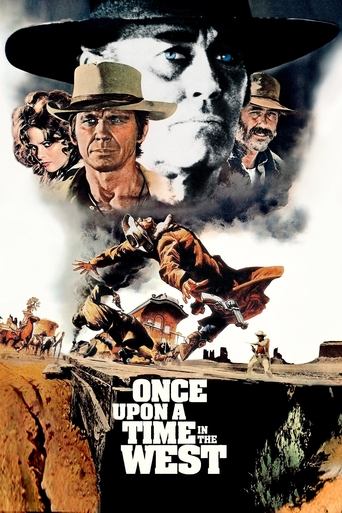
Once Upon a Time in the West (1968)
Directed by Sergio Leone
As the railroad builders advance unstoppably through the Arizona desert on their way to the sea, Jill arrives in the small town of Flagstone with the intention of starting a new life.
Overview, poster, and credits from TMDB.
Read and watch our full recap ↓FROM THE RECAPRUSH LIBRARY · FULL RECAP
Once Upon a Time in the West (1968) Recap & Ending Explained: Why Harmonica Leaves Jill
13 min read · Estimated reading time— views
Intro + RecapRush Viewpoint
Once Upon a Time in the West brings two stories to the same piece of land. Harmonica wants an answer from a man who destroyed his family. Jill McBain needs to survive the destruction of hers and decide what to do with the property she inherits. One story looks backward toward a single killing; the other must continue after the gunfighters leave.
RecapRush interpretation: The final duel completes Harmonica’s purpose without completing Jill’s future. Her last action—carrying water to the railroad workers—offers a different measure of importance from winning a gunfight. The film lets revenge reach its destination, then gives its closing movement to the work of sustaining a place.
Spoilers and editorial note: This guide covers Sergio Leone’s complete 1968 feature and its ending, using the long version’s narrative rather than treating a shortened release as a separate story. It uses AI-assisted research and drafting checked against film institutions, classification records and published plot accounts; it does not claim a first-hand screening. Original interpretations are labelled separately from plot facts.

Table of Contents
Quick Facts
- Film: Once Upon a Time in the West (1968)
- Original title: C’era una volta il West
- Director: Sergio Leone
- Screenplay: Sergio Leone and Sergio Donati
- Story: Sergio Leone, Dario Argento and Bernardo Bertolucci
- Music: Ennio Morricone
- Countries: Italy and United States
- Runtime reference: 166 minutes, per TMDB and AFI Silver; editions vary
- TMDB genres: Drama, Western
- TMDB movie ID: 335
Some American listings use 1969 because of the U.S. release. This article uses the film’s 1968 identity, confirmed by AFI Silver and The Film Foundation. Runtime differences should not be mistaken for a different set of central characters or a newly revealed ending.
Full Spoiler Recap
A station ambush introduces a man with unfinished business
Three armed men wait at a remote railroad station for a passenger. The arriving stranger carries a harmonica and has expected to meet Frank. The encounter becomes a gunfight: the waiting men die, while the stranger survives a wound.
The scene introduces his method before his motive. He is prepared for violence, but the film withholds the history that makes Frank important to him. Later, Cheyenne gives the stranger the name Harmonica.
Jill arrives too late for the family she expected
At Sweetwater, Brett McBain and his children prepare for a celebration. Frank and his men murder them, including the youngest child. Evidence is left to make the killings look like the work of Cheyenne’s gang.
Jill arrives from New Orleans and discovers the deaths. She reveals that she and McBain were already married, making her his surviving widow and the owner of Sweetwater. What seemed to be the erasure of a household has left a person with a legal claim the killers did not anticipate.
Cheyenne denies responsibility. His interest in clearing his name and Harmonica’s pursuit of Frank bring both men into Jill’s struggle to keep the property.

Water explains why an isolated ranch is valuable
Railroad magnate Morton employs Frank to remove an obstacle to the advancing railway. McBain understood that Sweetwater’s water supply would make the property valuable as a stop for steam trains. His plan involved building a station before the tracks arrived; failing to meet the construction deadline would cost him the property under the agreement.
The building materials at the ranch are therefore evidence of a plan, not useless leftovers. Harmonica explains the opportunity, and Cheyenne’s men help turn the stored materials into the station that must exist in time.
Morton wanted intimidation rather than the massacre Frank carried out. Their conflict does not make Morton innocent: he still wants control of the land. Frank, meanwhile, begins to want the economic power of an owner rather than remaining someone else’s hired killer.
Frank uses Jill’s vulnerability to force a sale
Frank captures Jill and subjects her to sexual coercion and threats. Her efforts to remain alive should not be read as a romantic endorsement of him. His aim is to secure the property through her, and an auction becomes the means of taking it cheaply.
Frank’s gunmen intimidate potential bidders. Harmonica disrupts the arrangement by bidding $5,000, using the bounty on Cheyenne as the proposed payment. Cheyenne is taken into custody, but the arrangement does not end their cooperation; he subsequently escapes.
The auction turns the gang’s ability to control a room against them. Harmonica does not defeat the land grab by making the officials more honest. He finds a payment the threatened bidding process cannot simply ignore.
The alliance between money and violence breaks apart
Morton pays Frank’s own men to turn against him. Harmonica prevents them from killing Frank, leaving Jill angry that the murderer has been helped.
The intervention is not forgiveness. Harmonica has a particular confrontation to complete, and another man’s ambush would deprive him of it. His aid to Jill and his pursuit of Frank overlap, but they are not identical purposes.
Cheyenne and his men fight around Morton’s train. When Frank reaches the aftermath, bodies and the dying Morton mark the collapse of the businessman’s immediate scheme. Frank leaves that struggle for control behind and goes to meet Harmonica at Sweetwater.
The duel reveals the boy behind the instrument
As Harmonica and Frank face each other, the film completes its flashback. Years earlier, Frank arranged for a man to hang while forcing the victim’s younger brother to support him on his shoulders. He pushed a harmonica into the boy’s mouth. When the boy collapsed, he could no longer hold his brother up.
Harmonica is that surviving child. He outdraws Frank and fatally wounds him. Placing the instrument in the dying man’s mouth identifies the past that Frank has failed to recognize. The object that has announced the stranger’s presence throughout the film becomes the explanation of his identity.
Harmonica departs, Cheyenne dies, Jill stays
Harmonica does not settle at Sweetwater with Jill. He leaves with Cheyenne, whose behavior has concealed a fatal wound. Away from the ranch, Cheyenne reveals that Morton shot him and dies. Harmonica takes his body away on horseback.
Jill remains as the railway reaches Sweetwater. She brings water to the workers. The film closes around a place beginning to function, while the men who helped preserve it are dead or departing.
Cast and Characters
Cast and Characters

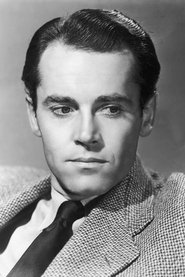

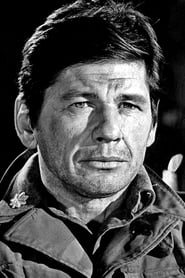


The linked TMDB gallery identifies Claudia Cardinale as Jill, Henry Fonda as Frank, Jason Robards as Cheyenne, Charles Bronson as Harmonica, Gabriele Ferzetti as Morton and Paolo Stoppa as Sam. Each portrait links to the corresponding RecapRush person profile without a duplicate cast table.
The central characters do not all want the same victory. Jill needs a viable life at Sweetwater. Morton wants the railway and its economic promise. Frank wants to turn violence into ownership. Harmonica wants recognition and revenge. Cheyenne, framed for the massacre, helps people whose future he will not share.
Ending Explained
Why does Harmonica put the instrument in Frank’s mouth?
It repeats the object’s role in Frank’s earlier cruelty. Frank used it to humiliate the boy while forcing him into an impossible position beneath his brother. Returning it allows the grown survivor to make himself known without a conventional introduction.
RecapRush interpretation: Harmonica does not merely want Frank dead; he wants the death connected to a memory. The instrument carries a history that a name alone would not communicate. Recognition arrives when Frank has no time left to bargain with it.
The flashback explains the revenge, but it does not make the childhood collapse a freely chosen act. Frank constructed the murder. The boy’s inability to keep supporting his brother is part of the cruelty inflicted on him, not evidence that he was responsible in the same way as the killer.
More from RecapRush
 Verity (2026) Recap & Ending Explained: Why the Letter Cannot Prove Verity’s Innocence
 The Final Problem (2026) Ending Explained: Basil Solves the Crime—But Can He Judge the Killer?
 Senna (2010) Recap & Ending Explained: Why the Funeral Changes the Rivalry with Prost
Why does Harmonica leave Jill?
The film shows the departure without giving an exhaustive psychological account. His confrontation with Frank is finished, yet he does not take a place in the new settlement.
RecapRush interpretation: Harmonica has organized his life around bringing the past to a reckoning. Jill’s task is to organize a future. Removing Frank makes that future possible, but it does not automatically give Harmonica a new purpose within it. His departure preserves the difference between helping a place survive and knowing how to inhabit it.
This is not proof that he is secretly dead, a supernatural visitor or destined to return in an unseen sequel. Those claims go beyond what the ending establishes.
Who kills Cheyenne?
Cheyenne dies from the wound he received in the encounter involving Morton’s train. His final explanation identifies Morton as the man who shot him. Harmonica does not kill him, and Frank is not his final executioner in the closing sequence.
RecapRush interpretation: The delayed revelation separates the appearance of survival from its reality. Cheyenne can participate in a farewell at Sweetwater even though he has no future there. The audience’s understanding catches up only after Jill can no longer see what happens.
Why end with Jill giving water to the workers?
Water caused the property to become a target in the first place. The final action turns that contested resource into something used by living people at the emerging settlement.
RecapRush interpretation: The ending changes the form of the question. Earlier it asks who can possess Sweetwater; now it shows what Sweetwater can do. Jill’s act is modest beside the spectacle of the duel, but it belongs to a continuing life rather than a completed score.
That does not prove the new economy will be fair. Morton’s scheme has already connected commercial ambition with coercion. The ending permits a beginning without certifying that progress has become innocent.

Character and Theme Analysis
Jill’s survival is more than a prize for a gunfighter
Jill arrives expecting a family and instead inherits a contested project. She confronts killers, pressure over the land and the need to make the unfinished station useful. The men’s help matters, but the ending remains with her after their objectives have run out.
RecapRush interpretation: Her importance is clearest when the story stops asking which man will win her. Sweetwater is not simply a reward to be handed over after the duel. It is a responsibility that will require labor, decisions and continued contact with other people.
At the same time, the film often places her under a sexualized gaze and restricts her choices through threats. Acknowledging the future she claims does not require celebrating the coercion she survives. The two judgments belong together.
Frank cannot become a businessman by changing his ambitions
Frank attempts to move from paid violence to ownership. Yet the auction is still organized through intimidation, and his relationship with Morton remains vulnerable to money changing hands.
RecapRush interpretation: The film does not treat the transition from gunman to capitalist as a clean moral transformation. Frank wants a different position in the same struggle for control. His methods carry his old profession into the new role before the final duel returns him to it openly.
Cheyenne helps build something that will outlast him
Cheyenne’s intervention begins with a false accusation against his gang. It develops into practical assistance with the station and Jill’s survival. His final wound keeps that contribution from becoming a promise of personal reward.
RecapRush interpretation: Unlike Harmonica’s fixed appointment with Frank, Cheyenne’s involvement makes room for a project that is not only his own. The ending gives his death weight without turning him into a spotless hero. He remains an outlaw whose assistance has made a material difference.
The railroad connects a future to the violence financing it
The railway brings workers and the prospect of a town. It also brings Morton’s effort to control a bottleneck and Frank’s willingness to remove a household from it.
RecapRush interpretation: The tracks are neither a simple symbol of salvation nor an entirely separate threat to a peaceful old world. The earlier world already contains murder and exploitation. What changes is the scale and organization of power, with Sweetwater caught where those systems meet.
Meaningful Overlooked Details
The construction deadline is a plot mechanism
Knowing that Sweetwater has water does not by itself explain why the station must be built immediately. McBain’s agreement makes the arrival of the tracks a deadline. The stored materials and Cheyenne’s builders therefore have direct narrative importance.
Harmonica protects Frank for an unsettling reason
His intervention against Frank’s attackers can look like an inconsistent act of mercy until the flashback supplies the personal motive. He prevents a killing without surrendering his own intention to kill.
RecapRush interpretation: The distinction limits any easy claim that helping Jill makes Harmonica an uncomplicated moral center. His conduct can protect another person’s future while remaining bound to a private act of revenge.
Waiting determines how violence feels
The opening station sequence spends time on the men waiting and the ordinary sounds around them before the gunfight. The final confrontation also delays its decisive movement.
RecapRush interpretation: The interval makes anticipation part of the event. A brief action can occupy a large emotional space when people must wait for it. The film’s pace asks us to confront that duration rather than measure a scene only by the number of shots fired.

Credit-Scene Information
The plot and institutional sources checked for this guide treat the departures, Cheyenne’s death and Jill’s work at the new station as the narrative conclusion. They do not establish a separate story reveal after the credits. This is a source-based qualification, not a frame-by-frame check of every release edition.
Final Thoughts
Once Upon a Time in the West completes a revenge story and then declines to make revenge the whole ending. Frank dies, Harmonica leaves, Cheyenne cannot survive his wound, and Jill continues the unfinished task at Sweetwater.
RecapRush interpretation: The final contrast is between settling a debt to the dead and accepting a responsibility to the living. The film allows the first to be necessary within Harmonica’s story without making it a sufficient foundation for Jill’s future.
For another Western about a rescuer who remains outside the household he helps restore, read our [The Searchers ending analysis](/movie/3114). For a final gesture that complicates an apparent victory, see [High Noon](/movie/288).
FAQ
Is Harmonica the boy in the hanging flashback?
Yes. The flashback reveals the childhood experience behind his pursuit of Frank. The instrument links the child and the adult.
Does Frank kill the McBain family?
Yes. Frank and his gang carry out the massacre and leave evidence implicating Cheyenne. Cheyenne’s implication is a frame-up, not the eventual solution.
Why is Sweetwater important to the railroad?
Its water supply gives it strategic value along the planned route. McBain anticipated that need and planned a station, subject to a construction deadline.
Does Harmonica die at the end?
No. He survives the duel and takes Cheyenne’s body away. Reading him symbolically as a figure of death is different from claiming the plot reveals him to be a ghost.
Do Harmonica and Jill settle down together?
No. He leaves, and she remains at Sweetwater. The film does not confirm a later reunion.
Is the video below the whole movie?
No. It is the film’s promotional trailer from YouTube Movies, independently checked against the title and channel metadata.
Join the conversation
What did you think of the ending? Share your interpretation. Spoilers may appear below.
This product uses the TMDB API but is not endorsed or certified by TMDB.
No comments yet. Start the conversation.