
RECAPRUSH MOVIE GUIDE
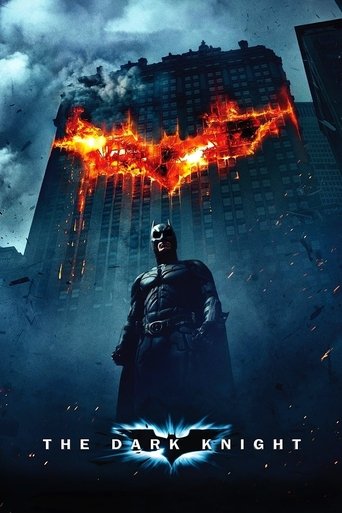
The Dark Knight (2008)
Directed by Christopher Nolan
Batman raises the stakes in his war on crime. With the help of Lt. Jim Gordon and District Attorney Harvey Dent, Batman sets out to dismantle the remaining criminal organizations that plague the streets. The partnership proves to be effective, but they soon find themselves prey to a reign of chaos unleashed by a rising criminal mastermind known to the terrified citizens of Gotham as the Joker.
Overview, poster, and credits from TMDB.
Read and watch our full movie recap ↓FROM THE RECAPRUSH LIBRARY · FULL MOVIE RECAP
The Dark Knight (2008) Recap & Ending Explained: Why Batman Takes the Blame After Gotham Rejects the Joker
15 min read · Estimated reading time— views
Intro + RecapRush Viewpoint
Two boats sit in the dark, and each has been handed the means to destroy the other. The terrifying question is no longer whether Batman can beat a criminal. It is whether frightened people will decide that survival excuses murder. Then Gotham surprises the Joker—and Batman still ends the night running from the police.
That contradiction is the heart of The Dark Knight. Christopher Nolan's 2008 film gives its hero a physical victory, a moral victory, and a devastating political compromise. Bruce Wayne can save a child. He cannot restore the city's faith without deciding which truth the city is allowed to hear.
RecapRush's viewpoint: the ending is moving because Batman sacrifices his reputation, but troubling because he and Gordon protect hope through deception. Gotham's citizens have just demonstrated that they can make a decent choice under pressure. Do they really need a manufactured hero afterward? The film leaves that question alive beneath Gordon's stirring final speech.
Full spoilers follow for The Dark Knight (2008). This article explains this film only and does not reveal later installments.
Featured Image
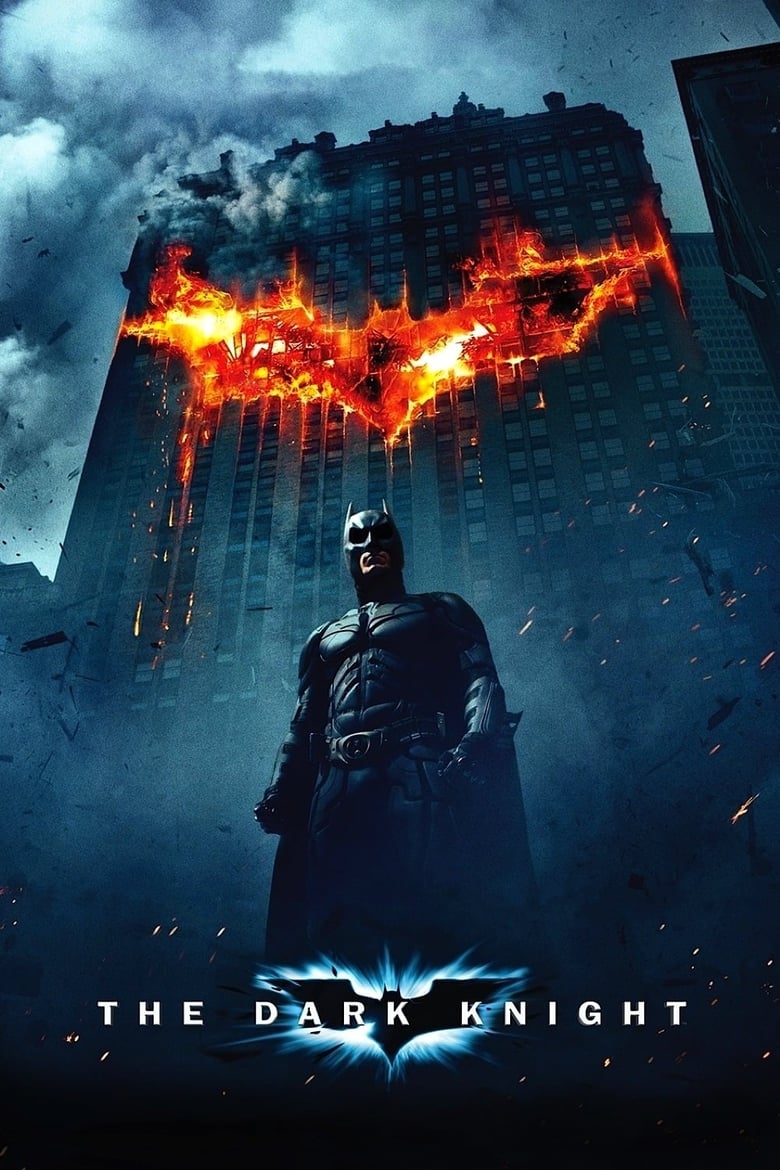
Table of Contents
Quick Facts
- Exact title: The Dark Knight
- Year and status: 2008; released feature film
- U.S. theatrical release: July 18, 2008. TMDB records July 16, 2008 as its release date; these are different release-market dates.
- Director: Christopher Nolan
- Screenplay: Jonathan Nolan and Christopher Nolan; story by Christopher Nolan and David S. Goyer
- Runtime: 152 minutes
- Verified TMDB genres: Action, Thriller, Crime
- U.S. rating: PG-13
- TMDB identity: Movie 155
- Distributor: Warner Bros.
Full Spoiler Recap
1. A robbery introduces the Joker's miniature society
Masked criminals rob a bank holding mob money. Their instructions encourage them to eliminate fellow robbers as each task finishes. The organizer emerges as the sole survivor: the Joker. He escapes with the cash while the operation exposes the lethal weakness of a partnership held together by greed.
Batman, meanwhile, faces a different problem with imitation. Armed copycats have adopted his appearance without his judgment or resources. A symbol intended to inspire resistance can also encourage reckless violence. Bruce already needs a successor who works through institutions rather than through a mask.
2. Harvey Dent offers Bruce an exit
District attorney Harvey Dent joins Batman and Lieutenant Jim Gordon in attacking organized crime. Bruce backs Dent publicly and imagines a future in which an accountable official can do what a vigilante cannot. Rachel Dawes, Bruce's childhood friend and a prosecutor herself, is now with Dent. Bruce nevertheless hopes that ending his double life will let him return to her.
The alliance pursues Lau, the accountant protecting the mob's money. After Lau flees to Hong Kong, Batman retrieves him using equipment supplied by Lucius Fox. Lau's cooperation makes sweeping prosecutions possible. For a moment, Gotham's criminal structure looks vulnerable to coordinated police work and legal action.
But Bruce's optimism has two parts that he treats as one: Gotham might no longer need Batman, and Rachel might want Bruce. Only the first is a civic objective. His failure to separate them makes the coming loss even more painful.
3. The mob hires a problem it cannot control
The Joker offers to kill Batman for half the mob's fortune. His attacks soon reach public officials, including the judge and police commissioner. He demands that Batman expose his identity and makes other people pay for Bruce's refusal. At a fundraiser for Dent, he threatens Rachel and throws her from a window; Batman saves her.
Alfred helps Bruce recognize why ordinary bargaining will not work. The Joker cannot be understood simply as a businessman seeking a profitable outcome. Money buys him access to people who assume that everyone has a price, but he is interested in proving that everyone's principles can be broken.
Bruce considers surrendering. Instead, Dent claims to be Batman. A police convoy transports him, drawing the Joker into an attack. Batman intervenes, and Gordon—whose apparent death had concealed his survival—helps capture the Joker. Gordon becomes commissioner. The city seems to have reached the moment when its combined defenses finally work.
4. Capture becomes another part of the trap
In the interrogation room, Batman's physical strength cannot make the Joker care about being hurt. The prisoner has information Batman desperately needs: Rachel and Dent are held at separate locations rigged to explode.
Bruce chooses to go to Rachel while Gordon's officers head for Dent. The Joker has reversed the addresses. Batman reaches Harvey instead. He pulls him out, but the explosion burns one side of Harvey's face. Gordon's team cannot reach Rachel in time. She dies.
The cruelty is precise. Bruce is not calmly choosing the city's ideal hero over the woman he loves. He tries to save Rachel and is denied that choice. Dent survives with the unbearable knowledge that she did not. Meanwhile, a bomb planted inside another detainee enables the Joker's escape, taking Lau with him. What looked like a successful arrest has supplied another opportunity for violence.
5. Grief becomes the Joker's opening
The Joker burns a huge pile of mob money with Lau atop it. Wealth that motivated the criminals means nothing as an end in itself to him. He also threatens to destroy a hospital unless Coleman Reese, who plans to reveal Batman's identity, is killed. Bruce helps protect Reese rather than accepting a convenient solution to his own exposure.
At the hospital, the Joker approaches the injured Dent. His manipulation shifts attention from his own responsibility toward the institutions and people who failed to protect Rachel. Dent's coin, formerly double-headed, now has a damaged side. He begins using it to determine punishment.
Dent pursues people connected to Rachel's abduction, including corrupt police officers and mobster Sal Maroni. The prosecutor who once sought convictions now conducts personal revenge. The coin gives his decisions an appearance of fairness while removing the protections that made his work justice in the first place.
6. Batman's search creates a second ethical crisis
Bruce turns Gotham's cellphones into a vast sonar surveillance system to locate the Joker. Fox objects to the power involved. He agrees to help for this operation but refuses to remain at Wayne Enterprises if the system continues to exist.
The technology lets Batman see across the city, yet it also illustrates how a protector can become dangerous without changing his stated purpose. Bruce still wants to save lives. That purpose does not automatically justify every tool he can build.
7. The ferries refuse the Joker's conclusion
Two evacuation ferries—one carrying civilians and one carrying prisoners—are wired with explosives. Each boat receives a detonator for the other. The Joker threatens to destroy both if neither acts before midnight.
The civilian passengers debate and vote, but agreeing in a crowd to kill strangers does not make the person holding the device able to do it. On the prisoner boat, a man takes the detonator and throws it away. Neither ferry destroys the other.
Batman also discovers that hostages in the Joker's building have been dressed to look like armed criminals while the real attackers wear medical clothing. He must stop the police from acting on the misleading appearance. Finally, he subdues the Joker and saves him from falling to his death. The villain is left hanging for the police to arrest, alive and denied the mass murder he tried to produce.
The Joker's last advantage is elsewhere: Harvey Dent has fallen.
8. Batman saves Gordon's son and inherits Dent's guilt
Dent holds Gordon's family at the site of Rachel's death. He blames Gordon for relying on compromised officers and threatens the commissioner's son. His fixation has narrowed from justice for Gotham to making Gordon understand his own loss.
Dent shoots Batman, who survives. Before Dent can let the coin determine the child's fate, Batman tackles him. The boy is saved; Dent falls to his death. Gotham's celebrated prosecutor has become a killer, and the people who know it must decide what happens to his public legacy.
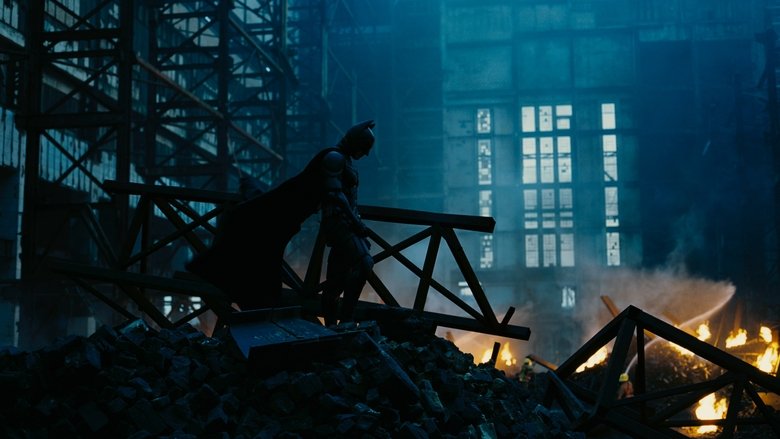
Bruce takes responsibility for Dent's crimes. Gordon agrees to conceal the truth, maintaining Dent's reputation and the hope attached to his prosecutions. The police pursue Batman, and Gordon destroys the Bat-Signal. In the closing montage, Alfred burns Rachel's letter explaining that she had chosen Dent, while Fox activates the surveillance system's destruction. Batman leaves on the Batpod as an accused criminal rather than a celebrated savior.
Cast + TMDB
Cast and Characters


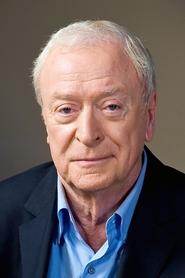


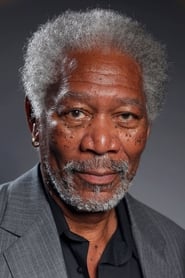

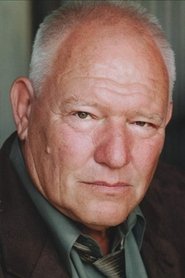
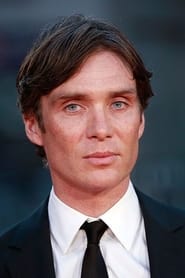
The gallery below uses the film's TMDB credited cast records and links to RecapRush actor profiles. Christian Bale plays Bruce Wayne, Heath Ledger the Joker, Aaron Eckhart Harvey Dent, Maggie Gyllenhaal Rachel, Gary Oldman Gordon, Michael Caine Alfred, and Morgan Freeman Lucius Fox. TMDB's abbreviated character labels are preserved in the gallery.
More from RecapRush
 Buddy (2026) Recap & Ending Explained: Why Freddy Escapes the Show but Cannot Go Home
 Teenage Sex and Death at Camp Miasma (2026) Movie Recap & Ending Explained
 The Assassin(s) (2026) Story Analysis: What Happens When Loyalty Requires Asking Forbidden Questions?
Ending Explained
Why does Batman take the blame?
Bruce and Gordon believe exposing Dent's murders would destroy the credibility of the city's most important public hero and threaten the achievement associated with his prosecutions. Batman is already an unofficial figure operating outside the law. Bruce decides that his reputation can bear the damage that Dent's cannot.
That is their reasoning, not a demonstrated legal certainty that every conviction would automatically disappear. Gordon fears the collapse of their work; the film dramatizes the decision made under that fear. It does not hold a courtroom hearing establishing that a cover-up is the only viable option.
Emotionally, Bruce gives up the reward a conventional superhero ending offers. People will believe he caused the violence he tried to prevent. His sacrifice protects Gordon's family and Gotham's image of Dent, but it also makes Gordon an active participant in a false public account.
Did the Joker win?
He fails on the ferries. Ordinary people do not become the murderers he predicted, and Batman refuses to execute him. His claim that pressure inevitably makes everyone like him is contradicted by actual choices.
He succeeds in corrupting Dent. Those results can coexist. Calling the ending a total Joker victory erases the passengers' courage; calling it a clean Batman victory erases the dead and the lie. The film's force comes from denying either comfortable verdict.
Is Harvey Dent really dead?
Yes. The film presents his fall as fatal and closes with his public memorial. His body is not a tease for a hidden survival twist within this movie. Batman's rescue of the child ends an immediate threat, with a lethal consequence he must carry.
What happens to the Joker?
Batman leaves him alive for police custody. The movie does not show his trial, sentence, or eventual place of confinement. Naming a specific institution as a confirmed final destination would go beyond what this ending establishes.
Why does Alfred burn Rachel's letter?
Rachel had chosen Dent. Alfred keeps that truth from Bruce and destroys the letter. Our reading is that he wants to spare Bruce another wound while Bruce is already grieving. Compassion explains the act without making it harmless: Bruce loses access to Rachel's own final account of her feelings.
RecapRush Interpretation
The ending sets two kinds of protection beside each other. Batman protects Gotham by accepting blame. Alfred protects Bruce by withholding Rachel's letter. Both substitute a bearable story for a painful truth.
Neither man acts with the Joker's cruelty. Yet both decide what another person—or an entire city—can handle. The parallel makes the finale more complicated than a simple celebration of noble lying. Love and responsibility can become paternalism when the protector controls the information.
RecapRush reads the final chase as a genuine sacrifice inside an unresolved ethical problem. Bruce gives something real: the possibility of being understood. But Gotham also loses something real: the ability to judge its hero and institutions with the facts available. The emotional uplift does not erase that cost.
Deep Analysis & Key Themes
Dent needs justice to answer his pain
Dent's confidence initially makes him useful. He can speak publicly, face threats, and persuade Gotham that lawful action matters. After Rachel's death, that same hunger for an intelligible moral world hardens into a demand that someone must suffer in proportion to his suffering.
Chance becomes attractive because the institutions he trusted have failed. But his coin cannot turn revenge into justice. Dent chooses the people, establishes the stakes, and brings the weapon. Randomness controls only the last step. It is a ritual that allows him to deny how much control he still exercises.
The Joker performs chaos through meticulous organization
The villain presents himself as an enemy of plans, but his attacks depend on preparation: coordinated abductions, concealed explosives, disguises, and carefully chosen deadlines. His speeches are recruitment tools rather than trustworthy explanations of how he works.
He wants people to accept his account of themselves. When Dent accepts it, the Joker can make a grieving man believe that surrendering responsibility is freedom. When the ferry passengers refuse it, his performance loses authority. The contradiction is useful: we should evaluate what he does, not grant him ownership of what the film means.
Bruce wants to stop being necessary
Bruce's support for Dent is more psychologically revealing than another display of equipment. He wants a lawful replacement and a private future. The problem is that he has built his identity around being the person who intervenes when everyone else fails.
The finale turns that desire inside out. He becomes necessary precisely by becoming unwanted. There is something compassionate in that willingness, but also something lonely: he can remain useful only by abandoning the hope that usefulness will finally bring him home.
Gotham's moral center belongs to people without costumes
The ferries interrupt a story otherwise dominated by exceptional men. A prisoner does something the Joker's social labels say he should not. A civilian cannot complete an act that a majority has authorized. These are individual decisions, not evidence that fear never corrupts people.
The sequence offers a more modest, durable hope: fear does not eliminate choice. Gotham is worth protecting because its people can resist, not merely because a heroic prosecutor once told them they could.
Seeing everything cannot solve every problem
The sonar network supplies information, but Batman's crucial problem in the hostage building is interpreting appearances. Seeing a figure with a weapon is not the same as knowing who the figure is. The film repeatedly makes certainty dangerous when it arrives too quickly.
Fox's objection places a boundary around Bruce's emergency power. The system's destruction matters because an exceptional response could otherwise become a permanent entitlement. The moral question continues even when the immediate rescue succeeds.
What Most Viewers Missed
The interrogation is a failure of Batman's usual language
Bruce can frighten criminals who have something to lose. The Joker absorbs violence while controlling the clock and the information. Every blow makes Batman's desperation clearer. The scene does not demonstrate that Bruce needs to hit harder; it exposes an opponent against whom force cannot produce reliable knowledge.
The coin changes, but Dent still selects the game
Before the explosion, its two heads conceal his control behind a gesture of risk. Afterward, the scarred face makes chance real. The object changes from a private confidence trick into an instrument of punishment, while Dent continues deciding whose life will be placed on the line.
Rachel's choice exists outside Bruce's imagined future
Rachel's letter prevents us from treating her as a reward waiting at the end of Batman's mission. Bruce may sincerely believe that retiring the mask will restore their relationship. Her decision reveals the distance between his hope and her agency. Alfred's action preserves that distance rather than resolving it.
The Joker's scars do not supply a verified origin story
His explanations contradict each other. They create intimidation and emotional instability in the listener, but they do not establish a reliable biography. Treating either tale as confirmed misses how he uses storytelling itself as a weapon.
Mid/Post-Credits
There are no additional narrative scenes during or after the credits. MediaStinger records dedications to Heath Ledger and special-effects technician Conway Wickliffe during the credits. The final chase and Gordon's speech are the movie's ending, not a post-credit sequence.
Final Thoughts
The Dark Knight leaves you with the sight of a man saving a city that is being taught to hate him. It is a powerful image because Bruce accepts misunderstanding without demanding gratitude.
But the ferries keep the ending from becoming a closed argument. If ordinary people can resist the Joker, perhaps they can also confront a fallen public hero. Batman and Gordon never give them that chance. That tension—between protecting hope and trusting people with truth—is why the film remains worth arguing about after the engines fade into the night.
FAQ
Does Batman choose Harvey over Rachel?
He intends to rescue Rachel. The Joker gives him the opposite location, so he reaches Harvey. The tragedy is built on deception, not Bruce consciously preferring Dent's political value.
Do either of the ferries explode?
No. Neither group uses its detonator, and Batman stops the Joker from carrying out his own attack.
Does Batman kill the Joker?
No. He saves the Joker from falling and leaves him for police custody.
Does the ending prove Dent was always evil?
No. His earlier work and courage matter. RecapRush interprets his later violence as a catastrophic response to grief, enabled by a preexisting need for control—not proof that every good act was fraudulent.
Is the surveillance network left running?
No. Fox follows Bruce's instruction to enter his name after the operation, triggering the system's destruction.
Do I need a later movie to understand this ending?
No. This film establishes Dent's death, the Joker's capture, Batman's assumed guilt, and Gordon's participation in the cover-up. The consequences beyond this night are deliberately outside this article's scope.
Join the conversation
What did you think of the ending? Share your interpretation. Spoilers may appear below.
This product uses the TMDB API but is not endorsed or certified by TMDB.
No comments yet. Start the conversation.