
RECAPRUSH TV GUIDE
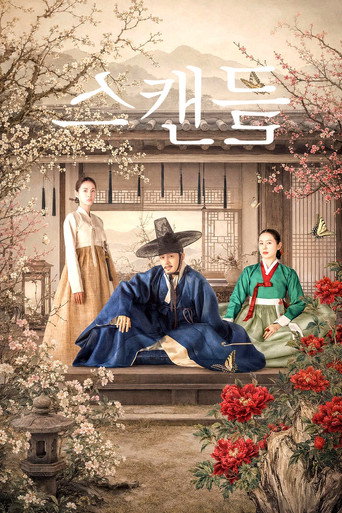
The Scandal (2026)
Directed by Jung Ji-woo
In Joseon, Lady Cho and Cho Won’s secret wager draws the widow Hui-yeon into a dangerous struggle over desire, reputation and the right to choose her own life.
Overview, poster, and credits from TMDB.
Read and watch our full season recap ↓FROM THE RECAPRUSH LIBRARY · FULL SEASON RECAP
The Scandal (2026) Recap & Ending Explained: Why Hui-yeon’s Survival Matters More Than Cho Won’s Last Letter
18 min read · Estimated reading time— views
Intro + RecapRush Viewpoint
A family wants a monument to a woman’s virtue. The woman is still alive. That cruel mismatch is where The Scandal stops being merely a seduction story and becomes a drama about who gets to decide what another person’s life is worth.
Netflix’s eight-episode Korean limited series follows Lady Cho, her cousin Cho Won and the widow Ahn Hui-yeon through a wager that turns desire into leverage. The beautiful clothes and carefully managed conversations offer little protection: the characters are most dangerous when they sound reasonable.
RecapRush’s viewpoint: Hui-yeon’s decision to keep living is the season’s strongest answer to its aristocrats. Lady Cho and Cho Won spend much of the story trying to make love prove something about themselves. Hui-yeon eventually has to imagine a future that belongs to her, even after the relationship she trusted has broken.
Full-season spoilers ahead: Episodes 1–8, including the wager, the false death report, the river sequence and the final letters. This article covers the completed 2026 Netflix series, not the similarly named earlier television dramas or the 2003 film. The setting is historical; the characters and plot discussed here are fiction. Analysis is labeled as RecapRush’s interpretation rather than confirmed filmmaker intent.
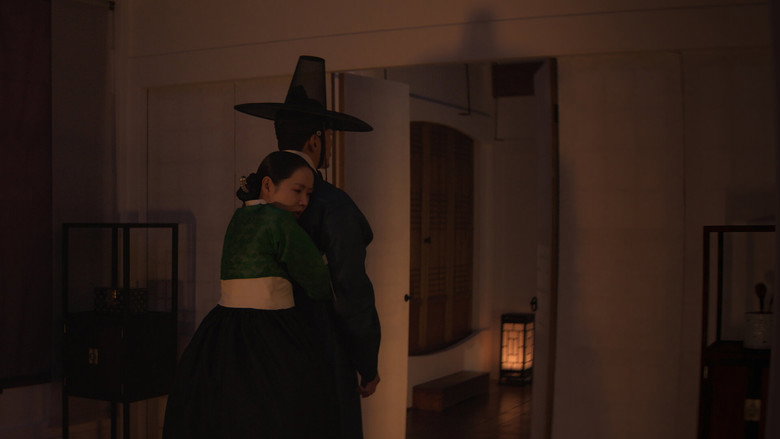
Featured Image
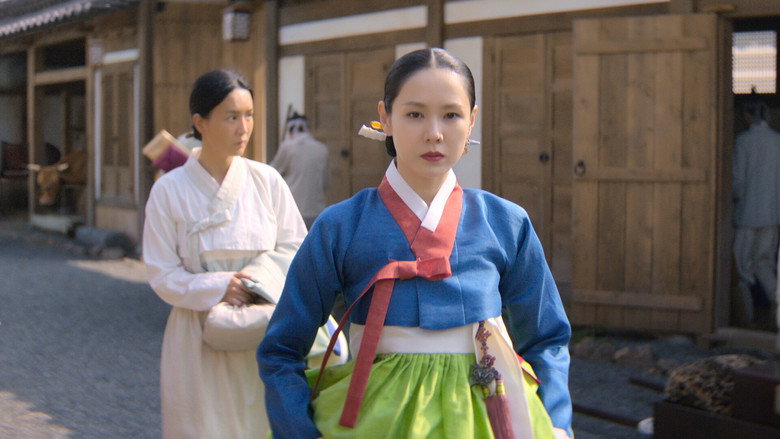
Table of Contents
Quick Facts
- English title: The Scandal
- Korean title: 스캔들
- Year / country / language: 2026 / South Korea / Korean
- Format: completed limited series, Season 1
- Release: all eight episodes on Netflix, September 18, 2026
- Scope: Episodes 1–8, including the finale
- Director: Jung Ji-woo
- Writers: Lee Seung-yeong and Ahn Hye-song
- Principal stars: Son Ye-jin, Ji Chang-wook and Nana
- TMDB TV ID: 275102
- TMDB Season 1 record ID: 425060
- TMDB genre: Drama
- Episode lengths: 48–80 minutes
- Adaptation context: Pierre Choderlos de Laclos’s Les Liaisons dangereuses and the earlier Korean film Untold Scandal
- Verification date: October 24, 2026
“Period romance” describes the story’s editorial category; Drama is the actual genre returned in the verified TMDB record. All eight episodes share the September 18 release date.
Full Spoiler Recap
1. Episode 1: Lady Cho turns a household insult into a plan
Lady Cho’s husband, Lord Yoo, brings So-ok into the household as a concubine to produce an heir. Lady Cho maintains her public composure, then reaches out to Cho Won with a scheme involving the younger woman.
The proposal grows out of a marriage where Lady Cho’s intelligence does not give her equal authority over her own future. She can understand the arrangement perfectly and still be expected to accommodate it. Her response is to manipulate the arrangement from within.
Flashbacks establish another inequality behind her relationship with Cho Won: her talent helped earn him recognition that she could not receive on the same terms. The cousins’ earlier intimacy and unrealized plans to leave together complicate every later bargain. When he answers her summons, he is returning to someone whose approval has long mattered more to him than his reputation as a lover.
RecapRush reading: Lady Cho’s grievance is intelligible; the people she chooses to hurt did not create the rules that wounded her. That distinction becomes essential as the season progresses.
2. Episode 2: Hui-yeon becomes the target of a wager
The scheme shifts toward Hui-yeon, a widow whose reputation for chastity makes her an especially difficult target. Cho Won takes on the challenge of winning her love. His desired reward is intimacy with Lady Cho.
Hui-yeon has not agreed to any contest. Her grief, faith and guarded behavior are treated as obstacles by people who assume that another person’s resistance exists to make their own victory more impressive.
The two conspirators also want different things from the bargain. Cho Won wants Lady Cho to choose him. Lady Cho wants evidence that she can still direct events. Neither initially gives Hui-yeon’s future the weight they give their own satisfaction.
That imbalance prevents the courtship from being harmless flirtation. Even when Cho Won appears attentive, the audience knows that information is being withheld from the person whose trust he needs.
3. Episodes 3–4: The seducer’s performance begins to expose him
Cho Won approaches Hui-yeon more directly, testing the defenses built around her loss and belief. At the same time, he provokes Lady Cho and tries to improve his position within their bargain.
The season gradually makes his practiced confidence less convincing. His earlier relationships with courtesans did not resolve his attachment to Lady Cho. Pursuing Hui-yeon allows him to perform mastery while avoiding that older disappointment.
Hui-yeon’s responses matter because they do not remain interchangeable with those of the women in his established routine. The more she trusts him, the harder it becomes to treat the result as a simple achievement he can report to someone else.
RecapRush reading: his feelings becoming real does not retroactively make the courtship honest. It creates a new obligation to disclose what he has concealed. The longer he delays, the more painful that disclosure will be.
4. Episodes 5–6: So-ok’s relationship reveals a second kind of captivity
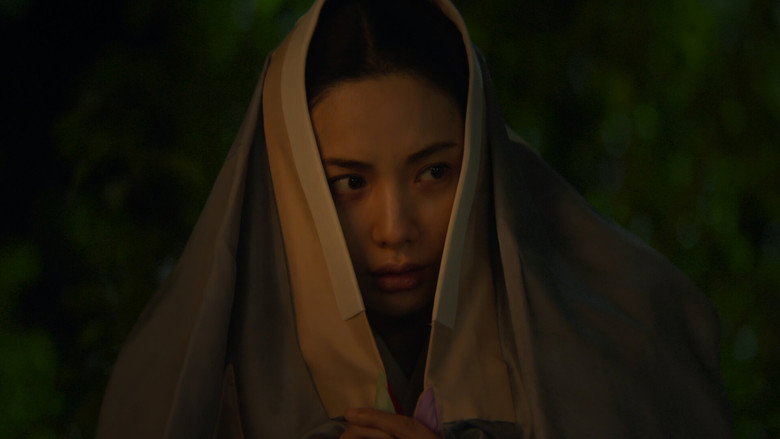
Lady Cho uses So-ok’s feelings for Kwon In-ho as another point of influence. Their relationship creates a parallel problem: So-ok has personal desires, but her place in Lord Yoo’s household has been defined around providing an heir.
In-ho’s connection to Hui-yeon’s family ties the younger couple’s secret to the wider network of reputation and obligation. Their affection is not insulated from the households that claim authority over them.
Meanwhile, Cho Won’s involvement with Hui-yeon deepens. Lady Cho raises the prospect of damage to his honor and family name, but he continues. Her warning also exposes how difficult it has become for her to keep the emotional consequences separate from the plan.
The same behavior can now mean different things to each participant. For Cho Won, continuing may feel like refusing to abandon someone. For Lady Cho, it can look like disobedience. For Hui-yeon, it appears to be a commitment made without the hidden conditions the audience knows still exist.
5. Episode 7: A private refuge collides with a public demand
Cho Won and Hui-yeon find a temporary interval away from scrutiny. Their closeness offers the possibility of a life beyond the identities other people have assigned them.
But Hui-yeon’s disappearance has produced a dangerous public story about her death. Her in-laws seek a commemorative gate honoring her chastity, and a royal order requires Cho Won to recover her body.
The contradiction is no longer avoidable. A living woman has become inconvenient to the reputation being built in her name.
Hui-yeon’s affection cannot protect her from a family that wants official recognition of her supposed death. Nor can Cho Won’s charm solve the problem indefinitely. The tools that helped him enter her life—access, language and social standing—are now implicated in the system threatening it.
6. Episode 8: A report tries to turn a living person into a useful death
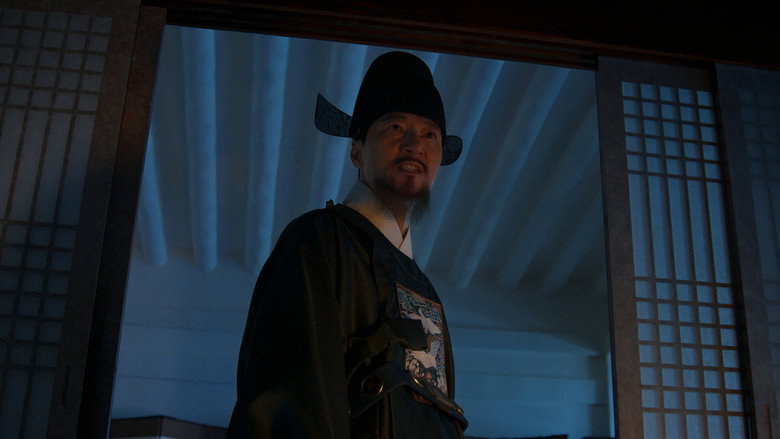
Lady Cho prepares a fabricated account of Hui-yeon’s death near Hwaseong. The report gives the family a route toward the memorial gate while placing pressure on Hui-yeon to make the story irreversible.
Hui-yeon fears that Cho Won will be punished for deceiving the King and seeks a way to save him. Lady Cho exploits that concern. The emotional bargain has become a demand that one person surrender her life to protect everyone else’s version of events.
Cho Won finally breaks with the logic of the wager. He tells Hui-yeon that their relationship began as a bet involving Lady Cho. The revelation wounds her, but she refuses to die for it. Her anger becomes compatible with survival.
He also recognizes an uncomfortable parallel: Hui-yeon’s desire to leave with him resembles his own earlier longing to leave with Lady Cho. He can no longer ignore the way an apparently intimate promise can keep someone waiting without delivering a future.
7. The royal audience: The lie fails its simplest factual test
Cho Won presents the false account to the King. Its description of severe weather does not match the information available to the monarch about Hwaseong.
The discrepancy punctures a story designed to sound moving and authoritative. The King knows he is being deceived. He spares Cho Won, but ends their relationship and bars him from returning before him.
Cho Won survives the audience, yet loses access to the powerful connection that could have sustained his place at court. Mercy is not the same as restoration.
Before leaving, he arranges freedom for the servants Chil-seong and Eun-sil. Their relationship receives a possibility that the central triangle has repeatedly deferred: a future that can be lived rather than continually negotiated.
8. The river and the aftermath: A disappearance leaves different lives behind
Cho Won departs alone on a journey toward Yanjing. During the crossing, he enters the river and disappears. The later scenes do not establish a recovered body or show him returning.
Hui-yeon lives on outside her former aristocratic identity, connected to a clandestine Christian community and work involving paper. Her survival is concrete even though the emotional wound remains.
So-ok’s pregnancy and relationship with In-ho expose another gap between household appearances and private knowledge. The story invites suspicion about the child’s parentage; the pregnancy should not be converted into a biological certainty that the narrative does not formally establish.
Lady Cho retains her position. In the winter aftermath, Cho Won’s empty residence and letters still addressed to him confront her with an absence she cannot manage away. The correspondence is evidence of people continuing to write to him, not proof that he has answered.
Cast + TMDB
Cast and Characters






The cast gallery uses the verified TMDB series credits, with credited characters, portrait records and RecapRush actor-profile links. The principal gallery is limited to six performers; the recap also discusses supporting characters where the story requires them.
More from RecapRush
 Rage of Stars (2026) Preview: Jemma’s Visions Turn an Investigation Into an Apocalypse
 Once Upon a Time in the West (1968) Recap & Ending Explained: Why Harmonica Leaves Jill
 Practical Magic 2 (2026) Recap & Ending Explained: Why Franny Has to Die
Son Ye-jin’s Lady Cho, Ji Chang-wook’s Cho Won and Nana’s Ahn Hui-yeon form the central triangle. Han Seon-hwa, Shin Youn-ha and Kang Ji-eun anchor the household relationships around So-ok and Hui-yeon. The gallery below supplies their individual credited roles without repeating them in an actor-character table.
Ending Explained
Is Cho Won definitely dead?
The river sequence strongly suggests a fatal act. It does not provide a later recovery of his body, an explicit survival scene or a reunion.
Published accounts differ in how firmly they describe his death. The careful conclusion is that Cho Won disappears in the river and is presumed dead; survival is not established either. Calling him secretly alive goes beyond the evidence. Treating every remaining uncertainty as resolved also goes beyond it.
For Lady Cho, the practical result is the same: she cannot summon him back. The ending makes the absence consequential without turning uncertainty into a puzzle with a verified hidden solution.
Does Hui-yeon survive, and why does she leave?
Yes. She is not the dead widow described by the official story. She goes on living beyond the aristocratic role that made her suffering valuable to other people.
Her departure is not an uncomplicated romantic victory. She loses the relationship she expected, while gaining the chance to stop organizing her life around what a family or lover requires.
Why does the King spare Cho Won?
Their previous connection helps explain the mercy, but the King does not accept the report as true. His knowledge of conditions around Hwaseong exposes its invented weather.
Cho Won leaves alive and excluded. The distinction matters: the scene does not vindicate the deception or return him to his former position.
What do the letters prove?
They show that Cho Won remains the object of hopes, questions and unfinished attachments. Letters arriving at his house do not establish who, if anyone, receives them elsewhere.
The closing uncertainty belongs especially to Lady Cho. She can imagine possibilities, but cannot secure an answer from the person whose responses once reassured her of her influence.
Has Lady Cho won?
She keeps the social world she repeatedly refuses to abandon. That is a form of success within the terms she originally protected.
RecapRush reads the emptiness of that success as the ending’s sharpest judgment. Her position survives; the intimate recognition she wanted does not. The series does not need to strip her of every privilege to show the cost of her choices.
RecapRush Interpretation
The season’s deepest conflict concerns authorship. Lady Cho is talented with words, Cho Won performs identities that other people find persuasive, and Hui-yeon is repeatedly described by people who want her to embody their values.
The fabricated death report brings those tendencies together. A persuasive account threatens to become more powerful than the person it describes. Hui-yeon must refuse the role even when refusing hurts people she loves.
That gives her anger an unusual moral importance. She does not need to forgive Cho Won before she is allowed to survive. She does not need to remain worthy of his romance, her in-laws’ honor or Lady Cho’s sympathy. Her future can begin with the plain fact that she wants to live.
This is RecapRush’s reading of the story, not a claim that every character escapes the social consequences of that choice.
Deep Analysis & Key Themes
Lady Cho’s denied talent explains her hunger for influence
The earlier recognition given to Cho Won through her writing establishes a specific injury: she can produce the work without receiving its public possibilities.
That history makes her sensitivity to exclusion understandable. It also explains why directing someone else can feel like proof of her own ability. A successful scheme becomes a substitute for a life in which she could act openly.
But understanding the substitution does not excuse it. So-ok and Hui-yeon become available targets because Lady Cho has more power over them than over the rules of her marriage. Her resistance reproduces the hierarchy when she makes another woman’s body answer for her disappointment.
Cho Won confuses being wanted with being known
His skill as a lover gives him constant evidence that he can attract people. It does not answer the older question of whether Lady Cho would choose a shared future with him.
The wager offers a task he can complete instead of a conversation whose answer he cannot control. He treats proof of another woman’s love as a route to certainty about Lady Cho.
His growing attachment to Hui-yeon makes that arrangement untenable. Once her feelings have become more than a means to an end, continuing to hide the wager becomes an active betrayal of someone he can no longer pretend is disposable.
The memorial gate separates reputation from human need
Within this fictional story, the family’s desired honor depends on a version of Hui-yeon that leaves no room for her continued life.
The horror comes from the gap between what the monument claims to celebrate and what the living person needs. Her supposed virtue becomes useful precisely when it can no longer contradict anyone.
The drama’s coercion should not be generalized into a claim about every widow or household in Joseon. Here it is a concrete mechanism used by particular characters, and the analysis concerns their actions.
Paper changes from an instrument of control to ordinary work
Letters initiate the wager, carry desire and threaten exposure. A written report gives deception the appearance of official truth. The closing correspondence keeps an absent person present in other people’s minds.
Hui-yeon’s later association with making and selling paper offers a different relationship to the same material. In RecapRush’s reading, it is meaningful that she can work with something the elite have used to define her, without continuing to serve their account of who she is.
The contrast does not require a hidden coded message in every letter. The repeated uses of paper are already enough to connect intimacy, reputation and survival.
The servants’ future makes freedom practical
Chil-seong and Eun-sil’s emancipation matters beyond its generosity. Affection alone cannot remove the obligations limiting their choices.
Their chance at a shared life therefore depends on a material change in status. This prevents the supporting romance from becoming a simple claim that ordinary people love better because they are less complicated. They also need an opportunity to act on what they feel.
Beauty can make coercion harder to recognize
The costumes and interiors create a world worth looking at, but the transactions inside it often remain ugly. A refined proposal can still treat someone as property. A carefully written tribute can still erase the person it praises.
That tension is one reason the period setting works for this story. The polished surface does not negate the violence; it gives the characters a language and appearance through which to conceal it.
What Most Viewers Missed
Lady Cho’s first request is not the entire wager
The concubine scheme and the challenge involving Hui-yeon are connected but distinct. Keeping them separate clarifies why So-ok’s relationships matter rather than treating the younger woman as a stray subplot.
Genuine feelings do not remove the original deception
Cho Won can change emotionally while remaining responsible for the circumstances he created. His later pain does not supply the consent Hui-yeon could not give when she lacked crucial information.
The royal scene turns on an ordinary detail
A story built from emotional persuasion fails because its weather is wrong. The practical discrepancy is important: rhetoric does not make a false account factually sound.
The pregnancy preserves appearances more easily than it resolves truth
The household’s need for an heir creates an incentive to accept the explanation most useful to it. Suspicion and gossip remain different from confirmed parentage.
Uncertainty is not a promise of another season
The absence of a body and the arrival of letters leave interpretive room. Neither is an announcement of a continuation. This is coverage of the completed eight-episode limited series, without an invented future reunion.
Mid/Post-Credits
A separate mid- or post-credits narrative scene was not established in the sources checked. The winter aftermath, the letters and the river’s unresolved consequences belong to the ending discussed above; this article does not reclassify them as a verified bonus scene.
Final Thoughts
The Scandal is most compelling when it makes a grand declaration of love answer a smaller question: what are you willing to let the other person choose?
Lady Cho can imagine freedom while clinging to the world that gives her influence. Cho Won can feel sincerely while withholding the truth. Hui-yeon’s ending offers something less spectacular and more durable than winning their contest: a life that does not have to end because their promises failed.
The final letters leave an absence. Her survival leaves a possibility.
FAQ
How many episodes are in The Scandal?
Eight. Netflix released the complete limited series on September 18, 2026. This article covers all eight episodes.
Is this the 2003 movie Untold Scandal?
No. It is the 2026 Netflix television adaptation directed by Jung Ji-woo. The earlier film is part of its adaptation context.
What is the exact TMDB identity?
TV series 275102, with Season 1 record 425060. The supported RecapRush season page is /tv/275102/season/1.
Is Cho Won’s survival confirmed?
No. His river disappearance suggests death, while the aftermath does not conclusively show what happened to his body. The letters are not verified evidence of a secret return.
Does Hui-yeon die for the memorial gate?
No. The account of her death is false, and she survives beyond the life her former household planned for her.
Is So-ok’s baby definitely In-ho’s?
The relationship and pregnancy fuel that suspicion. This article does not treat implied parentage as a formally confirmed biological fact.
Does Lady Cho lose her status?
She retains her social position. The ending centers the personal absence that her influence cannot repair.
Is the drama a factual history of Joseon?
No. It is historical fiction adapting a literary story. Its characters’ demands should not be treated as a complete account of how every historical family or widow lived.
Join the conversation
What did you think of the ending? Share your interpretation. Spoilers may appear below.
This product uses the TMDB API but is not endorsed or certified by TMDB.
No comments yet. Start the conversation.