
RECAPRUSH MOVIE GUIDE
Black Panther (2018)
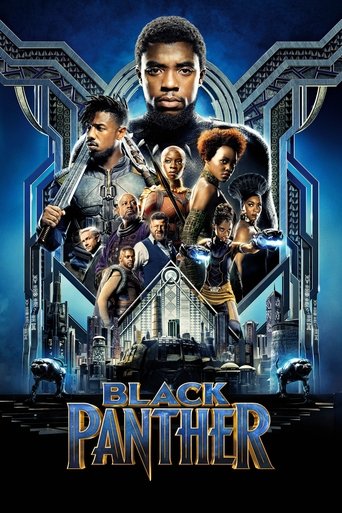
King T'Challa returns home to the reclusive, technologically advanced African nation of Wakanda to serve as his country's new leader. However, T'Challa soon finds that he is challenged for the throne by factions within his own country as well as without. Using powers reserved to Wakandan kings, T'Challa assumes the Black Panther mantle to join with ex-girlfriend Nakia, the queen-mother, his princess-kid sister, members of the Dora Milaje (the Wakandan 'special forces') and an American secret agent, to prevent Wakanda from being dragged into a world war.
Overview, poster, and credits from TMDB.
Read and watch our full recap ↓FROM THE RECAPRUSH LIBRARY · FULL RECAP
Black Panther (2018) Recap & Ending Explained: T'Challa Wins by Accepting Killmonger's Accusation
14 min read · Estimated reading time— views
Intro + RecapRush Viewpoint
Wakanda's most dangerous enemy does not arrive as a stranger. Erik Killmonger enters the throne room carrying a royal ring, a murdered man's body, and a question the kingdom has spent generations avoiding: what does its safety mean to people it chose not to help?
Ryan Coogler's Black Panther is built around a conflict that cannot be settled by proving one claimant stronger. T'Challa must defeat Killmonger, but the film's deeper resolution requires him to admit that the old Wakandan policy helped create the anger now threatening the country. The king survives because he learns to separate his opponent's cruelty from the truth inside his indictment.
RecapRush Viewpoint: Killmonger loses the throne because he converts abandonment into domination. T'Challa earns the future because he lets the same history change him without letting it dictate whom he must become.
Full spoilers ahead: This article reveals T'Challa's apparent death, N'Jobu's history, Killmonger's fate, Wakanda's policy change, and both credits scenes. Interpretive claims are identified as RecapRush readings unless linked to a filmmaker statement.
Featured Image
Featured image: TMDB theatrical poster for Black Panther (2018), movie ID 284054.
Source: https://www.themoviedb.org/movie/284054
Caption: A struggle for Wakanda's throne forces T'Challa to reconsider what the hidden nation owes the wider world. Poster via TMDB; artwork belongs to its respective rights holders.
Table of Contents
Quick Facts
- Title: Black Panther
- Year: 2018
- Type: Live-action feature film
- Genres: Action, Adventure, Science Fiction; political drama
- Director: Ryan Coogler
- Screenwriters: Ryan Coogler and Joe Robert Cole
- U.S. theatrical release: February 16, 2018
- Runtime: 134–135 minutes, depending on catalog convention
- TMDB movie ID: 284054
- Studio: Marvel Studios
- Distributor: Walt Disney Studios Motion Pictures
- Article scope: The original theatrical film and its two credits scenes
Disney's D23 record confirms the release and credits; TMDB supplies the catalog match and credited cast. Marvel's official materials confirm the trailer and production identity. [1–4]
Full Spoiler Recap
1. A secret in Oakland becomes a national crisis
In 1992 Oakland, King T'Chaka confronts his brother N'Jobu. N'Jobu has helped Ulysses Klaue steal vibranium because he believes Wakanda has a duty to arm oppressed people beyond its borders. Zuri, working undercover beside him, confirms the betrayal.
N'Jobu attempts to kill Zuri, and T'Chaka kills his brother while protecting him. The king takes Zuri home and leaves N'Jobu's young son Erik behind. The Wakandan craft departing above the basketball court becomes Erik's defining image: proof that the world of his father possesses extraordinary power and has chosen to leave him outside it.
This prologue makes the later conflict more than a foreign invasion. Wakanda's concealed history has produced a claimant whose anger is tied to an actual royal failure.
2. T'Challa returns to a throne shaped by tradition
After T'Chaka's death, T'Challa returns to Wakanda with Okoye and Nakia. He loves Nakia, but her work abroad has convinced her that Wakanda should use its resources to help others. T'Challa listens without yet abandoning the isolationist policy he inherited.
At Warrior Falls, the tribes are invited to challenge his succession. M'Baku of the Jabari accepts. With the heart-shaped herb's power temporarily removed, T'Challa defeats him in ritual combat but urges him to yield rather than die. The choice establishes the kind of king T'Challa hopes to be: strong enough to win and restrained enough to preserve a rival's life.
After taking the herb, T'Challa visits the ancestral plane and speaks with T'Chaka. He wants guidance, yet his devotion makes it difficult to question the assumptions his father represents.
3. A museum theft turns Wakanda's past into a weapon
Killmonger and Klaue steal a Wakandan artifact from a London museum. The sequence links two kinds of possession: the institution displays an African object under an incomplete label, while Killmonger plans to use stolen heritage in a violent claim to power.
Klaue intends to sell vibranium in Busan. T'Challa, Okoye, and Nakia attempt to capture him, working with CIA agent Everett Ross. The operation becomes a chase through the city, and Klaue is taken alive.
During interrogation, Klaue openly describes Wakanda as technologically advanced, contradicting its agricultural cover story. Killmonger then attacks the facility and frees him. Ross is critically wounded while protecting Nakia, and T'Challa chooses to take him to Wakanda, exposing a foreigner to the country's truth so Shuri can save him.
That decision quietly anticipates the king T'Challa will become. Long before the public policy changes, he breaks secrecy to preserve a life.
4. Killmonger buys entry with Klaue's body
Killmonger kills Klaue and brings his body to Wakanda. W'Kabi, whose parents were killed by Klaue, sees the corpse as evidence that Killmonger has delivered what the royal family failed to provide.
Killmonger reveals that he is N'Jadaka, son of N'Jobu. His royal ring proves his lineage and grants him the right to challenge T'Challa. Before the fight, T'Challa confronts Zuri and learns the truth about his uncle's death and Erik's abandonment.
At Warrior Falls, Killmonger turns the ritual into punishment. Zuri intervenes and admits his part in N'Jobu's death; Killmonger kills him. He defeats T'Challa and throws him into the waterfall, then claims the throne.
The outcome is legally recognizable inside Wakandan tradition, but legitimacy and justice have split apart. A system designed to confirm continuity has handed power to someone who intends to destroy it.
5. The ancestral plane reveals two different inheritances
After taking the heart-shaped herb, Killmonger returns in memory to the Oakland apartment where his father died. He encounters N'Jobu and admits that he has carried the pain rather than escaped it.
T'Challa's ancestral experience placed him among Wakandan kings in an open landscape. Erik's appears inside the small room of his childhood before opening onto a Wakandan sunset. The difference is emotional geography: one heir grew up surrounded by belonging; the other knew Wakanda as an absence.
Killmonger orders the remaining herbs burned, attempting to make himself the final Black Panther. Nakia secretly saves one. His plan is to distribute vibranium weapons through Wakandan agents and turn global oppression into a worldwide armed revolution led by his rule.
His anger identifies a real abandonment. His answer repeats the logic he condemns: people become instruments, and power belongs to whoever can impose it.
6. T'Challa's family seeks help from an old rival
Nakia, Shuri, Ramonda, and Ross flee to the Jabari. They intend to offer the remaining herb to M'Baku, but discover that Jabari fishermen found T'Challa alive and preserved him in snow.
Ramonda administers the herb. In the ancestral plane, T'Challa confronts T'Chaka and the previous kings. He condemns the decision to abandon Erik and the wider policy of hiding while others suffered. Returning to life means rejecting part of his inheritance rather than simply reclaiming it.
M'Baku initially declines to join the fight. T'Challa nevertheless returns with his family and allies. Ross enters Shuri's laboratory, where he can remotely pilot a craft to stop vibranium weapons from leaving Wakanda.
T'Challa's survival depends on people the throne did not command: Nakia preserves the herb, the Jabari save his body, Ramonda restores him, Shuri equips him, and Ross helps contain the external threat. Kingship is revealed as dependence disguised by ceremony.
7. Wakanda fights over the meaning of loyalty
T'Challa interrupts Killmonger's weapons operation and declares that he is not dead, so the challenge is incomplete. The Dora Milaje support T'Challa because Killmonger's authority no longer deserves their allegiance. W'Kabi and the Border Tribe fight for Killmonger, while Nakia and Shuri join the resistance.
Okoye's conflict with W'Kabi turns political loyalty into a personal wound. When he asks whether she would kill him, her answer places Wakanda above their relationship. Later, W'Kabi yields when confronted by her resolve.
M'Baku and the Jabari finally enter the battle, preventing the royal family from being overwhelmed. Their intervention pays off T'Challa's mercy at Warrior Falls without reducing it to a transaction. He spared M'Baku because killing him was unnecessary; that choice allowed a future alliance to remain possible.
8. The vibranium mine strips away the royal image
T'Challa and Killmonger fall into the vibranium mine while fighting in their Panther suits. Sonic stabilizers periodically deactivate the nanotechnology, exposing vulnerable bodies beneath the armor.
T'Challa times an attack to one of those disruptions and mortally wounds Killmonger. He offers to heal him, but Erik refuses a life of imprisonment. T'Challa carries him outside to see a Wakandan sunset, fulfilling the childhood story N'Jobu gave him.
Killmonger removes the blade and dies. T'Challa wins the physical contest, but the sunset does not turn the moment into simple triumph. He is holding the cousin his father left behind, looking at the country that could have been Erik's home.
9. The ending changes Wakanda's answer
T'Challa and Shuri visit the Oakland building where N'Jobu died. T'Challa has purchased it and nearby properties to create a Wakandan outreach center led by Shuri. Children notice their advanced craft, transforming Erik's childhood image of departure into a promise of arrival.
More from RecapRush
 Companion (2025) Recap & Ending Explained: Why Iris Shows Her Mechanical Hand
 Roman Holiday (1953) Recap & Ending Explained: Why Joe Gives Up the Story, Not Just the Princess
 Unforgiven (1992) Recap & Ending Explained: Why Munny’s Victory Cannot Make Him Innocent
The decision does not adopt Killmonger's program of domination. It accepts his core accusation that Wakanda cannot justify indifference simply because secrecy kept it safe.
T'Challa's victory is therefore constitutional as well as physical. He remains king, yet the meaning of Wakandan leadership changes. Tradition survives by becoming capable of self-criticism.
Cast + TMDB
Cast and Characters









Verified catalog match: TMDB movie 284054 — https://www.themoviedb.org/movie/284054
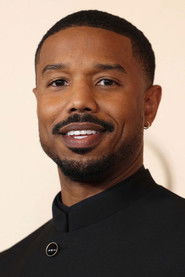
The central performances include Chadwick Boseman as T'Challa, Michael B. Jordan as Erik Killmonger, Lupita Nyong'o as Nakia, Danai Gurira as Okoye, Letitia Wright as Shuri, Winston Duke as M'Baku, Angela Bassett as Ramonda, Forest Whitaker as Zuri, Daniel Kaluuya as W'Kabi, Martin Freeman as Everett Ross, and Andy Serkis as Klaue. The cast gallery below presents the credited roles attached to this film's TMDB record. [3]
Ending Explained
Why does T'Challa change Wakanda's isolationist policy?
Killmonger's arrival reveals that isolation has never been morally neutral. T'Chaka's attempt to protect Wakanda included abandoning Erik, while the country withheld resources from people facing oppression outside its borders. T'Challa rejects Killmonger's violent method but accepts that the underlying grievance demands action.
The outreach center is his first concrete response. The mid-credits address expands that commitment into international policy.
Is Killmonger right?
He is right that Wakanda's comfort depends partly on refusing responsibility beyond its border, and right that this refusal has consequences. He is not right that liberation can be achieved by placing himself above everyone else and spreading warfare on a global scale.
The film asks viewers to keep both judgments in view. Explaining his rage does not excuse his killings; condemning those killings does not erase the history that shaped him.
Why does Killmonger refuse treatment?
T'Challa offers to heal him, but survival would mean imprisonment and the loss of the autonomy Killmonger has pursued through violence. He chooses death after finally seeing Wakanda's sunset.
The choice is consistent with his character, though it should not be romanticized into proof that he has won. It ends his life before he must imagine a future built through accountability rather than conquest.
Why does T'Challa take Killmonger outside?
N'Jobu told Erik about Wakanda's sunsets when he was a child. Carrying him above ground gives Erik the sight that had represented an inaccessible home. T'Challa cannot repair the abandonment, but he can acknowledge the person his family refused to bring back.
What does the Oakland scene mean?
The final return to Oakland converts the site of royal failure into a place of investment and exchange. It also reverses the prologue's visual movement: Wakandan technology now arrives where it once disappeared.
RecapRush Interpretation
The movie's most important battle happens after T'Challa is thrown from the waterfall. When he enters the ancestral plane again, he stops treating the past as an authority that can only be obeyed. He tells the ancestors they were wrong.
That confrontation separates respect from submission. T'Challa does not abandon Wakanda or its history. He assumes responsibility for changing what the history has made possible.
Killmonger cannot make the same distinction. He sees inherited pain as a command to reproduce domination with himself in control. T'Challa listens to that pain as evidence, then chooses a different response.
RecapRush reads the ending as a model of accountable inheritance: the mature heir is not the person who protects every decision of the dead, but the one willing to repair what those decisions damaged.
Deep Analysis & Key Themes
Secrecy protects Wakanda and deforms its moral vision
Wakanda's concealment prevented conquest and preserved extraordinary achievements. The film respects that success. It also shows the cost of treating survival as a complete ethical program.
Nakia has already seen the outside need that T'Challa encounters through Erik. Her proposal and Killmonger's accusation point toward the same failure from opposite moral positions. She imagines service; he imagines command.
The throne cannot convert strength into moral legitimacy
Both T'Challa and Killmonger gain power through ritual combat. The same institution produces radically different rulers. That contrast exposes the limitation of a system that allows physical victory to settle political authority.
T'Challa becomes worthy of the throne through choices the ritual cannot measure: sparing M'Baku, saving Ross, listening to Nakia, confronting his father, and changing national policy.
Fathers give both cousins unfinished work
T'Challa inherits a kingdom and a protected image of T'Chaka. Erik inherits a ring, a body, and an absence. Both must decide what loyalty to their fathers means after discovering failure.
T'Challa can criticize T'Chaka without losing his own identity. Erik fuses N'Jobu's grievance with his entire purpose. One son revises an inheritance; the other lets it consume every possible future.
The women around T'Challa make restoration possible
Nakia preserves the herb and articulates the need for engagement. Ramonda restores her son. Shuri's science saves Ross and equips the resistance. Okoye decides that duty to Wakanda is larger than obedience to a particular ruler.
These are different kinds of power rather than a single supporting function. The king's return is a coalition produced through judgment, knowledge, care, and force.
The two Panther suits turn ideology into visual conflict
The suits store and release kinetic energy, making absorbed violence return as force. That feature suits a story in which historical injury is never simply contained. The real question is how accumulated force will be released and toward whom.
In the mine, sonic pulses repeatedly remove the invulnerable surface. The cousins' political mythologies fall away with the armor, leaving two wounded people fighting over what Wakanda should become.
What Most Viewers Missed
T'Challa changes policy before his final speech
Bringing Ross into Wakanda already violates the logic of absolute secrecy. T'Challa makes the choice because a life is at stake. The later outreach program expands a moral instinct the film has already shown him practicing.
Mercy creates political possibilities
T'Challa's decision to spare M'Baku does not purchase the Jabari's help, and M'Baku initially refuses it. Mercy matters because it leaves another person's agency intact. Cooperation becomes possible without being owed.
Erik and T'Challa see different ancestral landscapes
The ancestral plane reflects belonging. T'Challa immediately enters a royal lineage. Erik first returns to the apartment where abandonment defined him. Wakanda is his inheritance, but it has never been his lived home.
The final child echoes Erik
The Oakland children looking up at Wakandan technology visually recall the child Erik watching a ship leave. This time, Wakanda stays. The change is the film's clearest answer to the wound established in its opening scene.
Okoye distinguishes the nation from its ruler
Her loyalty is often described as rigid, yet her decisive choice is morally discriminating. She does not follow T'Challa simply because she loves him, or Killmonger simply because he won. She acts when the claimed authority threatens Wakanda itself.
Mid/Post-Credits
The film contains two credits scenes in its original theatrical release.
Mid-credits: T'Challa addresses the United Nations and announces that Wakanda will share knowledge and resources with the world. When a delegate asks what an apparently poor agricultural nation can offer, T'Challa smiles. The scene publicly completes the policy change begun in Oakland.
Post-credits: Bucky Barnes awakens in Wakanda, where children call him the White Wolf. Shuri meets him as he continues his recovery from HYDRA's programming. The scene follows the Wakandan refuge established in Captain America: Civil War and prepares his return in Avengers: Infinity War. [8]
Neither scene alters Killmonger's death. Together they show Wakanda opening outward in two forms: international cooperation and the restoration of an individual once used as a weapon.
Final Thoughts
Black Panther gives T'Challa an opponent whose methods must be defeated and whose history must be heard. That combination keeps the ending from treating victory as a return to normal.
The king preserves Wakanda by changing it. He refuses Killmonger's demand for domination, rejects the ancestors' defense of isolation, and begins a program whose first image is a Wakandan craft landing in the neighborhood where his cousin once watched one leave.
The film's sharpest idea is that listening to an enemy does not require surrendering to him. Sometimes it is the only way to understand which part of the world must change after the fight is over.
FAQ
Does T'Challa die at Warrior Falls?
No. The Jabari rescue his injured body and preserve him in snow. Nakia's saved heart-shaped herb restores his strength.
Is Killmonger T'Challa's cousin?
Yes. Erik Stevens, whose Wakandan name is N'Jadaka, is the son of T'Chaka's brother N'Jobu.
Why can Killmonger challenge for the throne?
His royal ancestry gives him a recognized claim under Wakanda's challenge tradition. The film distinguishes that procedural claim from moral fitness to rule.
Does Killmonger survive the ending?
No. He refuses T'Challa's offer of treatment, removes the weapon from his wound, and dies after seeing Wakanda's sunset.
What is Black Panther's exact TMDB ID?
The movie ID is 284054.
How many credits scenes are there?
The original theatrical film has two: T'Challa at the United Nations and Bucky recovering in Wakanda.
Join the conversation
What did you think of the ending? Share your interpretation. Spoilers may appear below.
This product uses the TMDB API but is not endorsed or certified by TMDB.
No comments yet. Start the conversation.