
RECAPRUSH MOVIE GUIDE
Captain America: The Winter Soldier (2014)
After the cataclysmic events in New York with The Avengers, Steve Rogers, aka Captain America is living quietly in Washington, D.C. and trying to adjust to the modern world. But when a S.H.I.E.L.D. colleague comes under attack, Steve becomes embroiled in a web of intrigue that threatens to put the world at risk. Joining forces with the Black Widow, Captain America struggles to expose the ever-widening conspiracy while fighting off professional assassins sent to silence him at every turn. When the full scope of the villainous plot is revealed, Captain America and the Black Widow enlist the help of a new ally, the Falcon. However, they soon find themselves up against an unexpected and formidable enemy—the Winter Soldier.
Overview, poster, and credits from TMDB.
Read and watch our full recap ↓FROM THE RECAPRUSH LIBRARY · FULL RECAP
Captain America: The Winter Soldier (2014) Recap & Ending Explained: Why Steve Drops the Shield
16 min read · Estimated reading time— views
Intro + RecapRush Viewpoint
Imagine discovering that the organization protecting your country has been deciding which of its citizens deserve to live. Then imagine that the man enforcing its decisions is the friend you thought you buried seventy years ago. Captain America: The Winter Soldier makes those two betrayals inseparable: a stolen institution and a stolen human being.
Anthony and Joe Russo's 2014 film gives Steve Rogers an enemy he cannot defeat simply by hitting harder. It asks him to decide what his uniform means when the people issuing his orders have betrayed its purpose. Its conspiracy thriller also becomes an intimate story about whether someone reduced to a weapon can still be reached as a person.
RecapRush Viewpoint: Steve's defining victory is his ability to distinguish loyalty from obedience. He destroys the machinery that claims to protect people, then refuses to destroy the person that machinery has used. The shield falling from his hand is where those choices finally meet.
Full spoilers ahead: This article reveals HYDRA's infiltration, the Winter Soldier's identity, Project Insight's defeat, and both credits scenes. Interpretive passages describe RecapRush's reading of the film rather than an unverified statement of the filmmakers' intentions.
Featured Image
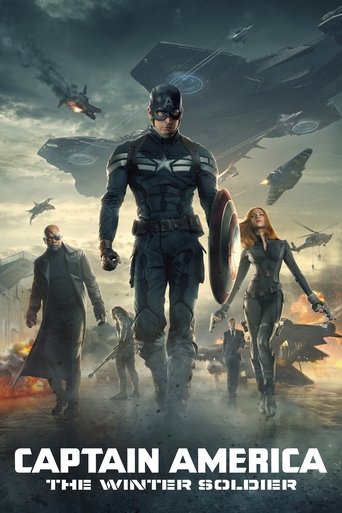
Featured image: TMDB poster for Captain America: The Winter Soldier (2014).
Source: https://www.themoviedb.org/movie/100402
Caption: Steve Rogers faces a conspiracy inside S.H.I.E.L.D. in Marvel Studios' 2014 political superhero thriller. Poster supplied through TMDB; artwork belongs to its respective rights holders.
Table of Contents
Quick Facts
- Title: Captain America: The Winter Soldier
- Year: 2014
- Type: Live-action feature film
- Genres: Action, adventure, science fiction; political and espionage thriller
- Directors: Anthony Russo and Joe Russo
- Screenwriters: Christopher Markus and Stephen McFeely
- U.S. theatrical release: April 4, 2014
- Runtime: 136 minutes
- U.S. rating: PG-13
- TMDB movie ID: 100402
Disney's official listing confirms the U.S. date, rating, runtime, and directors. TMDB's general release field records an earlier international date; April 4 is specifically the American theatrical release. [2, 3]
Full Spoiler Recap
1. Steve has a job, but belonging is harder
Living in Washington, D.C., Steve works for S.H.I.E.L.D. and meets fellow veteran Sam Wilson during an early morning run. Their shared experience creates a connection outside the agency's hierarchy. Sam is someone Steve can talk to without first receiving a briefing. [4]
That distinction becomes essential. An institution can give Steve a mission, transport, and equipment; it cannot automatically give him a life. His friendship with Sam offers something more modest and more durable: another person who understands that coming home does not always make a soldier feel at home.
2. The rescue mission contains another mission
Steve, Natasha Romanoff, and the S.T.R.I.K.E. team board the Lemurian Star to recover hostages. Natasha is also collecting shipboard data under separate orders from Nick Fury, a task Steve was not told about. The rescue succeeds, but the concealed assignment exposes a fault in their working relationship. [4]
For Natasha, compartmentalization is familiar tradecraft. For Steve, it raises a practical moral question: how can he take responsibility for a mission when he does not know its actual purpose? The disagreement does not make either character foolish. It establishes two competent people whose definitions of professional trust differ.
3. Project Insight promises safety through preemptive killing
Fury shows Steve three heavily armed Helicarriers tied to satellite surveillance. Project Insight is presented as a way to remove danger before it becomes an attack. Steve objects to security built around deciding who should be killed in advance. [5]
The project does not become troubling only after HYDRA is exposed. Its premise is troubling already. Calling an execution preventive does not answer who chooses the target, what evidence counts, or how anyone can challenge a prediction. The later conspiracy takes advantage of an ethical weakness the film has already shown us.
4. Fury's apparent death turns the investigator into a fugitive
Fury's inability to access the recovered data deepens his suspicions. After requesting a delay to Insight, he is attacked. He reaches Steve's apartment, passes him a drive, and warns that S.H.I.E.L.D. is compromised. The Winter Soldier shoots him; his death is subsequently reported. [5]
Steve refuses to give Alexander Pierce the information Fury entrusted to him. His own agency turns against him. The elevator confrontation makes that reversal physical: familiar operatives surround him in a confined space, and official authority becomes an immediate threat. [6]
Steve's escape is more than an action showcase. The place that should grant him access and protection has become a trap. From this point, rank and credentials are inadequate evidence of anyone's intentions.
5. Zola explains how the enemy survived inside the system
Steve and Natasha trace the drive to an old facility at Camp Lehigh. There, Arnim Zola's preserved digital consciousness explains how HYDRA rebuilt itself within S.H.I.E.L.D. after the war. Its strategy has been to encourage instability until people accept the surrender of freedom as the price of safety. A missile destroys the bunker, but the two escape. [5]
The setting makes the revelation sting. A place associated with Steve's beginnings now contains the survival mechanism of his old enemy. Progress has updated the equipment without necessarily defeating the ideology. HYDRA has learned to administer its ambitions through the organization created to oppose them.
6. Sam provides shelter, and Sitwell identifies the targets
Steve and Natasha turn to Sam, whose military background includes the Falcon flight system. Together they interrogate Jasper Sitwell. He explains that Zola's algorithm uses personal data to identify people who might threaten HYDRA in the future; Insight's guns will eliminate them. [7]
This is the conspiracy's decisive clarification. The targets are not an army attacking the country. They include people whose possible future independence is inconvenient to those seeking control. Prediction becomes a substitute for accusation, trial, and any opportunity to choose differently.
Sam's contribution is equally significant in another register. Helping Steve is voluntary. The film rebuilds cooperation through individual decisions precisely when cooperation imposed through institutional chains has failed.
7. The assassin is Bucky Barnes
The Winter Soldier attacks again, kills Sitwell, and fights Steve. When the mask comes off, Steve recognizes Bucky Barnes, his friend from before the war. Bucky survived and has been subjected to experimentation, conditioning, and freezing between assignments. He does not respond to Steve as the friend Steve remembers. [7]
Recognition changes the fight's emotional direction. Steve now sees two realities at once: the attacker remains dangerous, and that danger has been manufactured through abuse. HYDRA has not merely recruited a villain. It has tried to replace a man's identity with a function.
Steve, Natasha, and Sam are captured, but Maria Hill gets them out and takes them to Fury. His death was a deception. The surviving allies plan to replace the three Helicarriers' control modules and prevent the mass killings. [6]
8. The response must expose S.H.I.E.L.D., not preserve its reputation
Steve broadcasts the infiltration to the people inside headquarters. Natasha infiltrates Pierce's meeting and, with Fury's help, releases the agency's classified files. The disclosure exposes HYDRA while also opening S.H.I.E.L.D.'s own secrets to scrutiny. Fury kills Pierce during the confrontation. [6]
The heroes do not finish by issuing a statement that everything is under control. Restoring the agency's appearance would preserve the environment in which the conspiracy flourished. Their answer is costly public exposure, accompanied by the physical destruction of Insight's weapons.
9. Steve stops Insight, then stops fighting Bucky
Steve and Sam get the replacement modules into the Helicarriers. Bucky disables Sam's wings and confronts Steve on the last ship. Steve completes the final replacement despite his injuries; Hill makes the carriers fire on one another. [4]
Only after the launch threat has been stopped does Steve give up fighting his friend. He frees Bucky from fallen wreckage, drops his shield, and appeals to their shared bond. Bucky continues attacking him, but Steve refuses to answer with another blow. [4]
The order is crucial. Steve does not sacrifice the people on Insight's target list to protect Bucky. He fulfills his responsibility to them first, then risks his own life rather than treating Bucky as disposable. That is a harder decision than a simple choice between friendship and duty.
10. Rescue begins a recovery; it does not complete one
Steve falls into the Potomac. Bucky pulls him out and leaves. Steve survives, and Sam later joins his search for Bucky. Fury continues pursuing HYDRA's remaining operations, while Natasha faces questions about the released information. [5]
The film gives us a rescue without a reunion. Bucky's action contradicts his assigned mission, but he is not suddenly restored to an uncomplicated former self. That refusal to tidy everything up is what makes the hopeful ending persuasive. A person can begin making a different choice before he can explain everything that has been done to him.
Cast + TMDB
Cast and Characters







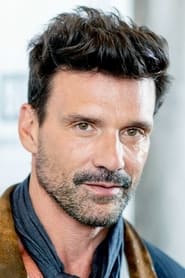


TMDB movie ID: 100402.
Movie record and credited cast: https://www.themoviedb.org/movie/100402/cast
The key performances are Chris Evans as Steve Rogers, Scarlett Johansson as Natasha Romanoff, Sebastian Stan as Bucky Barnes, Anthony Mackie as Sam Wilson, Samuel L. Jackson as Nick Fury, and Robert Redford as Alexander Pierce. Their credited roles are listed below. [3]
Evans makes Steve's resolve feel like a continuing decision rather than an absence of doubt. Johansson supplies the friction of someone accustomed to surviving through concealment. Stan's restrained performance makes Bucky difficult to read without making his suffering unimportant. Mackie's openness gives the story breathing room: Sam offers solidarity without requiring Steve to prove his usefulness first.
More from RecapRush
 The Journey to Gyeongju (2026) Recap & Ending Explained – Ok-sil’s Revenge
 The Prestige (2006) Recap & Ending Explained: Why Borden’s Sacrifice Is the Trick Angier Cannot Understand
 Street Fighter (2026) Recap & Ending Explained: Dark Ryu, Ken and Bison’s Escape
Redford's Pierce is effective because he speaks from a position of established legitimacy. His confidence suggests a man who does not think of himself as a trespasser. The institution has accommodated him so thoroughly that he treats resistance as the intrusion.
Ending Explained
Why does Steve drop his shield?
His task of disabling Insight is already complete. Continuing to fight can no longer save the people the carriers were going to target; it would primarily protect Steve from Bucky. By dropping the shield, Steve makes an appeal that cannot be mistaken for another attempt to overpower him. [4]
RecapRush interpretation: Steve has spent the climax fighting a system that turns human beings into calculations. At the personal level, refusing to finish Bucky enacts the opposite principle. He insists that the man before him is more than the threat his behavior currently represents.
This is a personal risk, not a universal instruction for dealing with violence. Steve has knowledge of Bucky's history and conditioning that gives the decision its specific dramatic meaning. The film's emotional power comes from that relationship, not from claiming everyone can stop an attacker through compassion.
Does Bucky remember everything?
No complete restoration is established here. He rescues Steve and later investigates the Smithsonian display about his former life. Those actions show a break with his orders and a search for identity. They do not demonstrate that every memory has returned or that his conditioning has been permanently resolved. [4, 8]
The distinction matters. A neat cure would turn trauma into a temporary obstacle the plot can erase. The actual ending leaves room for uncertainty, work, and the possibility that recovery requires more than one emotional breakthrough.
Is HYDRA completely defeated?
Project Insight is destroyed, Pierce is killed, and the infiltration is exposed. HYDRA's wider network remains. The laboratory in the mid-credits scene makes that survival explicit. This film ends a specific attempt at mass domination rather than announcing that every HYDRA operative has disappeared. [6, 8]
Why does Sam join the search?
He chooses to help Steve even after the immediate battle is over. RecapRush reads that decision as the film's quiet answer to Fury's warning about trusting nobody: Steve needs discernment, not permanent isolation. Sam's loyalty has been earned through shared actions rather than assumed from a badge.
RecapRush Interpretation
The film's two central stories mirror each other. S.H.I.E.L.D. retains its name and outward legitimacy while its purpose is being redirected. Bucky retains his body and capabilities while his history and judgment are suppressed. In each case, HYDRA keeps the useful shell and attempts to control what happens inside it.
Steve's responses are different because the moral situations are different. The compromised organization cannot be saved simply by believing harder in its good intentions. It must lose the secrecy and machinery that enable its abuse. Bucky, by contrast, is someone upon whom that abuse has been inflicted. Steve refuses to equate the captive with his captors.
That is the film's most valuable distinction. Accountability for a system and compassion for a person do not need to cancel each other. Steve can oppose the organization absolutely while recognizing that one of its most frightening instruments is also its victim.
Deep Analysis & Key Themes
Security becomes dangerous when prediction cannot be challenged
Insight's logic closes the future. If a model decides someone will become an enemy, that person's later actions become irrelevant. The person is condemned before the predicted offense, so there can be no meaningful appeal to actual conduct.
This makes the technology more than a large weapon. It is a political structure: whoever controls the definition of danger controls who is permitted to have a future. In RecapRush's reading, the film's threat is not simply that a bad person can press a button. It is that a whole process can make pressing that button sound responsible.
Natasha's honesty involves a real cost
Natasha's disclosure does not expose only other people's secrets. It also removes the protection secrecy has given her. Her shift therefore has weight beyond agreeing with Steve in conversation. She accepts the risk of being known.
The film does not ask us to assume every secret is malicious. Instead, it asks what secrecy is serving and who bears its consequences. Natasha's change is compelling because she does not become a different profession overnight; she directs her existing expertise toward a different obligation.
Fury learns that competence is not the same as control
Fury is skilled at withholding information and preparing contingencies. The conspiracy reveals the limits of that approach: knowing more than most people does not mean he knows where the corruption ends. His resources have not insulated him from the organization's vulnerability.
RecapRush reads his role as a challenge to managerial confidence. He can contribute to the solution, but he cannot solve the crisis simply by being the smartest person behind a closed door. People outside his usual system of control become essential.
Bucky's body is useful to HYDRA; his memory is dangerous
HYDRA wants Bucky's precision while suppressing the relationships that could complicate his obedience. Steve's recognition introduces something conditioning is designed to exclude: another account of who he is.
The resulting conflict is not merely between two combat styles. It is between a command that reduces him to a mission and a relationship that addresses him as someone capable of choosing. This is why Steve's vulnerability matters in the climax. It gives that second account a form Bucky can act upon.
The filmmakers place the conspiracy inside Steve's personal journey
In their on-set /Film interview, the Russos describe Steve's relationship to himself and the modern world as the story's center, with his other relationships surrounding it. Their discussion also emphasizes the emotional stakes of facing a friend as an adversary. [9]
That confirmed framing supports a useful way of watching the action. Each alliance asks Steve who he will be in the present. Sam offers new companionship; Natasha challenges his habits; Fury tests his relationship to authority; Bucky forces him to decide whether his past is a memory to mourn or a person to help.
What Most Viewers Missed
The film criticizes Insight before it reveals HYDRA
Steve's first objection concerns the program's principle. The later infiltration does not create the problem from nothing; it reveals who is exploiting it. A rewatch is more interesting when the early argument is treated as an argument, rather than merely a clue that Fury has hired the wrong people.
The shield's absence is as meaningful as its use
For most of the movie, Steve's physical identity is expressed through the shield: defending, striking, and surviving. The climax asks what remains when he puts it aside. RecapRush's answer is that his ethic must exist independently of the object that makes it visible.
A rescued friend and a searchable archive offer different kinds of hope
Bucky's rescue is an action taken in a crisis. His visit to the museum is a quieter, deliberate investigation. The credits scene gives the ending another step: he is not only resisting an instruction in the moment, but looking for evidence about himself. [8]
Exposure does not replace responsibility
The files becoming public does not make the heroes exempt from scrutiny. Natasha's hearing is a reminder that dismantling a conspiracy creates further questions about the people and practices surrounding it. The film reaches a victory, but it does not return everyone to the comfortable authority they possessed at the beginning.
Mid/Post-Credits
Mid-credits: Baron Wolfgang von Strucker's laboratory contains Loki's scepter and two superpowered test subjects, Pietro and Wanda Maximoff. Their abilities and the surviving HYDRA facility connect this story to Avengers: Age of Ultron. [8, 10]
After the credits: Bucky, in civilian clothes, studies the Smithsonian exhibit about his former life. It continues his search rather than staging a reunion with Steve. [8, 10]
The two scenes serve different purposes. One expands the continuing threat; the other returns to the individual the film has asked us to care about.
Final Thoughts
The Winter Soldier remains compelling because Steve's certainty is tested by people he cares about, not only by opponents he dislikes. His principles become meaningful when following them costs him institutional security and exposes him to personal pain.
The film also understands that an ending can be hopeful without restoring everything. The agency is shattered. The friendship is unresolved. The danger continues elsewhere. Yet a man who was ordered to kill chooses to rescue, and another man agrees to help look for him. Those choices leave the world less secure in its certainties and more open to repair.
FAQ
Who is the Winter Soldier?
Bucky Barnes, Steve Rogers' childhood friend and wartime comrade, turned into an assassin through HYDRA's experimentation and conditioning. [3, 7]
Is Nick Fury really dead?
No. The reported death lets him operate covertly while the remaining allies prepare their response. The film subsequently reveals him alive; the apparent death should not be treated as a resurrection. [6]
What does Project Insight actually do?
It combines a predictive targeting system with three armed Helicarriers. Under HYDRA's control, people identified as possible future opponents become assassination targets. [5, 7]
Does the film finish Bucky's recovery?
No. Rescuing Steve and researching his past establish the beginning of a break from his assigned identity, not a complete resolution. [4, 8]
How many credits scenes are there?
Two: Strucker's laboratory during the credits and Bucky at the Smithsonian afterward. [8, 10]
Which film comes next in Steve and Bucky's story?
Captain America: Civil War (2016) continues their unresolved conflict and relationship. This article analyzes the 2014 film without importing that sequel's revelations into its recap.
Join the conversation
What did you think of the ending? Share your interpretation. Spoilers may appear below.
This product uses the TMDB API but is not endorsed or certified by TMDB.
No comments yet. Start the conversation.