

RECAPRUSH MOVIE GUIDE
72 Hours (2026)
Directed by Tim Story
An advertising executive joins a Miami bachelor party after a mistaken group text and confronts his career and personal choices.
Overview, poster, and credits from TMDB.
Read and watch our full recap ↓FROM THE RECAPRUSH LIBRARY · FULL RECAP
72 Hours (2026) Recap & Ending Explained: Why Joe's Best Pitch Is the One He Never Gives His Boss
15 min read · Estimated reading time— views
Intro + RecapRush Viewpoint
Joe Nixon thinks he has three days to learn how to be young again. His employer has stopped trusting his instincts, his girlfriend is tired of waiting for a commitment, and an accidental group text drops him into a Miami bachelor party full of strangers. Joe sees the invitation as market research. It becomes a crash course in the damage he can do when he treats friendship as a business opportunity.
Tim Story's 72 Hours sends Kevin Hart's advertising executive through a weekend of yacht parties, stolen drugs, a kidnapping and a very unconvincing criminal persona. Beneath the chaos, the film asks a surprisingly ordinary question: what happens when a person keeps postponing the decisions that would make his life his own?
The RecapRush viewpoint: Joe's real breakthrough is not learning a younger generation's vocabulary. It is recognizing that people are not raw material for a pitch. His most important decision comes after Nick creates the campaign Joe desperately needs: Joe stops chasing approval from the employer who sent him to Miami and chooses to build something with the people he learned to value.
Full spoilers ahead. This article covers the complete released film, including Joe's secret recording, Ricardo Montana, Mason's kidnapping, the drug lord's decision, Jennifer's future with Joe and the wedding epilogue. Plot facts were checked against Netflix and post-release reporting on October 29, 2026. Thematic readings are RecapRush's interpretation.
Featured Image

Table of Contents
Quick Facts
- Title: 72 Hours
- Year: 2026
- Director: Tim Story
- Writers: Jon Hurwitz, Hayden Schlossberg, Kevin Burrows and Matt Mider
- World premiere: July 20, 2026, New York
- Netflix release: July 24, 2026
- Runtime: 105 minutes
- TMDB: Movie 949838
- TMDB genres: Comedy, Crime
- Coverage: the complete feature and its wedding epilogue
Full Spoiler Recap
1. Joe's career success starts to look fragile
Joe Nixon has spent a decade building his career in advertising. He expects his experience to bring a promotion, but his bosses worry that he no longer understands younger consumers. A vodka campaign offers him a chance to prove otherwise on a tight deadline.
At home, Jennifer, a surgeon and Joe's longtime girlfriend, has her own reason to doubt his priorities. She wants the relationship to move forward. Joe's tendency to postpone a proposal leaves her unsure whether the future she wants is one he intends to share.
The two problems appear separate. At work Joe fears becoming irrelevant; at home he fears making an irreversible choice. Both leave him clinging to a version of life he knows instead of honestly admitting what needs to change.
2. A mistaken group chat becomes a research assignment
Joe is accidentally included in a group chat organizing a Miami bachelor weekend. The men are decades younger, and the invitation was not meant for him. After his work situation deteriorates, that mistake begins to look useful.
He helps finance the trip and joins groom-to-be Mason, best man Nick, Hunter and Freshman. The younger men tease their unexpected older guest, but they let him into the group. Joe brings vodka connected to the campaign and plans to collect the kind of material his company believes it needs.
His colleague Barry helps him with wearable recording devices. Joe's new friends do not know that their private weekend is being filmed for work. The film's joke has a sharp edge: a man anxious about understanding people starts by failing to respect their trust.
3. Mason shows Joe another way to think about commitment
The bachelor group has its own tensions. Mason is excited to marry Emily. Nick, his childhood friend, worries that marriage will change their friendship. Hunter is struggling after a broken engagement, while Freshman brings an unpredictable energy to the trip.
Mason's certainty surprises Joe. The younger man does not describe marriage as the end of life. He talks about Emily as the person with whom he wants to build it. For Joe, who keeps treating a proposal to Jennifer as something that can wait, that confidence is difficult to dismiss.
The friends also check in on one another emotionally and keep a scrapbook of their history. Their willingness to talk about feelings undercuts Joe's assumption that their generation can be understood through a few fashionable images.

4. A borrowed badge opens the wrong door
Joe's efforts to keep up grow increasingly reckless. A police badge ends up in his possession, and he uses it to help the group get into a yacht party. What looks like a shortcut to an unforgettable night attracts the attention of Jaze, whose father is a drug lord.
Jaze suspects that Joe may be a police officer. To prove otherwise, Joe is pressured into taking cocaine. Under its influence, he assumes an exaggerated tough-guy identity he calls Ricardo Montana. The performance gives him the confidence to talk and act like a crime-movie boss, although he is still an advertising executive with no idea how dangerous the situation is.
The joke depends on the gap between appearance and reality. Joe thinks he is performing authority. The people around him are capable of treating that performance as a genuine threat.
5. The escape carries a hidden problem
As the yacht party falls apart, Joe and the others flee on jet skis. They do not realize that cocaine belonging to the criminal operation is hidden in the watercraft. Jaze now has a reason to pursue them beyond his suspicion about Joe's identity.
The group also meets women during the weekend, only to be drugged and robbed. Their possessions disappear, including Mason's scrapbook. The object is valuable for a different reason from the stolen drugs: it contains the history of a friendship the men fear may change after the wedding.
Joe's secret and the stolen property create two separate crises. One threatens his place in the group; the other places the groom in physical danger.

6. The friends discover the hidden cameras
Joe begins to enjoy the company of the people he initially treated as a demographic. That makes his deception harder to defend when the group discovers he has recorded them without their knowledge. They believed the weekend belonged to their friendship; Joe had also been collecting footage for an advertisement.
Nick reacts angrily and destroys Joe's laptop. Joe's explanation that the friendships became real does not erase the original betrayal. The group rejects him, and the footage he hoped would secure his professional future is lost.
Jennifer's view of the trip also worsens when she sees evidence of Joe's drug-fueled behavior and the party. She decides to move out. Joe has chased a performance of freedom while putting both his relationship and his new friendships at risk.
7. Joe tries to return what he took for granted
Joe tracks down the women who robbed the group and recovers Mason's scrapbook. It has no value as a corporate assignment; its importance is personal. Returning it is an attempt to repair some of the harm he has caused, even though the gesture cannot undo the secret filming.
Then Joe discovers that Mason has been kidnapped. Jaze's people want their cocaine back and believe they are dealing with the dangerous Ricardo Montana. The group must identify where the drugs ended up and find a way to bring the groom home.
The men reluctantly work with Joe again. Their cooperation does not require them to forget what he did. It gives him a chance to act for someone else's sake when his own promotion is no longer the immediate concern.
8. Ricardo Montana disappears at the worst possible moment
Joe tries to revive his criminal persona for the exchange. The group brings the drugs to the meeting, but the effects wear off and Joe is left to face Jaze's father as himself.
He admits that he is not a rival drug lord. He is an advertising executive in the middle of a personal crisis who has made a series of disastrous choices. The confession cuts through the intimidation the criminals expected.
The drug lord also notices Joe's clothing: it belonged to his late father and was taken from a closet in the rental property. The reminder of family softens the confrontation. With the drugs returned, he lets the group go and offers advice about valuing loved ones.
It is an absurd resolution, but its mechanism is clear. Joe's borrowed image finally fails; honesty, the returned cocaine and an unexpected reminder of family change the encounter.
9. Joe chooses Jennifer and a different career
Nick has created an advertising idea that answers the campaign problem. Joe could take it back to his employer and continue pursuing the promotion. Instead, he decides to leave the company and start his own agency, a possibility Barry had encouraged him to consider.
Joe returns to Jennifer as she is preparing to leave. He tells her he loves her, acknowledges the need to change and explains that he has quit his job. She gives their relationship another chance.
The film does not claim that quitting magically repairs every problem. It shows Joe taking concrete action in both parts of his life: he stops waiting for an employer's approval and stops keeping Jennifer's future indefinitely on hold.
More from RecapRush
 One Last Shot (2026) Recap & Ending Explained: Why Jake Refuses Carter's Definition of Loyalty
 Once Upon a Time in the West (1968) Recap & Ending Explained: Why Harmonica Leaves Jill
 Avatar: The Way of Water (2022) Recap & Ending Explained: Why Jake Stops Running

10. The wedding reveals what the weekend changed
Three weeks later, the group reunites for Mason and Emily's wedding. Jennifer and Joe are engaged. Joe has begun his own advertising business, and Nick works with him after helping secure a major campaign.
The men share an emotional check-in, a practice Joe initially resisted during the weekend. This time he participates readily. Mason is married, Hunter is moving beyond his slump, and Freshman adds his own comic response. Joe jokes that he may soon be planning a bachelor party himself.
The ending resolves the major relationships without pretending the weekend was harmless. The group has given Joe another chance, and he is no longer there to turn their private lives into secret research.
Cast + TMDB
Cast and Characters


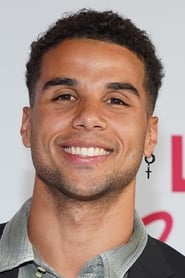



The TMDB-backed portrait gallery links the film's credited performers to their RecapRush profiles. Kevin Hart makes Joe's attempts to control a room increasingly frantic as his plan falls apart. Marcello Hernández gives Nick's jokes an anxious edge: his fear of losing Mason helps explain why a wedding celebration sometimes sounds like a protest against marriage. Mason Gooding makes the groom's confidence a quiet counterpoint to Joe's uncertainty.
Ben Marshall's Hunter and Kam Patterson's Freshman keep the group from becoming a single interchangeable voice. Teyana Taylor gives Jennifer a clear stake outside Joe's professional panic: she has a career and a future that cannot remain suspended until he feels ready.
Ending Explained
Does Joe get the promotion?
Joe does not pursue the promotion at his old company. Nick develops an effective campaign, but Joe chooses to leave and start an independent advertising business. Netflix's official ending summary confirms that Joe has his own business and that Nick works for him after helping secure a major campaign.
The practical distinction matters. Joe's ending is not a victory in the competition his bosses established. He changes the terms on which he measures success.
Do Joe and Jennifer get married?
By Mason's wedding, Joe and Jennifer are engaged. The film does not show their own wedding. Jennifer agrees to another chance after Joe returns and commits to changing the direction of his life; the ring in the epilogue confirms their engagement.
Why does the drug lord let Joe go?
Joe tells the truth, the cocaine is returned, and the older man's response changes when he recognizes clothing that belonged to his father. The family connection gives an otherwise violent confrontation an unexpectedly sentimental turn. Joe's fake persona is not what saves him.
What happens to Mason?
Mason is kidnapped as leverage in the dispute over the drugs, but the exchange resolves the immediate threat. He survives and marries Emily three weeks later.
Why does Nick work with Joe?
Nick demonstrates a creative ability Joe's company would value, and he helps secure a campaign. Their later partnership turns Joe's original idea upside down: instead of secretly observing a younger person, he works with one openly.
What does the final check-in mean?
The group shares how they feel, and Joe joins a ritual he once resisted. Netflix identifies this as a change from his earlier refusal. RecapRush reads it as a small but visible sign that he can accept another generation's way of expressing friendship without needing to perform youth.
RecapRush Interpretation
This is RecapRush's reading, not a claim about confirmed director intent. Joe arrives in Miami believing youth is a market he can decode. His hidden cameras make that belief literal: he looks through a lens at people whose actual names, fears and relationships matter less to him than the footage they might produce.
The scrapbook offers a different form of recording. Mason's friends preserve their own history for one another. Joe records them without permission for an employer. Both collect images, but only one practice begins with mutual trust.
His later work with Nick is meaningful because the relationship changes from extraction to collaboration. Joe does not need to stop being experienced or pretend that aging has disappeared. He needs to allow someone else to contribute as a person rather than a trend.
Deep Analysis & Key Themes
Comedy turns insecurity into spectacle
The film repeatedly makes Joe's effort to look comfortable produce the opposite effect. He arrives at a bachelor party as an observer, but his attempts to participate draw attention to him. The persona of Ricardo Montana takes that pattern to an extreme: the more powerful Joe tries to appear, the less control he has over the consequences.
The contrast gives the broad physical comedy a psychological foundation. Joe is not merely embarrassed by the younger men. He is frightened that they represent a future in which his experience no longer counts.
The generation gap runs in both directions
Joe assumes the younger men can teach him how to market to a demographic. Mason instead challenges his personal avoidance, and Nick contributes a professional idea. The older guest has something to offer too, but only after he begins to listen.
The film's reconciliation does not require one generation to defeat another. Its final business partnership imagines experience and a new perspective as useful together.
Commitment and independence are not opposites
Nick worries about what Mason's marriage will do to their friendship. Joe has delayed committing to Jennifer. Mason, by contrast, speaks about marrying Emily without treating the choice as the death of freedom.
Joe's eventual engagement and new agency connect his personal and professional decisions. He gives up the safety of waiting for a promotion while choosing a more definite future with Jennifer. RecapRush reads both decisions as forms of agency rather than surrender.
A false identity can conceal the truth until it cannot
Ricardo Montana is an exaggerated crime-film character, and the cocaine-fueled performance produces immediate danger. Joe's deception at the bachelor party is less flamboyant, but it also lets him avoid telling people why he is there.
At the exchange, the persona wears off. Joe's confession works because he can no longer sustain the role. The film turns the collapse of a ridiculous disguise into the moment when the character finally states his real problem.
Sentiment interrupts the expected gangster finale
The drug lord's father's clothes are a comic coincidence, but they also redirect the scene. A threat built around status and territory gives way to a memory of family. The movie uses that tonal turn to bring the theme of commitment into a confrontation that initially seems to belong to another genre.
What Most Viewers Missed
The scrapbook and the cameras tell opposite stories
The friends' scrapbook keeps shared memories inside the group; Joe's hidden recording converts private moments into potential advertising. His effort to recover the scrapbook matters because he begins protecting a record that serves someone else.
Mason is not afraid of the future Nick imagines
Nick's anxiety about losing his friend is understandable, but Mason's enthusiasm for Emily demonstrates that the groom does not experience marriage as a punishment. Their disagreement gives Joe two competing ways to think about his own hesitation.
Barry's suggestion comes back at the end
Starting an agency is not a random idea that appears after Miami. Barry had already reminded Joe of the ambition. The trip changes Joe's willingness to act on it.
Joe's final joke points to a real change
His comment about planning a bachelor party is funny because it echoes the trip. It also follows the revelation that he and Jennifer are engaged. The joke rests on a decision he was previously unwilling to make.
Mid/Post-Credits
A post-release credits guide reports a blooper reel during the credits, with no major story development in that material. The wedding is the film's narrative ending. No separate post-credits story scene is asserted here because its status was not independently established.
Final Thoughts
72 Hours uses an accidental message to turn a professional panic into an unruly friendship comedy. The trip supplies the familiar pleasures of escalating disaster, but the sharper idea is that Joe's fear of being left behind makes him overlook the people already in front of him.
He cannot undo the secret recording with a single apology. The film gives him a more useful direction: return what matters to his friends, help rescue Mason, choose Jennifer and build a business with Nick. The final check-in is not proof that the rest of his life will be easy. It shows that he has finally stopped treating every relationship as something to schedule after the next pitch.
FAQ
When was 72 Hours released?
The film premiered in New York on July 20, 2026, and began streaming on Netflix on July 24, 2026.
Who directed 72 Hours?
Tim Story directed the comedy, starring Kevin Hart as Joe.
Who is Ricardo Montana?
Ricardo Montana is the exaggerated criminal persona Joe adopts after being pressured into taking cocaine at the yacht party.
Does Mason survive?
Yes. Mason is freed after the drug exchange and later marries Emily.
Are Joe and Jennifer engaged?
Yes. They are engaged by the wedding epilogue, although their own wedding is not shown.
Does Joe stay with his employer?
No. He leaves and starts his own advertising business; Nick later works with him.
Is there anything during the credits?
A checked post-release guide describes a blooper reel during the credits. It does not change the story's outcome.
Join the conversation
What did you think of the ending? Share your interpretation. Spoilers may appear below.
This product uses the TMDB API but is not endorsed or certified by TMDB.
No comments yet. Start the conversation.